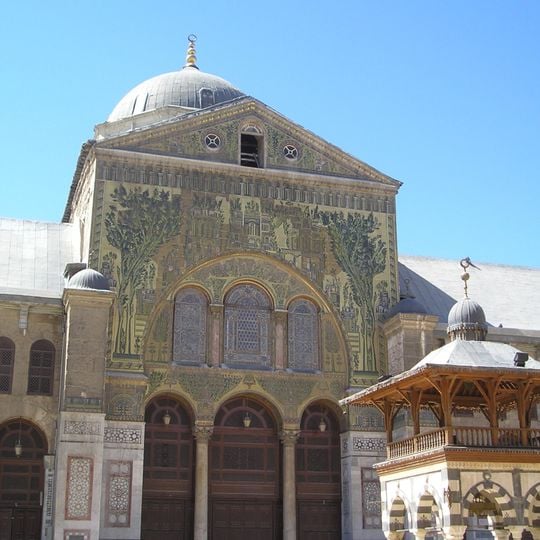
Umayyad Mosque, Mosque in the Old City of Damascus, Syria
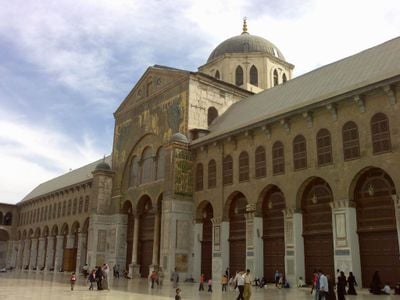
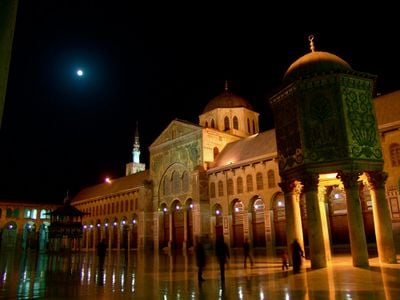
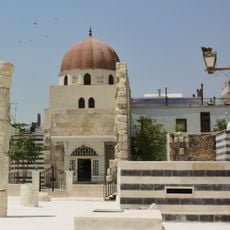
The Umayyad Mosque is a stone and marble complex whose main facade has a central arched portal flanked by two smaller arches, all set within a broad recessed arch. Above the arches, mosaic panels show tall trees and buildings in green, gold and blue, and a triangular gable with a small window and two round medallions rises to a dome. Three tall wooden doors open beneath the arches, and a separate smaller domed structure on columns stands to the right.
Construction was completed in 715 under Caliph Al-Walid I and it ranks among the oldest prayer structures in Islam. A pagan temple and later a church stood on this site before the mosque was built.
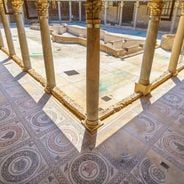
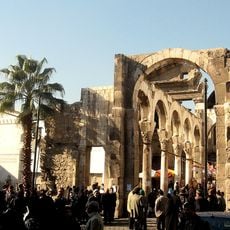
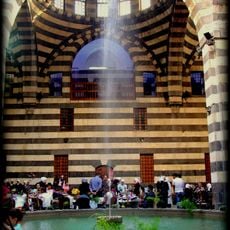
The mosque draws visitors from different faith traditions, as it represents a place where religious practices overlap. The central courtyard, framed by columned halls, serves as a gathering space where people pray, converse, and spend moments of reflection.
Visiting is best done early morning or late afternoon when the sun does not bear directly on the courtyard. Visitors should wear appropriate clothing and be prepared for varying floor levels between the courtyard and prayer halls.
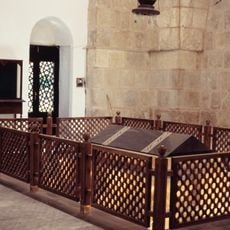
A stone column marks the spot where Caliph al-Walid I ordered a reliquary left in place after workers found a cave holding what tradition holds is John the Baptist's head. The Greek inscription praising Christ still survives on one wall.
The community of curious travelers
AroundUs brings together thousands of curated places, local tips, and hidden gems, enriched daily by 94,123 contributors worldwide.