Eklizi-Burun, Mountain summit in Crimean Peninsula, Russia
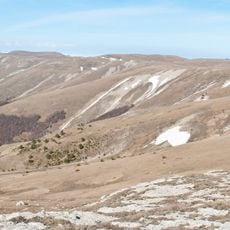
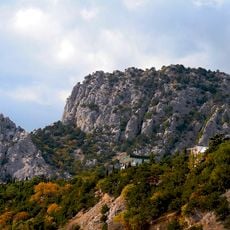
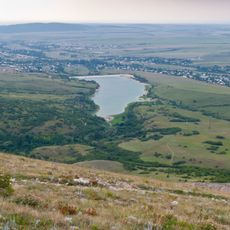
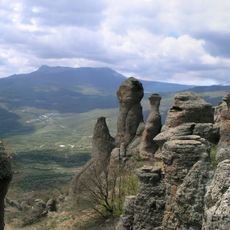
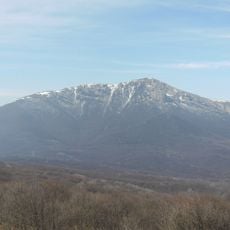
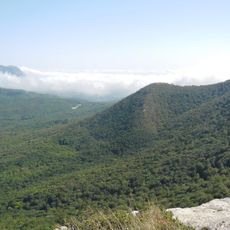
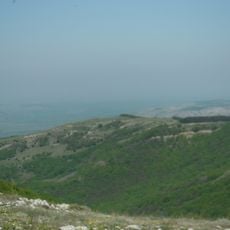
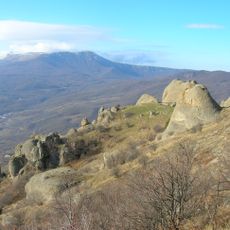
Eklizi-Burun is a mountain summit in the Crimean range, featuring steep limestone slopes and a rocky plateau near the top. It stands among the higher peaks of the peninsula and sits within a stretch of rugged highland that runs along the southern coast.
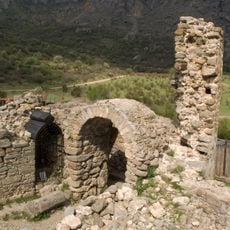
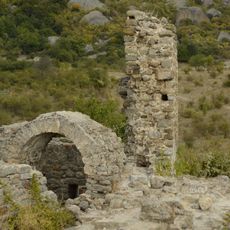
In the 6th century CE, Byzantine emperor Justinian I had defensive walls built to protect the southern coast; a medieval fortification uncovered in the Ay-Chokrak tract beneath the summit may have belonged to this system, guarding an ancient road to the sea and the coastal fortress of Aluston (modern Alushta). The Greek church of Panagia stood on the summit until 1778, when Potemkin's expulsion of Christians from Crimea left it deserted and ruined.
The name mixes Greek and Crimean Tatar: eklizi from the Greek ekklisia, "church", and burun, "cape" or "promontory" in Crimean Tatar, so "Church Cape". It refers to the Greek church of Panagia ("All-Holy") whose almost destroyed ruins lie on the summit; Greeks climbed here once a year in a large procession to pray. After Potemkin's resettlement of Christians from Crimea in 1778 the church stood empty and was ruined.
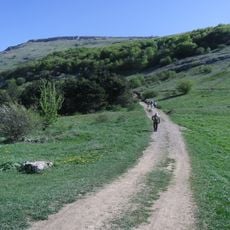
The limestone slopes can become slippery after rain, so sturdy footwear and some experience with mountain trails are helpful before heading up. Starting early in the day is a good idea, as clouds and fog often build up over the ridge by mid-afternoon.
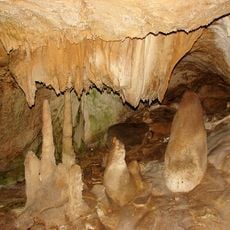
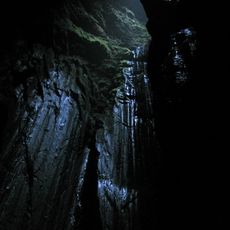
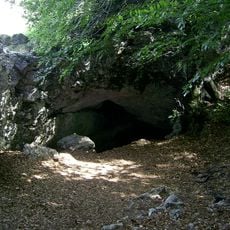
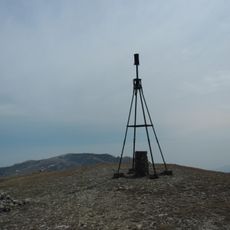
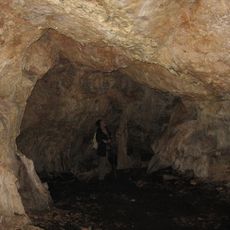
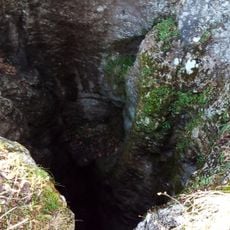
Eklizi-Koba, the highest cave in Crimea, lies at about 1,500 m just below the summit. It is a single cave, not a large developed network, and it has no tourist infrastructure. The summit itself is the fifth-highest point of the Crimean Mountains, and its bare trapezoid top is made of limestone.
The community of curious travelers
AroundUs brings together thousands of curated places, local tips, and hidden gems, enriched daily by 94,019 contributors worldwide.