Milwaukee Art Museum, Art museum in Milwaukee, US
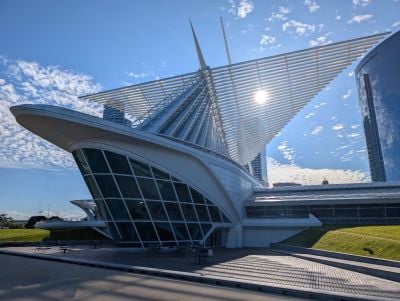
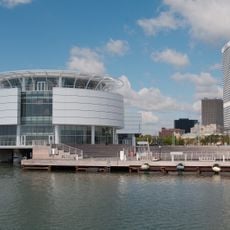
Milwaukee Art Museum is an art museum on the shore of Lake Michigan, housed in a white steel structure that holds around 25,000 works spanning multiple periods. The architecture combines modern lines with open interior spaces where paintings, sculptures, and decorative objects are displayed.
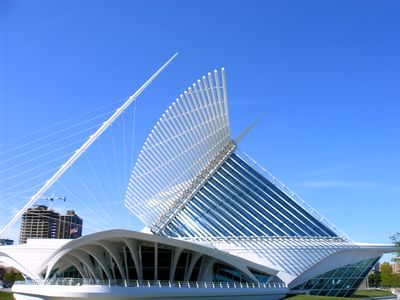
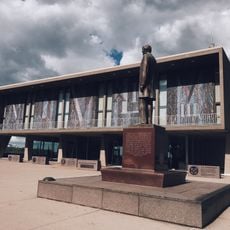
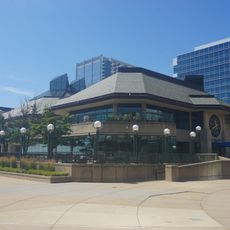
The Milwaukee Art Museum traces its origin to two institutions both established in 1888: the Layton Art Gallery, funded by British-born businessman Frederick Layton with a $100,000 endowment, and the Milwaukee Art Association founded by German panorama artists and local businessmen. The two merged in 1955 as the Milwaukee Art Center and opened in 1957 in Eero Saarinen's Milwaukee County War Memorial. The name Milwaukee Art Museum was adopted in 1980, after David Kahler's brutalist building of 1975. Santiago Calatrava's Quadracci Pavilion followed in 2001, and the East End entrance opened in 2015.
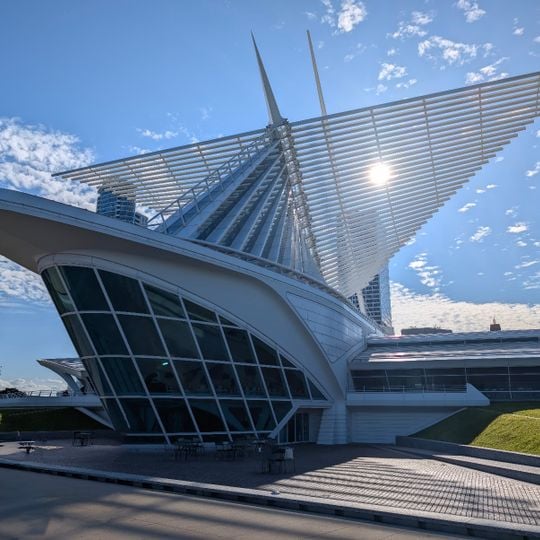
The museum's name comes from the 1957 Milwaukee Art Center, renamed Milwaukee Art Museum in 1980. Its Quadracci Pavilion, sometimes called "the Calatrava", appears in the museum's logo. The 2015 Shields Building added a lake-facing entrance and galleries for light-based media, photography and video.
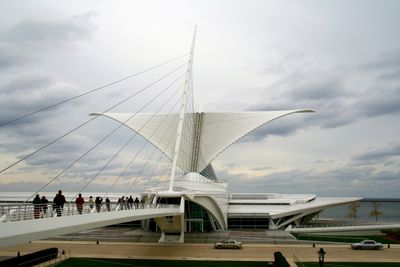
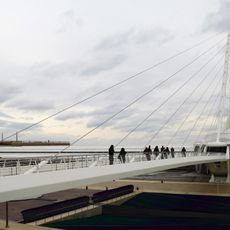
The museum is open Wednesday, Friday, Saturday and Sunday from 10 a.m. to 5 p.m., and Thursday from 10 a.m. to 8 p.m.; it is closed on Mondays and Tuesdays. The 2015 Shields Building added a lake-facing entrance with an atrium, reached by an elevated walkway from the left. The galleries occupy four floors.
A movable sunscreen with metal fins opens and closes like wings above the entrance pavilion, forming a kinetic element visible from the lakefront. On clear days, the fins extend outward to let daylight into the hall below.
The community of curious travelers
AroundUs brings together thousands of curated places, local tips, and hidden gems, enriched daily by 93,345 contributors worldwide.