Piedmont, Physiographic province between Atlantic Plain and Blue Ridge Mountains, United States
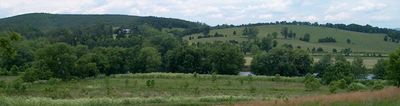
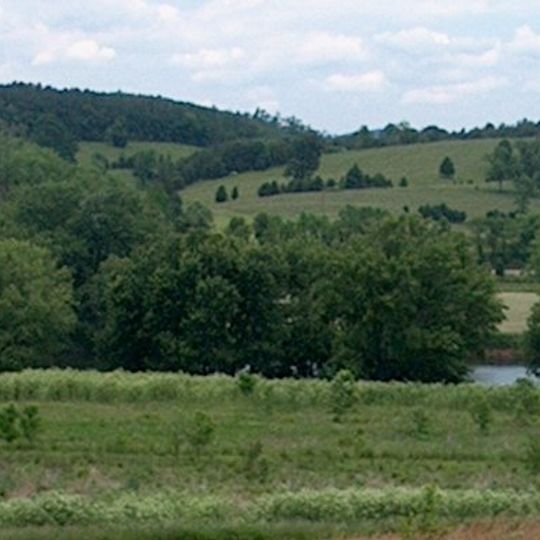
The region lies between the Atlantic Coastal Plain and the Blue Ridge Mountains, stretching roughly 1000 miles (1600 km) from Alabama to New Jersey through the eastern United States. The landscape consists of gently rolling hills, flat plateaus, and metamorphic rock formations shaped by centuries of erosion.
Before European settlement in the 16th century, indigenous communities lived here, farming and using trade routes along the rivers. Starting in the 17th century, European settlers transformed the area into tobacco and cotton plantation country, which dominated the economy until the 19th century.
During the late 19th century, musicians living here developed a fingerpicking style on the guitar that allowed them to play melody and rhythm at the same time. This approach to blues music spread through rural communities, where performers played at farms and small-town gatherings.
The many rivers and lakes offer opportunities for hiking, fishing, and boating, with numerous public parks and natural areas providing marked trails. The terrain is generally accessible, though some hilly sections may be challenging for visitors with limited mobility.
In 1829, gold was discovered near Dahlonega in Georgia, sparking the first gold rush in the United States about two decades before prospectors headed to California. The find transformed the area overnight as thousands arrived to dig in the creeks and hills.
The community of curious travelers
AroundUs brings together thousands of curated places, local tips, and hidden gems, enriched daily by 60,000 contributors worldwide.