Cleveland Stadium, Sports stadium in Cleveland, United States
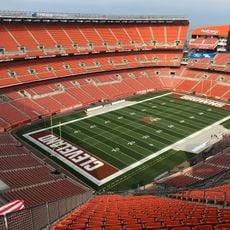
Cleveland Stadium, known as Municipal Stadium, was a multi-purpose venue on the Lake Erie shore designed by Walker and Weeks with Osborn Engineering. It used structural aluminum early on and seated over 78,000 for baseball, about 80,000 for football. Its vast outfield drew complaints from players and fans for cutting home runs.
In November 1928 Cleveland voters approved a US$2.5 million levy for a fireproof lakefront stadium by 112,448 to 76,975, and construction overran that sum by $500,000. Designed by Walker and Weeks with Osborn Engineering, it was dedicated on July 1, 1931. The Indians left after the 1993 season, the Browns after December 1995, and the stadium was demolished in 1996.
The east end bleachers were the original Dawg Pound, where Browns fans barked at opponents. The stadium also hosted the 1935 MLB All-Star Game and three AAFC Championship Games. In 1974 tightrope walker Karl Wallenda crossed the field during a halftime program.
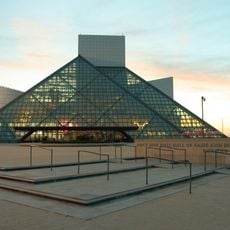
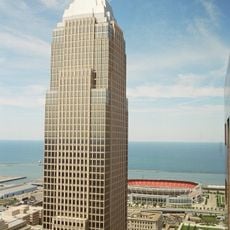
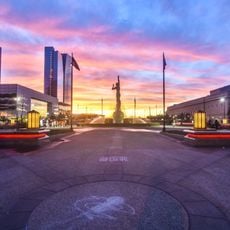
The former venue site stands near the Great Lakes Science Center and Rock and Roll Hall of Fame, with direct connection from downtown. Visitors can explore the area on foot and reach other lakefront attractions from there.
After demolition in 1996, materials from the venue were transported to Lake Erie and repurposed as artificial reefs. These reefs now serve as habitat for fish and other aquatic organisms, supporting ecological balance in the lake.
The community of curious travelers
AroundUs brings together thousands of curated places, local tips, and hidden gems, enriched daily by 94,726 contributors worldwide.