Bolshoye Bogdo, Protected hill in Akhtubinsky District, Russia.
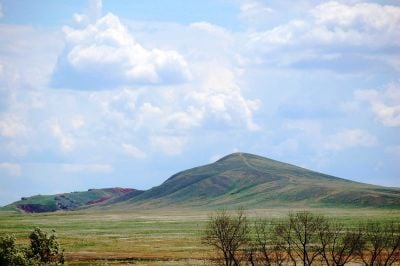
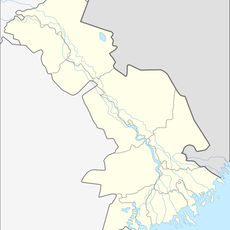
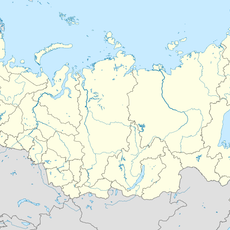
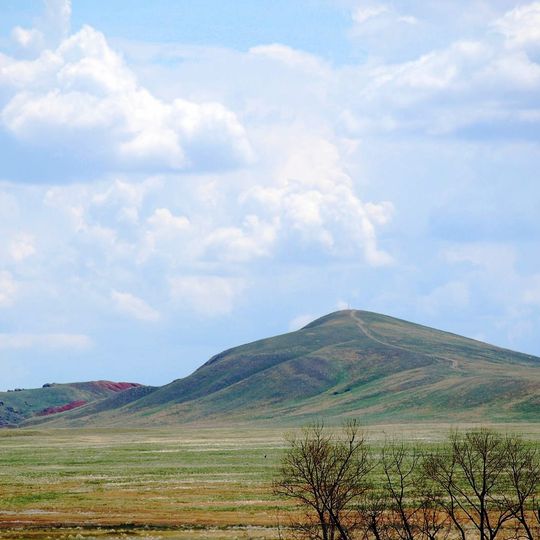
Bolshoye Bogdo is a protected hill in Akhtubinsky District that rises 152 meters above sea level and forms the highest point in Astrakhan Oblast. The hill sits within the Caspian Depression and borders the Bogdinsko-Baskunchaksky Nature Reserve.
Scientific study of the hill began in 1769 with S. G. Gmelin and continued in 1774 with P. S. Pallas, who identified Triassic deposits there. In 1854 I. B. Auerbach mapped its position and brought sulphur and fossil samples to St Petersburg. In 1926 the 18-year-old Ivan Yefremov led an expedition to its Lower Triassic labyrinthodont site, later using the experience in his story "White Horn".
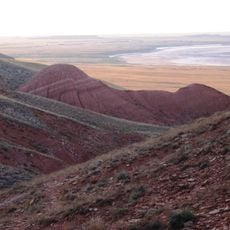
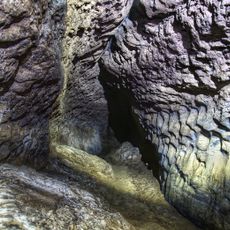
The name Bogdo comes from the Kalmyk and Mongolian word for "great" or "sacred"; "Bolshoye" distinguishes it from Maly Bogdo, a 37.5 m hill 40 km to the north-northeast in Kazakhstan. The southwest slope is called the "Singing Rocks" because air moving between stone pillars and connected caves produces sounds.
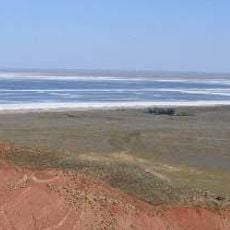
A marked path leads to the summit, where views of Lake Baskunchak and the surrounding landscape open up. Wear sturdy shoes and be ready for some steep sections, as the terrain changes along the way.
The southwestern slope is called the Singing Rocks: wind moving between stone pillars and connected caves produces sounds there. The hill also rises about 1 mm a year, and measurements at a marker on the summit recorded the fastest uplift of the Baskunchak salt dome, 0.1 to 1.1 mm annually.
The community of curious travelers
AroundUs brings together thousands of curated places, local tips, and hidden gems, enriched daily by 94,405 contributors worldwide.