Godlik, Medieval fortress in Chemitokvadzhe, Russia
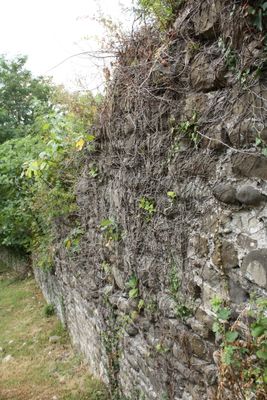
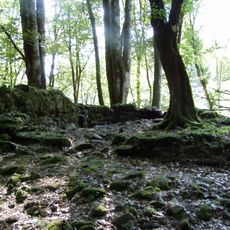
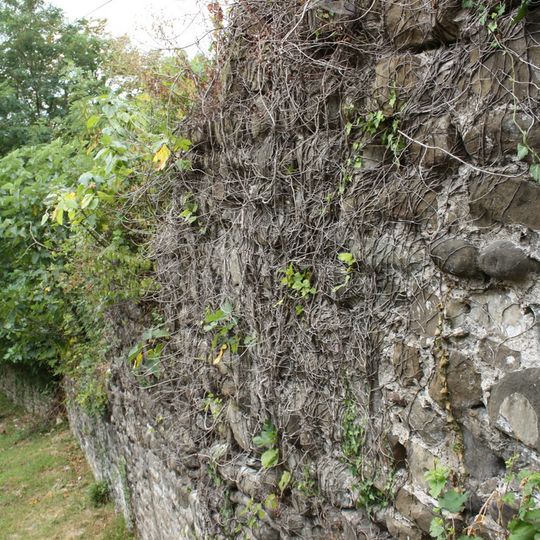
Godlik is a medieval fortress at the mouth of the Godlik River on the Black Sea coast, between the village of Volkonka and the Chemitokvadzhe microdistrict of Sochi's Lazarevsky District. Its walls use Roman-Byzantine double-shell masonry with an inner rubble fill; a later wall built in the Italian "herringbone" technique dates from the Genoese period.
Godlik fortress was used in two periods: Byzantine, dated by Yuri Voronov to the 5th–8th centuries and by B. Ovchinnikova, after 1992–1993 clearing, to the 7th–10th centuries, and Genoese in the 14th–15th centuries. In 1864 the Godlik valley was the site of a battle between Russian troops and Ubykhs.
The fortress is also called the Chemitokvadzhe fortress after the Chemitokvadzhe microdistrict where it stands, on Kourskaya Street. Excavations on the grounds produced fragments of pottery, including vessels classed as "Khazar" ware. The site holds federal cultural heritage status in Russia.
The site is accessible via marked trails from Chemitokvadzhe village during daylight hours, and visitors should wear comfortable walking shoes. The terrain is uneven and climbs in places, so take your time exploring the different areas at your own pace.
The walls show two building traditions: Roman-Byzantine double-shell masonry with rubble core, and a later Genoese section laid in the Italian "herringbone" pattern. Fragments of pottery, including so-called Khazar ware, were found inside the fortress.
The community of curious travelers
AroundUs brings together thousands of curated places, local tips, and hidden gems, enriched daily by 94,382 contributors worldwide.