Tsoy-Peda, Medieval necropolis in Itum-Kalinsky District, Russia
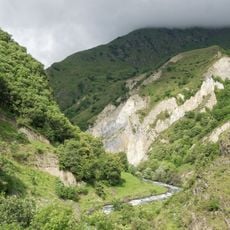
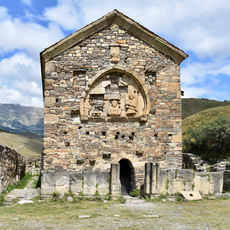
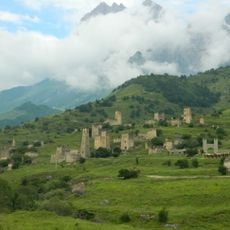
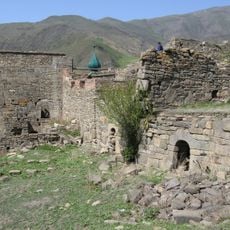
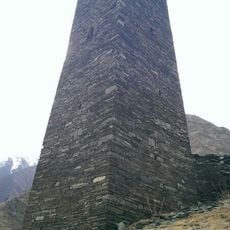
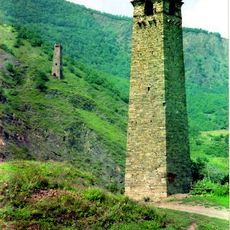
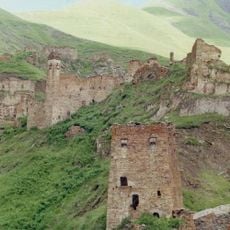
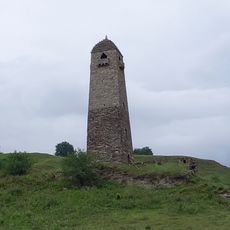
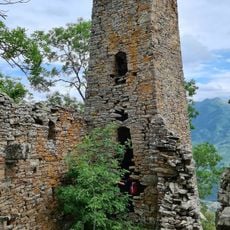
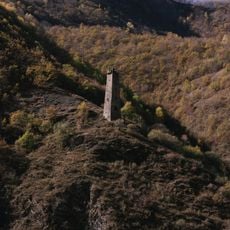
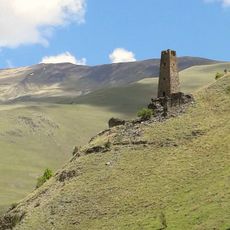
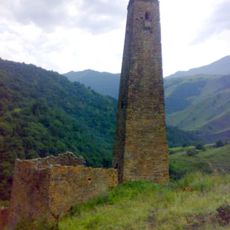
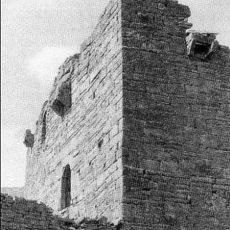
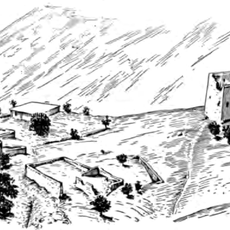
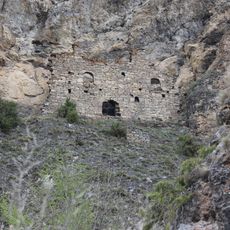
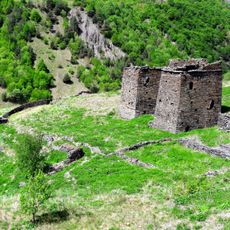
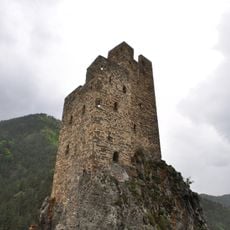
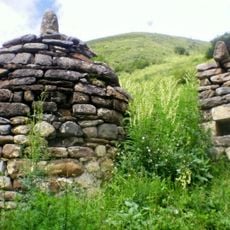
Tsoy-Peda is a necropolis on a cliff-bound promontory where the Meshi-Khi joins the Chanty-Argun, 40 km southwest of Itum-Kali. Its 72 recorded structures include 52 above-ground slate crypts with gabled slate roofs, 13 underground crypts, one semi-underground crypt, two battle towers, a defensive wall with a gate, a temple and two pillar-shaped shrines bearing solar signs and petroglyphs. The crypts date from the 14th to the 18th centuries.
Tsoy-Peda's stone crypts are dated to the 14th–18th centuries; the older 13th–15th century dating in earlier descriptions is not supported. Some Chechen researchers hold that the Mekhk-Khel, the supreme representative assembly, sometimes met at this settlement, though the sources do not specify the period. In 2018 epigraphic inscriptions were recorded here, and in 2024 the monument was entered on Russia's tentative list for UNESCO World Heritage status.
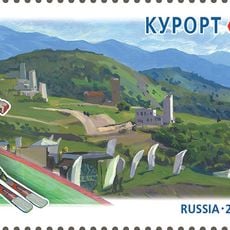
The Chechen name ЦӀайн-пхьеда means "settlement of the deity" or "city of the dead". Two pillar-shaped sanctuaries at the entrance bear solar signs, crosses and spirals carved on their walls. Some Chechen researchers hold that the supreme council, the Mekhk-khel, sometimes met at Tsoy-Peda.
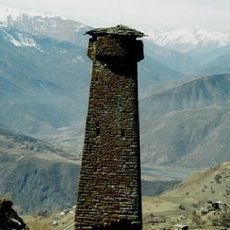
The site lies in a border zone 40 km southwest of Itum-Kali; Russian citizens may enter with identity documents, while foreign nationals need a border-zone pass issued by the FSB Border Directorate in Grozny. The route runs by marshrutka from Grozny to the district centre, then on foot. The watchtower was restored in 2019.
Among the 72 recorded monuments at Tsoy-Peda are two pillar-shaped shrines whose walls carry solar signs and petroglyphs — crosses, spirals and other motifs. Epigraphic inscriptions were also found at the site in 2018, alongside finds at Keshtera, Koshtara and Eld-Pkha.
The community of curious travelers
AroundUs brings together thousands of curated places, local tips, and hidden gems, enriched daily by 94,035 contributors worldwide.