Surb Praktchi church, Armenian church in Bahate, Russia.
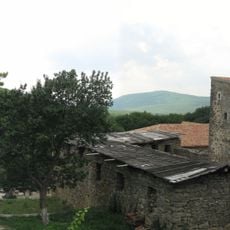
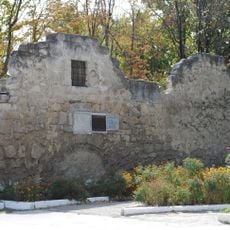
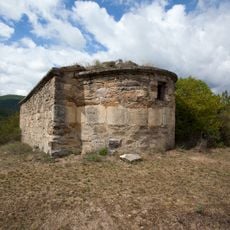
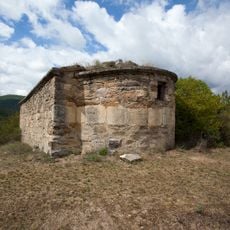
Surb Praktchi church is a church building featuring traditional Armenian architectural elements and stone carvings located in the Bahate settlement. The structure has a solid, simple design with characteristic features of Armenian Apostolic architecture.
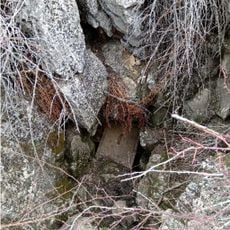
The monastery was first mentioned by Minas Medici, who described a stone cross brought from the city of Ani and consecrated by the apostle Thaddeus. After Armenians were resettled to the Azov region in 1778, the relic was kept in Rostov-on-Don and later moved to Saint Petersburg. The monastery was closed in 1927 and subsequently destroyed; only the Church of the Holy Saviour survived. Archaeological work in 1979 examined the Kuchuk-Karasu valley, including the Church of Elijah, the cells, the farm buildings and a 15th–17th-century fountain of which only the foundation remains.
The church is also called Ilyinskaya, after Saint Elijah, though it belonged to the Saint Saviour (Surb Amenaprkich) monastery; the surviving building is the Church of the Holy Saviour and its name is often confused with the monastery's. A stone cross brought from the city of Ani and said to have been consecrated by the apostle Thaddeus was kept here as a relic; after Armenians moved to the Azov region in 1778 it was taken to Rostov-on-Don and later to Saint Petersburg.
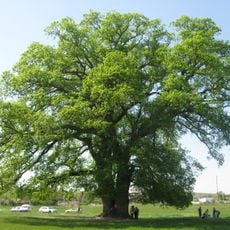
The church stands on a hill near chestnut trees, 1.6 km southeast of the bridge over the Kuchuk-Karasu and south of the village entrance from the Simferopol-Feodosia highway. A 50-metre protection zone surrounds the monument. The site is reached on foot from Bahate; the surviving structure is the Church of the Holy Saviour, with the monastery's cells and wall once lying north of it.
The name Surb Praktchi is a misidentification: the surviving building is the Church of the Holy Saviour, the only structure left of the Saint Elias (Surb-Khach) monastery, and its name is often confused with the monastery's. A stone found three versts away bore a cross and the date 1031 of the Armenian era, i.e. 1582.
The community of curious travelers
AroundUs brings together thousands of curated places, local tips, and hidden gems, enriched daily by 94,165 contributors worldwide.