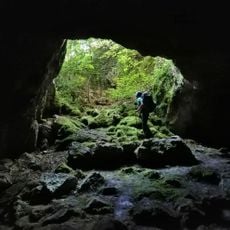
Гора Ак-Кая, Natural monument in Bilohirsk District, Crimea.
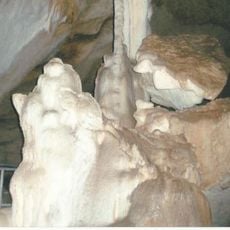
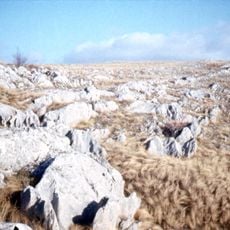
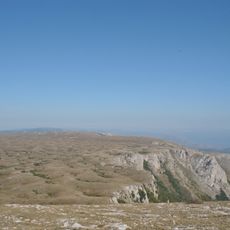
Ak-Kaya is a limestone mountain that rises 325 meters above the Biyuk-Karasu River valley, distinguished by its vertical white rock face visible from considerable distances. The 30 hectare site features numerous trails winding through weathered stone pillars and natural cave formations.
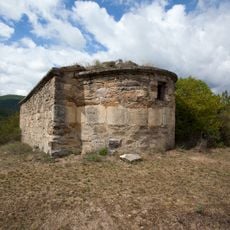
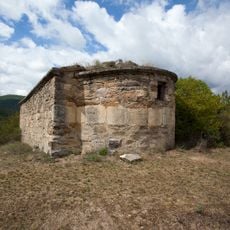
The mountain hosted ancient human settlements at its northern base, with excavations from 1960 to 1970 uncovering flint tools and bones of extinct animals. These findings demonstrated that people occupied this location in prehistoric times.
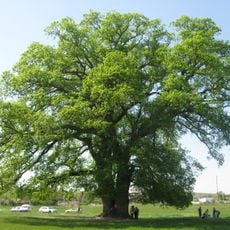
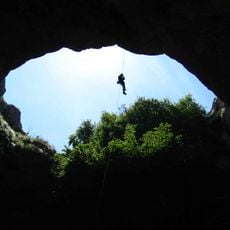
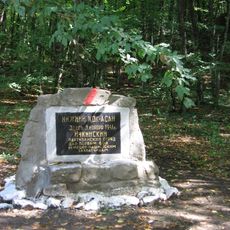
The name Ak-Kaya is Crimean Tatar for "white rock". In 1945/46 Sarmatian petroglyphs from the 3rd century BCE onward were found on the walls of the Great Ak-Kaya grotto, now covered by visitors' graffiti. Legend says criminals were thrown from the cliff in the Crimean Khanate, and that Suvorov negotiated with the khans under the "Four Brothers" oak before the 1777 battle.
The cliff wall faces south and west, so the rock is in shade in the morning and lit in the afternoon. The climb from the valley floor to the plateau gains about 100 m. The nearest village, Bilohirska, lies across the Biyuk-Karasu; Bilohirsk is 5 km away. The Altyn-Teshik grotto opens 52 m above the base.
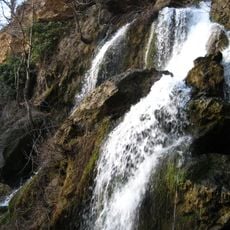
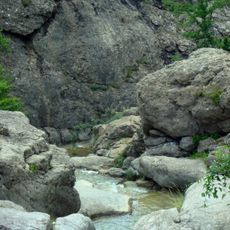
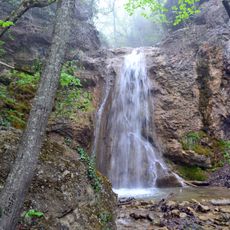
The rock fractures and erosion patterns visible on the mountain reveal how water has slowly shaped the limestone over thousands of years. These ongoing geological processes remain visible today and tell the story of the landscape's transformation.
The community of curious travelers
AroundUs brings together thousands of curated places, local tips, and hidden gems, enriched daily by 93,375 contributors worldwide.