Tash han karavansaray, Belogorsk, Medieval caravanserai ruins in Belogorsk, Crimea.
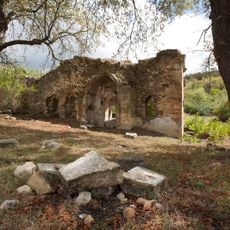
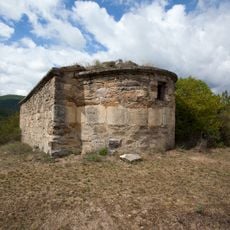
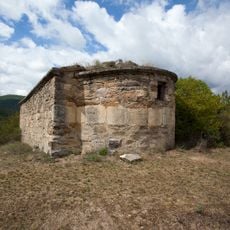
Tash han karavansaray, known as the Great or Upper Tash-Han ("Stone Court"), is a 15th-century Crimean Tatar caravanserai in Belogorsk, now in ruins: only the gateway and part of the adjoining wall survive. The rectangular building had a massive western entrance arch with a rectangular window above it, two-storey walls of irregular stone up to 150 cm thick, and loopholes on the upper floor. Inside were a large courtyard, 120 rooms on two levels, a well, storerooms and a mosque without a minaret.
The Great Tash Han was built in the 15th century on the orders of, and possibly with funds from, a grand vizier of the Shirin clan. It served as a fortress-like caravanserai where goods such as bread, wine, weapons, carpets and livestock products were traded, and a slave market stood to its east. By the late 16th century this trade had made Karasubazar (Belogorsk) the most populous town on the Crimean peninsula. A smaller Lower Tash Han was added nearby in the 17th century.
The site reflects the mixing of cultures that came together along trade routes crossing Crimea. Visitors walking through the ruins can observe how different building traditions blended in the architecture that served merchants from many regions.
Visiting requires careful movement through partially collapsed structures and unstable stonework throughout the site. Sturdy footwear and slow pace help ensure safe exploration of the different areas.
Stone blocks scattered throughout the complex still bear marks and patterns left by medieval stonemasons. These details reveal the specific building techniques that craftsmen employed in this region.
The community of curious travelers
AroundUs brings together thousands of curated places, local tips, and hidden gems, enriched daily by 94,430 contributors worldwide.