See the monuments around you in AROpen chests in the app
Around Us is built for your phone — point your camera at the streets and discover the monuments and places around you in augmented reality.Around Us is built for your phone — chests unlock when you walk, explore and capture nearby places.
Shikoku rewards those who wander beyond Japan's crowded centers, offering everything from whirlpools and mountain temples to art islands and hot springs.
Shikoku rewards travelers who venture beyond Japan's main tourist routes. The island holds natural wonders, sacred temples, and cultural landmarks that draw visitors into different worlds. You can walk through mountain valleys that feel frozen in time, visit temples that sit high on cliffsides, explore contemporary art museums built into the earth, and wander through towns where traditional crafts continue as they have for centuries. Along the coasts, you will find dramatic rock formations, sandy beaches with mirror-like reflections at low tide, and sandbar crossings that appear and disappear with the tides. The island's character comes from this mix: ancient pilgrimage routes where people have walked for over a thousand years stand alongside modern art installations, historic castles overlook lively markets filled with local food, and hot spring resorts offer respite after days of hiking or cycling through island chains. This guide takes you through Shikoku's most worth-seeing places, showing what makes the island feel different from the rest of Japan and why many travelers find themselves returning again and again.
Shikoku rewards those who wander beyond Japan's crowded centers, offering everything from whirlpools and mountain temples to art islands and hot springs.
Shikoku rewards travelers who venture beyond Japan's main tourist routes. The island holds natural wonders, sacred temples, and cultural landmarks that draw visitors into different worlds. You can walk through mountain valleys that feel frozen in time, visit temples that sit high on cliffsides, explore contemporary art museums built into the earth, and wander through towns where traditional crafts continue as they have for centuries. Along the coasts, you will find dramatic rock formations, sandy beaches with mirror-like reflections at low tide, and sandbar crossings that appear and disappear with the tides. The island's character comes from this mix: ancient pilgrimage routes where people have walked for over a thousand years stand alongside modern art installations, historic castles overlook lively markets filled with local food, and hot spring resorts offer respite after days of hiking or cycling through island chains. This guide takes you through Shikoku's most worth-seeing places, showing what makes the island feel different from the rest of Japan and why many travelers find themselves returning again and again.
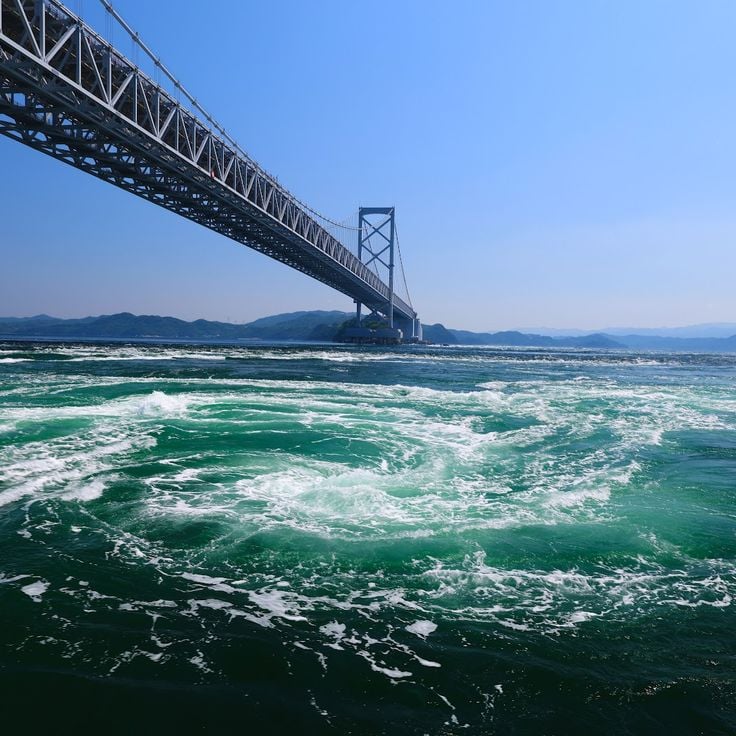
The Naruto Whirlpools form in the strait between Shikoku and Awaji Island, where opposing tidal currents collide and pull the water into spinning circles. You can watch them from a glass-floored walkway beneath the Naruto Bridge or from a small boat that takes you right into the current. The whirlpools grow and shrink with the tides, so the timing of your visit shapes what you see.
The Iya Valley sits deep in the mountains of Tokushima, making it one of the most remote corners of Shikoku. Steep cliffs drop down to narrow rivers, and small villages cling to the slopes as if time has passed them by. Walking through this valley, travelers find a landscape that has changed little over the centuries, where local life still follows old rhythms far from the busy parts of Japan.
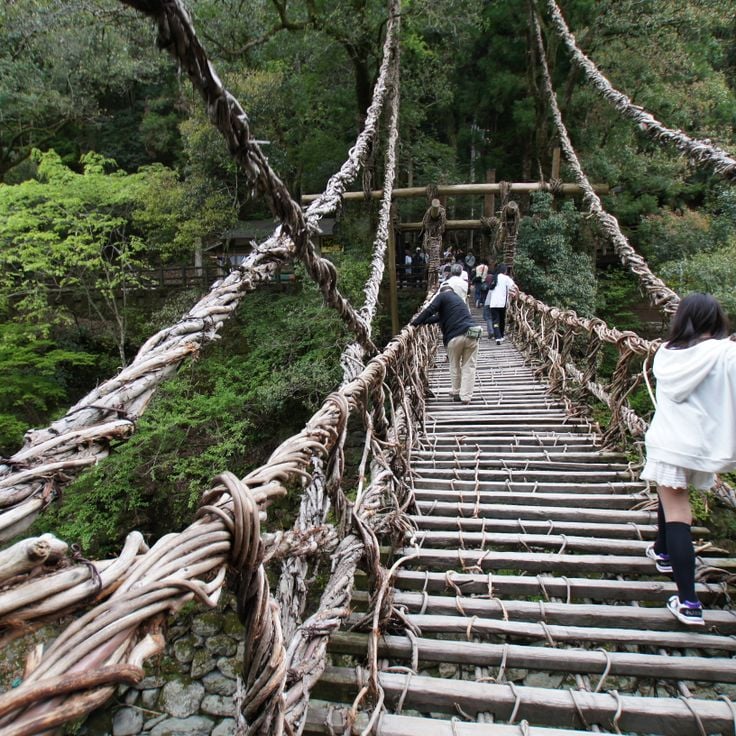
The Iya Kazurabashi is a bridge woven from mountain vines, hanging over a deep gorge in one of Shikoku's most remote valleys. Walking across it, you feel it sway and shift underfoot while the river rushes far below. This bridge is one of the oldest of its kind in Japan, and crossing it gives a real sense of how people once moved through these steep mountain landscapes.
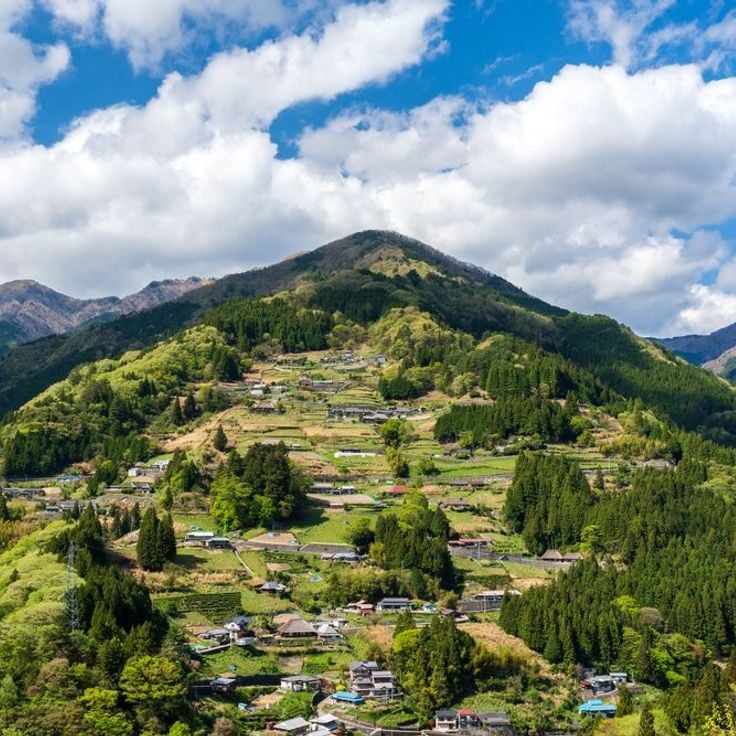
Ochiai Historic Village sits deep in the Iya Valley and is one of the oldest surviving mountain villages on Shikoku. Old timber and stone houses are scattered across the steep hillsides, surrounded by forest and narrow paths. Walking through this village, you get a clear sense of how rural mountain life looked and felt for centuries in Japan.
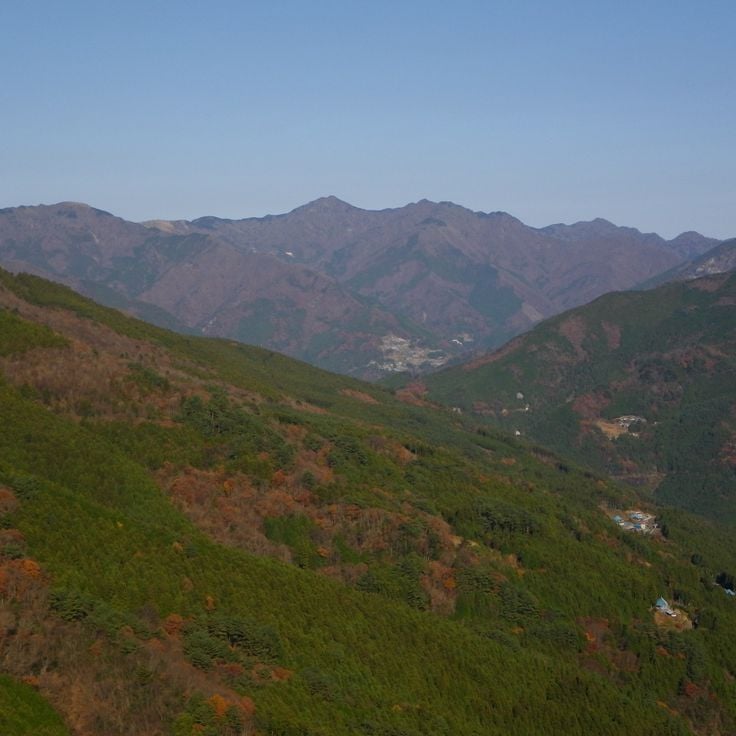
Mount Tsurugi is one of the tallest peaks on Shikoku, drawing hikers who want to experience the island's mountain landscape up close. Trails wind through forest and open terrain before reaching the summit, where views stretch across the surrounding ranges. It is a natural landmark on any journey through Tokushima.
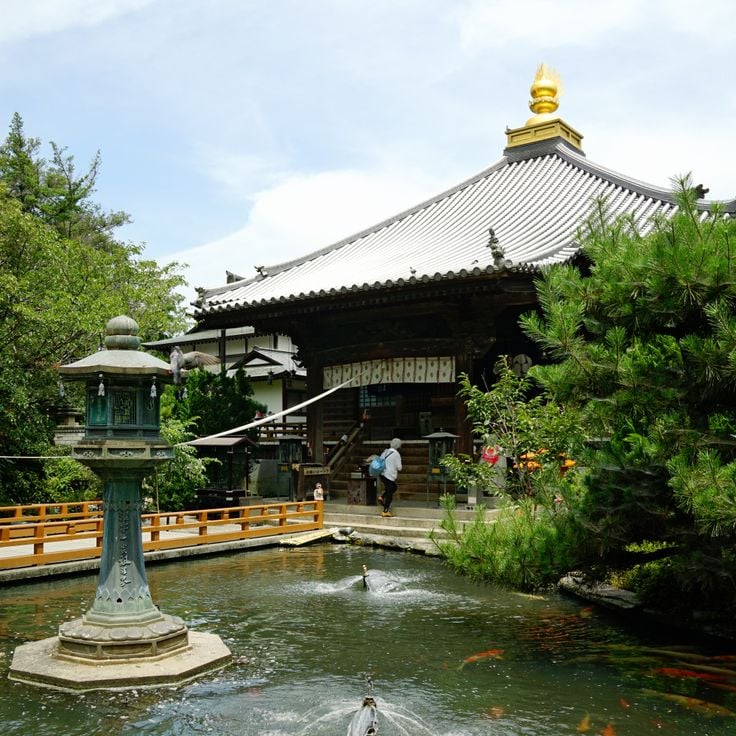
Ryozen-ji Temple marks the starting point of Shikoku's 88-temple pilgrimage, a route that people have walked for over a thousand years. Located near Tokushima, this temple is where pilgrims traditionally put on white robes and pick up their walking staffs before setting out. Watching visitors prepare here gives a sense of how deeply this journey is rooted in everyday spiritual life across Japan.
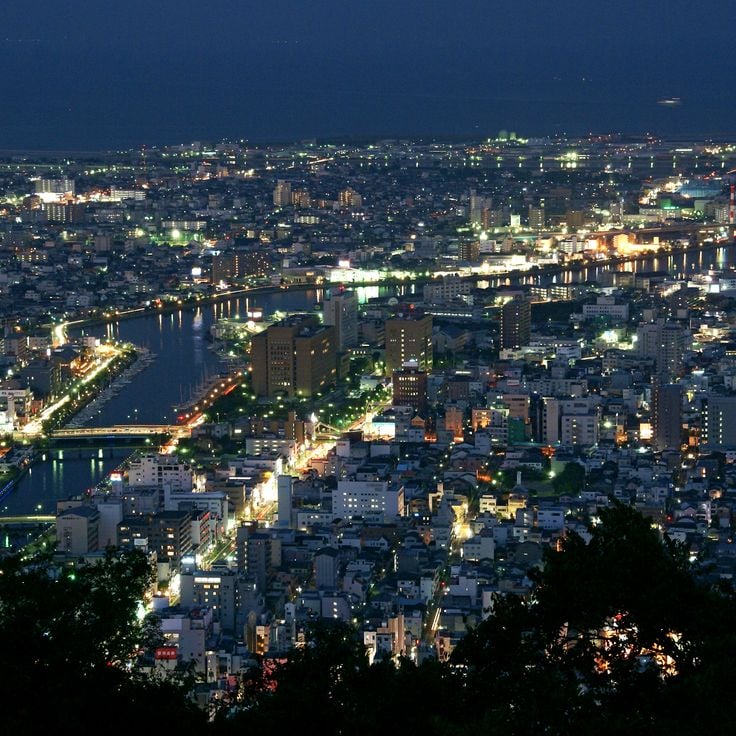
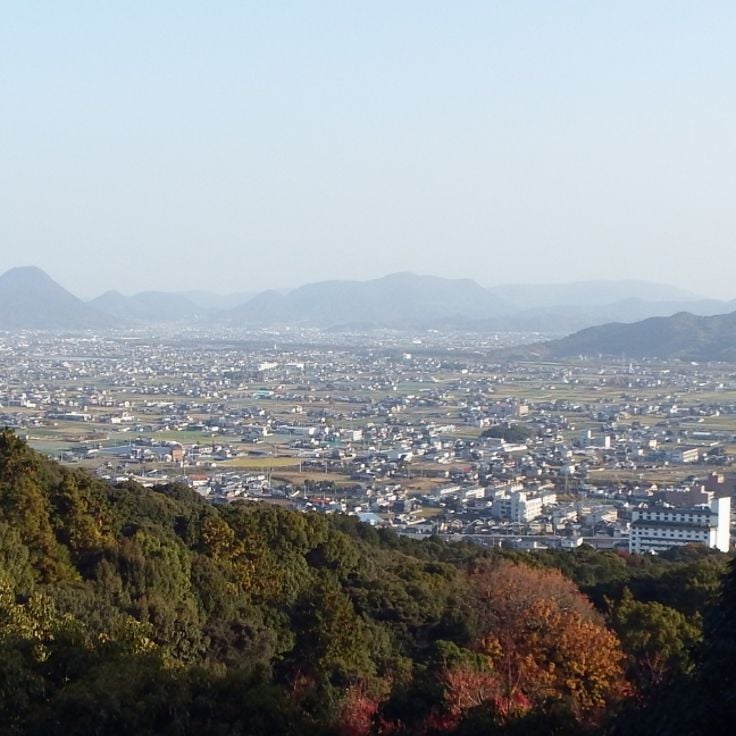
Mount Bizan rises directly above Tokushima and can be reached by cable car. From the top, you look out over the city and the land around it, making it a good place to get a sense of how Shikoku's coast and valleys come together.
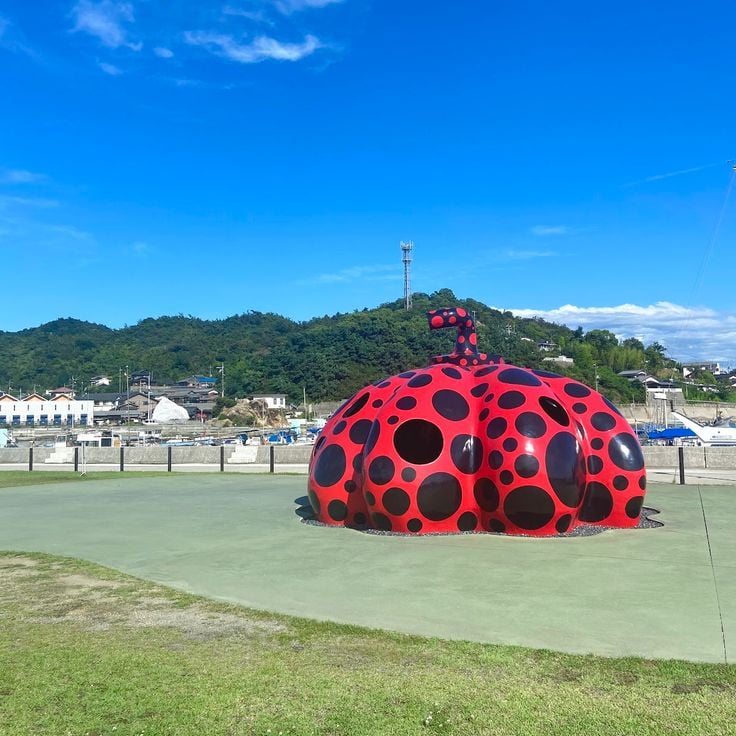
Naoshima is a small island in the Seto Inland Sea where contemporary art has taken root in the landscape itself. Museums are built into hillsides, sculptures sit on beaches, and old village houses have been transformed into gallery spaces. Walking through Naoshima feels like moving between art and everyday island life.
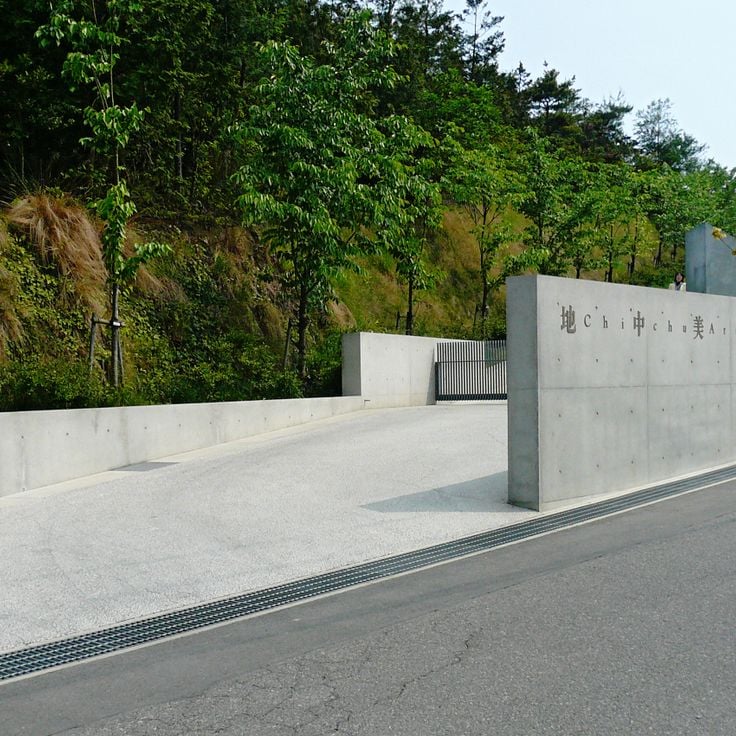
The Chichu Art Museum sits mostly underground on the island of Naoshima. Architect Tadao Ando designed it so that natural light enters through openings in the roof and fills the rooms below. Works by Claude Monet, James Turrell, and Walter De Maria are built directly into the architecture. Walking through its concrete corridors, each installation feels like a world of its own, which makes this museum one of the reasons Shikoku draws travelers who want something beyond ordinary sightseeing.
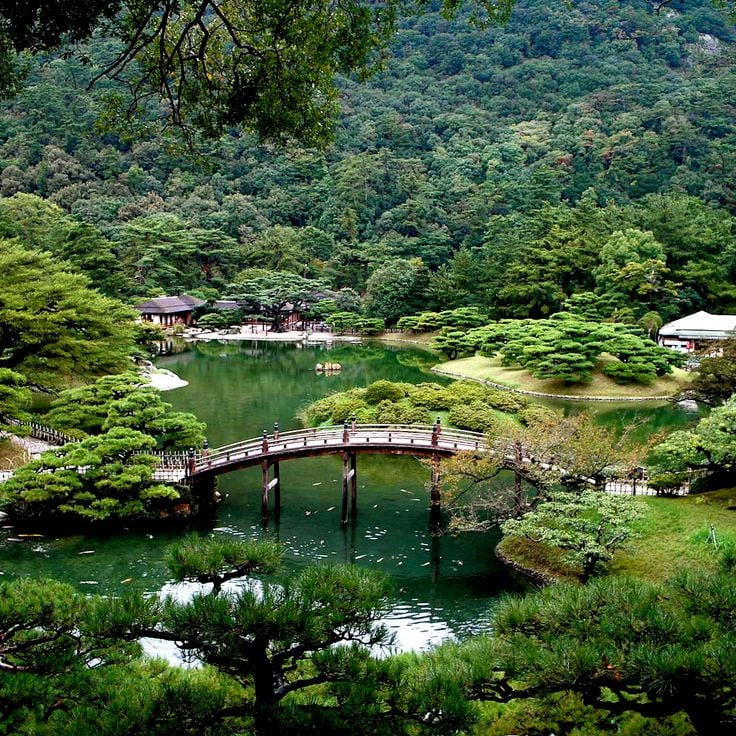
Ritsurin Garden in Takamatsu is one of Japan's most celebrated landscape gardens. Ponds reflect carefully shaped pines, curved bridges cross the water, and Mount Shiun rises in the background. People walk here at a slow pace, and the seasons change the look of the garden from month to month.
Kotohira-gu Shrine sits on the slopes of Mount Zozu in Kagawa and is one of the most visited Shinto shrines in Japan. To reach the main hall, you climb a long series of stone steps. The path itself is part of the experience: small shops and teahouses line the way, and the view over the surrounding area opens up as you go higher. Pilgrims have come here for centuries, and today the shrine remains a place that many Japanese people hope to visit at least once in their lives.
Shodoshima sits in the Seto Inland Sea, off the coast of Kagawa Prefecture. The island is known for its olive groves, which have grown here for over a century, and for coastal landscapes that shift with the light and season. Local products like olive oil, soy sauce, and somen noodles are woven into everyday life here, giving the island a character shaped by what the land and sea produce.
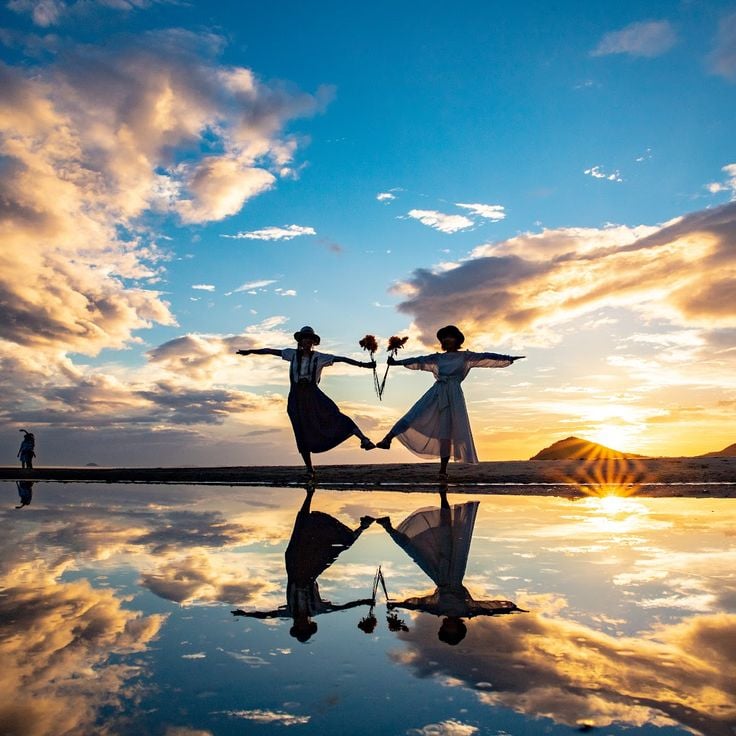
Angel Road is a sandbar off the coast of Shodoshima that appears only at low tide. When the water pulls back, it links a handful of small islands, and visitors can walk across it. The water on either side mirrors the sky, making this stretch a favorite spot for photographs. This natural crossing fits well into a journey through Shikoku, where the landscape often surprises in quiet, simple ways.
Kankakei Gorge sits on the island of Shodoshima in Kagawa and is one of the most visited natural spots on Shikoku. In autumn, the trees turn deep red and orange, drawing visitors from across Japan. Rocky peaks rise over narrow valleys, and a ropeway offers views over the island and the sea.
Teshima is an island in the Seto Inland Sea where rice paddies, fishing villages, and contemporary art sit side by side. Walking through it, you find artworks built into the hillsides and shoreline, while the pace of daily life on the island remains slow and unhurried.
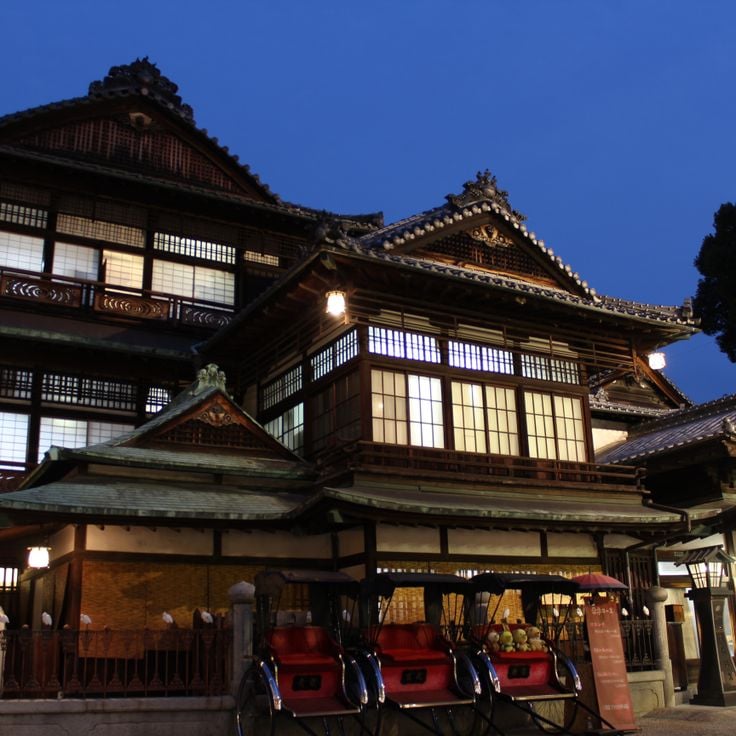
Dogo Onsen in Matsuyama is one of the oldest hot spring resorts in Japan. The main bathhouse is a wooden building that has welcomed visitors for centuries. The hot springs themselves have a history stretching back well over a thousand years. The streets around the bathhouse are lined with shops and small restaurants, making it a good place to slow down after exploring Shikoku.
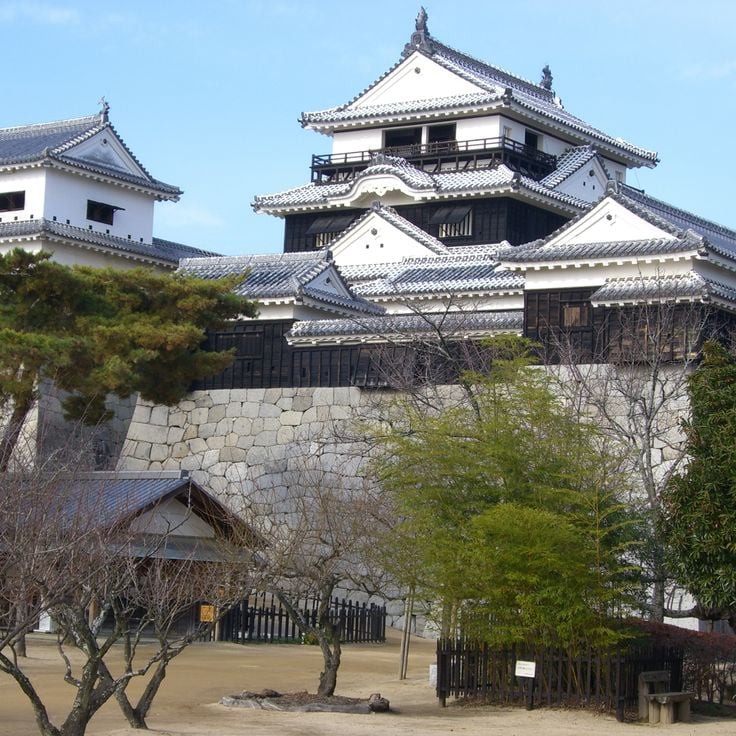
Matsuyama Castle sits on a hill at the center of the city and looks out over the rooftops toward the sea. It is one of the very few castles in Japan that still has its original tower, never torn down or rebuilt after the feudal era. A gondola carries visitors up the hill, but those who walk follow shaded paths through pine trees. Inside, the wooden floors creak underfoot, the staircases are steep, and the views from the top give a clear sense of how the castle once watched over the whole town below.
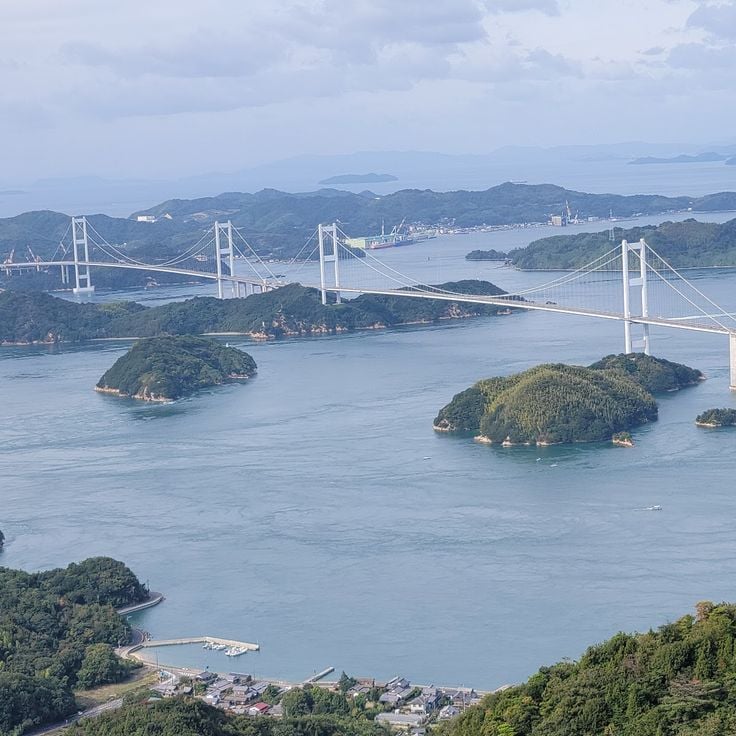
The Kirosan Observatory sits on a hill in Ehime and looks out over the islands and bridges of the Shimanami Kaido. From this point, you can see how the bridges connect one island to the next, with the sea spreading out between them. It is one of those places where the scale of the coastline becomes clear, and visitors often pause here for a long time before moving on.
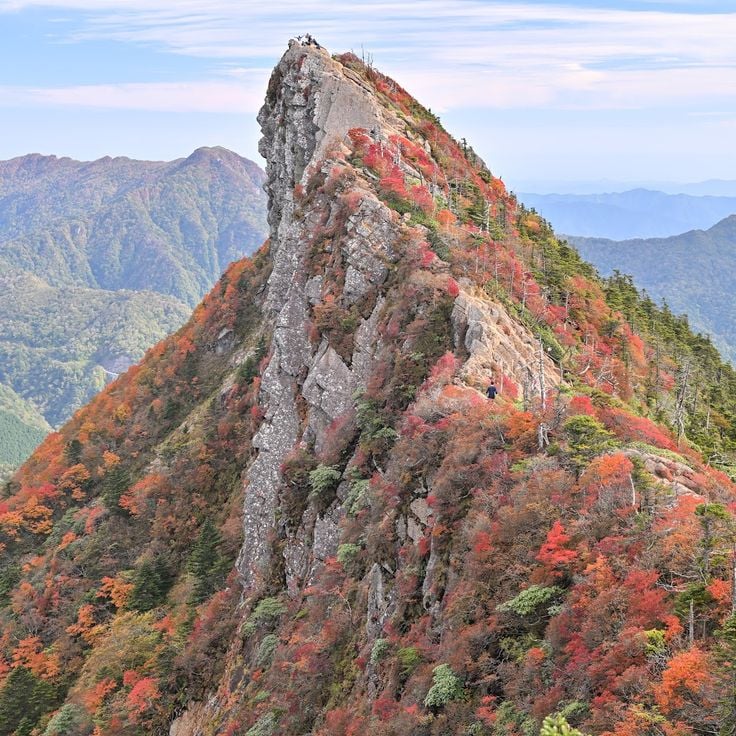
Mount Ishizuchi is the highest peak in western Japan and a sacred site that pilgrims and hikers have visited for centuries. The ascent involves steep trails where iron chains are fixed into the rock face to help climbers reach the top. From the summit, you look out over the mountain ranges of Shikoku.
Uchiko is a town in Ehime where old merchant houses still line the main street and traditional crafts like wax-making continue much as they have for centuries. Walking through it feels like stepping into a quieter chapter of Japanese history.
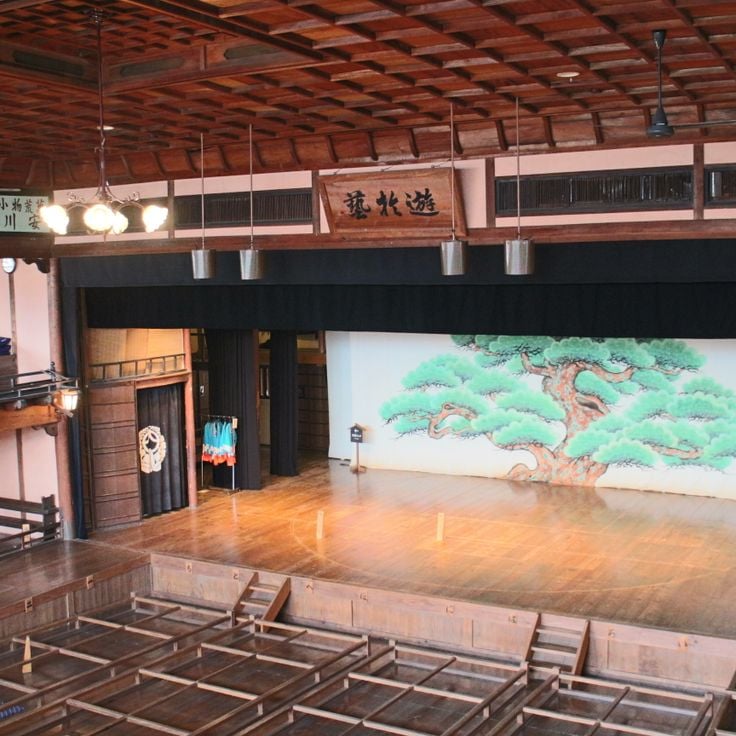
The Uchiko-za Theater is a wooden theater built in the early 1900s in the town of Uchiko, Ehime. It still hosts performances today, and walking through it gives a real sense of what cultural life looked like in a small Japanese town a century ago.
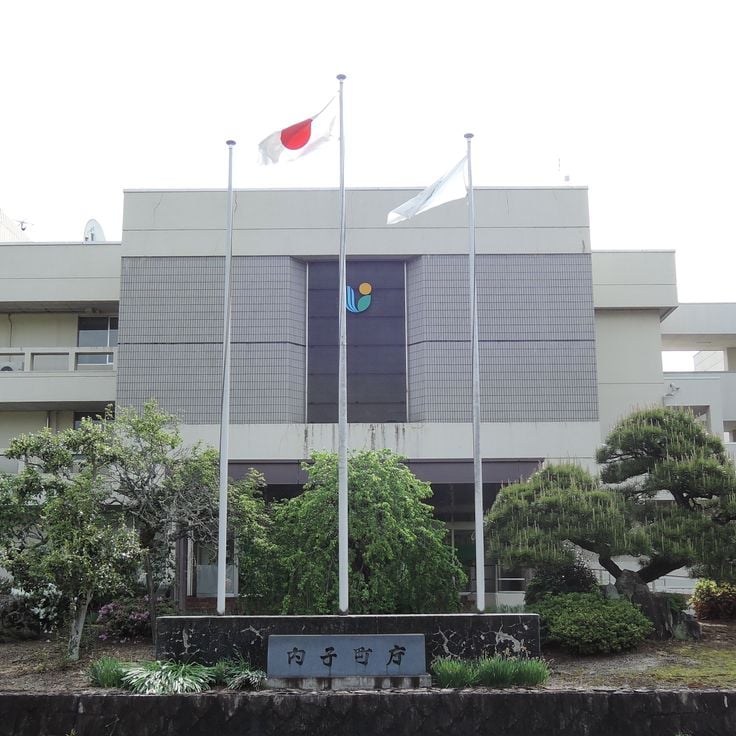
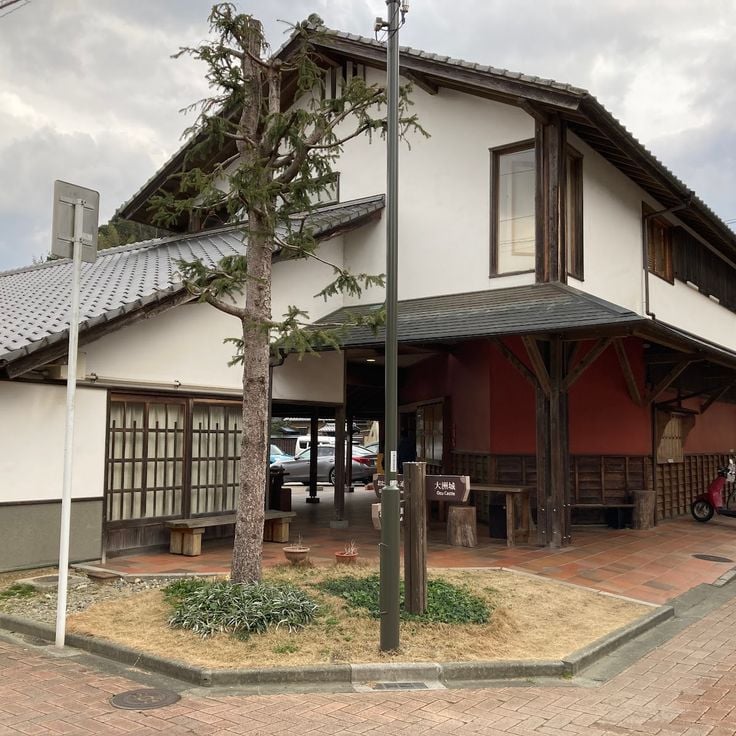
Ozu is a former castle town in Ehime Prefecture, crossed by the Hiji River. The town has a castle, historic streets, and traditional wooden houses that give a sense of how life looked here centuries ago. Walking through Ozu feels unhurried, with the river running alongside old buildings and locals going about their daily routines.
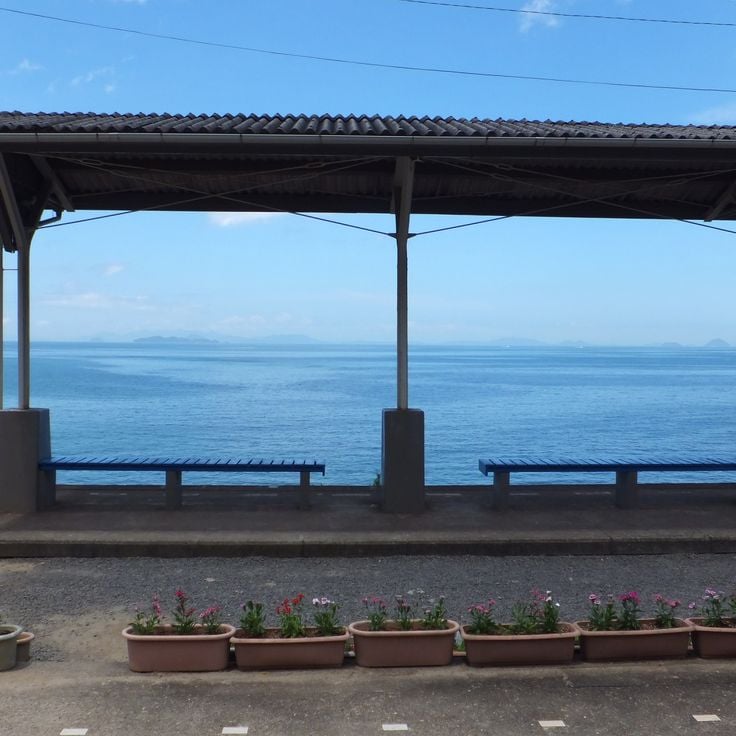
Shimonada Station sits on the coast of Ehime, where the platform ends just a few steps from the sea. Trains pass infrequently, so visitors often linger on the platform, listening to the waves. This small station has become one of Shikoku's most photographed spots, drawing people who come not to travel, but simply to stand at the edge of the water.
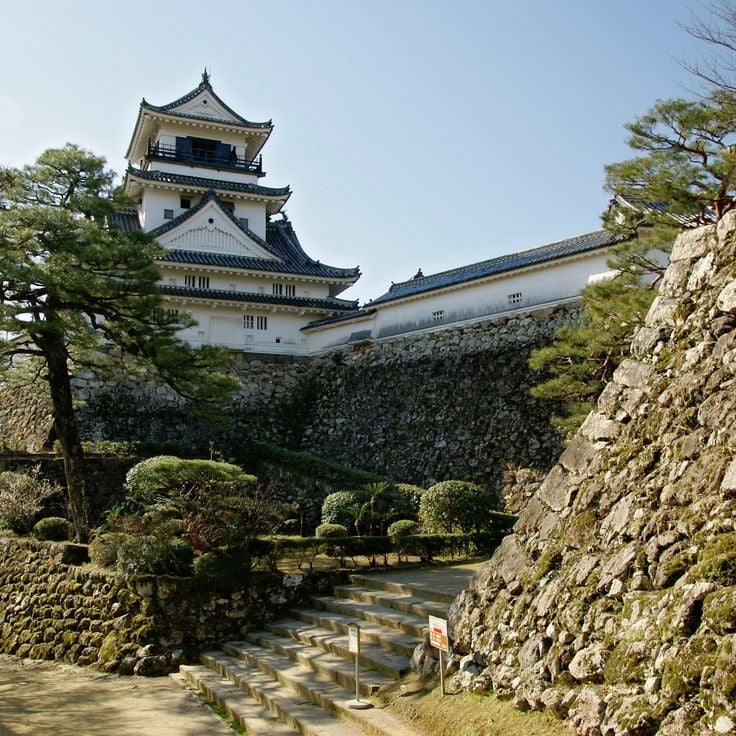
Kochi Castle is one of only twelve castles in Japan that still has its original tower standing. It sits on a hill in the middle of the city, visible from many streets below. Walking up to it, you pass stone walls and old gates that have stood for centuries. At the base of the hill, a lively Sunday market fills the road with local food and crafts. The castle gives a sense of how Kochi looked and felt long before the modern city grew around it.
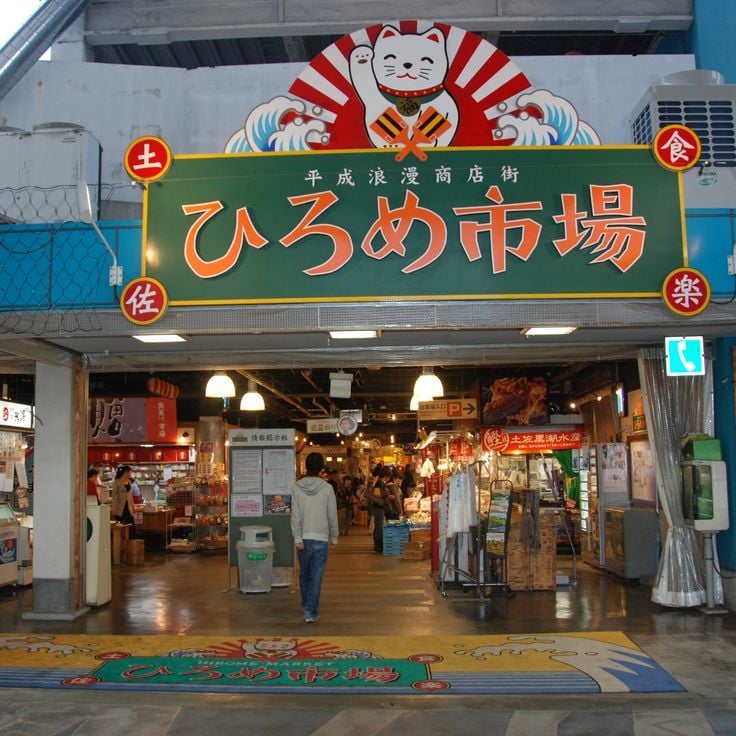
Hirome Market in Kochi is a place where locals and visitors sit side by side to eat and drink. The market is known for katsuo no tataki, a lightly seared bonito fish that is one of the great local dishes of the region. Stalls line the space, tables fill up fast, and the energy feels more like a gathering than a shopping trip.
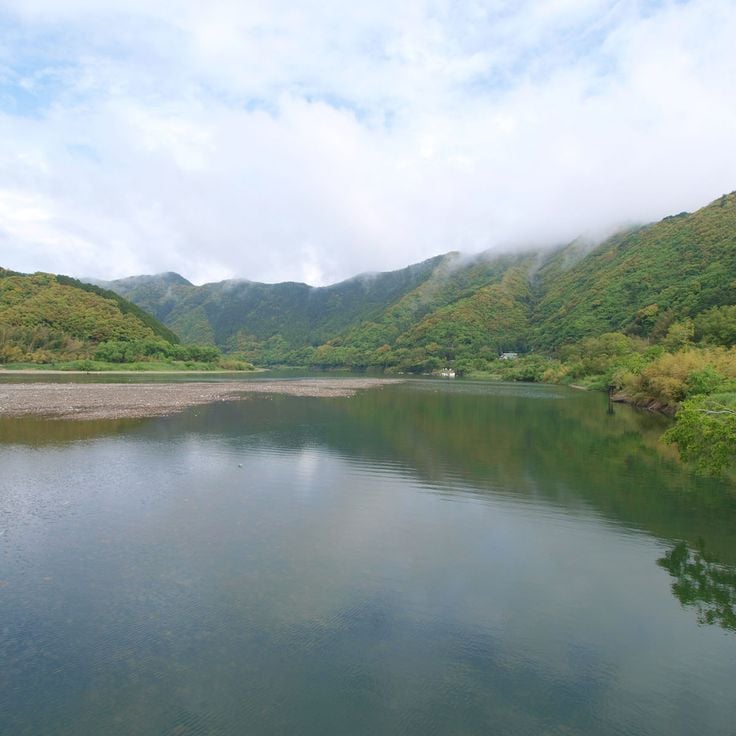
The Shimanto River in Kochi is considered one of the last wild rivers in Japan. Its water runs clear, the banks are lined with rice fields and small villages, and low wooden bridges are built to go underwater during floods rather than break. Walking or cycling along its banks gives a strong sense of how rural Shikoku can feel, far from the noise of big cities.
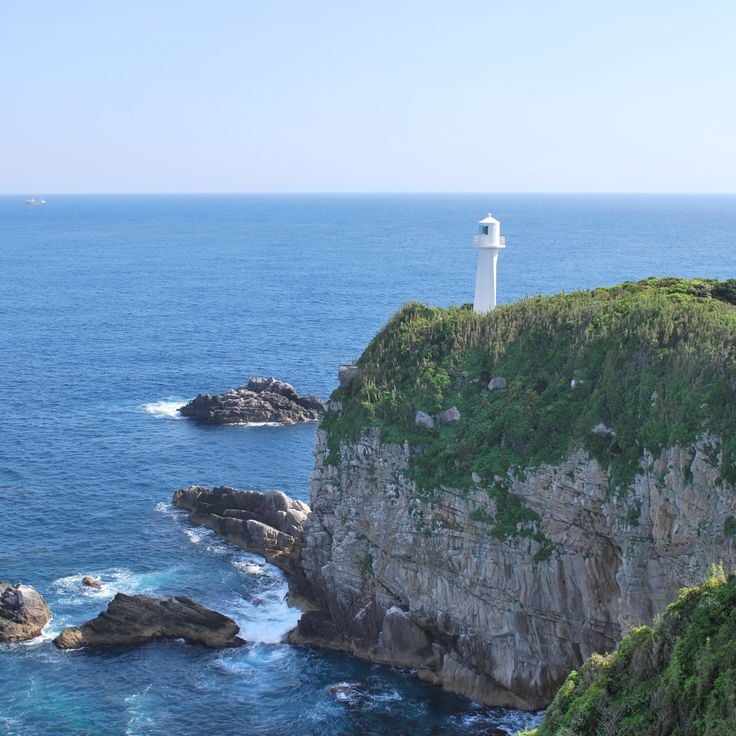
Cape Ashizuri sits at the southern tip of Shikoku, where the land ends in rocky cliffs above the Pacific Ocean. The view from the cape stretches far out to sea, and the wind off the water is constant. This cape is a stopping point on Shikoku's ancient pilgrimage route, and many people come here with a sense of having reached the edge of something.
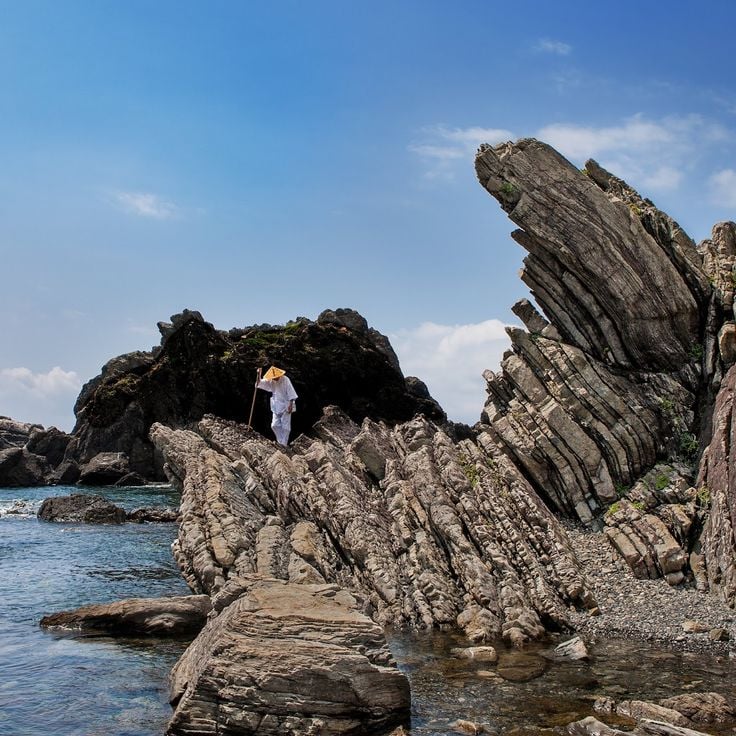
The Muroto UNESCO Global Geopark sits along the southeastern tip of the Muroto Peninsula in Kochi Prefecture. Here, the open Pacific meets a coastline shaped by millions of years of tectonic activity. Layered rock formations rise from the water, and cliffs face the waves directly. Walking along this shore gives a clear sense of the geological forces that have shaped Shikoku from below.
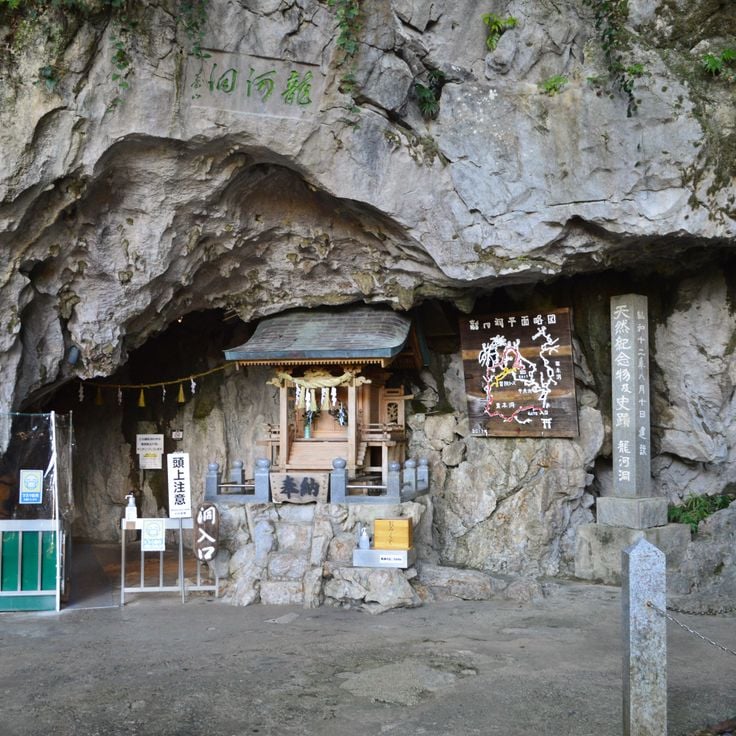
Ryugado Cave, located in Kochi Prefecture, is one of Shikoku's most striking natural sites. Walking through its limestone tunnels and chambers offers a sharp contrast to the island's temples and pilgrimage routes, taking you deep underground into a world shaped by water and rock over millions of years.
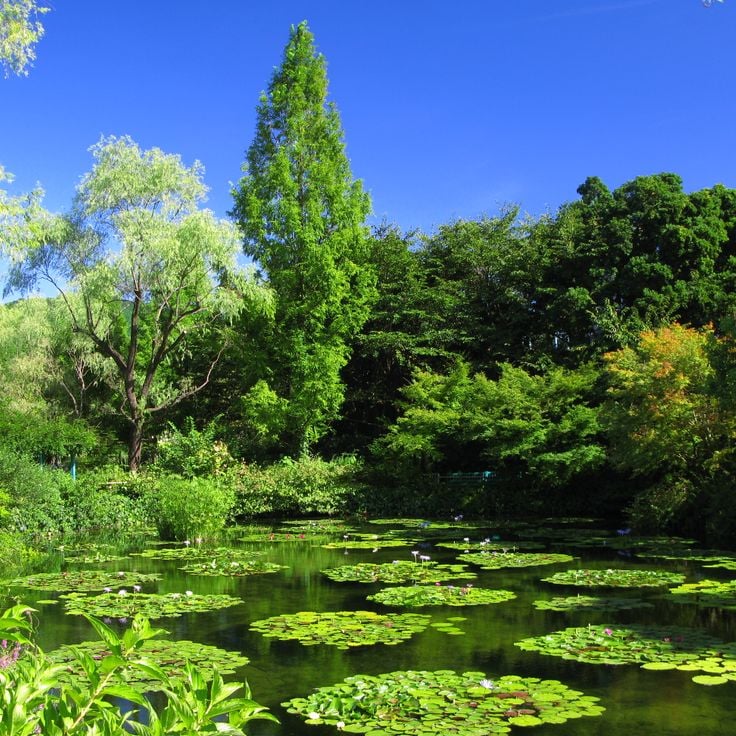
The Monet Garden Marmottan in Kochi is a Japanese garden inspired by the life and gardens of Claude Monet at Giverny. Water, bridges, and flowers echo the scenes that the painter returned to throughout his work.
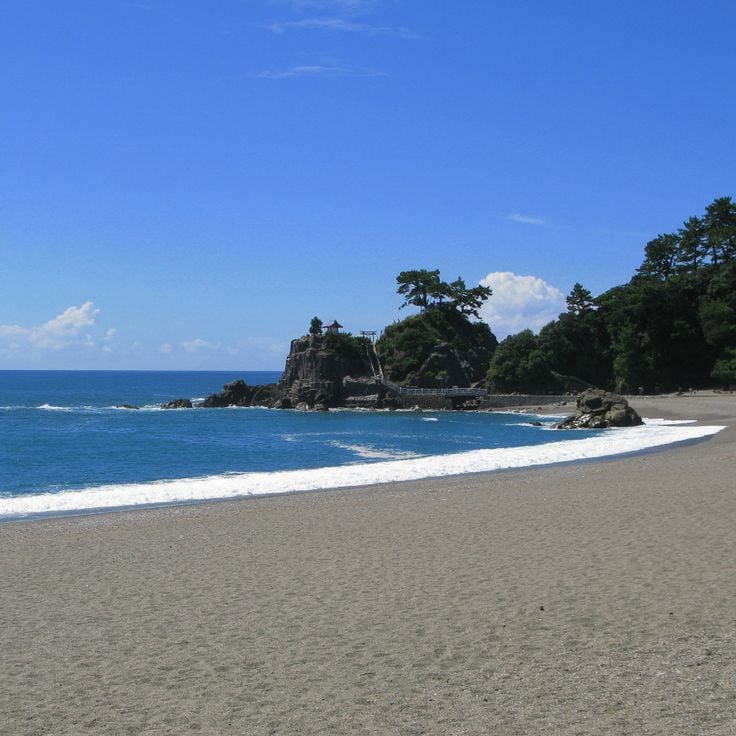
Katsurahama Beach is a curved stretch of sand facing the Pacific Ocean. It is closely tied to Sakamoto Ryoma, one of the most celebrated figures in Japanese history, and a statue of him stands watch over the shore. The sea here tends to be rough, so swimming is not common, but the view across the open water is open and wide. Many visitors come to walk the beach and take in the connection to this historical figure.
Chichibugahama Beach sits along the coast of Kagawa and is known for the wide reflections that form on the flat sand at low tide. The water pulls back and leaves a thin layer that mirrors the sky so clearly that the beach draws comparisons to the Salar de Uyuni salt flats in Bolivia. This effect makes it one of the most talked-about coastal spots on Shikoku.
The Naruto Whirlpools form in the strait between Shikoku and Awaji Island, where opposing tidal currents collide and pull the water into spinning circles. You can watch them from a glass-floored walkway beneath the Naruto Bridge or from a small boat that takes you right into the current. The whirlpools grow and shrink with the tides, so the timing of your visit shapes what you see.
The Iya Valley sits deep in the mountains of Tokushima, making it one of the most remote corners of Shikoku. Steep cliffs drop down to narrow rivers, and small villages cling to the slopes as if time has passed them by. Walking through this valley, travelers find a landscape that has changed little over the centuries, where local life still follows old rhythms far from the busy parts of Japan.
The Iya Kazurabashi is a bridge woven from mountain vines, hanging over a deep gorge in one of Shikoku's most remote valleys. Walking across it, you feel it sway and shift underfoot while the river rushes far below. This bridge is one of the oldest of its kind in Japan, and crossing it gives a real sense of how people once moved through these steep mountain landscapes.
Ochiai Historic Village sits deep in the Iya Valley and is one of the oldest surviving mountain villages on Shikoku. Old timber and stone houses are scattered across the steep hillsides, surrounded by forest and narrow paths. Walking through this village, you get a clear sense of how rural mountain life looked and felt for centuries in Japan.
Mount Tsurugi is one of the tallest peaks on Shikoku, drawing hikers who want to experience the island's mountain landscape up close. Trails wind through forest and open terrain before reaching the summit, where views stretch across the surrounding ranges. It is a natural landmark on any journey through Tokushima.
Ryozen-ji Temple marks the starting point of Shikoku's 88-temple pilgrimage, a route that people have walked for over a thousand years. Located near Tokushima, this temple is where pilgrims traditionally put on white robes and pick up their walking staffs before setting out. Watching visitors prepare here gives a sense of how deeply this journey is rooted in everyday spiritual life across Japan.
Mount Bizan rises directly above Tokushima and can be reached by cable car. From the top, you look out over the city and the land around it, making it a good place to get a sense of how Shikoku's coast and valleys come together.
Naoshima is a small island in the Seto Inland Sea where contemporary art has taken root in the landscape itself. Museums are built into hillsides, sculptures sit on beaches, and old village houses have been transformed into gallery spaces. Walking through Naoshima feels like moving between art and everyday island life.
The Chichu Art Museum sits mostly underground on the island of Naoshima. Architect Tadao Ando designed it so that natural light enters through openings in the roof and fills the rooms below. Works by Claude Monet, James Turrell, and Walter De Maria are built directly into the architecture. Walking through its concrete corridors, each installation feels like a world of its own, which makes this museum one of the reasons Shikoku draws travelers who want something beyond ordinary sightseeing.
Ritsurin Garden in Takamatsu is one of Japan's most celebrated landscape gardens. Ponds reflect carefully shaped pines, curved bridges cross the water, and Mount Shiun rises in the background. People walk here at a slow pace, and the seasons change the look of the garden from month to month.
Kotohira-gu Shrine sits on the slopes of Mount Zozu in Kagawa and is one of the most visited Shinto shrines in Japan. To reach the main hall, you climb a long series of stone steps. The path itself is part of the experience: small shops and teahouses line the way, and the view over the surrounding area opens up as you go higher. Pilgrims have come here for centuries, and today the shrine remains a place that many Japanese people hope to visit at least once in their lives.
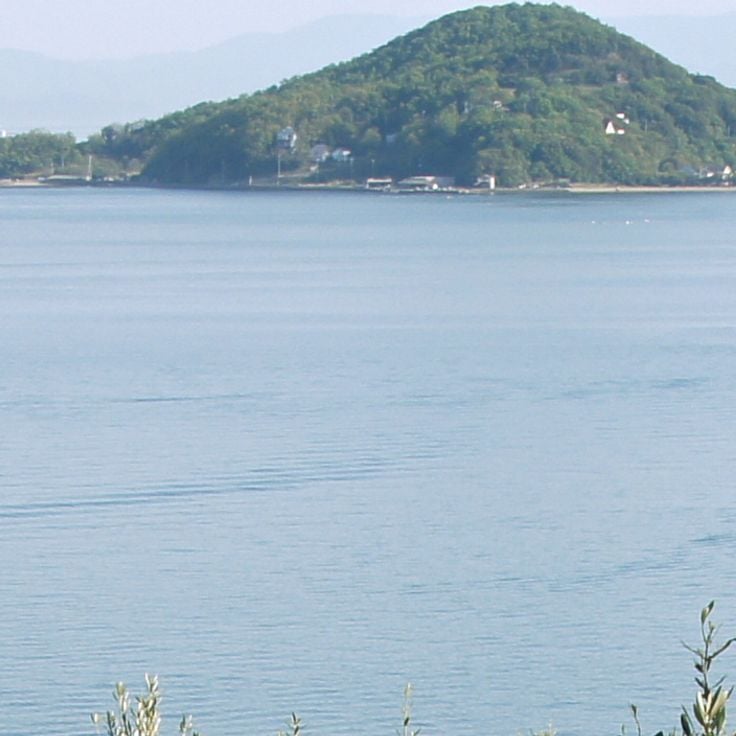
Shodoshima sits in the Seto Inland Sea, off the coast of Kagawa Prefecture. The island is known for its olive groves, which have grown here for over a century, and for coastal landscapes that shift with the light and season. Local products like olive oil, soy sauce, and somen noodles are woven into everyday life here, giving the island a character shaped by what the land and sea produce.
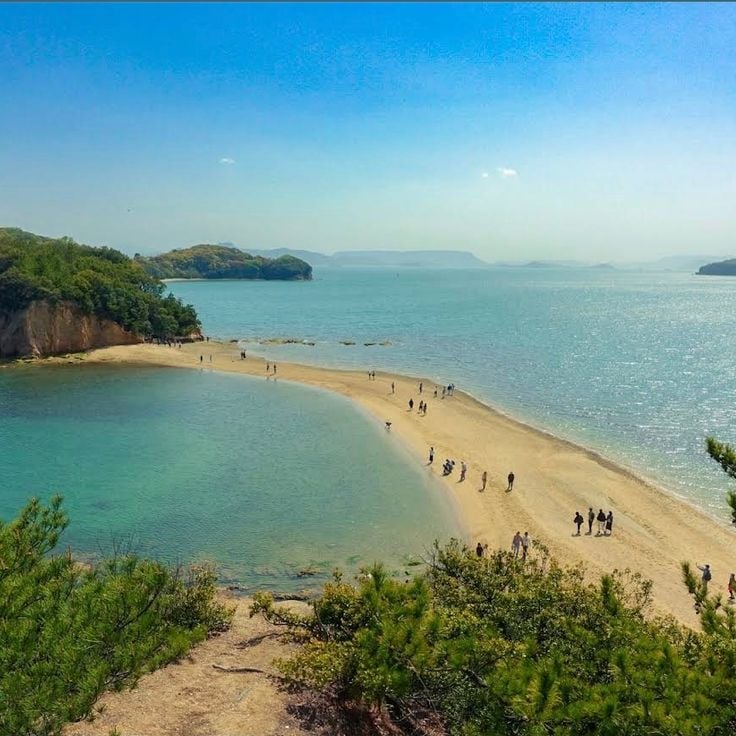
Angel Road is a sandbar off the coast of Shodoshima that appears only at low tide. When the water pulls back, it links a handful of small islands, and visitors can walk across it. The water on either side mirrors the sky, making this stretch a favorite spot for photographs. This natural crossing fits well into a journey through Shikoku, where the landscape often surprises in quiet, simple ways.
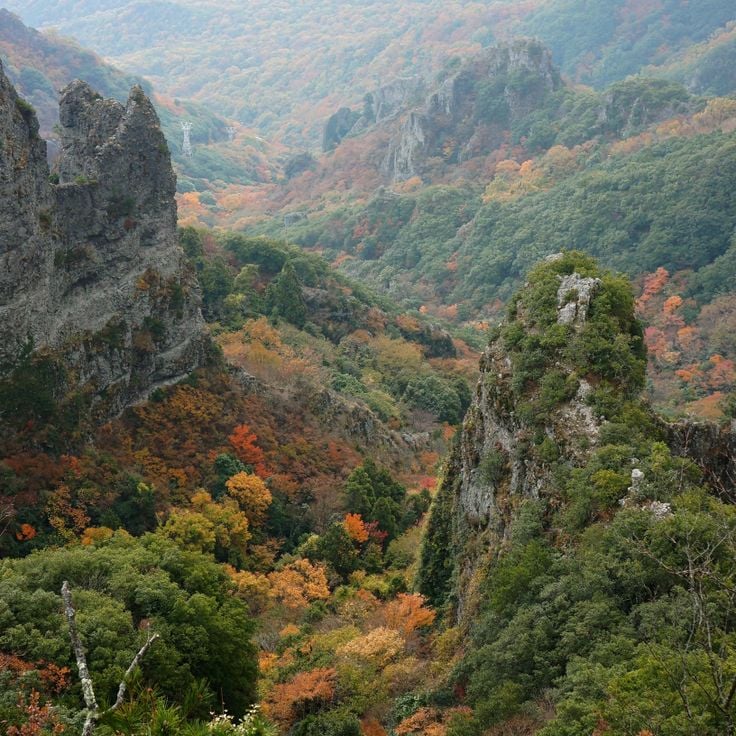
Kankakei Gorge sits on the island of Shodoshima in Kagawa and is one of the most visited natural spots on Shikoku. In autumn, the trees turn deep red and orange, drawing visitors from across Japan. Rocky peaks rise over narrow valleys, and a ropeway offers views over the island and the sea.
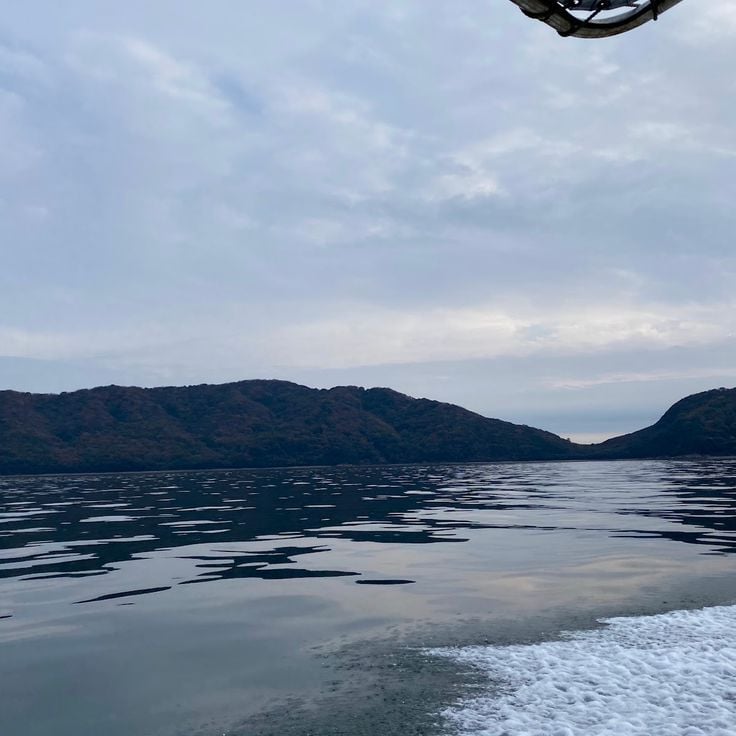
Teshima is an island in the Seto Inland Sea where rice paddies, fishing villages, and contemporary art sit side by side. Walking through it, you find artworks built into the hillsides and shoreline, while the pace of daily life on the island remains slow and unhurried.
Dogo Onsen in Matsuyama is one of the oldest hot spring resorts in Japan. The main bathhouse is a wooden building that has welcomed visitors for centuries. The hot springs themselves have a history stretching back well over a thousand years. The streets around the bathhouse are lined with shops and small restaurants, making it a good place to slow down after exploring Shikoku.
Matsuyama Castle sits on a hill at the center of the city and looks out over the rooftops toward the sea. It is one of the very few castles in Japan that still has its original tower, never torn down or rebuilt after the feudal era. A gondola carries visitors up the hill, but those who walk follow shaded paths through pine trees. Inside, the wooden floors creak underfoot, the staircases are steep, and the views from the top give a clear sense of how the castle once watched over the whole town below.
The Kirosan Observatory sits on a hill in Ehime and looks out over the islands and bridges of the Shimanami Kaido. From this point, you can see how the bridges connect one island to the next, with the sea spreading out between them. It is one of those places where the scale of the coastline becomes clear, and visitors often pause here for a long time before moving on.
Mount Ishizuchi is the highest peak in western Japan and a sacred site that pilgrims and hikers have visited for centuries. The ascent involves steep trails where iron chains are fixed into the rock face to help climbers reach the top. From the summit, you look out over the mountain ranges of Shikoku.
Uchiko is a town in Ehime where old merchant houses still line the main street and traditional crafts like wax-making continue much as they have for centuries. Walking through it feels like stepping into a quieter chapter of Japanese history.
The Uchiko-za Theater is a wooden theater built in the early 1900s in the town of Uchiko, Ehime. It still hosts performances today, and walking through it gives a real sense of what cultural life looked like in a small Japanese town a century ago.
Ozu is a former castle town in Ehime Prefecture, crossed by the Hiji River. The town has a castle, historic streets, and traditional wooden houses that give a sense of how life looked here centuries ago. Walking through Ozu feels unhurried, with the river running alongside old buildings and locals going about their daily routines.
Shimonada Station sits on the coast of Ehime, where the platform ends just a few steps from the sea. Trains pass infrequently, so visitors often linger on the platform, listening to the waves. This small station has become one of Shikoku's most photographed spots, drawing people who come not to travel, but simply to stand at the edge of the water.
Kochi Castle is one of only twelve castles in Japan that still has its original tower standing. It sits on a hill in the middle of the city, visible from many streets below. Walking up to it, you pass stone walls and old gates that have stood for centuries. At the base of the hill, a lively Sunday market fills the road with local food and crafts. The castle gives a sense of how Kochi looked and felt long before the modern city grew around it.
Hirome Market in Kochi is a place where locals and visitors sit side by side to eat and drink. The market is known for katsuo no tataki, a lightly seared bonito fish that is one of the great local dishes of the region. Stalls line the space, tables fill up fast, and the energy feels more like a gathering than a shopping trip.
The Shimanto River in Kochi is considered one of the last wild rivers in Japan. Its water runs clear, the banks are lined with rice fields and small villages, and low wooden bridges are built to go underwater during floods rather than break. Walking or cycling along its banks gives a strong sense of how rural Shikoku can feel, far from the noise of big cities.
Cape Ashizuri sits at the southern tip of Shikoku, where the land ends in rocky cliffs above the Pacific Ocean. The view from the cape stretches far out to sea, and the wind off the water is constant. This cape is a stopping point on Shikoku's ancient pilgrimage route, and many people come here with a sense of having reached the edge of something.
The Muroto UNESCO Global Geopark sits along the southeastern tip of the Muroto Peninsula in Kochi Prefecture. Here, the open Pacific meets a coastline shaped by millions of years of tectonic activity. Layered rock formations rise from the water, and cliffs face the waves directly. Walking along this shore gives a clear sense of the geological forces that have shaped Shikoku from below.
Ryugado Cave, located in Kochi Prefecture, is one of Shikoku's most striking natural sites. Walking through its limestone tunnels and chambers offers a sharp contrast to the island's temples and pilgrimage routes, taking you deep underground into a world shaped by water and rock over millions of years.
The Monet Garden Marmottan in Kochi is a Japanese garden inspired by the life and gardens of Claude Monet at Giverny. Water, bridges, and flowers echo the scenes that the painter returned to throughout his work.
Katsurahama Beach is a curved stretch of sand facing the Pacific Ocean. It is closely tied to Sakamoto Ryoma, one of the most celebrated figures in Japanese history, and a statue of him stands watch over the shore. The sea here tends to be rough, so swimming is not common, but the view across the open water is open and wide. Many visitors come to walk the beach and take in the connection to this historical figure.
Chichibugahama Beach sits along the coast of Kagawa and is known for the wide reflections that form on the flat sand at low tide. The water pulls back and leaves a thin layer that mirrors the sky so clearly that the beach draws comparisons to the Salar de Uyuni salt flats in Bolivia. This effect makes it one of the most talked-about coastal spots on Shikoku.
The Naruto Whirlpools form in the strait between Shikoku and Awaji Island, where opposing tidal currents collide and pull the water into spinning circles. You can watch them from a glass-floored walkway beneath the Naruto Bridge or from a small boat that takes you right into the current. The whirlpools grow and shrink with the tides, so the timing of your visit shapes what you see.
The Iya Valley sits deep in the mountains of Tokushima, making it one of the most remote corners of Shikoku. Steep cliffs drop down to narrow rivers, and small villages cling to the slopes as if time has passed them by. Walking through this valley, travelers find a landscape that has changed little over the centuries, where local life still follows old rhythms far from the busy parts of Japan.
The Iya Kazurabashi is a bridge woven from mountain vines, hanging over a deep gorge in one of Shikoku's most remote valleys. Walking across it, you feel it sway and shift underfoot while the river rushes far below. This bridge is one of the oldest of its kind in Japan, and crossing it gives a real sense of how people once moved through these steep mountain landscapes.
Ochiai Historic Village sits deep in the Iya Valley and is one of the oldest surviving mountain villages on Shikoku. Old timber and stone houses are scattered across the steep hillsides, surrounded by forest and narrow paths. Walking through this village, you get a clear sense of how rural mountain life looked and felt for centuries in Japan.
Mount Tsurugi is one of the tallest peaks on Shikoku, drawing hikers who want to experience the island's mountain landscape up close. Trails wind through forest and open terrain before reaching the summit, where views stretch across the surrounding ranges. It is a natural landmark on any journey through Tokushima.
Ryozen-ji Temple marks the starting point of Shikoku's 88-temple pilgrimage, a route that people have walked for over a thousand years. Located near Tokushima, this temple is where pilgrims traditionally put on white robes and pick up their walking staffs before setting out. Watching visitors prepare here gives a sense of how deeply this journey is rooted in everyday spiritual life across Japan.
Mount Bizan rises directly above Tokushima and can be reached by cable car. From the top, you look out over the city and the land around it, making it a good place to get a sense of how Shikoku's coast and valleys come together.
Naoshima is a small island in the Seto Inland Sea where contemporary art has taken root in the landscape itself. Museums are built into hillsides, sculptures sit on beaches, and old village houses have been transformed into gallery spaces. Walking through Naoshima feels like moving between art and everyday island life.
The Chichu Art Museum sits mostly underground on the island of Naoshima. Architect Tadao Ando designed it so that natural light enters through openings in the roof and fills the rooms below. Works by Claude Monet, James Turrell, and Walter De Maria are built directly into the architecture. Walking through its concrete corridors, each installation feels like a world of its own, which makes this museum one of the reasons Shikoku draws travelers who want something beyond ordinary sightseeing.
Ritsurin Garden in Takamatsu is one of Japan's most celebrated landscape gardens. Ponds reflect carefully shaped pines, curved bridges cross the water, and Mount Shiun rises in the background. People walk here at a slow pace, and the seasons change the look of the garden from month to month.
Kotohira-gu Shrine sits on the slopes of Mount Zozu in Kagawa and is one of the most visited Shinto shrines in Japan. To reach the main hall, you climb a long series of stone steps. The path itself is part of the experience: small shops and teahouses line the way, and the view over the surrounding area opens up as you go higher. Pilgrims have come here for centuries, and today the shrine remains a place that many Japanese people hope to visit at least once in their lives.
Shodoshima sits in the Seto Inland Sea, off the coast of Kagawa Prefecture. The island is known for its olive groves, which have grown here for over a century, and for coastal landscapes that shift with the light and season. Local products like olive oil, soy sauce, and somen noodles are woven into everyday life here, giving the island a character shaped by what the land and sea produce.
Angel Road is a sandbar off the coast of Shodoshima that appears only at low tide. When the water pulls back, it links a handful of small islands, and visitors can walk across it. The water on either side mirrors the sky, making this stretch a favorite spot for photographs. This natural crossing fits well into a journey through Shikoku, where the landscape often surprises in quiet, simple ways.
Kankakei Gorge sits on the island of Shodoshima in Kagawa and is one of the most visited natural spots on Shikoku. In autumn, the trees turn deep red and orange, drawing visitors from across Japan. Rocky peaks rise over narrow valleys, and a ropeway offers views over the island and the sea.
Teshima is an island in the Seto Inland Sea where rice paddies, fishing villages, and contemporary art sit side by side. Walking through it, you find artworks built into the hillsides and shoreline, while the pace of daily life on the island remains slow and unhurried.
Dogo Onsen in Matsuyama is one of the oldest hot spring resorts in Japan. The main bathhouse is a wooden building that has welcomed visitors for centuries. The hot springs themselves have a history stretching back well over a thousand years. The streets around the bathhouse are lined with shops and small restaurants, making it a good place to slow down after exploring Shikoku.
Matsuyama Castle sits on a hill at the center of the city and looks out over the rooftops toward the sea. It is one of the very few castles in Japan that still has its original tower, never torn down or rebuilt after the feudal era. A gondola carries visitors up the hill, but those who walk follow shaded paths through pine trees. Inside, the wooden floors creak underfoot, the staircases are steep, and the views from the top give a clear sense of how the castle once watched over the whole town below.
The Kirosan Observatory sits on a hill in Ehime and looks out over the islands and bridges of the Shimanami Kaido. From this point, you can see how the bridges connect one island to the next, with the sea spreading out between them. It is one of those places where the scale of the coastline becomes clear, and visitors often pause here for a long time before moving on.
Mount Ishizuchi is the highest peak in western Japan and a sacred site that pilgrims and hikers have visited for centuries. The ascent involves steep trails where iron chains are fixed into the rock face to help climbers reach the top. From the summit, you look out over the mountain ranges of Shikoku.
Uchiko is a town in Ehime where old merchant houses still line the main street and traditional crafts like wax-making continue much as they have for centuries. Walking through it feels like stepping into a quieter chapter of Japanese history.
The Uchiko-za Theater is a wooden theater built in the early 1900s in the town of Uchiko, Ehime. It still hosts performances today, and walking through it gives a real sense of what cultural life looked like in a small Japanese town a century ago.
Ozu is a former castle town in Ehime Prefecture, crossed by the Hiji River. The town has a castle, historic streets, and traditional wooden houses that give a sense of how life looked here centuries ago. Walking through Ozu feels unhurried, with the river running alongside old buildings and locals going about their daily routines.
Shimonada Station sits on the coast of Ehime, where the platform ends just a few steps from the sea. Trains pass infrequently, so visitors often linger on the platform, listening to the waves. This small station has become one of Shikoku's most photographed spots, drawing people who come not to travel, but simply to stand at the edge of the water.
Kochi Castle is one of only twelve castles in Japan that still has its original tower standing. It sits on a hill in the middle of the city, visible from many streets below. Walking up to it, you pass stone walls and old gates that have stood for centuries. At the base of the hill, a lively Sunday market fills the road with local food and crafts. The castle gives a sense of how Kochi looked and felt long before the modern city grew around it.
Hirome Market in Kochi is a place where locals and visitors sit side by side to eat and drink. The market is known for katsuo no tataki, a lightly seared bonito fish that is one of the great local dishes of the region. Stalls line the space, tables fill up fast, and the energy feels more like a gathering than a shopping trip.
The Shimanto River in Kochi is considered one of the last wild rivers in Japan. Its water runs clear, the banks are lined with rice fields and small villages, and low wooden bridges are built to go underwater during floods rather than break. Walking or cycling along its banks gives a strong sense of how rural Shikoku can feel, far from the noise of big cities.
Cape Ashizuri sits at the southern tip of Shikoku, where the land ends in rocky cliffs above the Pacific Ocean. The view from the cape stretches far out to sea, and the wind off the water is constant. This cape is a stopping point on Shikoku's ancient pilgrimage route, and many people come here with a sense of having reached the edge of something.
The Muroto UNESCO Global Geopark sits along the southeastern tip of the Muroto Peninsula in Kochi Prefecture. Here, the open Pacific meets a coastline shaped by millions of years of tectonic activity. Layered rock formations rise from the water, and cliffs face the waves directly. Walking along this shore gives a clear sense of the geological forces that have shaped Shikoku from below.
Ryugado Cave, located in Kochi Prefecture, is one of Shikoku's most striking natural sites. Walking through its limestone tunnels and chambers offers a sharp contrast to the island's temples and pilgrimage routes, taking you deep underground into a world shaped by water and rock over millions of years.
The Monet Garden Marmottan in Kochi is a Japanese garden inspired by the life and gardens of Claude Monet at Giverny. Water, bridges, and flowers echo the scenes that the painter returned to throughout his work.
Katsurahama Beach is a curved stretch of sand facing the Pacific Ocean. It is closely tied to Sakamoto Ryoma, one of the most celebrated figures in Japanese history, and a statue of him stands watch over the shore. The sea here tends to be rough, so swimming is not common, but the view across the open water is open and wide. Many visitors come to walk the beach and take in the connection to this historical figure.
Chichibugahama Beach sits along the coast of Kagawa and is known for the wide reflections that form on the flat sand at low tide. The water pulls back and leaves a thin layer that mirrors the sky so clearly that the beach draws comparisons to the Salar de Uyuni salt flats in Bolivia. This effect makes it one of the most talked-about coastal spots on Shikoku.
If you visit Shikoku, go in autumn when the forests turn red and gold, and the cooler weather makes hiking easier. Bring good shoes and a light rain jacket—the mountain paths can be slippery after rain, and weather changes quickly at high elevations. Start with the easier walks in Iya Valley before attempting Mount Ishizuchi, which demands serious preparation and climbing experience.