See the monuments around you in AROpen chests in the app
Around Us is built for your phone — point your camera at the streets and discover the monuments and places around you in augmented reality.Around Us is built for your phone — chests unlock when you walk, explore and capture nearby places.
Historic homes in North America: architecture of major families, residences from the 19th and 20th centuries
These North American houses tell the story of big wealth built during the industrial age. Around the late 1800s and early 1900s, families like the Vanderbilts and the Hearsts built homes that mix European styles with new ideas in building. The Breakers in Newport draws from Italian Renaissance ideas with its 70 rooms. The Hearst Castle in California has art and old objects from Europe. Fallingwater, designed by Frank Lloyd Wright in 1935, is built over a waterfall in Pennsylvania, showing modern style.
Other places like Pittock Manor in Portland or Vizcaya in Miami have decorated rooms and gardens. In Canada, Château Ramezay in Montreal dates back to the 1700s and keeps many items from New France. Château Craigdarroch in Victoria shows the love for woodwork and stained glass from Victorian times. These sites give a look into a world where buildings, gardens, and art collections were part of one whole. They reflect a time when people built to impress and last long.
Historic homes in North America: architecture of major families, residences from the 19th and 20th centuries
These North American houses tell the story of big wealth built during the industrial age. Around the late 1800s and early 1900s, families like the Vanderbilts and the Hearsts built homes that mix European styles with new ideas in building. The Breakers in Newport draws from Italian Renaissance ideas with its 70 rooms. The Hearst Castle in California has art and old objects from Europe. Fallingwater, designed by Frank Lloyd Wright in 1935, is built over a waterfall in Pennsylvania, showing modern style.
Other places like Pittock Manor in Portland or Vizcaya in Miami have decorated rooms and gardens. In Canada, Château Ramezay in Montreal dates back to the 1700s and keeps many items from New France. Château Craigdarroch in Victoria shows the love for woodwork and stained glass from Victorian times. These sites give a look into a world where buildings, gardens, and art collections were part of one whole. They reflect a time when people built to impress and last long.
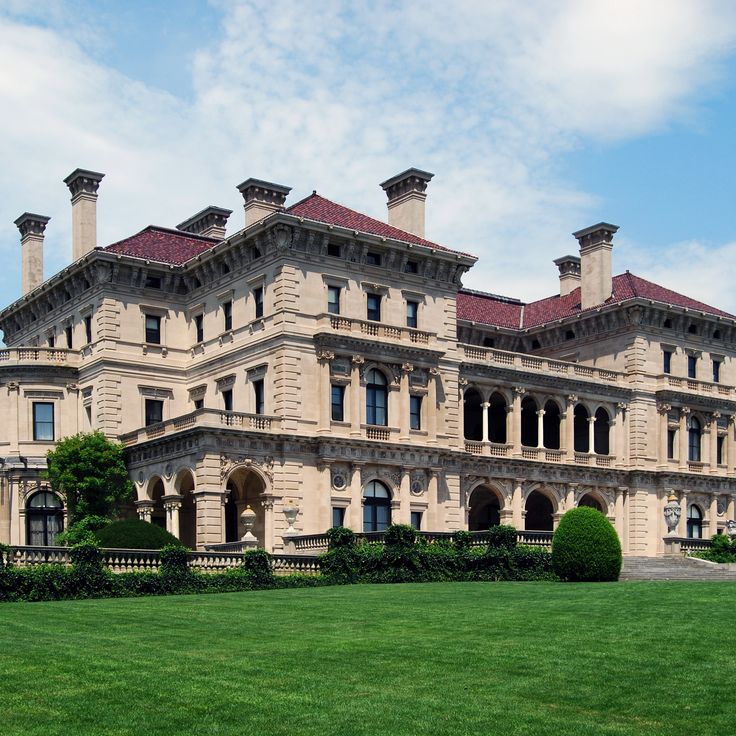
This villa built for the Vanderbilt family shows Italian Renaissance architecture from 1895. The Breakers was a summer house with 70 rooms that reflected the wealth of the industrial age. Large halls, decorated ceilings and imported materials from Europe shape the interior. From the property you look out over the Atlantic, while terraces and gardens surround the main building. The rooms are fitted with marble, bronze and carved wood, and each hall follows its own theme. This residence is among the examples of American manor houses that adopted and reinterpreted European styles.
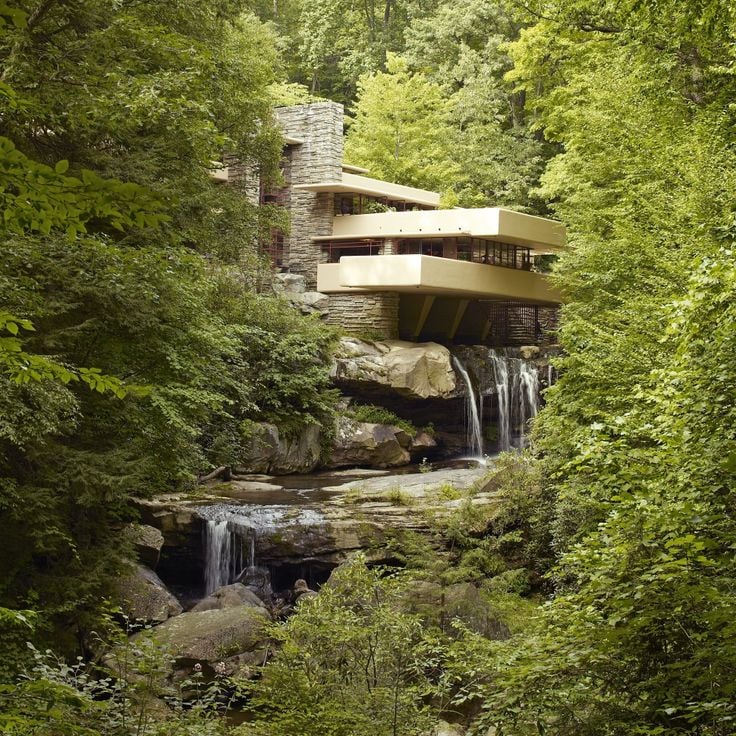
Fallingwater demonstrates Frank Lloyd Wright's approach to design when he created this house in 1935 directly above a waterfall. The structure rests on concrete terraces that anchor into the rock and project over the flowing stream. Large windows open the interior to the surrounding forest, stone, and water. Wright used natural materials such as local sandstone to connect the structure with the Pennsylvania landscape. The terraces extend outward like natural rock ledges, linking the interior with the sound of the falls. This residence was built for the Kaufmann family during the mid-1930s and stands as a central example of modern domestic architecture. Wright designed the floor plan so that each room receives daylight and views across the wooded valley. Today the house welcomes visitors and shows how architecture and nature can meet.
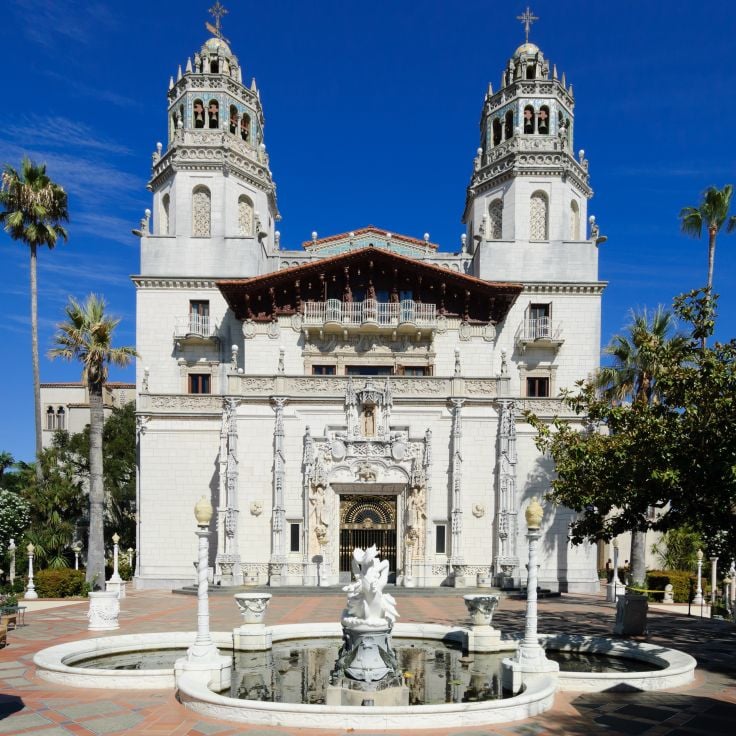
The Château Hearst was designed in the 1920s by architect Julia Morgan and sits on a hill above the California coast. The residence holds artworks and antiques William Randolph Hearst collected from Europe over decades. Sculptures stand next to tapestries in the salons and galleries, antique furniture fills the rooms, and ceilings from Spanish monasteries were rebuilt here. The architecture combines Spanish and Mediterranean elements with more modern construction. Pools, terraces, and gardens surround the buildings and open views toward the hills and the ocean. Hearst entertained guests from politics and Hollywood here, and the rooms reflect a time when a newspaper publisher turned his fortune into stone, statues, and collections.
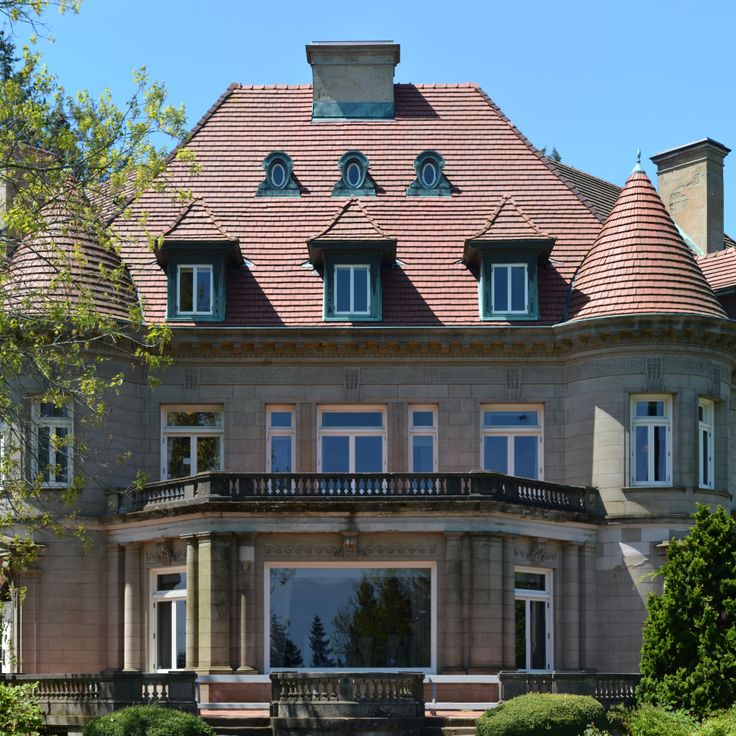
The Pittock Mansion completed in 1914 sits on a hill above Portland and shows how wealthy industrial families lived at the start of the 20th century. Through the large windows of this 46-room residence, views stretch toward the city, Mount Hood, and the Columbia River Valley. The architecture combines French Renaissance elements with Turkish marble and carved woodwork. Rooms open onto terraces that overlook gardens and wooded slopes. Every detail speaks to a time when families like the Pittocks built homes to display their social standing and to take in the landscape all around.
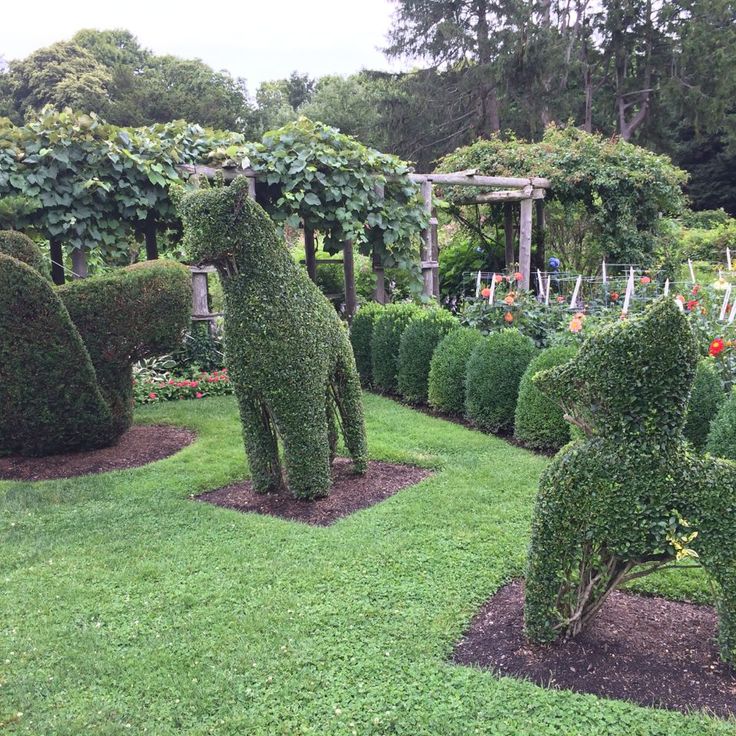
Green Animals Topiary Garden in Portsmouth dates back to 1872, when it was part of a wealthy family estate. The property holds more than 80 sculpted hedges shaped into animals and geometric forms. Several sections include vegetable beds and formal plantings arranged in rows. Paths lead through the greenery, which has been maintained for over a century. The feeling is quiet, defined by carefully trimmed boxwood and other evergreens. You see elephants, giraffes, and other animal figures carved from living plants. The estate connects garden craft with the story of an era when such grounds expressed wealth and taste.
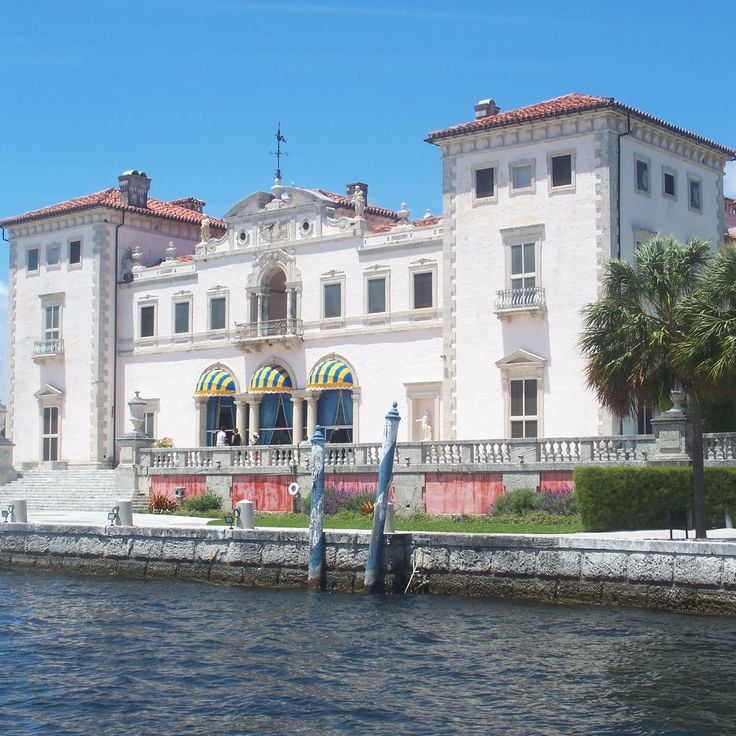
This estate on the shore of Biscayne Bay recalls Italian villas from the Renaissance. The 34 rooms spread across several floors and display furniture, paintings and sculptures gathered from Europe. The interior presents wooden ceilings, marble floors and tapestries. Outside, formal gardens extend with stone fountains, geometric beds and sculptures along tree-lined paths and terraces. The view opens onto the water, framed by palms and Mediterranean plants. The estate from 1916 served as a winter residence for an industrialist. Today visitors can walk through the halls and courtyards and trace the connection between architecture and landscape.
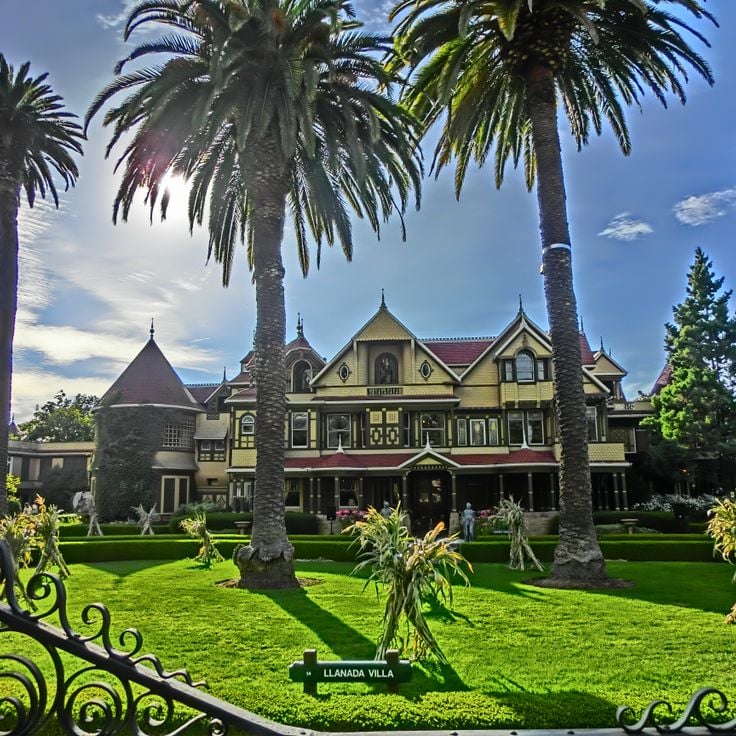
The Winchester Mystery House in San Jose spans 160 rooms built over 38 years without a single master plan. Sarah Winchester, heir to a firearms fortune, kept construction running day and night, creating a maze where staircases lead to ceilings, doors open onto walls or empty space, and windows look into other rooms. The house shows Victorian woodwork, stained glass, and towers, yet its layout defies reason. Visitors walk through secret passages, narrow hallways that suddenly open into grand halls, and rooms reachable only by winding paths. Legend says Sarah built to confuse spirits, giving the place its puzzling character.
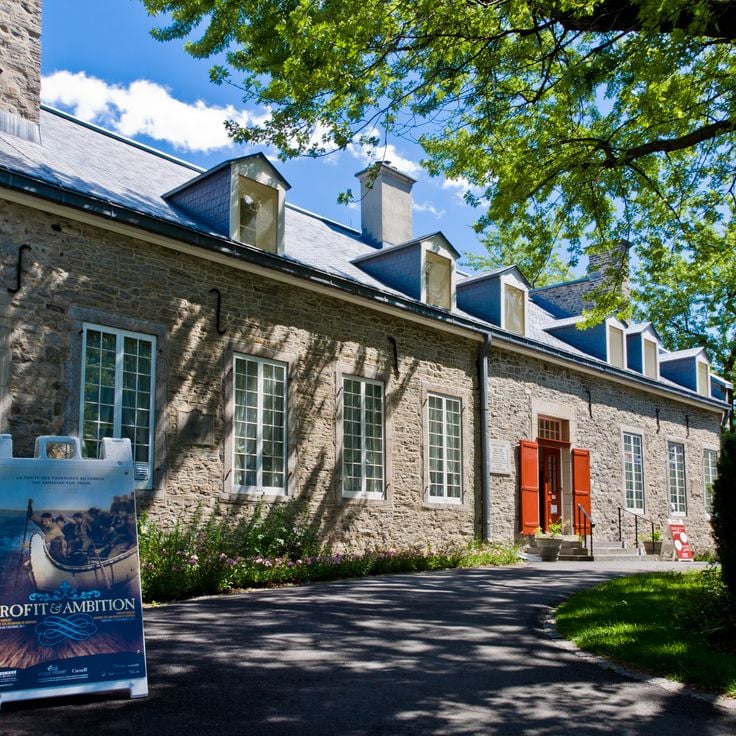
The Château Ramezay was built in the 18th century and now holds thousands of objects from the time of the French colony. The rooms display furniture, tools, paintings, and everyday items that document life in Montreal before British influence. Thick stone walls and low ceilings recall French building methods, while the exhibition spaces present trade routes, settler life, and relations with indigenous peoples. The collections include uniforms, weapons, coins, and documents that shed light on the colony's trade and administration. A courtyard garden features plants that were cultivated in North America at the time. Walking through the hallways, visitors find display cases with ceramics, textiles, and furs that show how people lived and worked. The mood remains quiet, almost intimate, inviting a slow discovery of the past without rush.
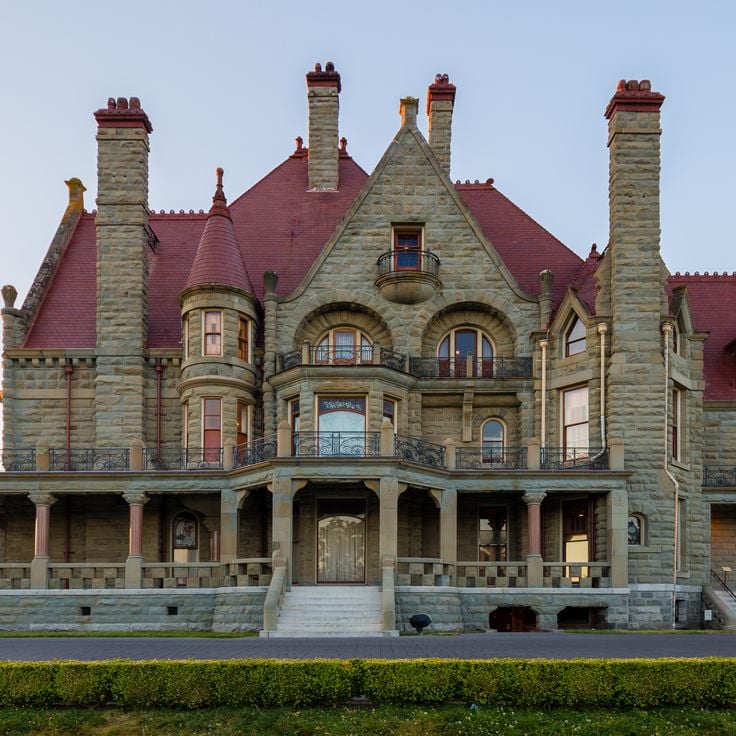
Château Craigdarroch rises in Victoria and shows how wealthy families built near the end of the 19th century. This residence from 1890 spreads 39 rooms across four floors, where dark wood on walls and staircases meets colored glass windows. The architecture follows Victorian taste: carved railings, tall ceilings, tiled fireplaces, windows that break light through stained glass. You walk through halls with wood paneling, climb staircases that turn and curve, discover corners where polished wood catches the light. The Dunsmuir family had this house built and wanted to display wealth in stone and timber. Today you see how people lived back then when they had money for craftsmen and materials. The rooms tell the story of a time when interior design meant every detail should make an impression.
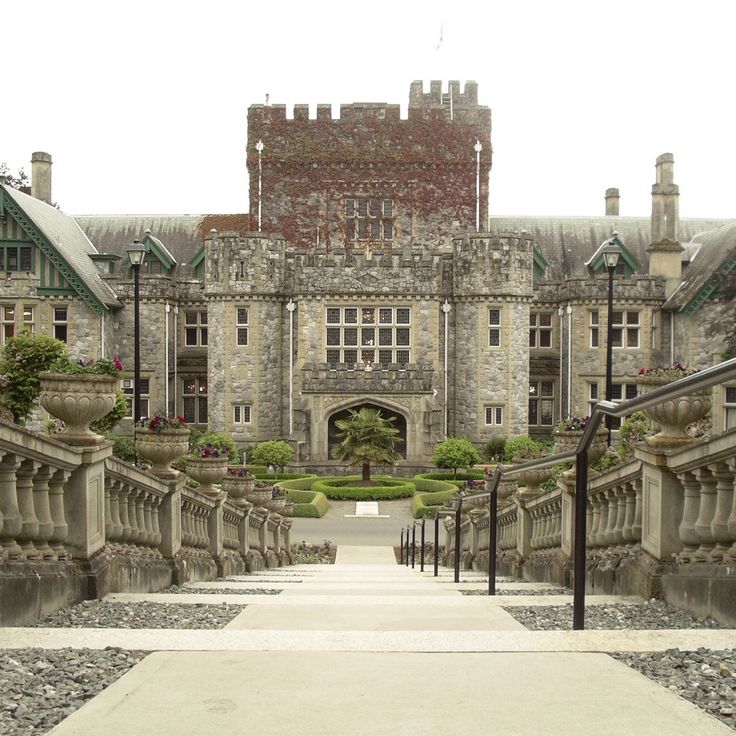
This mansion was built in 1908 for James Dunsmuir and contains 40 rooms spread across multiple floors. The architecture shows the Edwardian style with stone towers and terraces. Around the building stretch Japanese gardens with ponds and bridges, Italian gardens with fountains and statues, and English lawns under old trees. The Dunsmuir family made their fortune in coal and built a residence here that combines European traditions with the landscape of Vancouver Island. Today the estate belongs to Royal Roads University and can be visited.
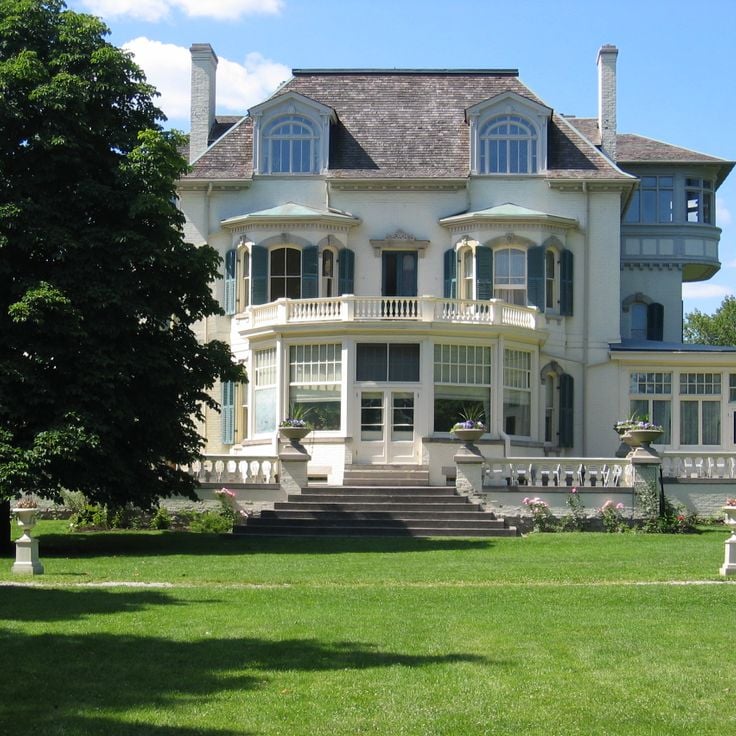
Spadina House was built in 1866 in Toronto and served as home to three generations of the Austin family. The rooms contain furniture and objects that the residents themselves used, offering a sense of how people lived here between the late 19th century and the first half of the 20th century. The house shows how interior design and daily routines changed over the decades while the family continued to live there. The collection includes personal items, household tools, and decoration that reveal the taste and habits of each generation. Walking through the rooms, visitors see how living styles shifted and how spaces were arranged for social occasions and family life. Spadina House belongs to the residences in North America that were inhabited by families with industrial wealth and today provide insight into a time when architecture and furnishings expressed social standing.
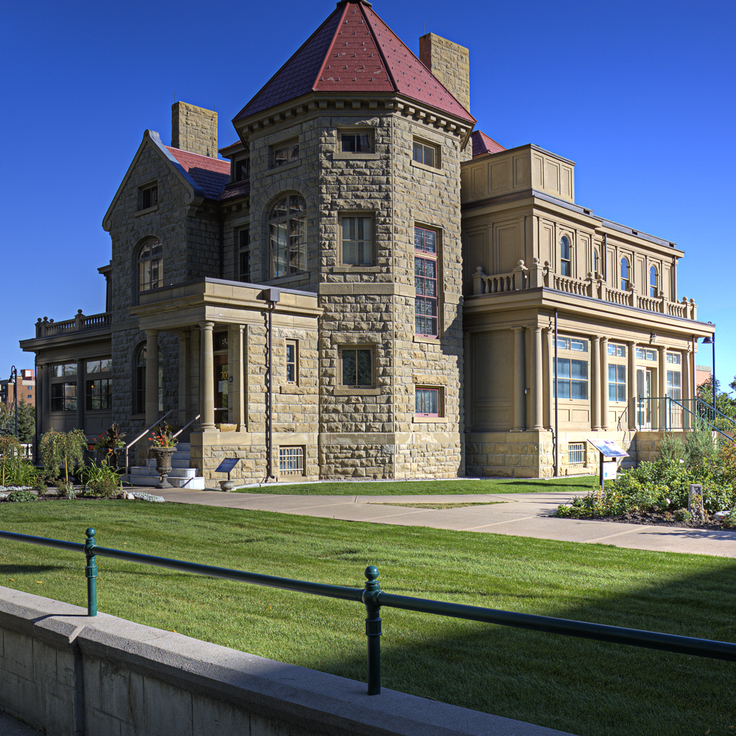
This sandstone house from 1891 was one of the first large residences in Calgary. The Lougheed family built it when the city was still a young settlement. Inside, you find parlors with carved wood, fireplaces, and high ceilings that show the taste of upper-class society at the end of the 19th century. Around the building, gardens spread over roughly 3.5 acres (1.4 hectares) in the middle of downtown. Trees, lawns, and paths offer a quiet setting between modern streets. Today, you can walk through the rooms and see how a wealthy family lived back then, among imported furniture and decorations from Europe. The house reminds visitors that Calgary was once shaped by a few rich families who invested their fortunes in real estate and agriculture.
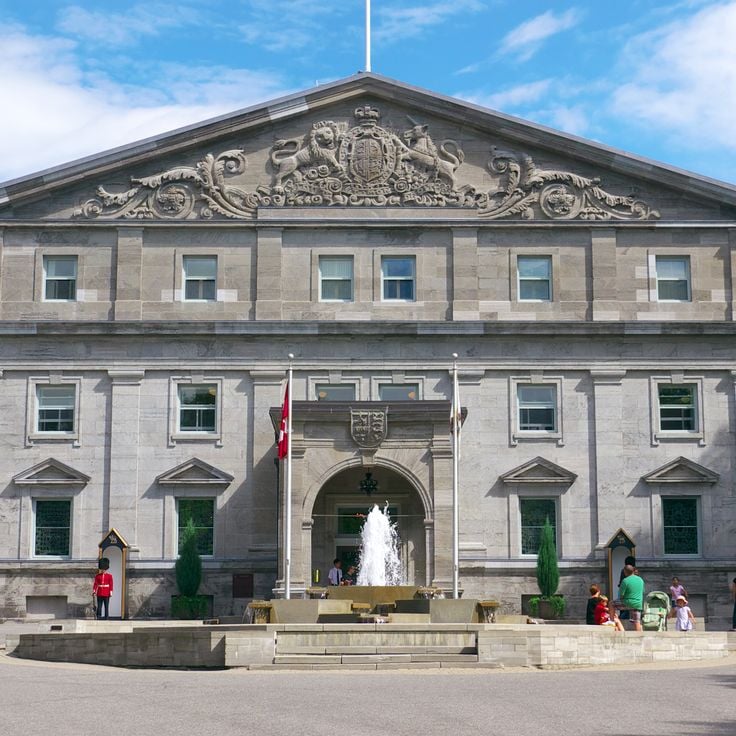
This residence has served as the official home of Canada's governors general since 1867. Rideau Hall contains 175 rooms spread across the grounds. The park extends over a large area and includes gardens, pathways and open spaces. The buildings have been expanded and adapted over the decades. State receptions take place here, along with public events where visitors can explore the gardens. The property brings together formal architecture with green spaces that invite walking.
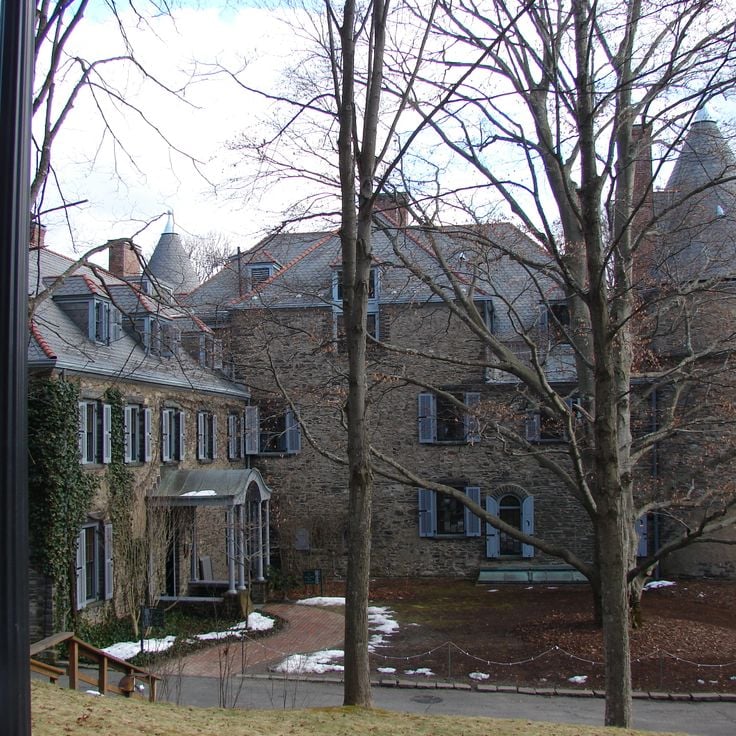
Grey Towers National Historic Site was built in 1886 in the style of a French château and takes its name from the three towers that mark the building. The house has 43 rooms and was home to the Pinchot family, set in a large park with old trees, terraces and water basins. Gifford Pinchot, who lived here, founded the United States Forest Service and promoted the idea of sustainable forestry. The rooms display furniture and artworks from Europe, and the library holds books and documents on the history of conservation policy. The gardens were redesigned several times, with formal beds, sculptures and a pond that served as an outdoor space for gatherings. You can walk through the rooms, look at the collection and stroll outside among the trees, where paths lead across the grounds.
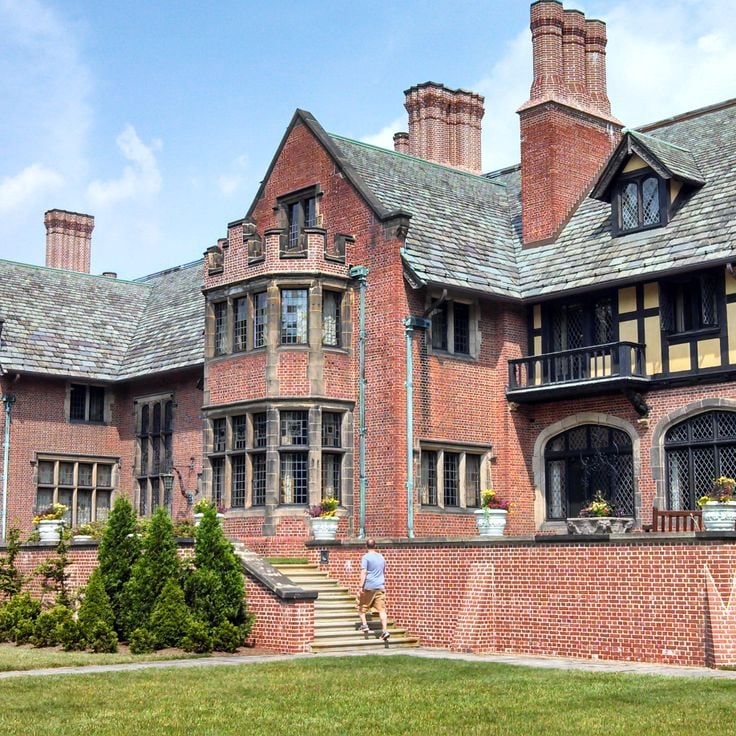
This estate in Akron was built for Frank Seiberling, founder of Goodyear Tire. The house, completed in 1915, holds 65 rooms and adopts Tudor architecture with touches from English country manor design. Inside, you find wood paneling, carved beams, and furniture from different periods. Outside, 28 hectares (70 acres) of gardens were laid out by Warren Manning. A formal garden inspired by French design leads through hedges and flower beds, while other areas include ponds and walking paths. The name Stan Hywet comes from Old English, meaning stone quarry. Today the property is open as a museum, showing how a wealthy family lived and shaped its surroundings at the beginning of the 20th century.
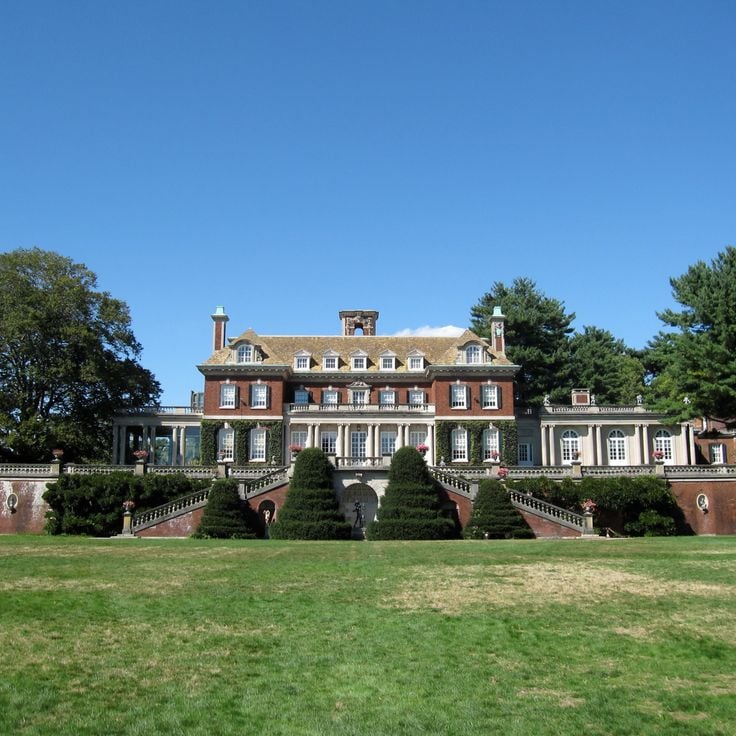
These gardens and the 1906 manor show an estate built on the model of English country houses. The house follows the style of the time of Charles II with brick facades and symmetrical windows. The rooms keep furniture and decoration from the early 20th century, when the Phipps family lived here. The estate covers about 70 hectares and holds several garden areas: a formal garden with geometric beds, a rose garden, a pond, and paths among old trees. Visitors can walk through the rooms and then step outside, where hedges, statues, and flower beds organize the park. Old Westbury Gardens belongs to the estates built by wealthy families on the East Coast, bringing together European garden design and American space.
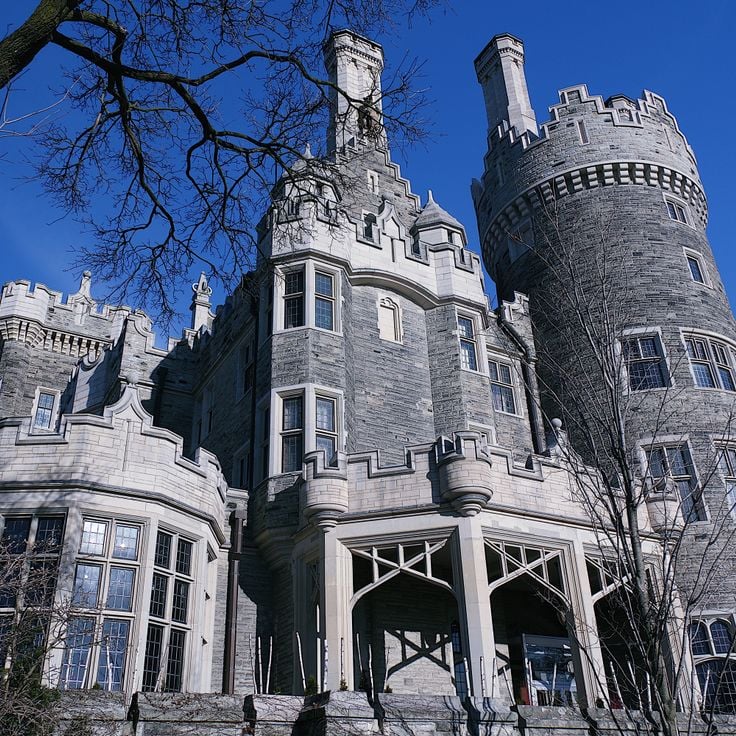
Casa Loma was built between 1911 and 1914 and contains 98 rooms. The financier Henry Pellatt wanted to create a residence in the style of medieval castles and combined Gothic towers with modern technology for his time. The architecture draws on European castle designs, with battlements, wood paneling and high ceilings. The house had elevators and its own power plant when completed. The rooms range from large halls to libraries and vaulted corridors. An underground tunnel connects the main building with the stables. Pellatt had to give up the residence after only a few years, and today visitors can walk through the rooms and gardens and see how people wanted to live in a castle in North America at the beginning of the 20th century.
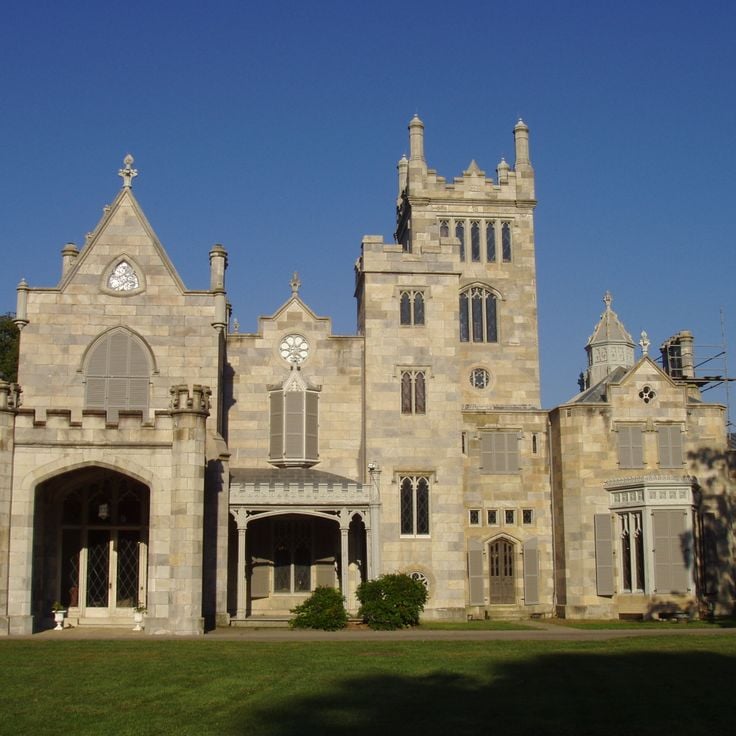
Lyndhurst Manor was built in 1838 along the Hudson River and displays tall pointed windows, slender towers and stone arches in the Gothic style. The gray marble facade catches the light, while the interior rooms feature high ceilings, carved wood paneling and colored glass windows. Architect Alexander Jackson Davis designed this residence for a New York mayor before it passed to railroad tycoon Jay Gould. The grounds hold old trees, trimmed lawns and the ruin of a greenhouse. Visitors walk through parlors furnished with 19th-century pieces and see paintings and personal belongings of former residents. This estate shows how wealthy industrial-age families brought European architectural forms into the American landscape.
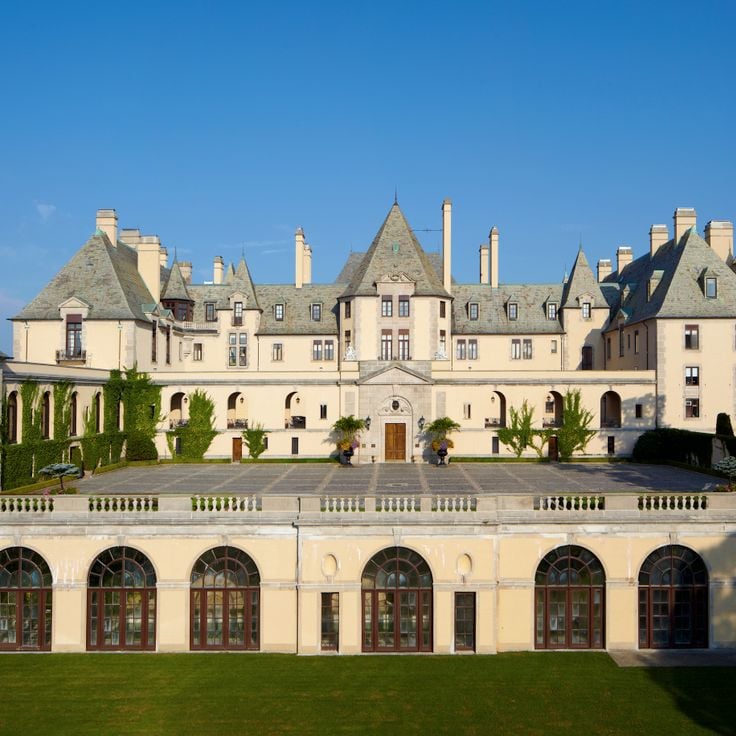
This 1919 estate on Long Island was commissioned by financier Otto Hermann Kahn with 127 rooms to bring European manor style to America. The grounds spread over more than 100,000 square meters and combine a mansion designed by architects after French models with symmetrical gardens, fountains and terraced paths. The interior shows woodwork, paneling and ornament that recall the grand residences of the Belle Époque. From here you look out over the estate to the horizon, while tree-lined drives and lawns give the impression of a park. Oheka Castle stands for a time when architecture was used to recreate a piece of Europe on American soil and when space and grandeur went together.
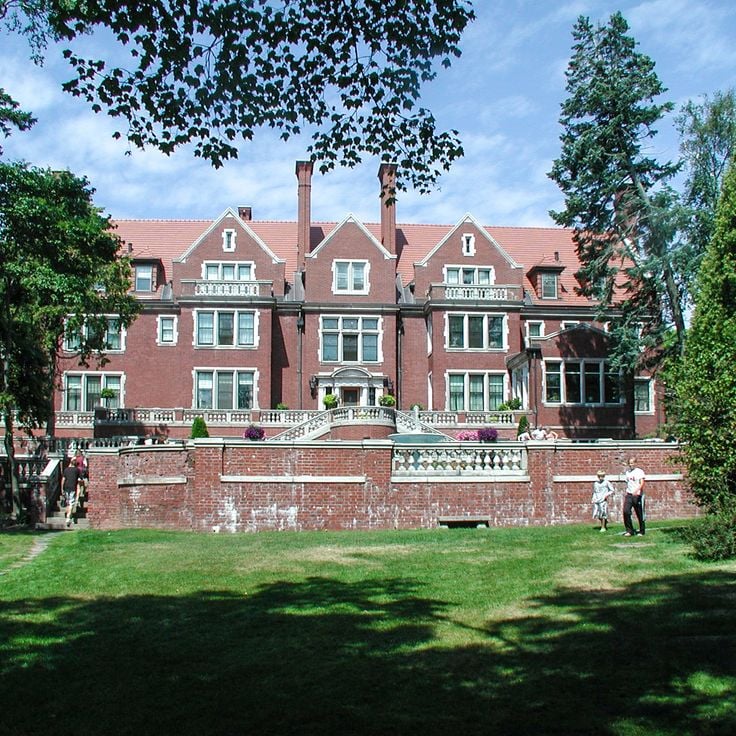
The Glensheen Estate was built from 1908 for the Congdon family in Duluth and now covers roughly 30,000 square meters (7.4 acres). Rooms display furniture from the years when wealthy families across North America raised homes with references to European styles. The grounds run from the house down to gardens ending at the shore of Lake Superior, where lawns and flowerbeds were laid out. Inside, visitors find wood paneling, fireplaces, and lamps reflecting the taste of prosperous households in the early 20th century. Today people walk through the house to understand how such families lived, furnished their rooms, and arranged their collections.
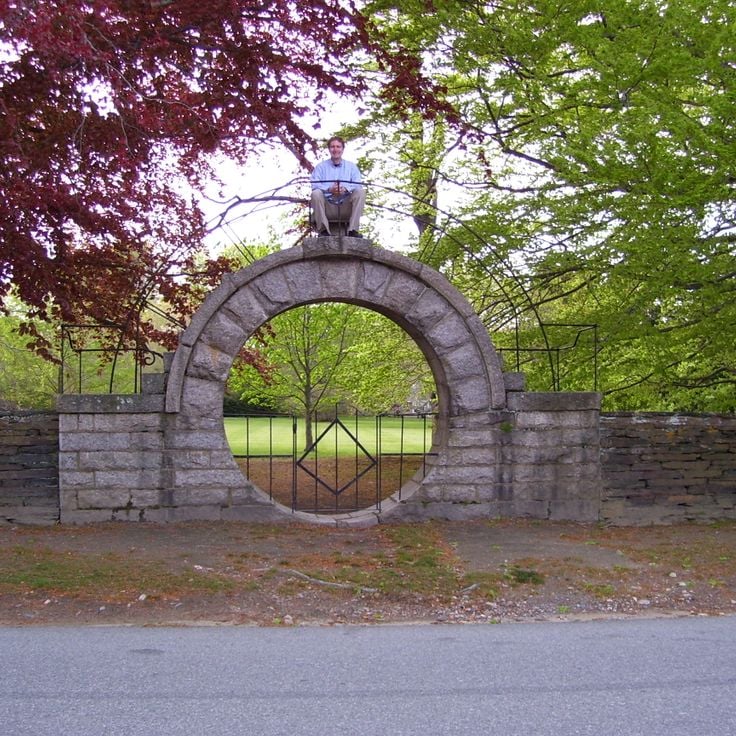
The Château des Ormes was built following the design of mid-18th-century French architecture and stands as one of the Rhode Island residences that show how American families looked to European styles. Guided tours take visitors through rooms filled with furniture, paintings and wall panels that recall manor houses across the Atlantic, while the gardens around the building offer paths for walking.
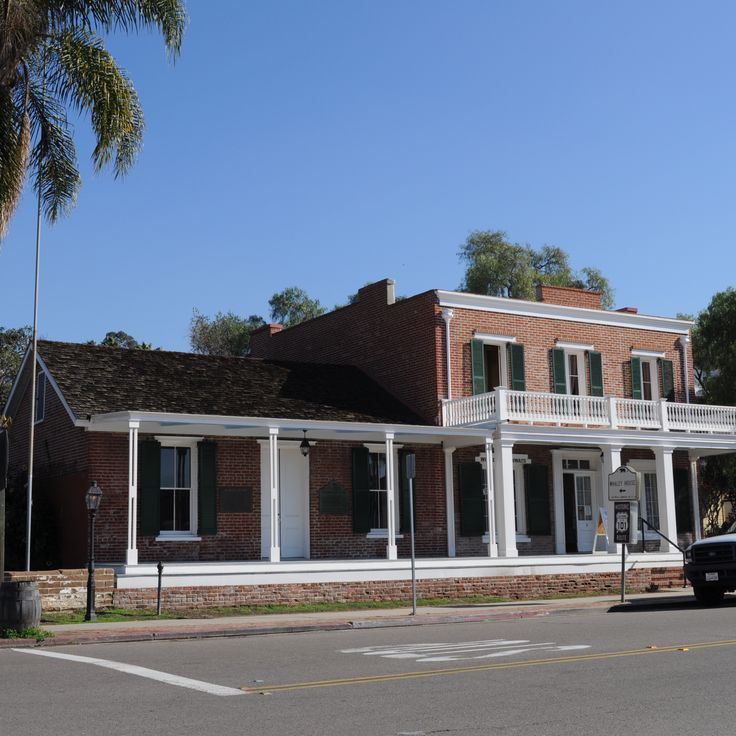
The Whaley House Museum in San Diego preserves a residence from 1857 built in Greek Revival style. Thomas Whaley had the two-story brick building with its columned veranda constructed when San Diego was still a small settlement. The rooms display furniture and objects from several generations of the Whaley family. The house served at different times as a store, theater, and courthouse. The rooms with their high ceilings and wide floorboards give a sense of how a prosperous family lived in 19th-century California, when the region still bordered Mexico and was just beginning to develop.
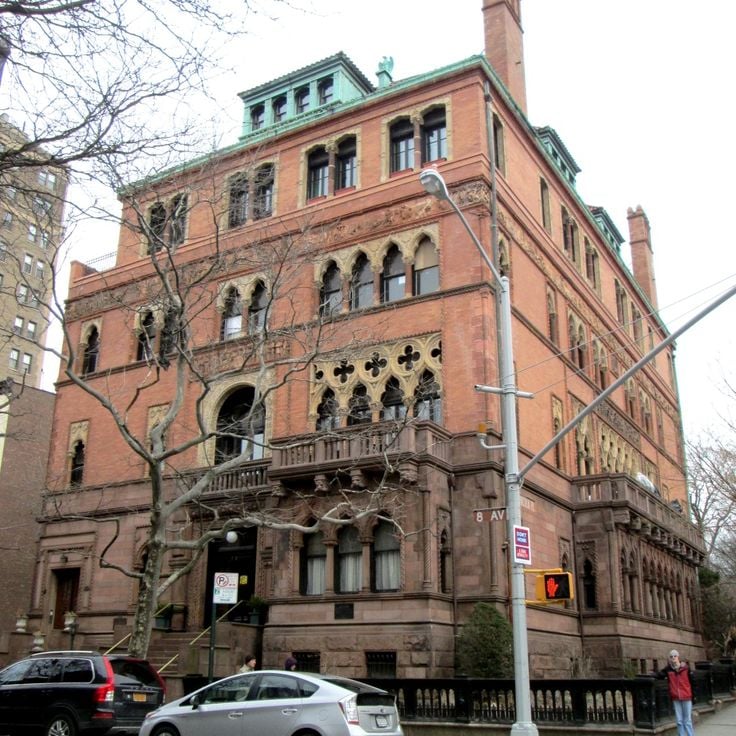
This Brooklyn clubhouse comes from the era when wealthy families built gathering places for social occasions. The facade shows pointed arches and decorated windows in the Venetian Gothic style of architect Francis H. Kimball. The building serves today as a private social club, where members host events and experience late 19th-century architecture that favored generous rooms and tall ceilings. Details on the walls recall European palaces, while the interiors are arranged for meetings and gatherings.
This Victorian mansion in Newport shows how wealthy families lived during the 19th century. Built starting in 1852 and later remodeled, Château-sur-Mer features heavy wood paneling, high ceilings, and carved fireplaces. The rooms hold European furniture and Chinese porcelain the owners collected during their travels. Fabric wall coverings line the parlors, and the library keeps volumes from the 19th century. Stained glass windows cast colored light across staircases and hallways, while outside tall trees shade the grounds. Visitors walk through reception rooms and bedrooms to see how a family lived more than a hundred years ago.
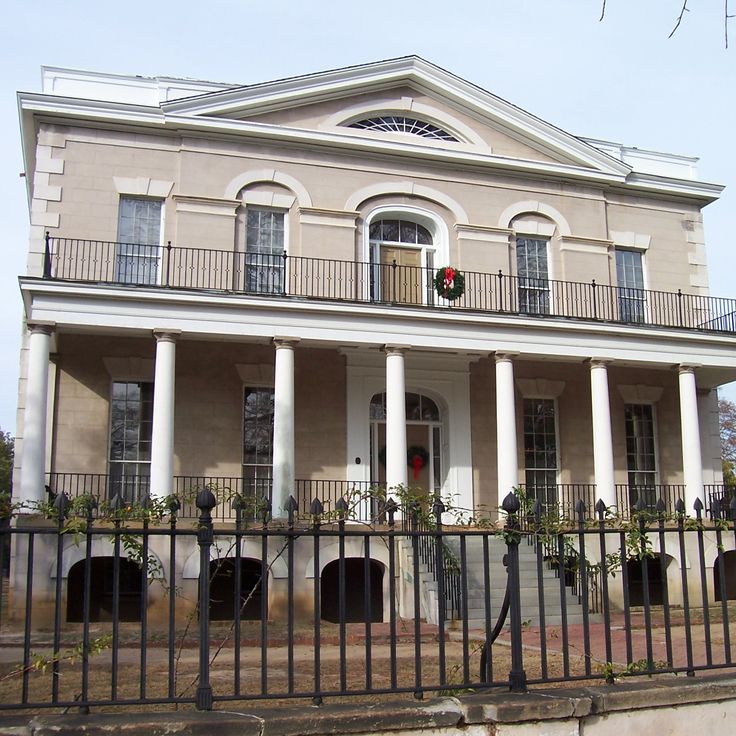
The Hampton-Preston Manor was built in 1818 in a style that reflects how wealthy families built in the South during those years. The facade shows columns and proportions borrowed from classical models. In the garden, old rose varieties grow in beds laid out in a formal arrangement. The rooms preserve furniture and objects from the time when prosperous families lived here. You see the preference for symmetry and bright spaces that belonged to the social life of the upper class of that period. Through the rooms and the garden runs the memory of an era when architecture and horticulture together shaped the image of a grand residence.
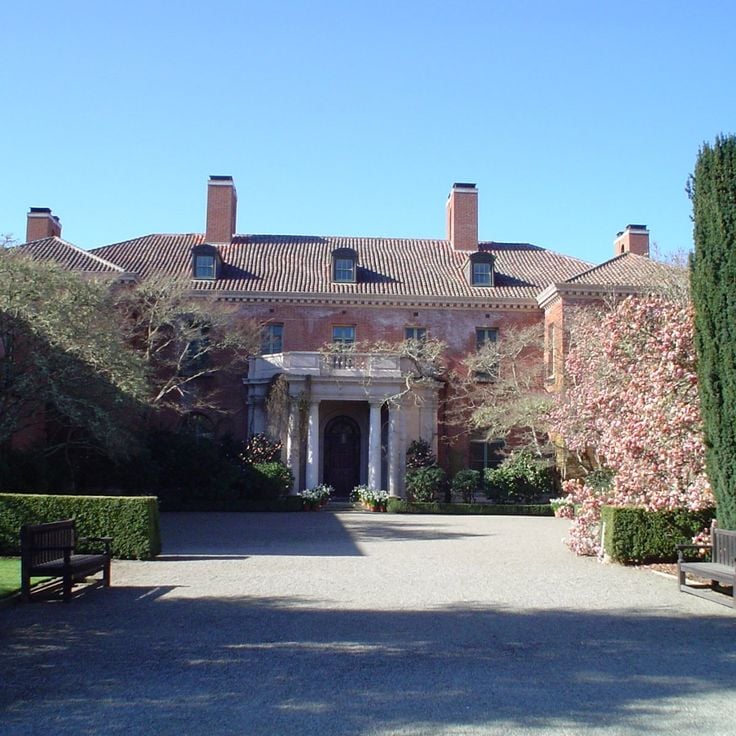
This estate south of San Francisco was built in the early 20th century for a businessman who made his fortune in gold and water and wanted a retreat far from the city. The main house combines stone walls and terracotta roofs in the California style. Around it, over 16 acres of garden space display flowers that change with the seasons, rows of fruit trees, and a vegetable garden laid out in rectangular beds following old European methods. Visitors walk between hedges, fountains, and lawns that have been tended from the 1920s to the present.
Boldt Castle on Heart Island, begun in 1900, rises six stories with a tower, ballroom and underground passages along the Saint Lawrence River. George Boldt, a Philadelphia hotel owner, commissioned the structure in the style of German castles and European manor houses for his wife Louise, but construction stopped in 1904 after her death. The abandoned rooms and outer walls stood empty for over seventy years until the region took ownership and began gradual restoration. From the boat dock, red turrets and battlements show through the trees, while inside, wood paneling, fireplaces and plasterwork reflect the taste of that era. The island sees summer visitors who walk through half-finished halls, the restored ballroom and outbuildings along the water. Alster Tower, a smaller structure on a neighboring island, completes the site. Boldt Castle belongs to a group of North American grand residences that industrial wealth and admiration for European building traditions brought into being.
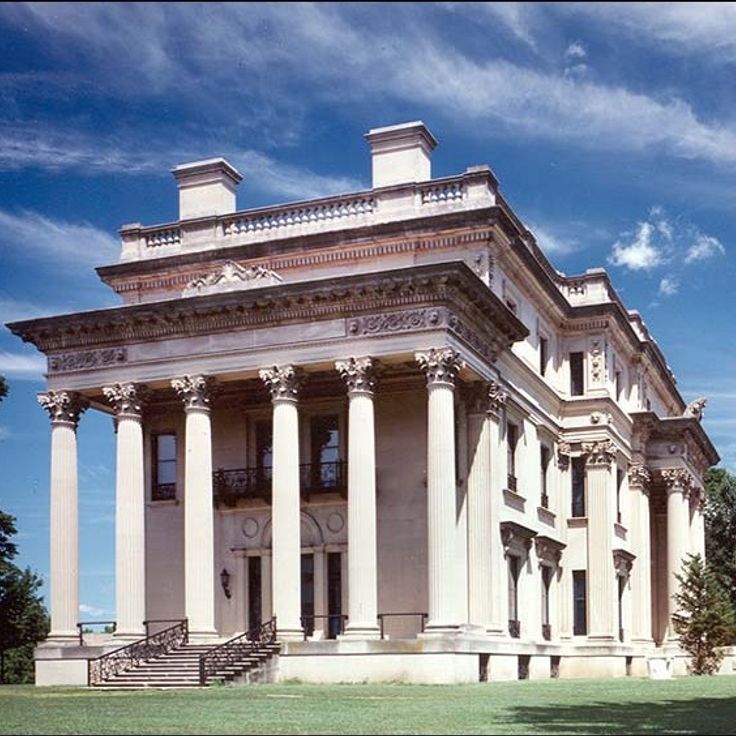
This mansion stands since 1899 on the shore of the Hudson River and houses a collection of 54 rooms that a New York family used as a retreat. Bright stone walls carry a slate roof, and tall windows let light flow through wide halls. The interiors keep furniture, tapestries and paintings from Europe, brought across the Atlantic at the time. The garden slopes gently toward the river, where old trees cast shade and paths wind through lawns. Visitors walk through parlors with carved fireplaces and dining rooms where porcelain and silver rest in display cases. The architecture follows the rules of the Beaux-Arts tradition, with symmetry, stucco and classical proportions inspired by Parisian workshops.
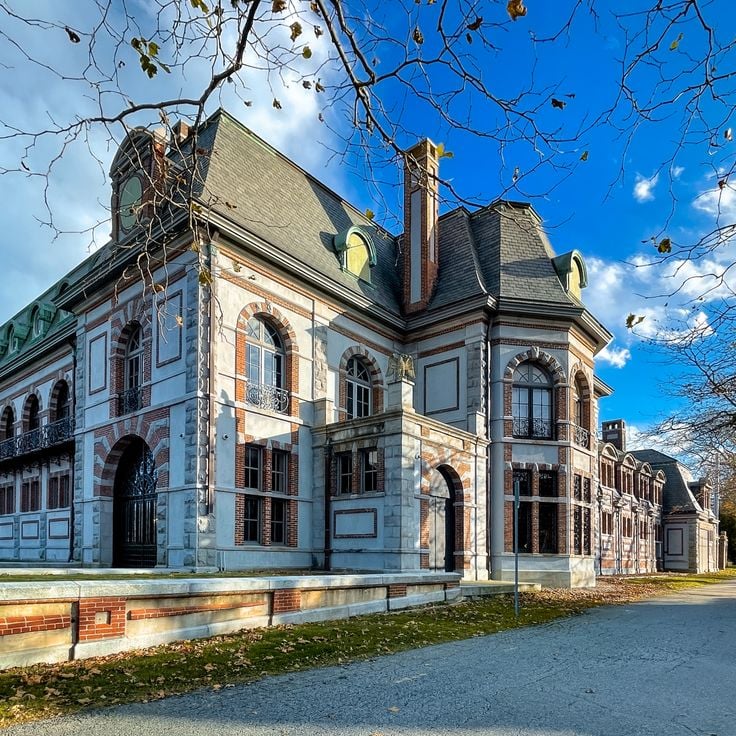
The Château Belcourt was built in 1894 for Oliver Belmont, a banker's son and horse enthusiast who drew inspiration from French hunting lodges. The ground floor was originally designed for his riding horses, with wide passages and wrought iron gates brought from Europe. The architecture recalls the châteaux of the Loire valley, with towers, bay windows, and tall openings. After several changes of ownership, the interior filled with furniture, tapestries, armor, and stained glass from different centuries. The rooms feature carved wood and wall panels taken from old European manor houses. Visitors today can walk through the salons and see how medieval and Renaissance craftsmanship was fitted into an American home of the 1890s. The château stands in Newport, where several wealthy families built their summer residences around the turn of the 20th century.
The George Eastman Museum occupies a residence built in 1905 in Rochester, New York, where George Eastman lived after founding the Kodak company. The house holds fifty rooms and shows how a successful industrialist organized his daily life at the turn of the twentieth century. Since 1947 the building has served as a museum collecting cameras, photographs and films from around the world. Visitors walk through rooms that combine period furnishings with displays on the history and technique of photography. The surrounding gardens include areas where Eastman experimented with plants and enjoyed time outdoors.
This villa built for the Vanderbilt family shows Italian Renaissance architecture from 1895. The Breakers was a summer house with 70 rooms that reflected the wealth of the industrial age. Large halls, decorated ceilings and imported materials from Europe shape the interior. From the property you look out over the Atlantic, while terraces and gardens surround the main building. The rooms are fitted with marble, bronze and carved wood, and each hall follows its own theme. This residence is among the examples of American manor houses that adopted and reinterpreted European styles.
Fallingwater demonstrates Frank Lloyd Wright's approach to design when he created this house in 1935 directly above a waterfall. The structure rests on concrete terraces that anchor into the rock and project over the flowing stream. Large windows open the interior to the surrounding forest, stone, and water. Wright used natural materials such as local sandstone to connect the structure with the Pennsylvania landscape. The terraces extend outward like natural rock ledges, linking the interior with the sound of the falls. This residence was built for the Kaufmann family during the mid-1930s and stands as a central example of modern domestic architecture. Wright designed the floor plan so that each room receives daylight and views across the wooded valley. Today the house welcomes visitors and shows how architecture and nature can meet.
The Château Hearst was designed in the 1920s by architect Julia Morgan and sits on a hill above the California coast. The residence holds artworks and antiques William Randolph Hearst collected from Europe over decades. Sculptures stand next to tapestries in the salons and galleries, antique furniture fills the rooms, and ceilings from Spanish monasteries were rebuilt here. The architecture combines Spanish and Mediterranean elements with more modern construction. Pools, terraces, and gardens surround the buildings and open views toward the hills and the ocean. Hearst entertained guests from politics and Hollywood here, and the rooms reflect a time when a newspaper publisher turned his fortune into stone, statues, and collections.
The Pittock Mansion completed in 1914 sits on a hill above Portland and shows how wealthy industrial families lived at the start of the 20th century. Through the large windows of this 46-room residence, views stretch toward the city, Mount Hood, and the Columbia River Valley. The architecture combines French Renaissance elements with Turkish marble and carved woodwork. Rooms open onto terraces that overlook gardens and wooded slopes. Every detail speaks to a time when families like the Pittocks built homes to display their social standing and to take in the landscape all around.
Green Animals Topiary Garden in Portsmouth dates back to 1872, when it was part of a wealthy family estate. The property holds more than 80 sculpted hedges shaped into animals and geometric forms. Several sections include vegetable beds and formal plantings arranged in rows. Paths lead through the greenery, which has been maintained for over a century. The feeling is quiet, defined by carefully trimmed boxwood and other evergreens. You see elephants, giraffes, and other animal figures carved from living plants. The estate connects garden craft with the story of an era when such grounds expressed wealth and taste.
This estate on the shore of Biscayne Bay recalls Italian villas from the Renaissance. The 34 rooms spread across several floors and display furniture, paintings and sculptures gathered from Europe. The interior presents wooden ceilings, marble floors and tapestries. Outside, formal gardens extend with stone fountains, geometric beds and sculptures along tree-lined paths and terraces. The view opens onto the water, framed by palms and Mediterranean plants. The estate from 1916 served as a winter residence for an industrialist. Today visitors can walk through the halls and courtyards and trace the connection between architecture and landscape.
The Winchester Mystery House in San Jose spans 160 rooms built over 38 years without a single master plan. Sarah Winchester, heir to a firearms fortune, kept construction running day and night, creating a maze where staircases lead to ceilings, doors open onto walls or empty space, and windows look into other rooms. The house shows Victorian woodwork, stained glass, and towers, yet its layout defies reason. Visitors walk through secret passages, narrow hallways that suddenly open into grand halls, and rooms reachable only by winding paths. Legend says Sarah built to confuse spirits, giving the place its puzzling character.
The Château Ramezay was built in the 18th century and now holds thousands of objects from the time of the French colony. The rooms display furniture, tools, paintings, and everyday items that document life in Montreal before British influence. Thick stone walls and low ceilings recall French building methods, while the exhibition spaces present trade routes, settler life, and relations with indigenous peoples. The collections include uniforms, weapons, coins, and documents that shed light on the colony's trade and administration. A courtyard garden features plants that were cultivated in North America at the time. Walking through the hallways, visitors find display cases with ceramics, textiles, and furs that show how people lived and worked. The mood remains quiet, almost intimate, inviting a slow discovery of the past without rush.
Château Craigdarroch rises in Victoria and shows how wealthy families built near the end of the 19th century. This residence from 1890 spreads 39 rooms across four floors, where dark wood on walls and staircases meets colored glass windows. The architecture follows Victorian taste: carved railings, tall ceilings, tiled fireplaces, windows that break light through stained glass. You walk through halls with wood paneling, climb staircases that turn and curve, discover corners where polished wood catches the light. The Dunsmuir family had this house built and wanted to display wealth in stone and timber. Today you see how people lived back then when they had money for craftsmen and materials. The rooms tell the story of a time when interior design meant every detail should make an impression.
This mansion was built in 1908 for James Dunsmuir and contains 40 rooms spread across multiple floors. The architecture shows the Edwardian style with stone towers and terraces. Around the building stretch Japanese gardens with ponds and bridges, Italian gardens with fountains and statues, and English lawns under old trees. The Dunsmuir family made their fortune in coal and built a residence here that combines European traditions with the landscape of Vancouver Island. Today the estate belongs to Royal Roads University and can be visited.
Spadina House was built in 1866 in Toronto and served as home to three generations of the Austin family. The rooms contain furniture and objects that the residents themselves used, offering a sense of how people lived here between the late 19th century and the first half of the 20th century. The house shows how interior design and daily routines changed over the decades while the family continued to live there. The collection includes personal items, household tools, and decoration that reveal the taste and habits of each generation. Walking through the rooms, visitors see how living styles shifted and how spaces were arranged for social occasions and family life. Spadina House belongs to the residences in North America that were inhabited by families with industrial wealth and today provide insight into a time when architecture and furnishings expressed social standing.
This sandstone house from 1891 was one of the first large residences in Calgary. The Lougheed family built it when the city was still a young settlement. Inside, you find parlors with carved wood, fireplaces, and high ceilings that show the taste of upper-class society at the end of the 19th century. Around the building, gardens spread over roughly 3.5 acres (1.4 hectares) in the middle of downtown. Trees, lawns, and paths offer a quiet setting between modern streets. Today, you can walk through the rooms and see how a wealthy family lived back then, among imported furniture and decorations from Europe. The house reminds visitors that Calgary was once shaped by a few rich families who invested their fortunes in real estate and agriculture.
This residence has served as the official home of Canada's governors general since 1867. Rideau Hall contains 175 rooms spread across the grounds. The park extends over a large area and includes gardens, pathways and open spaces. The buildings have been expanded and adapted over the decades. State receptions take place here, along with public events where visitors can explore the gardens. The property brings together formal architecture with green spaces that invite walking.
Grey Towers National Historic Site was built in 1886 in the style of a French château and takes its name from the three towers that mark the building. The house has 43 rooms and was home to the Pinchot family, set in a large park with old trees, terraces and water basins. Gifford Pinchot, who lived here, founded the United States Forest Service and promoted the idea of sustainable forestry. The rooms display furniture and artworks from Europe, and the library holds books and documents on the history of conservation policy. The gardens were redesigned several times, with formal beds, sculptures and a pond that served as an outdoor space for gatherings. You can walk through the rooms, look at the collection and stroll outside among the trees, where paths lead across the grounds.
This estate in Akron was built for Frank Seiberling, founder of Goodyear Tire. The house, completed in 1915, holds 65 rooms and adopts Tudor architecture with touches from English country manor design. Inside, you find wood paneling, carved beams, and furniture from different periods. Outside, 28 hectares (70 acres) of gardens were laid out by Warren Manning. A formal garden inspired by French design leads through hedges and flower beds, while other areas include ponds and walking paths. The name Stan Hywet comes from Old English, meaning stone quarry. Today the property is open as a museum, showing how a wealthy family lived and shaped its surroundings at the beginning of the 20th century.
These gardens and the 1906 manor show an estate built on the model of English country houses. The house follows the style of the time of Charles II with brick facades and symmetrical windows. The rooms keep furniture and decoration from the early 20th century, when the Phipps family lived here. The estate covers about 70 hectares and holds several garden areas: a formal garden with geometric beds, a rose garden, a pond, and paths among old trees. Visitors can walk through the rooms and then step outside, where hedges, statues, and flower beds organize the park. Old Westbury Gardens belongs to the estates built by wealthy families on the East Coast, bringing together European garden design and American space.
Casa Loma was built between 1911 and 1914 and contains 98 rooms. The financier Henry Pellatt wanted to create a residence in the style of medieval castles and combined Gothic towers with modern technology for his time. The architecture draws on European castle designs, with battlements, wood paneling and high ceilings. The house had elevators and its own power plant when completed. The rooms range from large halls to libraries and vaulted corridors. An underground tunnel connects the main building with the stables. Pellatt had to give up the residence after only a few years, and today visitors can walk through the rooms and gardens and see how people wanted to live in a castle in North America at the beginning of the 20th century.
Lyndhurst Manor was built in 1838 along the Hudson River and displays tall pointed windows, slender towers and stone arches in the Gothic style. The gray marble facade catches the light, while the interior rooms feature high ceilings, carved wood paneling and colored glass windows. Architect Alexander Jackson Davis designed this residence for a New York mayor before it passed to railroad tycoon Jay Gould. The grounds hold old trees, trimmed lawns and the ruin of a greenhouse. Visitors walk through parlors furnished with 19th-century pieces and see paintings and personal belongings of former residents. This estate shows how wealthy industrial-age families brought European architectural forms into the American landscape.
This 1919 estate on Long Island was commissioned by financier Otto Hermann Kahn with 127 rooms to bring European manor style to America. The grounds spread over more than 100,000 square meters and combine a mansion designed by architects after French models with symmetrical gardens, fountains and terraced paths. The interior shows woodwork, paneling and ornament that recall the grand residences of the Belle Époque. From here you look out over the estate to the horizon, while tree-lined drives and lawns give the impression of a park. Oheka Castle stands for a time when architecture was used to recreate a piece of Europe on American soil and when space and grandeur went together.
The Glensheen Estate was built from 1908 for the Congdon family in Duluth and now covers roughly 30,000 square meters (7.4 acres). Rooms display furniture from the years when wealthy families across North America raised homes with references to European styles. The grounds run from the house down to gardens ending at the shore of Lake Superior, where lawns and flowerbeds were laid out. Inside, visitors find wood paneling, fireplaces, and lamps reflecting the taste of prosperous households in the early 20th century. Today people walk through the house to understand how such families lived, furnished their rooms, and arranged their collections.
The Château des Ormes was built following the design of mid-18th-century French architecture and stands as one of the Rhode Island residences that show how American families looked to European styles. Guided tours take visitors through rooms filled with furniture, paintings and wall panels that recall manor houses across the Atlantic, while the gardens around the building offer paths for walking.
The Whaley House Museum in San Diego preserves a residence from 1857 built in Greek Revival style. Thomas Whaley had the two-story brick building with its columned veranda constructed when San Diego was still a small settlement. The rooms display furniture and objects from several generations of the Whaley family. The house served at different times as a store, theater, and courthouse. The rooms with their high ceilings and wide floorboards give a sense of how a prosperous family lived in 19th-century California, when the region still bordered Mexico and was just beginning to develop.
This Brooklyn clubhouse comes from the era when wealthy families built gathering places for social occasions. The facade shows pointed arches and decorated windows in the Venetian Gothic style of architect Francis H. Kimball. The building serves today as a private social club, where members host events and experience late 19th-century architecture that favored generous rooms and tall ceilings. Details on the walls recall European palaces, while the interiors are arranged for meetings and gatherings.
This Victorian mansion in Newport shows how wealthy families lived during the 19th century. Built starting in 1852 and later remodeled, Château-sur-Mer features heavy wood paneling, high ceilings, and carved fireplaces. The rooms hold European furniture and Chinese porcelain the owners collected during their travels. Fabric wall coverings line the parlors, and the library keeps volumes from the 19th century. Stained glass windows cast colored light across staircases and hallways, while outside tall trees shade the grounds. Visitors walk through reception rooms and bedrooms to see how a family lived more than a hundred years ago.
The Hampton-Preston Manor was built in 1818 in a style that reflects how wealthy families built in the South during those years. The facade shows columns and proportions borrowed from classical models. In the garden, old rose varieties grow in beds laid out in a formal arrangement. The rooms preserve furniture and objects from the time when prosperous families lived here. You see the preference for symmetry and bright spaces that belonged to the social life of the upper class of that period. Through the rooms and the garden runs the memory of an era when architecture and horticulture together shaped the image of a grand residence.
This estate south of San Francisco was built in the early 20th century for a businessman who made his fortune in gold and water and wanted a retreat far from the city. The main house combines stone walls and terracotta roofs in the California style. Around it, over 16 acres of garden space display flowers that change with the seasons, rows of fruit trees, and a vegetable garden laid out in rectangular beds following old European methods. Visitors walk between hedges, fountains, and lawns that have been tended from the 1920s to the present.
Boldt Castle on Heart Island, begun in 1900, rises six stories with a tower, ballroom and underground passages along the Saint Lawrence River. George Boldt, a Philadelphia hotel owner, commissioned the structure in the style of German castles and European manor houses for his wife Louise, but construction stopped in 1904 after her death. The abandoned rooms and outer walls stood empty for over seventy years until the region took ownership and began gradual restoration. From the boat dock, red turrets and battlements show through the trees, while inside, wood paneling, fireplaces and plasterwork reflect the taste of that era. The island sees summer visitors who walk through half-finished halls, the restored ballroom and outbuildings along the water. Alster Tower, a smaller structure on a neighboring island, completes the site. Boldt Castle belongs to a group of North American grand residences that industrial wealth and admiration for European building traditions brought into being.
This mansion stands since 1899 on the shore of the Hudson River and houses a collection of 54 rooms that a New York family used as a retreat. Bright stone walls carry a slate roof, and tall windows let light flow through wide halls. The interiors keep furniture, tapestries and paintings from Europe, brought across the Atlantic at the time. The garden slopes gently toward the river, where old trees cast shade and paths wind through lawns. Visitors walk through parlors with carved fireplaces and dining rooms where porcelain and silver rest in display cases. The architecture follows the rules of the Beaux-Arts tradition, with symmetry, stucco and classical proportions inspired by Parisian workshops.
The Château Belcourt was built in 1894 for Oliver Belmont, a banker's son and horse enthusiast who drew inspiration from French hunting lodges. The ground floor was originally designed for his riding horses, with wide passages and wrought iron gates brought from Europe. The architecture recalls the châteaux of the Loire valley, with towers, bay windows, and tall openings. After several changes of ownership, the interior filled with furniture, tapestries, armor, and stained glass from different centuries. The rooms feature carved wood and wall panels taken from old European manor houses. Visitors today can walk through the salons and see how medieval and Renaissance craftsmanship was fitted into an American home of the 1890s. The château stands in Newport, where several wealthy families built their summer residences around the turn of the 20th century.
The George Eastman Museum occupies a residence built in 1905 in Rochester, New York, where George Eastman lived after founding the Kodak company. The house holds fifty rooms and shows how a successful industrialist organized his daily life at the turn of the twentieth century. Since 1947 the building has served as a museum collecting cameras, photographs and films from around the world. Visitors walk through rooms that combine period furnishings with displays on the history and technique of photography. The surrounding gardens include areas where Eastman experimented with plants and enjoyed time outdoors.
This villa built for the Vanderbilt family shows Italian Renaissance architecture from 1895. The Breakers was a summer house with 70 rooms that reflected the wealth of the industrial age. Large halls, decorated ceilings and imported materials from Europe shape the interior. From the property you look out over the Atlantic, while terraces and gardens surround the main building. The rooms are fitted with marble, bronze and carved wood, and each hall follows its own theme. This residence is among the examples of American manor houses that adopted and reinterpreted European styles.
Fallingwater demonstrates Frank Lloyd Wright's approach to design when he created this house in 1935 directly above a waterfall. The structure rests on concrete terraces that anchor into the rock and project over the flowing stream. Large windows open the interior to the surrounding forest, stone, and water. Wright used natural materials such as local sandstone to connect the structure with the Pennsylvania landscape. The terraces extend outward like natural rock ledges, linking the interior with the sound of the falls. This residence was built for the Kaufmann family during the mid-1930s and stands as a central example of modern domestic architecture. Wright designed the floor plan so that each room receives daylight and views across the wooded valley. Today the house welcomes visitors and shows how architecture and nature can meet.
The Château Hearst was designed in the 1920s by architect Julia Morgan and sits on a hill above the California coast. The residence holds artworks and antiques William Randolph Hearst collected from Europe over decades. Sculptures stand next to tapestries in the salons and galleries, antique furniture fills the rooms, and ceilings from Spanish monasteries were rebuilt here. The architecture combines Spanish and Mediterranean elements with more modern construction. Pools, terraces, and gardens surround the buildings and open views toward the hills and the ocean. Hearst entertained guests from politics and Hollywood here, and the rooms reflect a time when a newspaper publisher turned his fortune into stone, statues, and collections.
The Pittock Mansion completed in 1914 sits on a hill above Portland and shows how wealthy industrial families lived at the start of the 20th century. Through the large windows of this 46-room residence, views stretch toward the city, Mount Hood, and the Columbia River Valley. The architecture combines French Renaissance elements with Turkish marble and carved woodwork. Rooms open onto terraces that overlook gardens and wooded slopes. Every detail speaks to a time when families like the Pittocks built homes to display their social standing and to take in the landscape all around.
Green Animals Topiary Garden in Portsmouth dates back to 1872, when it was part of a wealthy family estate. The property holds more than 80 sculpted hedges shaped into animals and geometric forms. Several sections include vegetable beds and formal plantings arranged in rows. Paths lead through the greenery, which has been maintained for over a century. The feeling is quiet, defined by carefully trimmed boxwood and other evergreens. You see elephants, giraffes, and other animal figures carved from living plants. The estate connects garden craft with the story of an era when such grounds expressed wealth and taste.
This estate on the shore of Biscayne Bay recalls Italian villas from the Renaissance. The 34 rooms spread across several floors and display furniture, paintings and sculptures gathered from Europe. The interior presents wooden ceilings, marble floors and tapestries. Outside, formal gardens extend with stone fountains, geometric beds and sculptures along tree-lined paths and terraces. The view opens onto the water, framed by palms and Mediterranean plants. The estate from 1916 served as a winter residence for an industrialist. Today visitors can walk through the halls and courtyards and trace the connection between architecture and landscape.
The Winchester Mystery House in San Jose spans 160 rooms built over 38 years without a single master plan. Sarah Winchester, heir to a firearms fortune, kept construction running day and night, creating a maze where staircases lead to ceilings, doors open onto walls or empty space, and windows look into other rooms. The house shows Victorian woodwork, stained glass, and towers, yet its layout defies reason. Visitors walk through secret passages, narrow hallways that suddenly open into grand halls, and rooms reachable only by winding paths. Legend says Sarah built to confuse spirits, giving the place its puzzling character.
The Château Ramezay was built in the 18th century and now holds thousands of objects from the time of the French colony. The rooms display furniture, tools, paintings, and everyday items that document life in Montreal before British influence. Thick stone walls and low ceilings recall French building methods, while the exhibition spaces present trade routes, settler life, and relations with indigenous peoples. The collections include uniforms, weapons, coins, and documents that shed light on the colony's trade and administration. A courtyard garden features plants that were cultivated in North America at the time. Walking through the hallways, visitors find display cases with ceramics, textiles, and furs that show how people lived and worked. The mood remains quiet, almost intimate, inviting a slow discovery of the past without rush.
Château Craigdarroch rises in Victoria and shows how wealthy families built near the end of the 19th century. This residence from 1890 spreads 39 rooms across four floors, where dark wood on walls and staircases meets colored glass windows. The architecture follows Victorian taste: carved railings, tall ceilings, tiled fireplaces, windows that break light through stained glass. You walk through halls with wood paneling, climb staircases that turn and curve, discover corners where polished wood catches the light. The Dunsmuir family had this house built and wanted to display wealth in stone and timber. Today you see how people lived back then when they had money for craftsmen and materials. The rooms tell the story of a time when interior design meant every detail should make an impression.
This mansion was built in 1908 for James Dunsmuir and contains 40 rooms spread across multiple floors. The architecture shows the Edwardian style with stone towers and terraces. Around the building stretch Japanese gardens with ponds and bridges, Italian gardens with fountains and statues, and English lawns under old trees. The Dunsmuir family made their fortune in coal and built a residence here that combines European traditions with the landscape of Vancouver Island. Today the estate belongs to Royal Roads University and can be visited.
Spadina House was built in 1866 in Toronto and served as home to three generations of the Austin family. The rooms contain furniture and objects that the residents themselves used, offering a sense of how people lived here between the late 19th century and the first half of the 20th century. The house shows how interior design and daily routines changed over the decades while the family continued to live there. The collection includes personal items, household tools, and decoration that reveal the taste and habits of each generation. Walking through the rooms, visitors see how living styles shifted and how spaces were arranged for social occasions and family life. Spadina House belongs to the residences in North America that were inhabited by families with industrial wealth and today provide insight into a time when architecture and furnishings expressed social standing.
This sandstone house from 1891 was one of the first large residences in Calgary. The Lougheed family built it when the city was still a young settlement. Inside, you find parlors with carved wood, fireplaces, and high ceilings that show the taste of upper-class society at the end of the 19th century. Around the building, gardens spread over roughly 3.5 acres (1.4 hectares) in the middle of downtown. Trees, lawns, and paths offer a quiet setting between modern streets. Today, you can walk through the rooms and see how a wealthy family lived back then, among imported furniture and decorations from Europe. The house reminds visitors that Calgary was once shaped by a few rich families who invested their fortunes in real estate and agriculture.
This residence has served as the official home of Canada's governors general since 1867. Rideau Hall contains 175 rooms spread across the grounds. The park extends over a large area and includes gardens, pathways and open spaces. The buildings have been expanded and adapted over the decades. State receptions take place here, along with public events where visitors can explore the gardens. The property brings together formal architecture with green spaces that invite walking.
Grey Towers National Historic Site was built in 1886 in the style of a French château and takes its name from the three towers that mark the building. The house has 43 rooms and was home to the Pinchot family, set in a large park with old trees, terraces and water basins. Gifford Pinchot, who lived here, founded the United States Forest Service and promoted the idea of sustainable forestry. The rooms display furniture and artworks from Europe, and the library holds books and documents on the history of conservation policy. The gardens were redesigned several times, with formal beds, sculptures and a pond that served as an outdoor space for gatherings. You can walk through the rooms, look at the collection and stroll outside among the trees, where paths lead across the grounds.
This estate in Akron was built for Frank Seiberling, founder of Goodyear Tire. The house, completed in 1915, holds 65 rooms and adopts Tudor architecture with touches from English country manor design. Inside, you find wood paneling, carved beams, and furniture from different periods. Outside, 28 hectares (70 acres) of gardens were laid out by Warren Manning. A formal garden inspired by French design leads through hedges and flower beds, while other areas include ponds and walking paths. The name Stan Hywet comes from Old English, meaning stone quarry. Today the property is open as a museum, showing how a wealthy family lived and shaped its surroundings at the beginning of the 20th century.
These gardens and the 1906 manor show an estate built on the model of English country houses. The house follows the style of the time of Charles II with brick facades and symmetrical windows. The rooms keep furniture and decoration from the early 20th century, when the Phipps family lived here. The estate covers about 70 hectares and holds several garden areas: a formal garden with geometric beds, a rose garden, a pond, and paths among old trees. Visitors can walk through the rooms and then step outside, where hedges, statues, and flower beds organize the park. Old Westbury Gardens belongs to the estates built by wealthy families on the East Coast, bringing together European garden design and American space.
Casa Loma was built between 1911 and 1914 and contains 98 rooms. The financier Henry Pellatt wanted to create a residence in the style of medieval castles and combined Gothic towers with modern technology for his time. The architecture draws on European castle designs, with battlements, wood paneling and high ceilings. The house had elevators and its own power plant when completed. The rooms range from large halls to libraries and vaulted corridors. An underground tunnel connects the main building with the stables. Pellatt had to give up the residence after only a few years, and today visitors can walk through the rooms and gardens and see how people wanted to live in a castle in North America at the beginning of the 20th century.
Lyndhurst Manor was built in 1838 along the Hudson River and displays tall pointed windows, slender towers and stone arches in the Gothic style. The gray marble facade catches the light, while the interior rooms feature high ceilings, carved wood paneling and colored glass windows. Architect Alexander Jackson Davis designed this residence for a New York mayor before it passed to railroad tycoon Jay Gould. The grounds hold old trees, trimmed lawns and the ruin of a greenhouse. Visitors walk through parlors furnished with 19th-century pieces and see paintings and personal belongings of former residents. This estate shows how wealthy industrial-age families brought European architectural forms into the American landscape.
This 1919 estate on Long Island was commissioned by financier Otto Hermann Kahn with 127 rooms to bring European manor style to America. The grounds spread over more than 100,000 square meters and combine a mansion designed by architects after French models with symmetrical gardens, fountains and terraced paths. The interior shows woodwork, paneling and ornament that recall the grand residences of the Belle Époque. From here you look out over the estate to the horizon, while tree-lined drives and lawns give the impression of a park. Oheka Castle stands for a time when architecture was used to recreate a piece of Europe on American soil and when space and grandeur went together.
The Glensheen Estate was built from 1908 for the Congdon family in Duluth and now covers roughly 30,000 square meters (7.4 acres). Rooms display furniture from the years when wealthy families across North America raised homes with references to European styles. The grounds run from the house down to gardens ending at the shore of Lake Superior, where lawns and flowerbeds were laid out. Inside, visitors find wood paneling, fireplaces, and lamps reflecting the taste of prosperous households in the early 20th century. Today people walk through the house to understand how such families lived, furnished their rooms, and arranged their collections.
The Château des Ormes was built following the design of mid-18th-century French architecture and stands as one of the Rhode Island residences that show how American families looked to European styles. Guided tours take visitors through rooms filled with furniture, paintings and wall panels that recall manor houses across the Atlantic, while the gardens around the building offer paths for walking.
The Whaley House Museum in San Diego preserves a residence from 1857 built in Greek Revival style. Thomas Whaley had the two-story brick building with its columned veranda constructed when San Diego was still a small settlement. The rooms display furniture and objects from several generations of the Whaley family. The house served at different times as a store, theater, and courthouse. The rooms with their high ceilings and wide floorboards give a sense of how a prosperous family lived in 19th-century California, when the region still bordered Mexico and was just beginning to develop.
This Brooklyn clubhouse comes from the era when wealthy families built gathering places for social occasions. The facade shows pointed arches and decorated windows in the Venetian Gothic style of architect Francis H. Kimball. The building serves today as a private social club, where members host events and experience late 19th-century architecture that favored generous rooms and tall ceilings. Details on the walls recall European palaces, while the interiors are arranged for meetings and gatherings.
This Victorian mansion in Newport shows how wealthy families lived during the 19th century. Built starting in 1852 and later remodeled, Château-sur-Mer features heavy wood paneling, high ceilings, and carved fireplaces. The rooms hold European furniture and Chinese porcelain the owners collected during their travels. Fabric wall coverings line the parlors, and the library keeps volumes from the 19th century. Stained glass windows cast colored light across staircases and hallways, while outside tall trees shade the grounds. Visitors walk through reception rooms and bedrooms to see how a family lived more than a hundred years ago.
The Hampton-Preston Manor was built in 1818 in a style that reflects how wealthy families built in the South during those years. The facade shows columns and proportions borrowed from classical models. In the garden, old rose varieties grow in beds laid out in a formal arrangement. The rooms preserve furniture and objects from the time when prosperous families lived here. You see the preference for symmetry and bright spaces that belonged to the social life of the upper class of that period. Through the rooms and the garden runs the memory of an era when architecture and horticulture together shaped the image of a grand residence.
This estate south of San Francisco was built in the early 20th century for a businessman who made his fortune in gold and water and wanted a retreat far from the city. The main house combines stone walls and terracotta roofs in the California style. Around it, over 16 acres of garden space display flowers that change with the seasons, rows of fruit trees, and a vegetable garden laid out in rectangular beds following old European methods. Visitors walk between hedges, fountains, and lawns that have been tended from the 1920s to the present.
Boldt Castle on Heart Island, begun in 1900, rises six stories with a tower, ballroom and underground passages along the Saint Lawrence River. George Boldt, a Philadelphia hotel owner, commissioned the structure in the style of German castles and European manor houses for his wife Louise, but construction stopped in 1904 after her death. The abandoned rooms and outer walls stood empty for over seventy years until the region took ownership and began gradual restoration. From the boat dock, red turrets and battlements show through the trees, while inside, wood paneling, fireplaces and plasterwork reflect the taste of that era. The island sees summer visitors who walk through half-finished halls, the restored ballroom and outbuildings along the water. Alster Tower, a smaller structure on a neighboring island, completes the site. Boldt Castle belongs to a group of North American grand residences that industrial wealth and admiration for European building traditions brought into being.
This mansion stands since 1899 on the shore of the Hudson River and houses a collection of 54 rooms that a New York family used as a retreat. Bright stone walls carry a slate roof, and tall windows let light flow through wide halls. The interiors keep furniture, tapestries and paintings from Europe, brought across the Atlantic at the time. The garden slopes gently toward the river, where old trees cast shade and paths wind through lawns. Visitors walk through parlors with carved fireplaces and dining rooms where porcelain and silver rest in display cases. The architecture follows the rules of the Beaux-Arts tradition, with symmetry, stucco and classical proportions inspired by Parisian workshops.
The Château Belcourt was built in 1894 for Oliver Belmont, a banker's son and horse enthusiast who drew inspiration from French hunting lodges. The ground floor was originally designed for his riding horses, with wide passages and wrought iron gates brought from Europe. The architecture recalls the châteaux of the Loire valley, with towers, bay windows, and tall openings. After several changes of ownership, the interior filled with furniture, tapestries, armor, and stained glass from different centuries. The rooms feature carved wood and wall panels taken from old European manor houses. Visitors today can walk through the salons and see how medieval and Renaissance craftsmanship was fitted into an American home of the 1890s. The château stands in Newport, where several wealthy families built their summer residences around the turn of the 20th century.
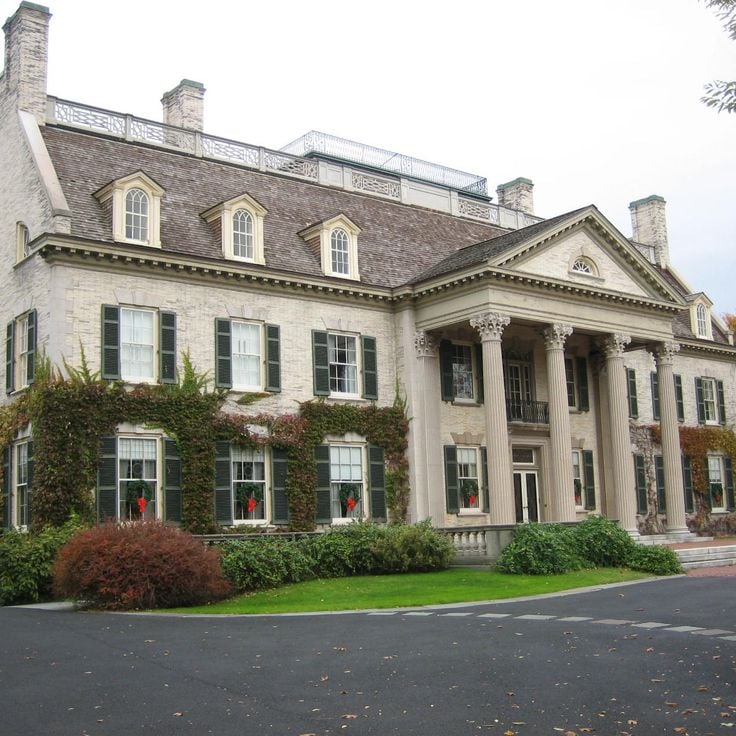
The George Eastman Museum occupies a residence built in 1905 in Rochester, New York, where George Eastman lived after founding the Kodak company. The house holds fifty rooms and shows how a successful industrialist organized his daily life at the turn of the twentieth century. Since 1947 the building has served as a museum collecting cameras, photographs and films from around the world. Visitors walk through rooms that combine period furnishings with displays on the history and technique of photography. The surrounding gardens include areas where Eastman experimented with plants and enjoyed time outdoors.