See the monuments around you in AROpen chests in the app
Around Us is built for your phone — point your camera at the streets and discover the monuments and places around you in augmented reality.Around Us is built for your phone — chests unlock when you walk, explore and capture nearby places.
Historical monuments in Dresden: baroque churches, Saxon palaces, art museums
Dresden has many monuments that show centuries of history. The heart of the city has baroque churches like the Frauenkirche, rebuilt stone by stone after the war. There are fancy palaces such as the Zwinger, with its collections of porcelain and old paintings. You also find cultural places like the Semperoper, where operas and concerts have been played since the middle of the 1800s. The Brühl promenade runs along the Elbe river, giving a peaceful view of the river and the old town.
Beyond the main sites, the city keeps quieter spots. The Hygiene Museum shows exhibits about the human body in a building from the thirties. The Albertinum has modern and contemporary art. A few miles from the center, Moritzburg Castle reflects in the water of its moat and is surrounded by forests. In the city, places like Kunsthofpassage or old shops like Pfunds Dairy remind you of everyday life from long ago. It all makes a walk with a mix of big monuments and small details.
Historical monuments in Dresden: baroque churches, Saxon palaces, art museums
Dresden has many monuments that show centuries of history. The heart of the city has baroque churches like the Frauenkirche, rebuilt stone by stone after the war. There are fancy palaces such as the Zwinger, with its collections of porcelain and old paintings. You also find cultural places like the Semperoper, where operas and concerts have been played since the middle of the 1800s. The Brühl promenade runs along the Elbe river, giving a peaceful view of the river and the old town.
Beyond the main sites, the city keeps quieter spots. The Hygiene Museum shows exhibits about the human body in a building from the thirties. The Albertinum has modern and contemporary art. A few miles from the center, Moritzburg Castle reflects in the water of its moat and is surrounded by forests. In the city, places like Kunsthofpassage or old shops like Pfunds Dairy remind you of everyday life from long ago. It all makes a walk with a mix of big monuments and small details.
The Frauenkirche stands among the most visible structures in the old town and rises with its pale stone facade above the Neumarkt square. After its destruction in February forty five the church was rebuilt stone by stone, with dark fragments of the old walls inserted into the new masonry. These contrasting shades give the building a speckled appearance and remind visitors of its turbulent past. Inside a wide space opens beneath a tall dome surrounded by several galleries. Light enters through large windows and illuminates simple furnishings that focus on essentials. The church is still used for services and occasional concerts, while visitors can climb the dome for a view across the rooftops and the river.
The Zwinger consists of several pavilions and galleries arranged around a broad inner courtyard, built in the eighteenth century as the festival grounds of the Saxon electors. The facades display baroque ornaments, statues and curving forms. Today the building houses various collections, including the Old Masters Picture Gallery with works of European painting, an extensive porcelain collection and the Mathematical Physical Salon with historical instruments and clocks. The galleries lead through tall rooms with stucco ceilings and wide windows. In the inner courtyard fountains and lawns invite visitors to linger in good weather. The ensemble combines courtly architecture with museum spaces and stands centrally in Dresden's old town, a few steps from the Elbe.
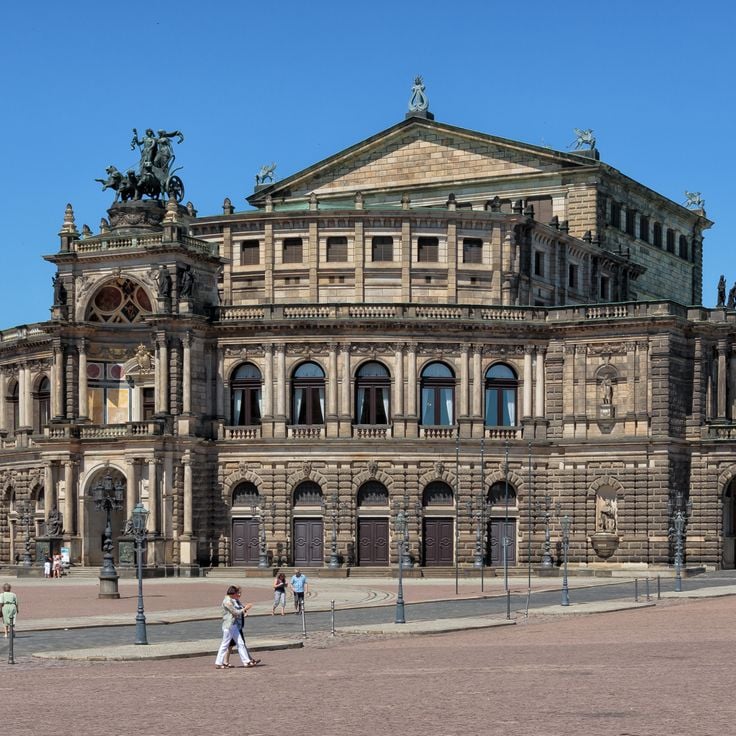
The Semperoper stands on Theaterplatz and has served as a venue for operas, ballets and classical concerts since it first opened in the mid nineteenth century. The building follows a Renaissance revival style with a facade of pale sandstone and a dome visible from various points in the old town. The interior offers a large hall with tiers, stucco and chandeliers, where Wagner and Strauss are heard. After the destruction of the Second World War the house was rebuilt and reopened in 1985.
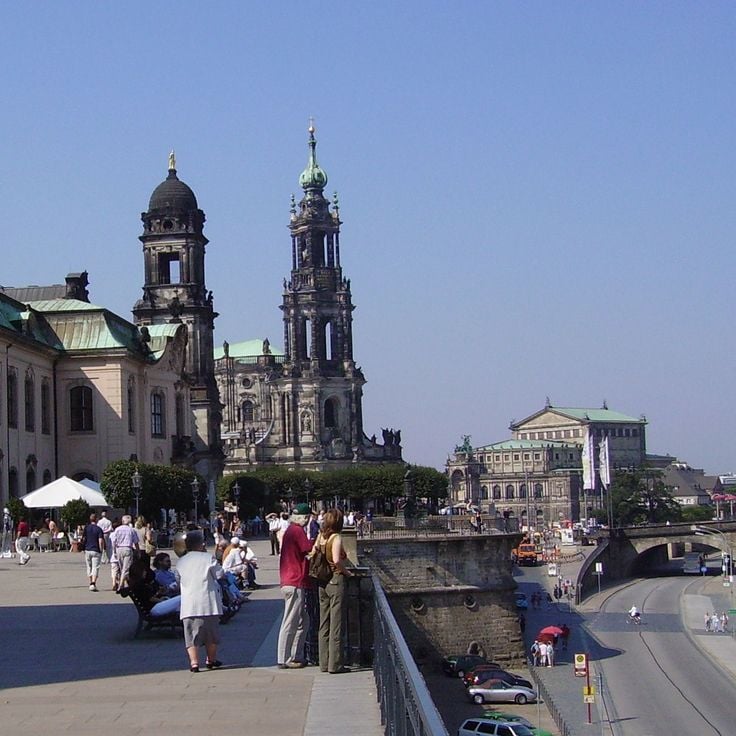
The Brühl Terrace runs along the Elbe above the water level and traces back to fortifications from the sixteenth century. This elevated walk offers a calm view over the river and the rooftops of the old town. Benches invite you to sit while passersby enjoy the panorama or simply watch the activity on the water. Mornings tend to be quiet, while afternoons draw locals and visitors alike. The surrounding architecture reflects different periods, from baroque to the nineteenth century.
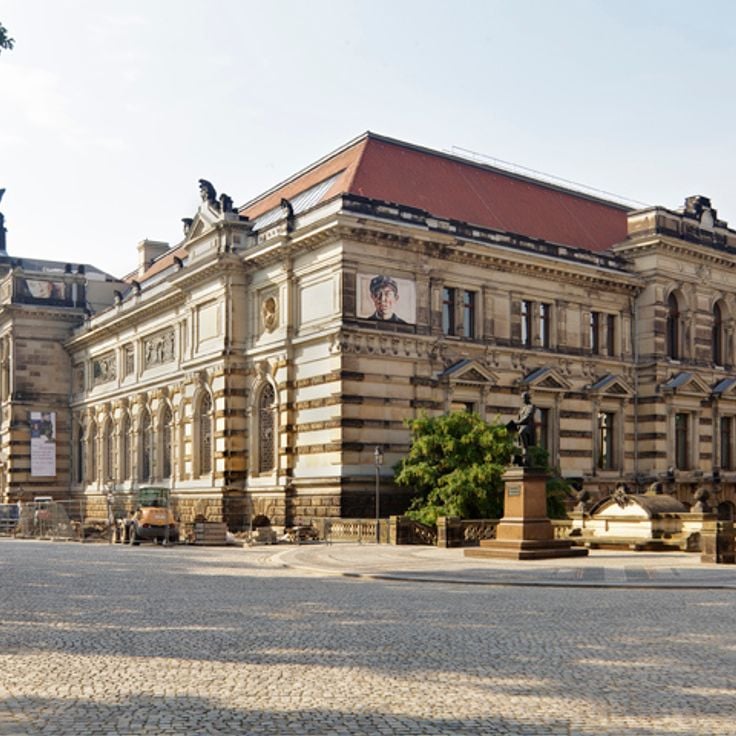
The museum displays paintings and sculptures from the nineteenth century to the present day. The collection focuses on German artists and works created across Europe. You will find paintings of impressionism, romanticism and later movements, often showing landscapes, portraits and scenes from everyday life. On the upper floor sculptures are arranged so you can view them from different angles. The rooms are quiet and light falls evenly on the walls. The building has been rebuilt several times and now carries a modern glass facade. You can walk through the halls without hurrying and take your time.
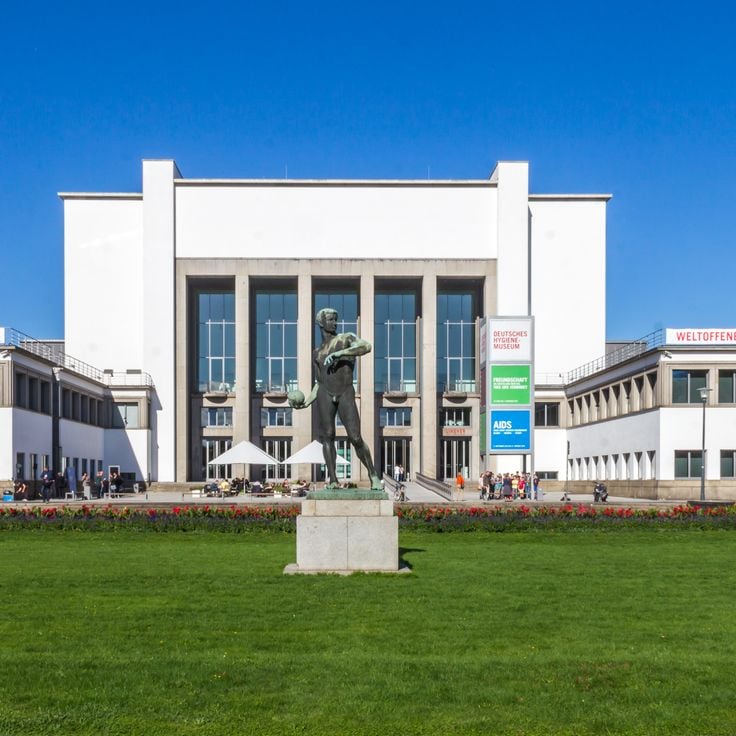
The Hygiene Museum presents exhibitions about the human body, nutrition and medical history inside a building from the thirties. The collections combine science with everyday culture and explain in simple terms how the body works. In the rooms stand anatomical models, historical instruments and interactive stations that invite understanding. The museum was originally founded to spread knowledge about health and hygiene and still keeps this educational character today. Some halls focus on the history of medicine in Dresden, others on sports or nutrition. The place feels quiet and suits visitors who want to take time to think about the body.
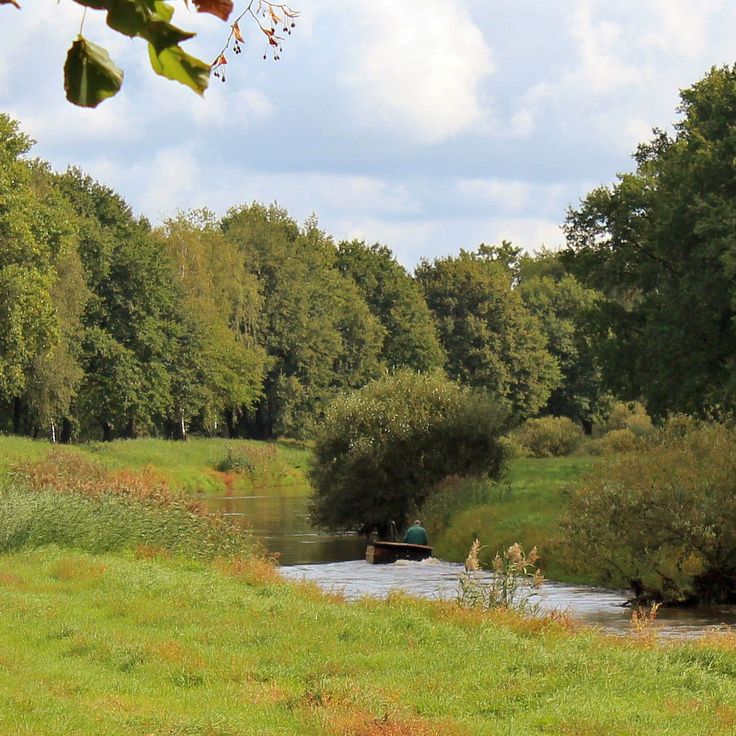
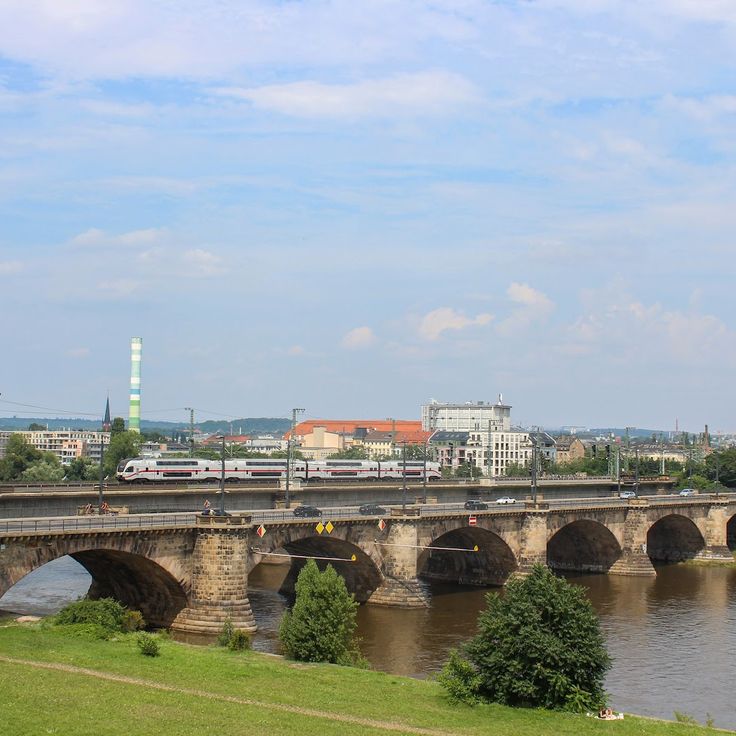
The Elbe divides Dresden into two halves and flows quietly through the city. Along its banks lie meadows, walking paths and old buildings that reflect in the water. From the river you see the silhouette of the old town with its towers and domes. In summer people sit by the shore, some take small boats or ferries from one side to the other. The river connects Dresden with Hamburg to the north and the Czech Republic to the south, but within the city itself it feels mostly like a broad, open space between neighborhoods. In some places there are bridges made of stone or steel, in others just green areas and trees down to the water.
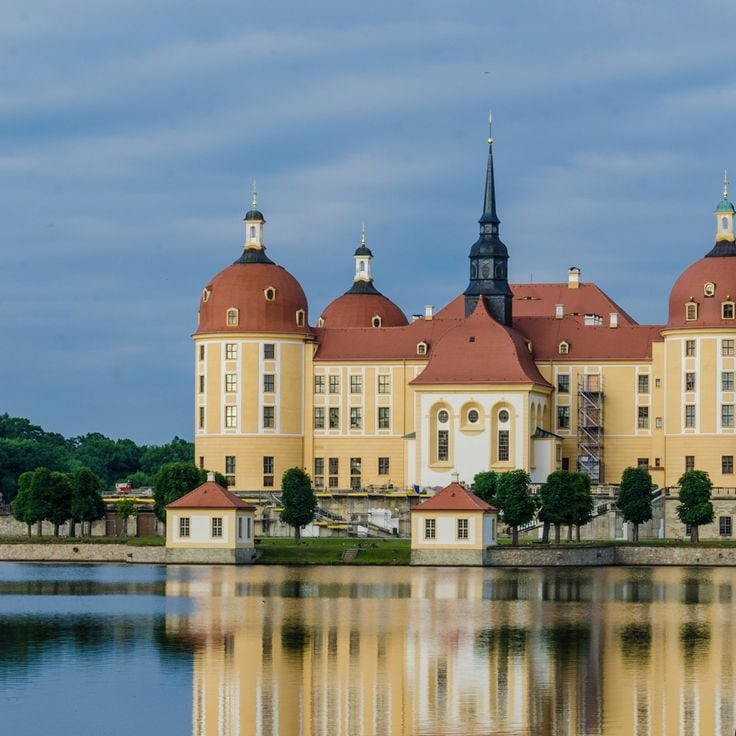
Moritzburg Castle sits a few miles north of Dresden and draws visitors with its position in the middle of an artificial lake. The four round towers and ochre facade reflect in the still water of the moat while forests surround the ensemble. Inside, the castle preserves an extensive collection of hunting trophies and historic weapons that recall the era of Saxon electors. Rooms are furnished with leather, gilded furniture and paintings, the dining hall still displays the original porcelain. Visitors stroll through the galleries or walk around the lake, in summer families come for walks, in winter the place feels quieter.
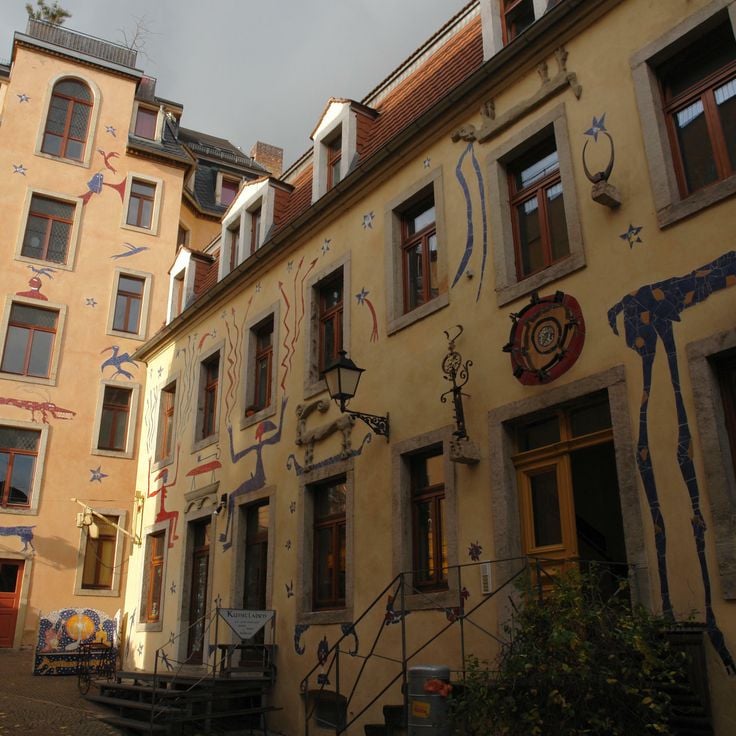
This courtyard passage in the Neustadt district connects several buildings through a series of narrow walkways whose facades have been artistically transformed. The walls display installations such as drainpipes shaped like musical instruments or colorful mosaics that reveal small details as you pass by. Shops, studios and cafes line the courtyards, creating a quiet atmosphere away from the main streets. The Kunsthofpassage is open during the day and is mainly used by residents and visitors looking for small finds or a moment of calm.
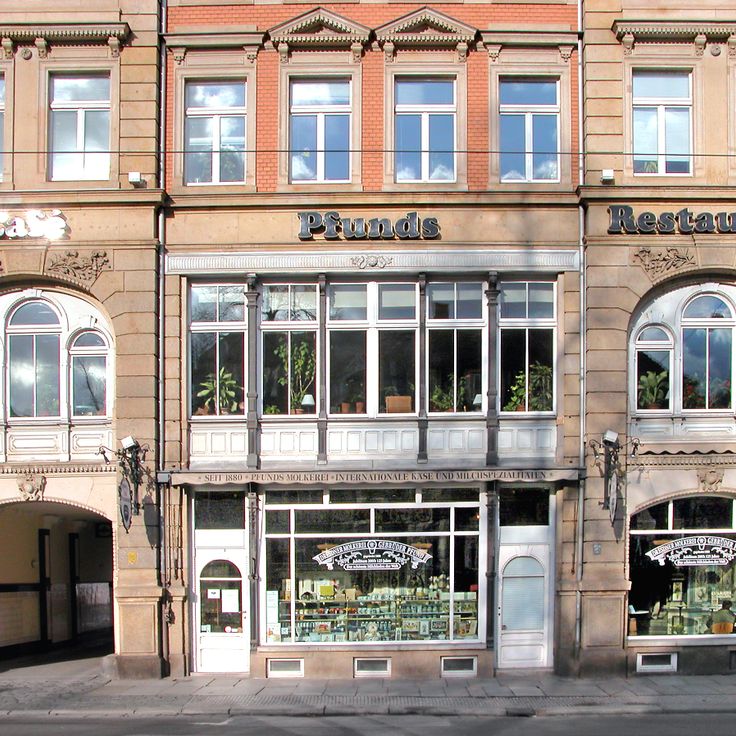
This historic dairy shop is among the oldest businesses of its kind in Dresden and was founded in the late nineteenth century. The interior is entirely covered with hand painted ceramic tiles that line the walls and ceiling, showing floral motifs and scenes from milk production. The shop still sells dairy products, cheese and regional specialities. The tiles give the room a warm light and create an atmosphere that recalls the food culture around the turn of the century. Visitors come both for the products and for the unusual design that sets this store apart from an ordinary creamery.
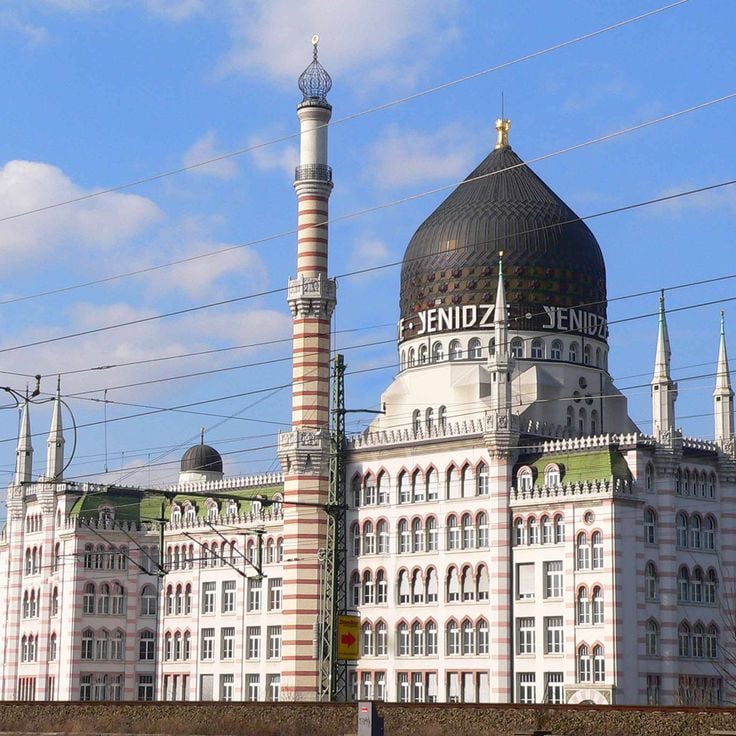
This former cigarette factory rises like an oriental vision on the edge of Dresden's old town. The building was constructed at the start of the twentieth century, when the architect chose an unusual design: the tower recalls a minaret, the dome is decorated with bright colors and the facade carries Moorish elements. At the time, the exotic appearance was meant to evoke the origin of tobacco and distinguish the factory from other industrial buildings. Today the Yenidze houses offices and a restaurant beneath the glass dome, from where you can look out over the rooftops of the city. The structure stands as a witness to an era when advertising and architecture combined in unexpected ways. It remains a curious contrast between industrial function and oriental form, one that catches the eye in the Dresden cityscape.
The Great Garden spreads across a wide area in the middle of Dresden and forms a quiet green space between the neighborhoods. Broad avenues run through the park, lined with old trees that provide shade in summer. At the center stands a baroque palace from the seventeenth century, surrounded by geometrically laid paths and open lawns. On weekends families come to walk, joggers use the long straight stretches, and in spring rhododendrons bloom along the paths. A narrow park railway runs through the grounds and connects different areas with each other. The Great Garden also houses a zoo and a botanical garden, located in the southern part. On sunny days the meadows fill with people who picnic or simply lie in the sun. The atmosphere is relaxed and spacious, a place to breathe between the historic buildings of the city.
This procession stretches along the outer wall of a building on Augustusstrasse and depicts rulers of the Wettin dynasty. The ensemble was first painted in the late nineteenth century and then transposed into Meissen porcelain between 1904 and 1907 using more than twenty thousand tiles. Figures on horseback or on foot follow one another in historical order, reflecting Saxon power over eight centuries. As you pass by, you recognise dukes, electors and kings accompanied by scholars, artists and soldiers who embody the cultural and political life of the time.
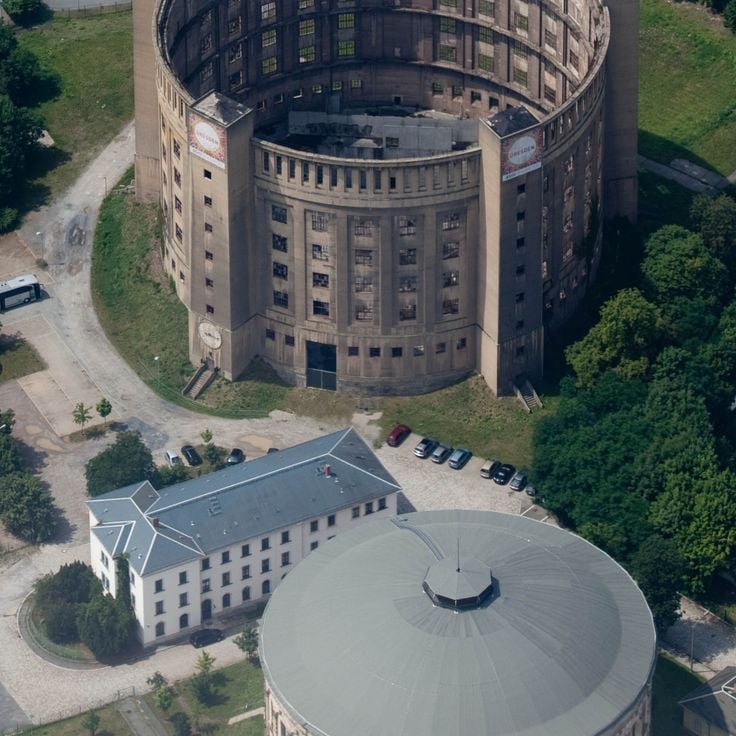
This panorama shows Dresden as it was before the war. Artist Yadegar Asisi reconstructed the old town inside a round gasometer so you feel you are standing in the middle of the historic center. You see the buildings, the bridges over the Elbe, the alleyways and daily life from another era. Light changes slowly and simulates the passage from day to night. The installation uses a former industrial structure and offers a quiet moment to observe and compare with the city today.
The Green Vault sits inside the Royal Palace and displays the treasures collected by the Saxon rulers. The rooms are divided into two sections: the historic vault with its mirrored cabinets and wall decorations, and the modern vault where objects stand freely on pedestals. You see jewelry made from ivory, gold and precious stones, elaborate vessels and small figures carved with great precision. The collection was assembled in the eighteenth century at the request of Augustus the Strong, who gathered the finest pieces from across Europe. The atmosphere feels like a treasure chamber where every detail glimmers and sparkles. Some halls remain dimly lit so that spotlights bring out the brilliance of each object.
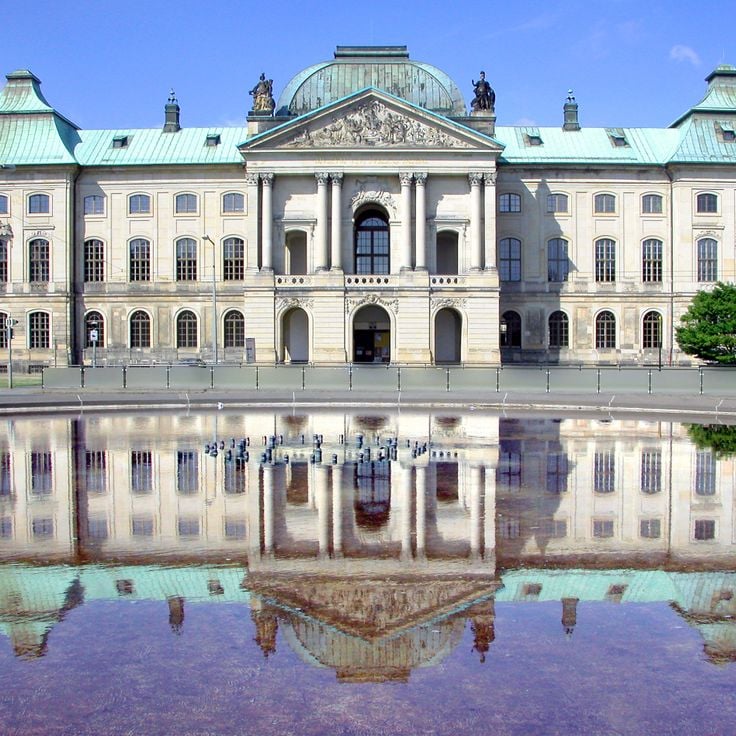
The Japanese Palace rises north of the Elbe, somewhat removed from the main axis of the old town. The ochre facade from the eighteenth century now houses several collections, including the Museum of Ethnology with objects from various continents and the Regional Museum of Prehistory, which displays archaeological finds from Saxony. The inner courtyard with its arcades invites rest, while the rooms inside maintain a quiet atmosphere, far from the crowds at the major museums in the Zwinger or Albertinum.
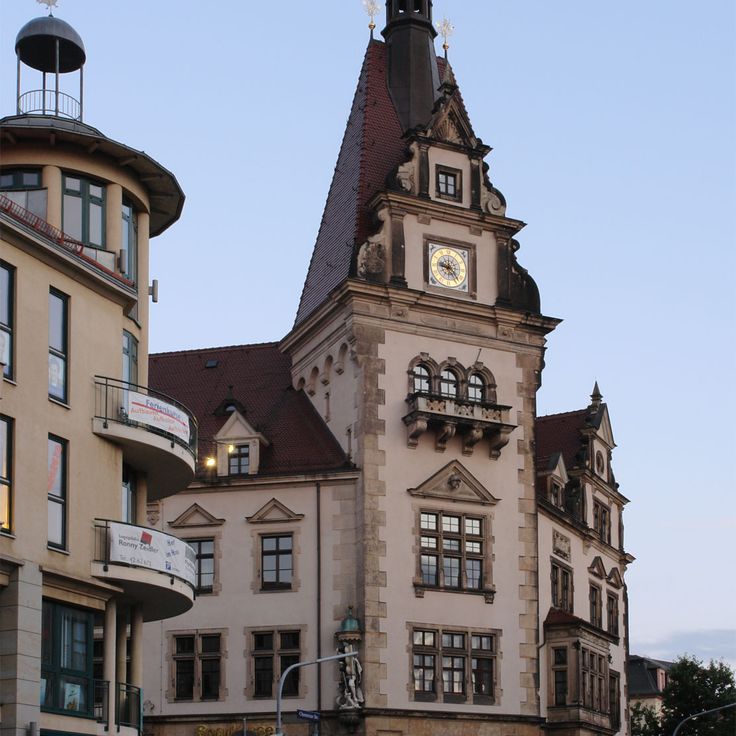
This city hall rises at the edge of the old town, a massive building in yellowish sandstone completed at the beginning of the twentieth century. Its tower dominates the nearby streets and serves as a landmark for walkers going from Postplatz toward Wilsdruffer Strasse. The facade shows typical forms of the period with bay windows and decorative elements, while inside administrative offices and meeting rooms house the political life of the city. The city hall is not located in the heart of baroque splendor, but its placement marks the transition between the historic center and the newer districts that emerged after the destructions.
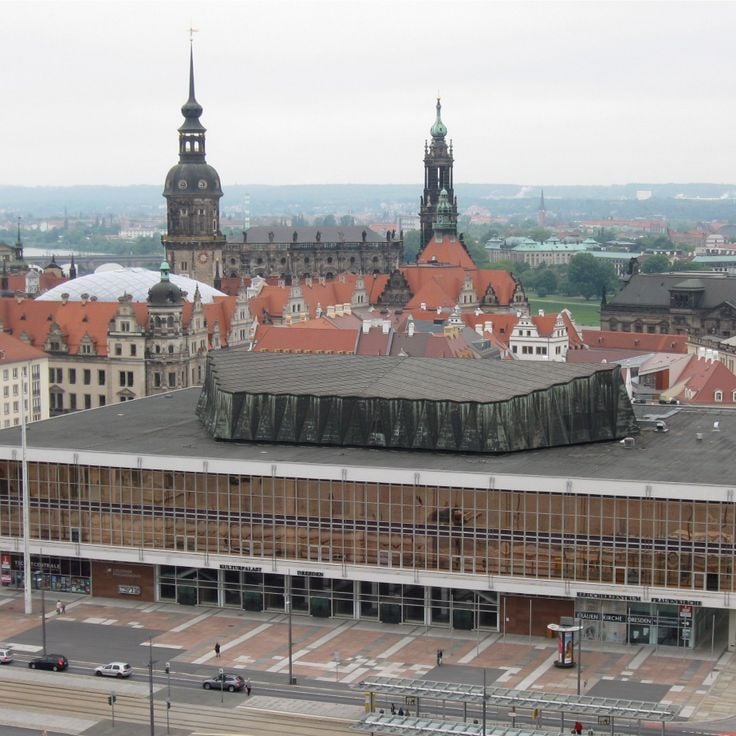
The Kulturpalast Dresden welcomes concert visitors in a building from the early nineteen sixties, its plain facade standing on Altmarkt square. The hall was redesigned later to host orchestra evenings and varied events. The interior atmosphere blends original architecture with modern fittings, so music and audience meet in a contemporary setting that works without frills.
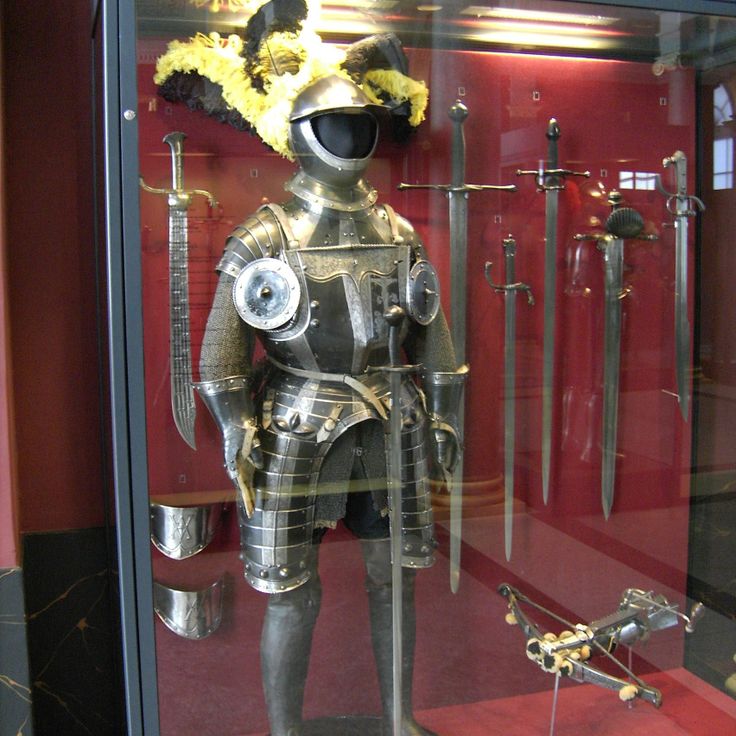
This armory belongs to the important collections of Europe and shows weapons, armor and ceremonial objects from several centuries. The exhibition includes harnesses of Saxon electors, richly decorated swords, tournament equipment and display weapons made for parades and court occasions. You see helmets with gilded details, sabers with gemstone inlays and armor that was once worn during festive processions. The objects date from the Renaissance to the eighteenth century and show the wealth and power of the Wettin dynasty. The rooms are located in the Residenzschloss and form part of Dresden's historical treasure. The collection gives an impression of courtly representation and military equipment from past epochs.
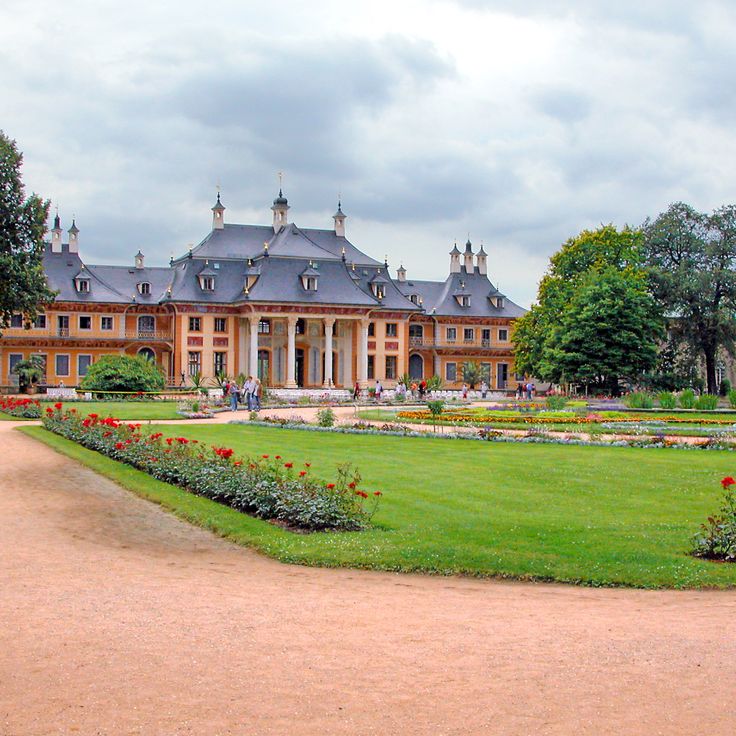
Pillnitz Palace stands on the eastern edge of the city and once served as a summer residence for Saxon rulers. Three eighteenth century buildings frame a quiet inner courtyard that opens toward the Elbe. The architecture combines baroque discipline with hints of Eastern forms. In the park grow old trees, including a camellia that has been protected in its own glasshouse for over two hundred years. Wide paths lead through gardens with carefully arranged beds, while on the other side of the palace grounds meadows and woodland spread out. On warm days visitors stroll between the pavilions or sit on a bench by the riverbank. Inside, several halls display historical furniture and craft collections. The ensemble conveys the impression of a place that once served pleasure and representation and today invites lingering.
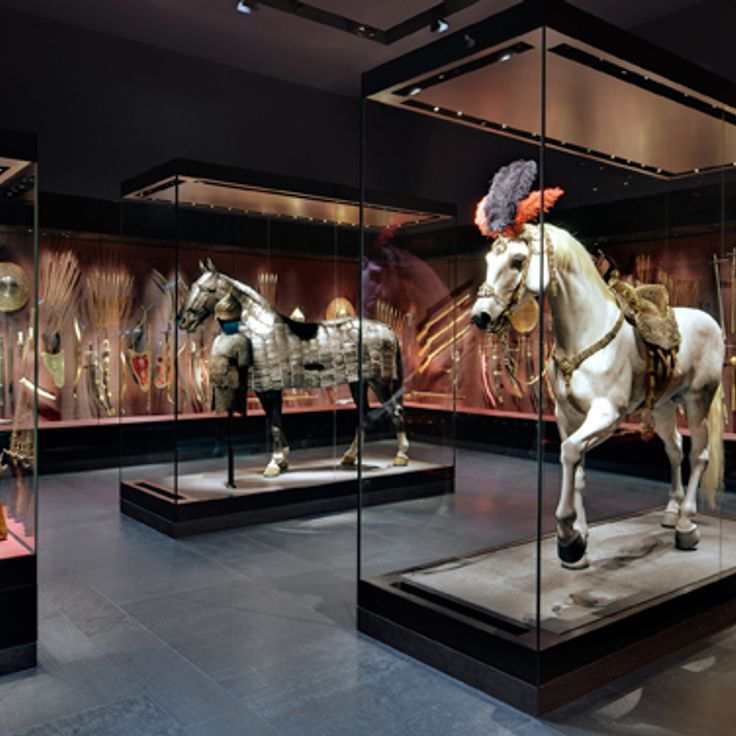
The Turkish Chamber displays Ottoman art, weapons and armor from the sixteenth to nineteenth centuries in the Dresden Royal Palace. The collection grew from diplomatic gifts that Ottoman sultans sent to Saxon electors and reflects the cultural exchange between both courts. The rooms hold precious sabers with decorated scabbards, ceremonial tents made of embroidered fabric, armor with intricate patterns and horse harnesses set with gemstones. These objects preserve the fascination Saxon rulers felt for oriental culture and document an era when such treasures served as signs of political ties. Walking through the collection gives a sense of the splendor of Ottoman craftsmanship and the curiosity European courts felt toward distant traditions.
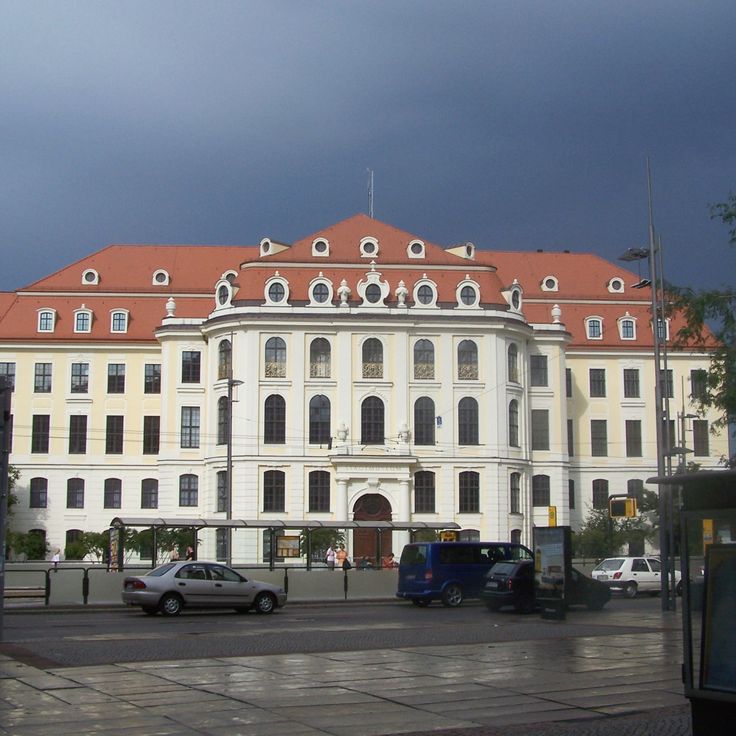
The City Museum documents the history of Dresden from the twelfth century to the present through everyday objects, detailed models of past city views and multimedia presentations that make the transformation of the city over the centuries understandable and offer insight into the lives of its inhabitants.
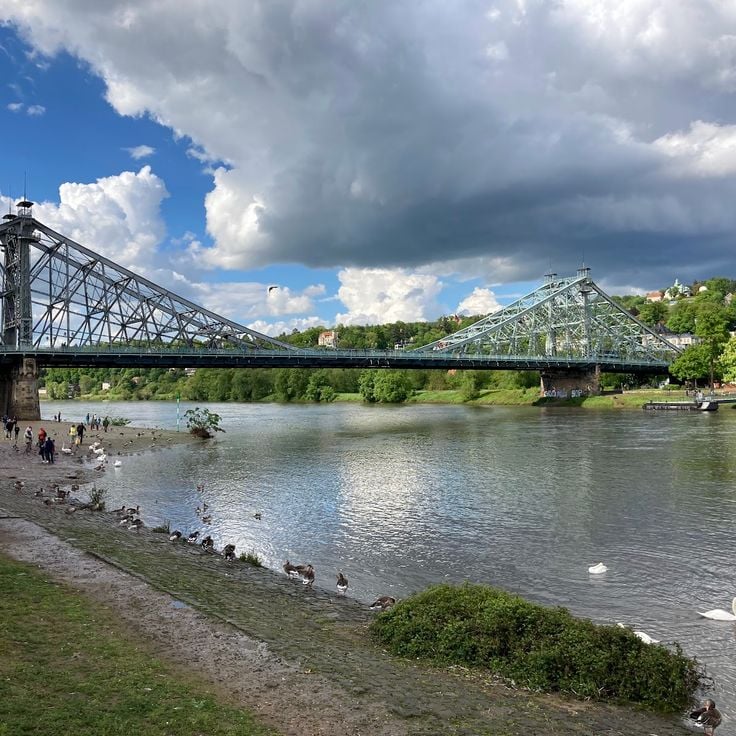
This steel structure from the late nineteenth century spans the Elbe without supporting piers in the water and connects the neighborhoods of Blasewitz and Loschwitz. The construction rests on abutments along the banks and forms a gentle arch over the river. Pedestrians cross on narrow sidewalks beside the traffic lanes, with views upstream toward the old town skyline and downstream toward forested slopes. The metal is painted light blue, giving the Blue Wonder bridge its popular name. Vehicles share the roadway with trams that run regularly between both shores. On many days walkers gather on the bridge, lean against the railing and watch excursion steamers or rowers. This structure belongs to Dresden's landmarks and shows how turn of the century engineering shaped everyday routes.
The Military History Museum of the Bundeswehr displays German military history inside a converted nineteenth century arsenal. The collection spans from the Middle Ages to contemporary operations and includes uniforms, weapons, aircraft and personal items from soldiers. Architect Daniel Libeskind inserted a wedge of glass and metal into the classical brick building, cutting through the old structure and remaining visible from afar. The exhibition raises questions about violence, the role of armies in society and the consequences of wars, without limiting itself to a purely military perspective.
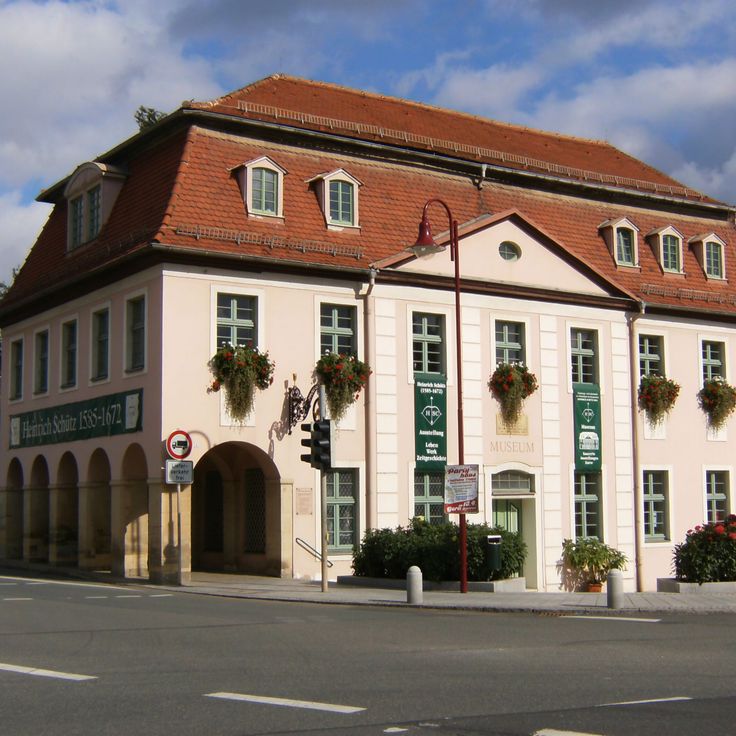
This house recalls Heinrich Schütz, one of the most important German composers of the seventeenth century. He directed the court chapel in Dresden for decades and shaped Protestant church music with works that stand between Italian opera and German tradition. The facade shows simple forms from an era when the city was slowly recovering from the devastation of the Thirty Years War. Inside, rooms document his life and his compositions, which were performed across Europe. You sense the atmosphere of a time when music played a central role in the daily life of courts and churches. The building fits into the baroque ensemble of Dresden's old town and offers a quiet place for visitors interested in the beginnings of German musical history.
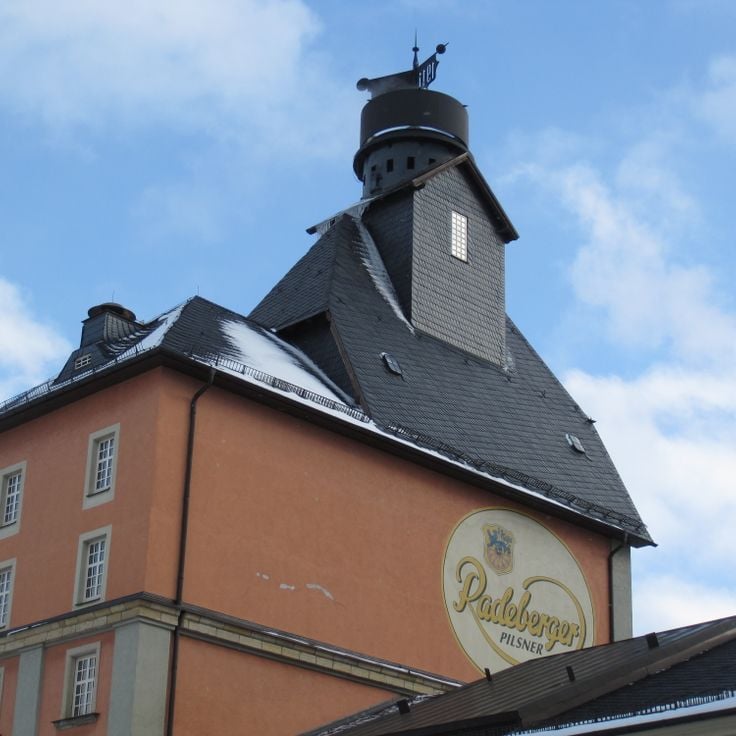
The Radeberger brewery supplied beer to the Saxon royal court for over a hundred and fifty years, shaping part of the local brewing tradition. Today the brewery stands in Radeberg, a small town near Dresden, where tours show the brewing process and the history of the company. Inside the halls the air smells of malt and hops, while copper kettles and old machines recall earlier times. At the end of the tour visitors can often sample freshly tapped beer. The brewery combines craft skill with a long connection to Saxon court culture.
The Staatsoperette Dresden is the only independent operetta theater in Germany and presents a repertoire of light operas, musicals and classic operettas. Performances take place at Kraftwerk Mitte, a former industrial building from the twentieth century that now serves as a cultural center. The program changes regularly and ranges from nineteenth century works to contemporary productions. The atmosphere is more informal than in grand opera houses, the audience sits close to the stage and the acoustics match the style of the pieces. The theater belongs to the cultural landscape of the city and attracts visitors who appreciate lighter musical forms.
The Marienbrücke crosses the Elbe and links both sides of Dresden. From this historic bridge you can see upstream the silhouette of the baroque old town with the dome of the Frauenkirche and the towers of the palace, while downstream the green Elbe valley opens up. Walkers often pause at the railing to watch boats or simply look at the wide river. The bridge is part of daily life in Dresden, used by cyclists, pedestrians and trams. Its steel arch and simple construction fit quietly into the landscape without competing with the monuments along the banks.
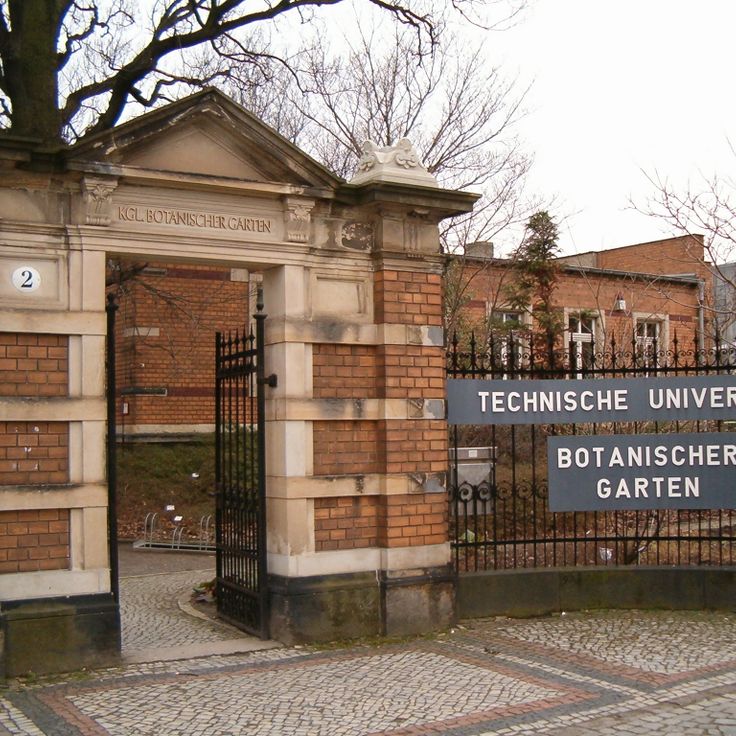
The Dresden Botanical Garden houses several thousand plant species spread across different sections. You can find greenhouses with tropical plants, outdoor beds with native perennials and thematic areas that recreate various climate zones. The garden belongs to the Technical University and serves both research purposes and quiet strolls among trees and flower beds. In the Victoria House water lilies and other aquatic plants thrive in a humid climate, while the succulent collection displays cacti and other drought loving species. Paths lead through shaded areas and open lawns, past old tree stands and carefully arranged borders. On warm days visitors sit on benches between the beds or watch insects moving from blossom to blossom. The garden sits somewhat outside the historic center and offers a break from urban bustle, without the typical rush of larger parks.
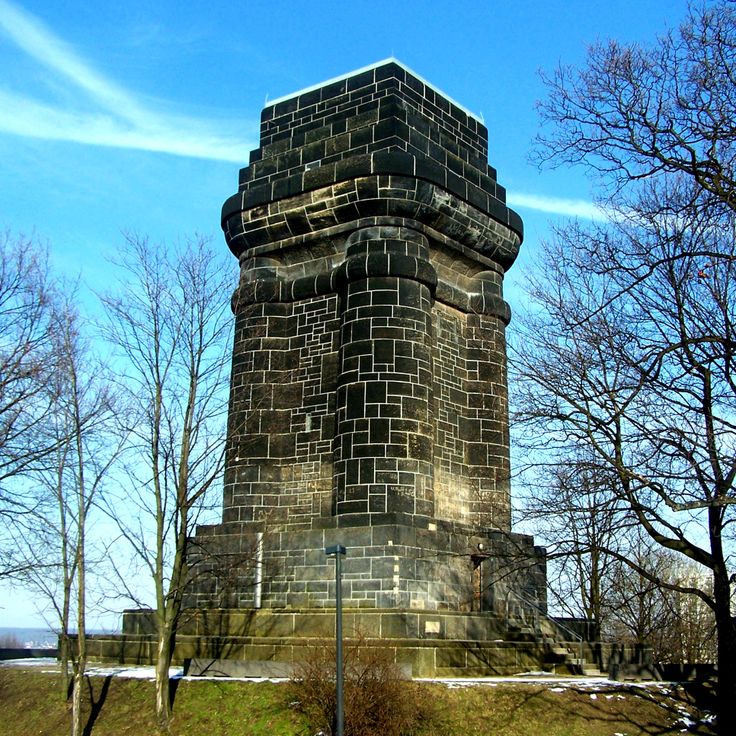
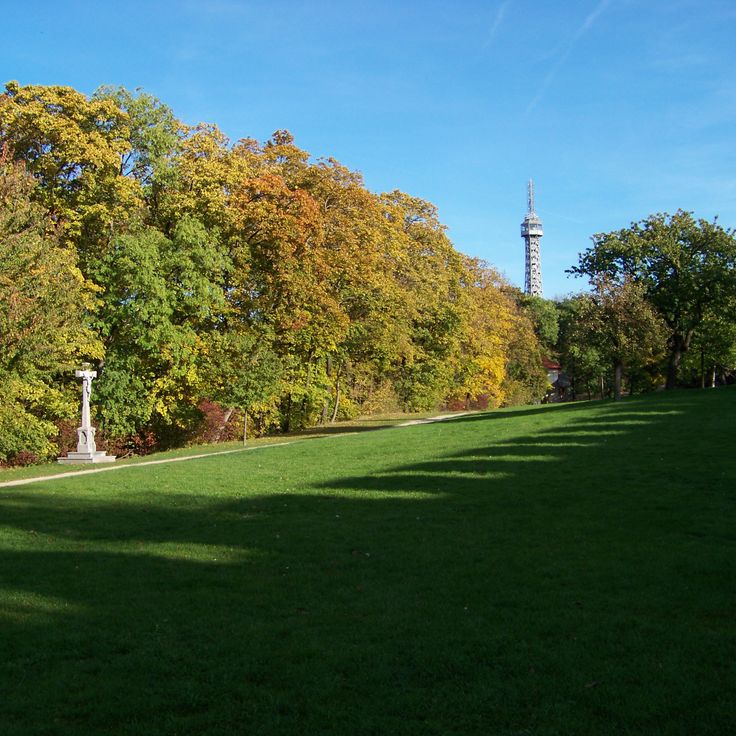
This Bismarck Tower stands on a low rise in the southeast of Dresden and honors the memory of Otto von Bismarck. The structure dates from the early twentieth century and recalls medieval fortifications. From the top you can see over the rooftops all the way to the old town and the Elbe. The place rests quietly in the greenery, far from the main tourist flows, and appeals mostly to walkers and cyclists who explore the surrounding forests.
The Frauenkirche stands among the most visible structures in the old town and rises with its pale stone facade above the Neumarkt square. After its destruction in February forty five the church was rebuilt stone by stone, with dark fragments of the old walls inserted into the new masonry. These contrasting shades give the building a speckled appearance and remind visitors of its turbulent past. Inside a wide space opens beneath a tall dome surrounded by several galleries. Light enters through large windows and illuminates simple furnishings that focus on essentials. The church is still used for services and occasional concerts, while visitors can climb the dome for a view across the rooftops and the river.
The Zwinger consists of several pavilions and galleries arranged around a broad inner courtyard, built in the eighteenth century as the festival grounds of the Saxon electors. The facades display baroque ornaments, statues and curving forms. Today the building houses various collections, including the Old Masters Picture Gallery with works of European painting, an extensive porcelain collection and the Mathematical Physical Salon with historical instruments and clocks. The galleries lead through tall rooms with stucco ceilings and wide windows. In the inner courtyard fountains and lawns invite visitors to linger in good weather. The ensemble combines courtly architecture with museum spaces and stands centrally in Dresden's old town, a few steps from the Elbe.
The Semperoper stands on Theaterplatz and has served as a venue for operas, ballets and classical concerts since it first opened in the mid nineteenth century. The building follows a Renaissance revival style with a facade of pale sandstone and a dome visible from various points in the old town. The interior offers a large hall with tiers, stucco and chandeliers, where Wagner and Strauss are heard. After the destruction of the Second World War the house was rebuilt and reopened in 1985.
The Brühl Terrace runs along the Elbe above the water level and traces back to fortifications from the sixteenth century. This elevated walk offers a calm view over the river and the rooftops of the old town. Benches invite you to sit while passersby enjoy the panorama or simply watch the activity on the water. Mornings tend to be quiet, while afternoons draw locals and visitors alike. The surrounding architecture reflects different periods, from baroque to the nineteenth century.
The museum displays paintings and sculptures from the nineteenth century to the present day. The collection focuses on German artists and works created across Europe. You will find paintings of impressionism, romanticism and later movements, often showing landscapes, portraits and scenes from everyday life. On the upper floor sculptures are arranged so you can view them from different angles. The rooms are quiet and light falls evenly on the walls. The building has been rebuilt several times and now carries a modern glass facade. You can walk through the halls without hurrying and take your time.
The Hygiene Museum presents exhibitions about the human body, nutrition and medical history inside a building from the thirties. The collections combine science with everyday culture and explain in simple terms how the body works. In the rooms stand anatomical models, historical instruments and interactive stations that invite understanding. The museum was originally founded to spread knowledge about health and hygiene and still keeps this educational character today. Some halls focus on the history of medicine in Dresden, others on sports or nutrition. The place feels quiet and suits visitors who want to take time to think about the body.
The Elbe divides Dresden into two halves and flows quietly through the city. Along its banks lie meadows, walking paths and old buildings that reflect in the water. From the river you see the silhouette of the old town with its towers and domes. In summer people sit by the shore, some take small boats or ferries from one side to the other. The river connects Dresden with Hamburg to the north and the Czech Republic to the south, but within the city itself it feels mostly like a broad, open space between neighborhoods. In some places there are bridges made of stone or steel, in others just green areas and trees down to the water.
Moritzburg Castle sits a few miles north of Dresden and draws visitors with its position in the middle of an artificial lake. The four round towers and ochre facade reflect in the still water of the moat while forests surround the ensemble. Inside, the castle preserves an extensive collection of hunting trophies and historic weapons that recall the era of Saxon electors. Rooms are furnished with leather, gilded furniture and paintings, the dining hall still displays the original porcelain. Visitors stroll through the galleries or walk around the lake, in summer families come for walks, in winter the place feels quieter.
This courtyard passage in the Neustadt district connects several buildings through a series of narrow walkways whose facades have been artistically transformed. The walls display installations such as drainpipes shaped like musical instruments or colorful mosaics that reveal small details as you pass by. Shops, studios and cafes line the courtyards, creating a quiet atmosphere away from the main streets. The Kunsthofpassage is open during the day and is mainly used by residents and visitors looking for small finds or a moment of calm.
This historic dairy shop is among the oldest businesses of its kind in Dresden and was founded in the late nineteenth century. The interior is entirely covered with hand painted ceramic tiles that line the walls and ceiling, showing floral motifs and scenes from milk production. The shop still sells dairy products, cheese and regional specialities. The tiles give the room a warm light and create an atmosphere that recalls the food culture around the turn of the century. Visitors come both for the products and for the unusual design that sets this store apart from an ordinary creamery.
This former cigarette factory rises like an oriental vision on the edge of Dresden's old town. The building was constructed at the start of the twentieth century, when the architect chose an unusual design: the tower recalls a minaret, the dome is decorated with bright colors and the facade carries Moorish elements. At the time, the exotic appearance was meant to evoke the origin of tobacco and distinguish the factory from other industrial buildings. Today the Yenidze houses offices and a restaurant beneath the glass dome, from where you can look out over the rooftops of the city. The structure stands as a witness to an era when advertising and architecture combined in unexpected ways. It remains a curious contrast between industrial function and oriental form, one that catches the eye in the Dresden cityscape.
The Great Garden spreads across a wide area in the middle of Dresden and forms a quiet green space between the neighborhoods. Broad avenues run through the park, lined with old trees that provide shade in summer. At the center stands a baroque palace from the seventeenth century, surrounded by geometrically laid paths and open lawns. On weekends families come to walk, joggers use the long straight stretches, and in spring rhododendrons bloom along the paths. A narrow park railway runs through the grounds and connects different areas with each other. The Great Garden also houses a zoo and a botanical garden, located in the southern part. On sunny days the meadows fill with people who picnic or simply lie in the sun. The atmosphere is relaxed and spacious, a place to breathe between the historic buildings of the city.
This procession stretches along the outer wall of a building on Augustusstrasse and depicts rulers of the Wettin dynasty. The ensemble was first painted in the late nineteenth century and then transposed into Meissen porcelain between 1904 and 1907 using more than twenty thousand tiles. Figures on horseback or on foot follow one another in historical order, reflecting Saxon power over eight centuries. As you pass by, you recognise dukes, electors and kings accompanied by scholars, artists and soldiers who embody the cultural and political life of the time.
This panorama shows Dresden as it was before the war. Artist Yadegar Asisi reconstructed the old town inside a round gasometer so you feel you are standing in the middle of the historic center. You see the buildings, the bridges over the Elbe, the alleyways and daily life from another era. Light changes slowly and simulates the passage from day to night. The installation uses a former industrial structure and offers a quiet moment to observe and compare with the city today.
The Green Vault sits inside the Royal Palace and displays the treasures collected by the Saxon rulers. The rooms are divided into two sections: the historic vault with its mirrored cabinets and wall decorations, and the modern vault where objects stand freely on pedestals. You see jewelry made from ivory, gold and precious stones, elaborate vessels and small figures carved with great precision. The collection was assembled in the eighteenth century at the request of Augustus the Strong, who gathered the finest pieces from across Europe. The atmosphere feels like a treasure chamber where every detail glimmers and sparkles. Some halls remain dimly lit so that spotlights bring out the brilliance of each object.
The Japanese Palace rises north of the Elbe, somewhat removed from the main axis of the old town. The ochre facade from the eighteenth century now houses several collections, including the Museum of Ethnology with objects from various continents and the Regional Museum of Prehistory, which displays archaeological finds from Saxony. The inner courtyard with its arcades invites rest, while the rooms inside maintain a quiet atmosphere, far from the crowds at the major museums in the Zwinger or Albertinum.
This city hall rises at the edge of the old town, a massive building in yellowish sandstone completed at the beginning of the twentieth century. Its tower dominates the nearby streets and serves as a landmark for walkers going from Postplatz toward Wilsdruffer Strasse. The facade shows typical forms of the period with bay windows and decorative elements, while inside administrative offices and meeting rooms house the political life of the city. The city hall is not located in the heart of baroque splendor, but its placement marks the transition between the historic center and the newer districts that emerged after the destructions.
The Kulturpalast Dresden welcomes concert visitors in a building from the early nineteen sixties, its plain facade standing on Altmarkt square. The hall was redesigned later to host orchestra evenings and varied events. The interior atmosphere blends original architecture with modern fittings, so music and audience meet in a contemporary setting that works without frills.
This armory belongs to the important collections of Europe and shows weapons, armor and ceremonial objects from several centuries. The exhibition includes harnesses of Saxon electors, richly decorated swords, tournament equipment and display weapons made for parades and court occasions. You see helmets with gilded details, sabers with gemstone inlays and armor that was once worn during festive processions. The objects date from the Renaissance to the eighteenth century and show the wealth and power of the Wettin dynasty. The rooms are located in the Residenzschloss and form part of Dresden's historical treasure. The collection gives an impression of courtly representation and military equipment from past epochs.
Pillnitz Palace stands on the eastern edge of the city and once served as a summer residence for Saxon rulers. Three eighteenth century buildings frame a quiet inner courtyard that opens toward the Elbe. The architecture combines baroque discipline with hints of Eastern forms. In the park grow old trees, including a camellia that has been protected in its own glasshouse for over two hundred years. Wide paths lead through gardens with carefully arranged beds, while on the other side of the palace grounds meadows and woodland spread out. On warm days visitors stroll between the pavilions or sit on a bench by the riverbank. Inside, several halls display historical furniture and craft collections. The ensemble conveys the impression of a place that once served pleasure and representation and today invites lingering.
The Turkish Chamber displays Ottoman art, weapons and armor from the sixteenth to nineteenth centuries in the Dresden Royal Palace. The collection grew from diplomatic gifts that Ottoman sultans sent to Saxon electors and reflects the cultural exchange between both courts. The rooms hold precious sabers with decorated scabbards, ceremonial tents made of embroidered fabric, armor with intricate patterns and horse harnesses set with gemstones. These objects preserve the fascination Saxon rulers felt for oriental culture and document an era when such treasures served as signs of political ties. Walking through the collection gives a sense of the splendor of Ottoman craftsmanship and the curiosity European courts felt toward distant traditions.
The City Museum documents the history of Dresden from the twelfth century to the present through everyday objects, detailed models of past city views and multimedia presentations that make the transformation of the city over the centuries understandable and offer insight into the lives of its inhabitants.
This steel structure from the late nineteenth century spans the Elbe without supporting piers in the water and connects the neighborhoods of Blasewitz and Loschwitz. The construction rests on abutments along the banks and forms a gentle arch over the river. Pedestrians cross on narrow sidewalks beside the traffic lanes, with views upstream toward the old town skyline and downstream toward forested slopes. The metal is painted light blue, giving the Blue Wonder bridge its popular name. Vehicles share the roadway with trams that run regularly between both shores. On many days walkers gather on the bridge, lean against the railing and watch excursion steamers or rowers. This structure belongs to Dresden's landmarks and shows how turn of the century engineering shaped everyday routes.
The Military History Museum of the Bundeswehr displays German military history inside a converted nineteenth century arsenal. The collection spans from the Middle Ages to contemporary operations and includes uniforms, weapons, aircraft and personal items from soldiers. Architect Daniel Libeskind inserted a wedge of glass and metal into the classical brick building, cutting through the old structure and remaining visible from afar. The exhibition raises questions about violence, the role of armies in society and the consequences of wars, without limiting itself to a purely military perspective.
This house recalls Heinrich Schütz, one of the most important German composers of the seventeenth century. He directed the court chapel in Dresden for decades and shaped Protestant church music with works that stand between Italian opera and German tradition. The facade shows simple forms from an era when the city was slowly recovering from the devastation of the Thirty Years War. Inside, rooms document his life and his compositions, which were performed across Europe. You sense the atmosphere of a time when music played a central role in the daily life of courts and churches. The building fits into the baroque ensemble of Dresden's old town and offers a quiet place for visitors interested in the beginnings of German musical history.
The Radeberger brewery supplied beer to the Saxon royal court for over a hundred and fifty years, shaping part of the local brewing tradition. Today the brewery stands in Radeberg, a small town near Dresden, where tours show the brewing process and the history of the company. Inside the halls the air smells of malt and hops, while copper kettles and old machines recall earlier times. At the end of the tour visitors can often sample freshly tapped beer. The brewery combines craft skill with a long connection to Saxon court culture.
The Staatsoperette Dresden is the only independent operetta theater in Germany and presents a repertoire of light operas, musicals and classic operettas. Performances take place at Kraftwerk Mitte, a former industrial building from the twentieth century that now serves as a cultural center. The program changes regularly and ranges from nineteenth century works to contemporary productions. The atmosphere is more informal than in grand opera houses, the audience sits close to the stage and the acoustics match the style of the pieces. The theater belongs to the cultural landscape of the city and attracts visitors who appreciate lighter musical forms.
The Marienbrücke crosses the Elbe and links both sides of Dresden. From this historic bridge you can see upstream the silhouette of the baroque old town with the dome of the Frauenkirche and the towers of the palace, while downstream the green Elbe valley opens up. Walkers often pause at the railing to watch boats or simply look at the wide river. The bridge is part of daily life in Dresden, used by cyclists, pedestrians and trams. Its steel arch and simple construction fit quietly into the landscape without competing with the monuments along the banks.
The Dresden Botanical Garden houses several thousand plant species spread across different sections. You can find greenhouses with tropical plants, outdoor beds with native perennials and thematic areas that recreate various climate zones. The garden belongs to the Technical University and serves both research purposes and quiet strolls among trees and flower beds. In the Victoria House water lilies and other aquatic plants thrive in a humid climate, while the succulent collection displays cacti and other drought loving species. Paths lead through shaded areas and open lawns, past old tree stands and carefully arranged borders. On warm days visitors sit on benches between the beds or watch insects moving from blossom to blossom. The garden sits somewhat outside the historic center and offers a break from urban bustle, without the typical rush of larger parks.
This Bismarck Tower stands on a low rise in the southeast of Dresden and honors the memory of Otto von Bismarck. The structure dates from the early twentieth century and recalls medieval fortifications. From the top you can see over the rooftops all the way to the old town and the Elbe. The place rests quietly in the greenery, far from the main tourist flows, and appeals mostly to walkers and cyclists who explore the surrounding forests.
The Frauenkirche stands among the most visible structures in the old town and rises with its pale stone facade above the Neumarkt square. After its destruction in February forty five the church was rebuilt stone by stone, with dark fragments of the old walls inserted into the new masonry. These contrasting shades give the building a speckled appearance and remind visitors of its turbulent past. Inside a wide space opens beneath a tall dome surrounded by several galleries. Light enters through large windows and illuminates simple furnishings that focus on essentials. The church is still used for services and occasional concerts, while visitors can climb the dome for a view across the rooftops and the river.
The Zwinger consists of several pavilions and galleries arranged around a broad inner courtyard, built in the eighteenth century as the festival grounds of the Saxon electors. The facades display baroque ornaments, statues and curving forms. Today the building houses various collections, including the Old Masters Picture Gallery with works of European painting, an extensive porcelain collection and the Mathematical Physical Salon with historical instruments and clocks. The galleries lead through tall rooms with stucco ceilings and wide windows. In the inner courtyard fountains and lawns invite visitors to linger in good weather. The ensemble combines courtly architecture with museum spaces and stands centrally in Dresden's old town, a few steps from the Elbe.
The Semperoper stands on Theaterplatz and has served as a venue for operas, ballets and classical concerts since it first opened in the mid nineteenth century. The building follows a Renaissance revival style with a facade of pale sandstone and a dome visible from various points in the old town. The interior offers a large hall with tiers, stucco and chandeliers, where Wagner and Strauss are heard. After the destruction of the Second World War the house was rebuilt and reopened in 1985.
The Brühl Terrace runs along the Elbe above the water level and traces back to fortifications from the sixteenth century. This elevated walk offers a calm view over the river and the rooftops of the old town. Benches invite you to sit while passersby enjoy the panorama or simply watch the activity on the water. Mornings tend to be quiet, while afternoons draw locals and visitors alike. The surrounding architecture reflects different periods, from baroque to the nineteenth century.
The museum displays paintings and sculptures from the nineteenth century to the present day. The collection focuses on German artists and works created across Europe. You will find paintings of impressionism, romanticism and later movements, often showing landscapes, portraits and scenes from everyday life. On the upper floor sculptures are arranged so you can view them from different angles. The rooms are quiet and light falls evenly on the walls. The building has been rebuilt several times and now carries a modern glass facade. You can walk through the halls without hurrying and take your time.
The Hygiene Museum presents exhibitions about the human body, nutrition and medical history inside a building from the thirties. The collections combine science with everyday culture and explain in simple terms how the body works. In the rooms stand anatomical models, historical instruments and interactive stations that invite understanding. The museum was originally founded to spread knowledge about health and hygiene and still keeps this educational character today. Some halls focus on the history of medicine in Dresden, others on sports or nutrition. The place feels quiet and suits visitors who want to take time to think about the body.
The Elbe divides Dresden into two halves and flows quietly through the city. Along its banks lie meadows, walking paths and old buildings that reflect in the water. From the river you see the silhouette of the old town with its towers and domes. In summer people sit by the shore, some take small boats or ferries from one side to the other. The river connects Dresden with Hamburg to the north and the Czech Republic to the south, but within the city itself it feels mostly like a broad, open space between neighborhoods. In some places there are bridges made of stone or steel, in others just green areas and trees down to the water.
Moritzburg Castle sits a few miles north of Dresden and draws visitors with its position in the middle of an artificial lake. The four round towers and ochre facade reflect in the still water of the moat while forests surround the ensemble. Inside, the castle preserves an extensive collection of hunting trophies and historic weapons that recall the era of Saxon electors. Rooms are furnished with leather, gilded furniture and paintings, the dining hall still displays the original porcelain. Visitors stroll through the galleries or walk around the lake, in summer families come for walks, in winter the place feels quieter.
This courtyard passage in the Neustadt district connects several buildings through a series of narrow walkways whose facades have been artistically transformed. The walls display installations such as drainpipes shaped like musical instruments or colorful mosaics that reveal small details as you pass by. Shops, studios and cafes line the courtyards, creating a quiet atmosphere away from the main streets. The Kunsthofpassage is open during the day and is mainly used by residents and visitors looking for small finds or a moment of calm.
This historic dairy shop is among the oldest businesses of its kind in Dresden and was founded in the late nineteenth century. The interior is entirely covered with hand painted ceramic tiles that line the walls and ceiling, showing floral motifs and scenes from milk production. The shop still sells dairy products, cheese and regional specialities. The tiles give the room a warm light and create an atmosphere that recalls the food culture around the turn of the century. Visitors come both for the products and for the unusual design that sets this store apart from an ordinary creamery.
This former cigarette factory rises like an oriental vision on the edge of Dresden's old town. The building was constructed at the start of the twentieth century, when the architect chose an unusual design: the tower recalls a minaret, the dome is decorated with bright colors and the facade carries Moorish elements. At the time, the exotic appearance was meant to evoke the origin of tobacco and distinguish the factory from other industrial buildings. Today the Yenidze houses offices and a restaurant beneath the glass dome, from where you can look out over the rooftops of the city. The structure stands as a witness to an era when advertising and architecture combined in unexpected ways. It remains a curious contrast between industrial function and oriental form, one that catches the eye in the Dresden cityscape.
The Great Garden spreads across a wide area in the middle of Dresden and forms a quiet green space between the neighborhoods. Broad avenues run through the park, lined with old trees that provide shade in summer. At the center stands a baroque palace from the seventeenth century, surrounded by geometrically laid paths and open lawns. On weekends families come to walk, joggers use the long straight stretches, and in spring rhododendrons bloom along the paths. A narrow park railway runs through the grounds and connects different areas with each other. The Great Garden also houses a zoo and a botanical garden, located in the southern part. On sunny days the meadows fill with people who picnic or simply lie in the sun. The atmosphere is relaxed and spacious, a place to breathe between the historic buildings of the city.
This procession stretches along the outer wall of a building on Augustusstrasse and depicts rulers of the Wettin dynasty. The ensemble was first painted in the late nineteenth century and then transposed into Meissen porcelain between 1904 and 1907 using more than twenty thousand tiles. Figures on horseback or on foot follow one another in historical order, reflecting Saxon power over eight centuries. As you pass by, you recognise dukes, electors and kings accompanied by scholars, artists and soldiers who embody the cultural and political life of the time.
This panorama shows Dresden as it was before the war. Artist Yadegar Asisi reconstructed the old town inside a round gasometer so you feel you are standing in the middle of the historic center. You see the buildings, the bridges over the Elbe, the alleyways and daily life from another era. Light changes slowly and simulates the passage from day to night. The installation uses a former industrial structure and offers a quiet moment to observe and compare with the city today.
The Green Vault sits inside the Royal Palace and displays the treasures collected by the Saxon rulers. The rooms are divided into two sections: the historic vault with its mirrored cabinets and wall decorations, and the modern vault where objects stand freely on pedestals. You see jewelry made from ivory, gold and precious stones, elaborate vessels and small figures carved with great precision. The collection was assembled in the eighteenth century at the request of Augustus the Strong, who gathered the finest pieces from across Europe. The atmosphere feels like a treasure chamber where every detail glimmers and sparkles. Some halls remain dimly lit so that spotlights bring out the brilliance of each object.
The Japanese Palace rises north of the Elbe, somewhat removed from the main axis of the old town. The ochre facade from the eighteenth century now houses several collections, including the Museum of Ethnology with objects from various continents and the Regional Museum of Prehistory, which displays archaeological finds from Saxony. The inner courtyard with its arcades invites rest, while the rooms inside maintain a quiet atmosphere, far from the crowds at the major museums in the Zwinger or Albertinum.
This city hall rises at the edge of the old town, a massive building in yellowish sandstone completed at the beginning of the twentieth century. Its tower dominates the nearby streets and serves as a landmark for walkers going from Postplatz toward Wilsdruffer Strasse. The facade shows typical forms of the period with bay windows and decorative elements, while inside administrative offices and meeting rooms house the political life of the city. The city hall is not located in the heart of baroque splendor, but its placement marks the transition between the historic center and the newer districts that emerged after the destructions.
The Kulturpalast Dresden welcomes concert visitors in a building from the early nineteen sixties, its plain facade standing on Altmarkt square. The hall was redesigned later to host orchestra evenings and varied events. The interior atmosphere blends original architecture with modern fittings, so music and audience meet in a contemporary setting that works without frills.
This armory belongs to the important collections of Europe and shows weapons, armor and ceremonial objects from several centuries. The exhibition includes harnesses of Saxon electors, richly decorated swords, tournament equipment and display weapons made for parades and court occasions. You see helmets with gilded details, sabers with gemstone inlays and armor that was once worn during festive processions. The objects date from the Renaissance to the eighteenth century and show the wealth and power of the Wettin dynasty. The rooms are located in the Residenzschloss and form part of Dresden's historical treasure. The collection gives an impression of courtly representation and military equipment from past epochs.
Pillnitz Palace stands on the eastern edge of the city and once served as a summer residence for Saxon rulers. Three eighteenth century buildings frame a quiet inner courtyard that opens toward the Elbe. The architecture combines baroque discipline with hints of Eastern forms. In the park grow old trees, including a camellia that has been protected in its own glasshouse for over two hundred years. Wide paths lead through gardens with carefully arranged beds, while on the other side of the palace grounds meadows and woodland spread out. On warm days visitors stroll between the pavilions or sit on a bench by the riverbank. Inside, several halls display historical furniture and craft collections. The ensemble conveys the impression of a place that once served pleasure and representation and today invites lingering.
The Turkish Chamber displays Ottoman art, weapons and armor from the sixteenth to nineteenth centuries in the Dresden Royal Palace. The collection grew from diplomatic gifts that Ottoman sultans sent to Saxon electors and reflects the cultural exchange between both courts. The rooms hold precious sabers with decorated scabbards, ceremonial tents made of embroidered fabric, armor with intricate patterns and horse harnesses set with gemstones. These objects preserve the fascination Saxon rulers felt for oriental culture and document an era when such treasures served as signs of political ties. Walking through the collection gives a sense of the splendor of Ottoman craftsmanship and the curiosity European courts felt toward distant traditions.
The City Museum documents the history of Dresden from the twelfth century to the present through everyday objects, detailed models of past city views and multimedia presentations that make the transformation of the city over the centuries understandable and offer insight into the lives of its inhabitants.
This steel structure from the late nineteenth century spans the Elbe without supporting piers in the water and connects the neighborhoods of Blasewitz and Loschwitz. The construction rests on abutments along the banks and forms a gentle arch over the river. Pedestrians cross on narrow sidewalks beside the traffic lanes, with views upstream toward the old town skyline and downstream toward forested slopes. The metal is painted light blue, giving the Blue Wonder bridge its popular name. Vehicles share the roadway with trams that run regularly between both shores. On many days walkers gather on the bridge, lean against the railing and watch excursion steamers or rowers. This structure belongs to Dresden's landmarks and shows how turn of the century engineering shaped everyday routes.
The Military History Museum of the Bundeswehr displays German military history inside a converted nineteenth century arsenal. The collection spans from the Middle Ages to contemporary operations and includes uniforms, weapons, aircraft and personal items from soldiers. Architect Daniel Libeskind inserted a wedge of glass and metal into the classical brick building, cutting through the old structure and remaining visible from afar. The exhibition raises questions about violence, the role of armies in society and the consequences of wars, without limiting itself to a purely military perspective.
This house recalls Heinrich Schütz, one of the most important German composers of the seventeenth century. He directed the court chapel in Dresden for decades and shaped Protestant church music with works that stand between Italian opera and German tradition. The facade shows simple forms from an era when the city was slowly recovering from the devastation of the Thirty Years War. Inside, rooms document his life and his compositions, which were performed across Europe. You sense the atmosphere of a time when music played a central role in the daily life of courts and churches. The building fits into the baroque ensemble of Dresden's old town and offers a quiet place for visitors interested in the beginnings of German musical history.
The Radeberger brewery supplied beer to the Saxon royal court for over a hundred and fifty years, shaping part of the local brewing tradition. Today the brewery stands in Radeberg, a small town near Dresden, where tours show the brewing process and the history of the company. Inside the halls the air smells of malt and hops, while copper kettles and old machines recall earlier times. At the end of the tour visitors can often sample freshly tapped beer. The brewery combines craft skill with a long connection to Saxon court culture.
The Staatsoperette Dresden is the only independent operetta theater in Germany and presents a repertoire of light operas, musicals and classic operettas. Performances take place at Kraftwerk Mitte, a former industrial building from the twentieth century that now serves as a cultural center. The program changes regularly and ranges from nineteenth century works to contemporary productions. The atmosphere is more informal than in grand opera houses, the audience sits close to the stage and the acoustics match the style of the pieces. The theater belongs to the cultural landscape of the city and attracts visitors who appreciate lighter musical forms.
The Marienbrücke crosses the Elbe and links both sides of Dresden. From this historic bridge you can see upstream the silhouette of the baroque old town with the dome of the Frauenkirche and the towers of the palace, while downstream the green Elbe valley opens up. Walkers often pause at the railing to watch boats or simply look at the wide river. The bridge is part of daily life in Dresden, used by cyclists, pedestrians and trams. Its steel arch and simple construction fit quietly into the landscape without competing with the monuments along the banks.
The Dresden Botanical Garden houses several thousand plant species spread across different sections. You can find greenhouses with tropical plants, outdoor beds with native perennials and thematic areas that recreate various climate zones. The garden belongs to the Technical University and serves both research purposes and quiet strolls among trees and flower beds. In the Victoria House water lilies and other aquatic plants thrive in a humid climate, while the succulent collection displays cacti and other drought loving species. Paths lead through shaded areas and open lawns, past old tree stands and carefully arranged borders. On warm days visitors sit on benches between the beds or watch insects moving from blossom to blossom. The garden sits somewhat outside the historic center and offers a break from urban bustle, without the typical rush of larger parks.
This Bismarck Tower stands on a low rise in the southeast of Dresden and honors the memory of Otto von Bismarck. The structure dates from the early twentieth century and recalls medieval fortifications. From the top you can see over the rooftops all the way to the old town and the Elbe. The place rests quietly in the greenery, far from the main tourist flows, and appeals mostly to walkers and cyclists who explore the surrounding forests.