Winy Maas creates buildings that challenge what you expect from the spaces around them, blending experimental forms with the practical needs of neighborhoods and cities.
Dutch architect Winy Maas, co-founder of MVRDV, designs buildings that experiment with form while keeping everyday function central. His work spans Europe and Asia, creating homes, cultural spaces, and offices that stand out in their cities. Each project responds to what a place needs, refusing to apply one solution everywhere.
Rotterdam hosts two of his most recognized buildings: Markthal, where housing sits above a market hall, and Depot Boijmans, a public art storage building that lets visitors watch conservators work. Amsterdam's Silodam and WoZoCo's apartments show how he thinks about bringing different people together. Further afield, the Mirador in Madrid and Baltyk Tower in Poznań prove his approach works across languages and climates.
Walking past these buildings, you notice they refuse to blend in. Some lean and tilt, others have grass roofs or unusual window patterns. The Book Mountain in Spijkenisse is a library shaped like a mountain. The Balancing Barn in Suffolk appears ready to tip over. These are not buildings that whisper. They speak directly to the spaces and people around them, becoming part of how their cities feel and work.
Winy Maas creates buildings that challenge what you expect from the spaces around them, blending experimental forms with the practical needs of neighborhoods and cities.
Dutch architect Winy Maas, co-founder of MVRDV, designs buildings that experiment with form while keeping everyday function central. His work spans Europe and Asia, creating homes, cultural spaces, and offices that stand out in their cities. Each project responds to what a place needs, refusing to apply one solution everywhere.
Rotterdam hosts two of his most recognized buildings: Markthal, where housing sits above a market hall, and Depot Boijmans, a public art storage building that lets visitors watch conservators work. Amsterdam's Silodam and WoZoCo's apartments show how he thinks about bringing different people together. Further afield, the Mirador in Madrid and Baltyk Tower in Poznań prove his approach works across languages and climates.
Walking past these buildings, you notice they refuse to blend in. Some lean and tilt, others have grass roofs or unusual window patterns. The Book Mountain in Spijkenisse is a library shaped like a mountain. The Balancing Barn in Suffolk appears ready to tip over. These are not buildings that whisper. They speak directly to the spaces and people around them, becoming part of how their cities feel and work.
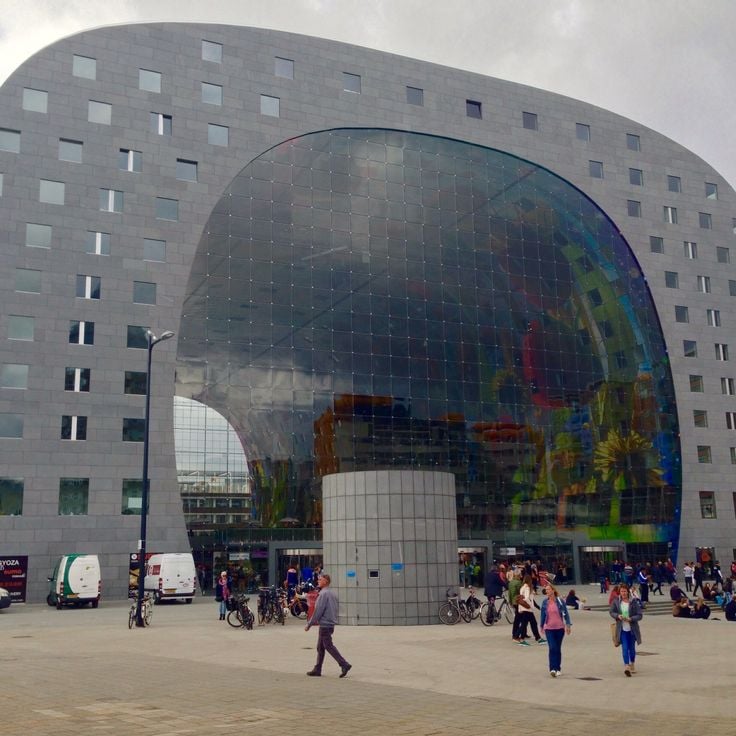
Markthal Rotterdam is a residential and office building with a large market hall at its base, designed by Winy Maas of MVRDV. The building curves into a horseshoe shape, with apartments stacked on either side and above the open market space below. The interior ceiling is covered with a large painted mural. It is one of the buildings in this collection where everyday life, food shopping, and city architecture come together in a single space.
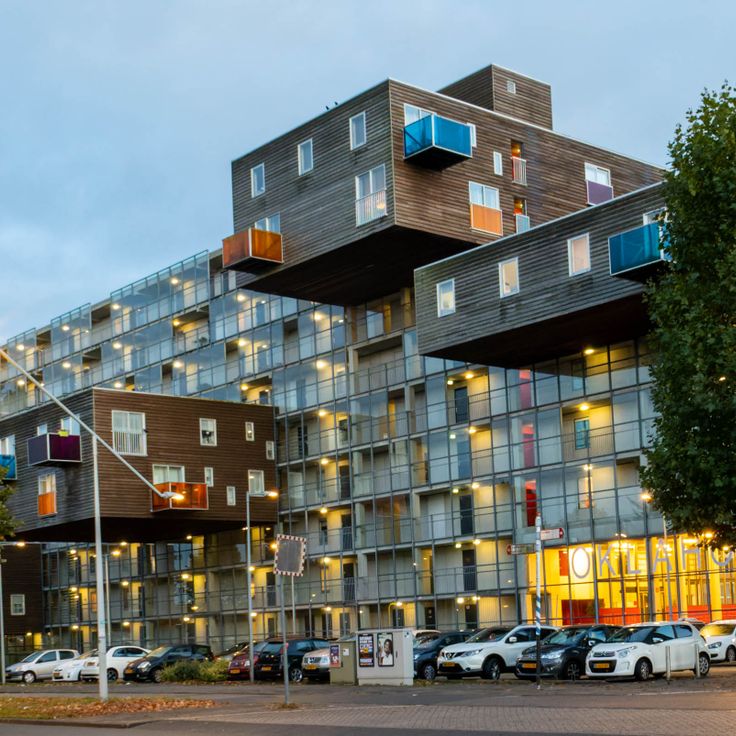
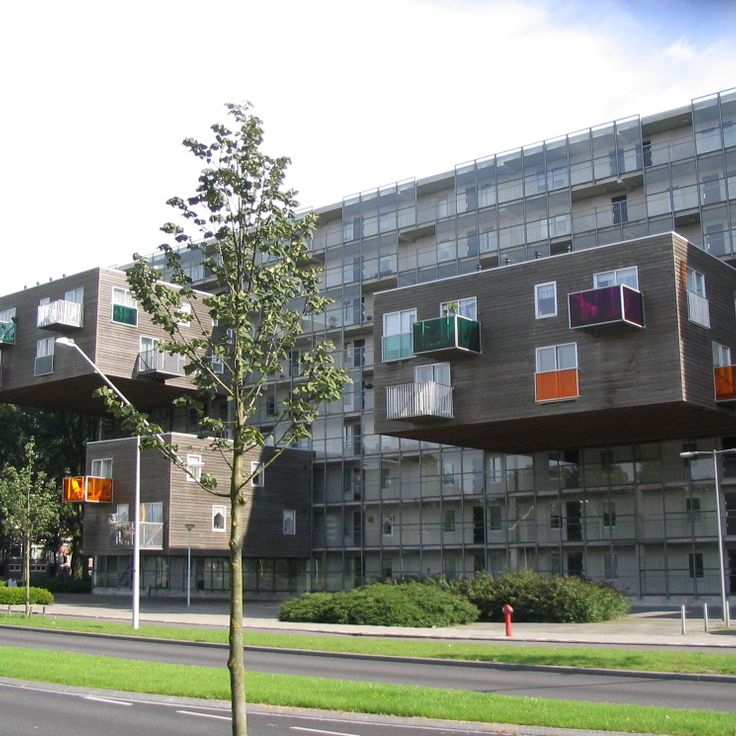
WoZoCo's Apartments in Amsterdam were designed by Winy Maas and MVRDV in the 1990s as housing for older adults. The building is easy to spot: a row of units juts out from the main block like oversized drawers pushed halfway open. This happened because the plot was too small to fit all the required homes in a standard layout. Rather than reduce the number of apartments, the architects pushed some of them outward. The result is a building that solves a practical problem in a way that surprises anyone walking past it.
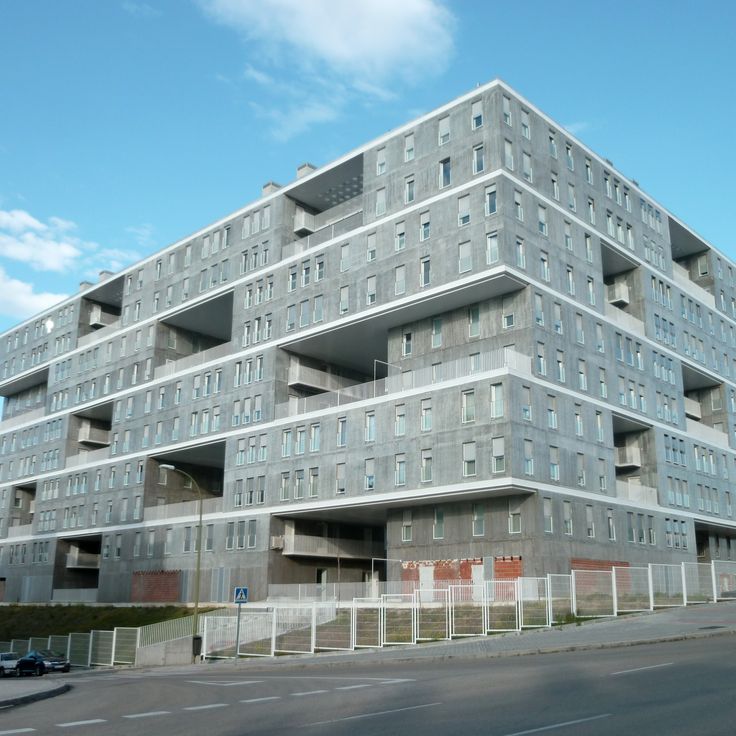
The Mirador Building is a social housing block in Madrid that shows how Dutch architect Winy Maas brings together different ways of living under one roof. The building stacks various apartment types on top of each other and opens up at one point to a large shared space that frames a view over the city. It is part of his approach of designing homes that stand out in their cities while remaining rooted in everyday life.
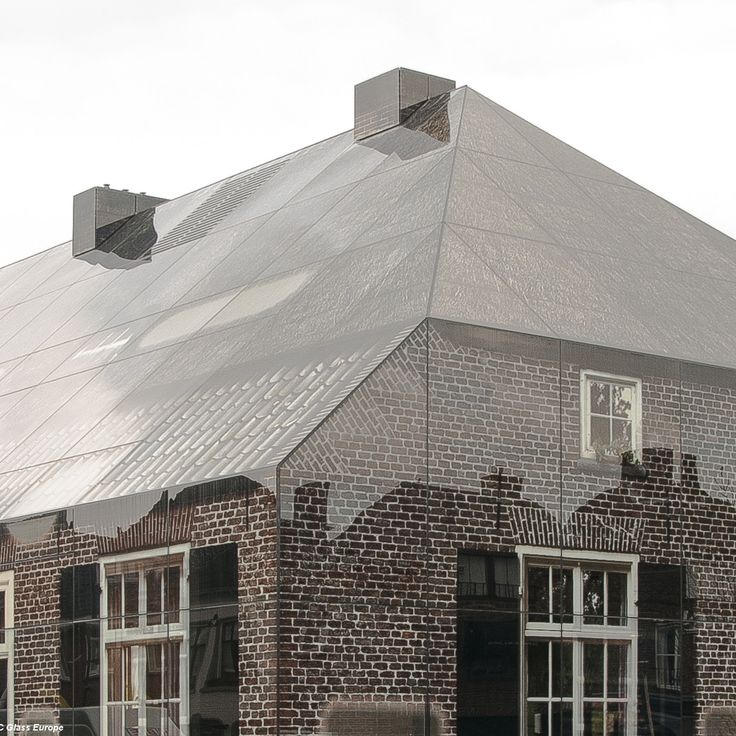
The Glass Farm in Schijndel is a mixed-use building by Winy Maas whose facade is covered with printed images of traditional local farmhouses. It sits in the center of a town with strong agricultural roots, and the building responds to that history directly. This is Maas at his most place-specific, using a contemporary structure to hold a conversation with what was there before.
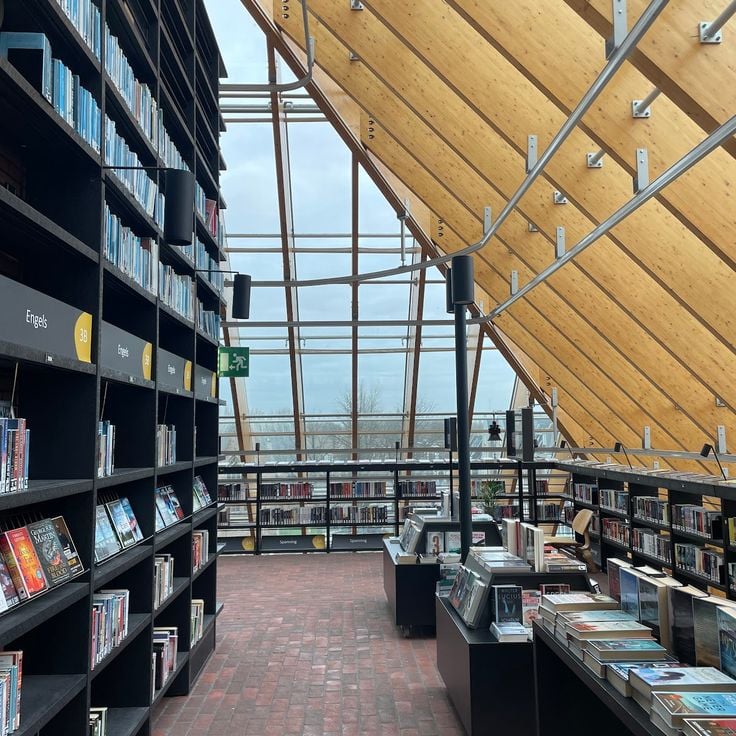
Book Mountain in Spijkenisse is a library shaped like a pyramid. The building rises over five floors, with books stacked visibly behind a glass facade. Natural light reaches deep inside, and visitors walk up through the shelves as if climbing a hill. Winy Maas treats this everyday public space as a place worth looking at from the street.
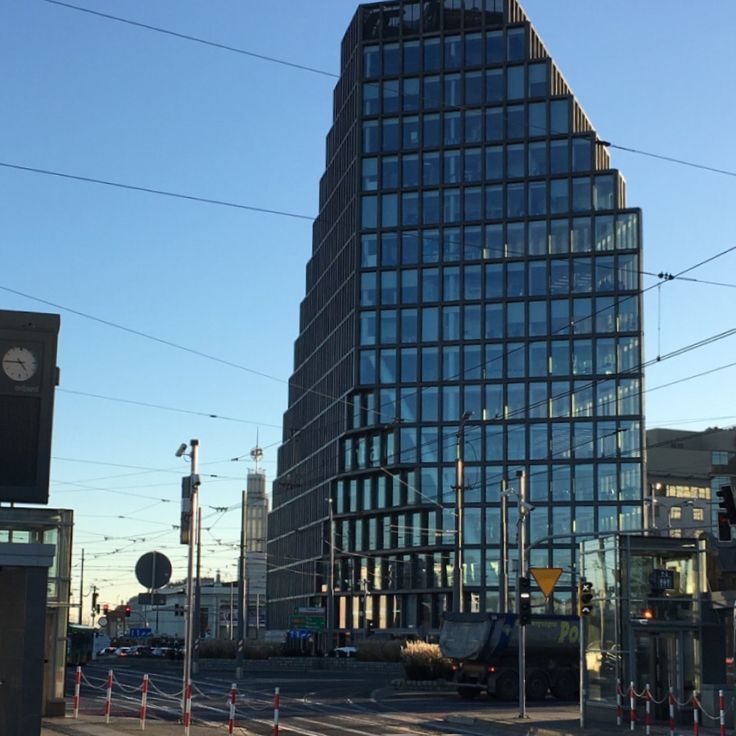
The Baltyk Tower in Poznan is a 16-story office building by Winy Maas. Each floor has a different footprint and orientation, so the tower looks different from every angle. This approach shows how Maas plays with form and function without sacrificing either.
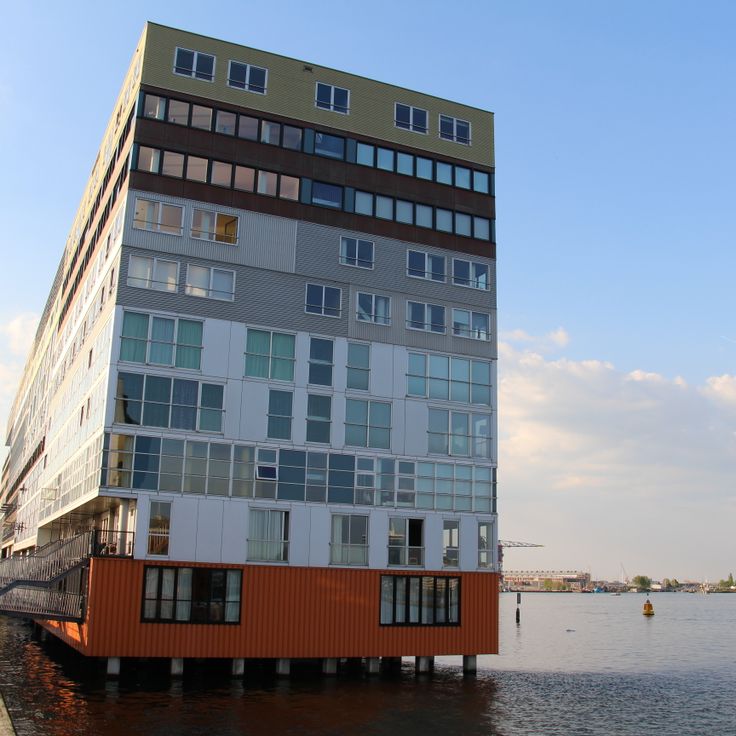
Silodam in Amsterdam is a residential building that sits on the water. Dutch architect Winy Maas designed it so that many different types of homes could exist side by side within a single structure. The facade shifts between colors and materials, making the building feel like a small neighborhood floating on the IJ river.
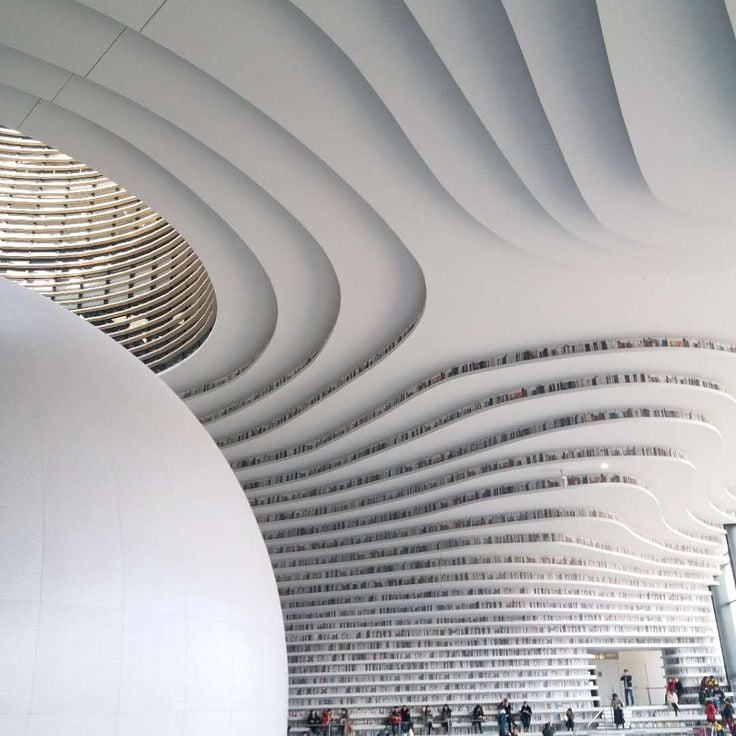
The Tianjin Binhai Library is a public building designed by Winy Maas and MVRDV in Tianjin. Inside, a spherical auditorium draws the eye immediately. White shelves run from floor to ceiling along the walls, giving the space a presence that feels almost theatrical. Spread across five floors, the building shows how Maas turns public functions into a strong form without losing sight of everyday use.
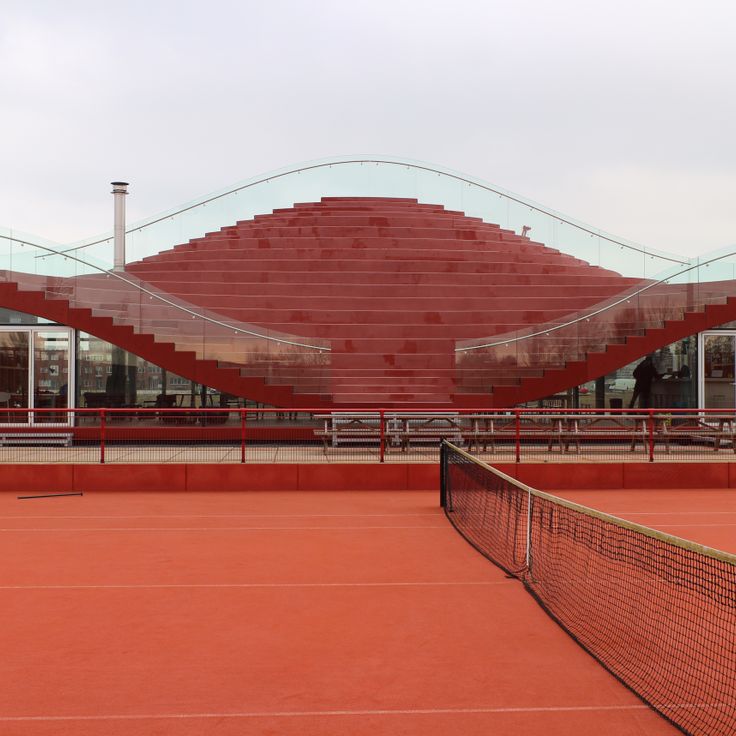
The Couch sits at the edge of Tennisclub IJburg in Amsterdam, serving at once as a grandstand for spectators and a public gathering spot. Winy Maas designed a building that gives the club what it needs while opening its arms to anyone passing by who wants to stop and watch. The form is direct and welcoming without trying too hard.
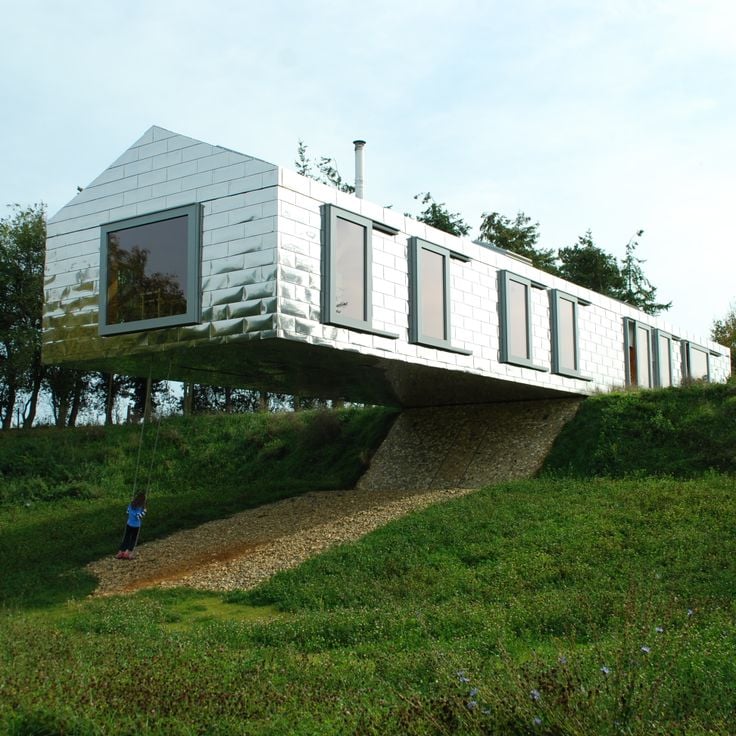
The Balancing Barn is a vacation home in Suffolk designed by Dutch architect Winy Maas. It extends far out over a hillside slope, making it look as if it might tip over at any moment. The outer walls are clad in metal, and the section of the house that hangs in the air offers open views over the land below.
Villa VPRO in Hilversum was designed by Winy Maas for a Dutch broadcasting organization. The floors flow into one another, terraces shift and overlap, and the line between inside and outside becomes hard to find. This building shows how Maas rethinks everyday office space without losing sight of what the people inside actually need.
Celosia Residence is a housing building in Madrid that shows how Winy Maas approaches city living. The facade is open and perforated, letting light and air pass through, while gardens are tucked between the apartments. The result is a building that brings greenery into a dense urban block without forgetting that people simply need a place to live.
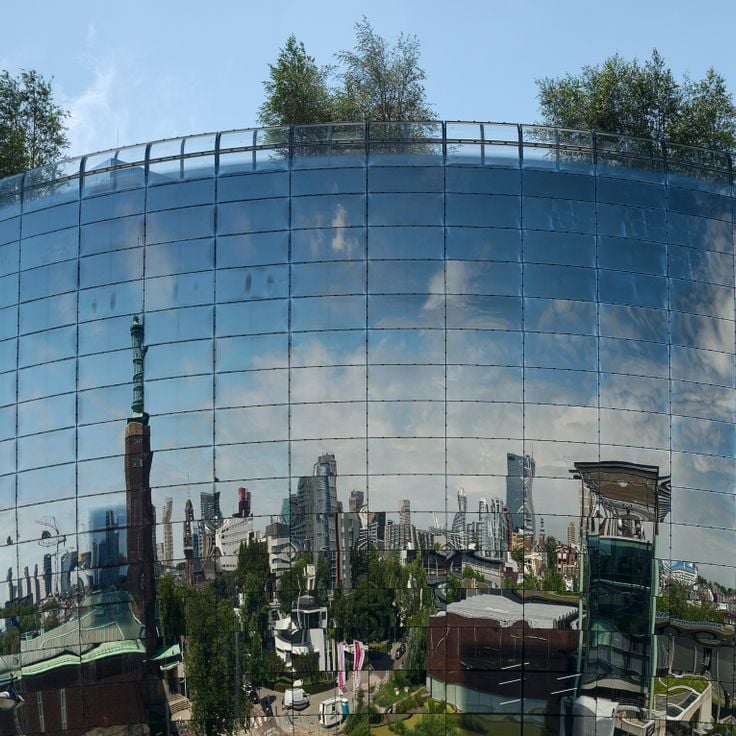
Depot Boijmans Van Beuningen in Rotterdam is an art storage building that anyone can visit. Designed by Winy Maas and MVRDV, it lets the public walk through rooms where conservators care for artworks that rarely go on public display. The outside is covered in curved mirrored glass, so the building reflects the city around it. This is one of the projects that shows how Maas approaches his work: a building does not have to hide what happens inside it.
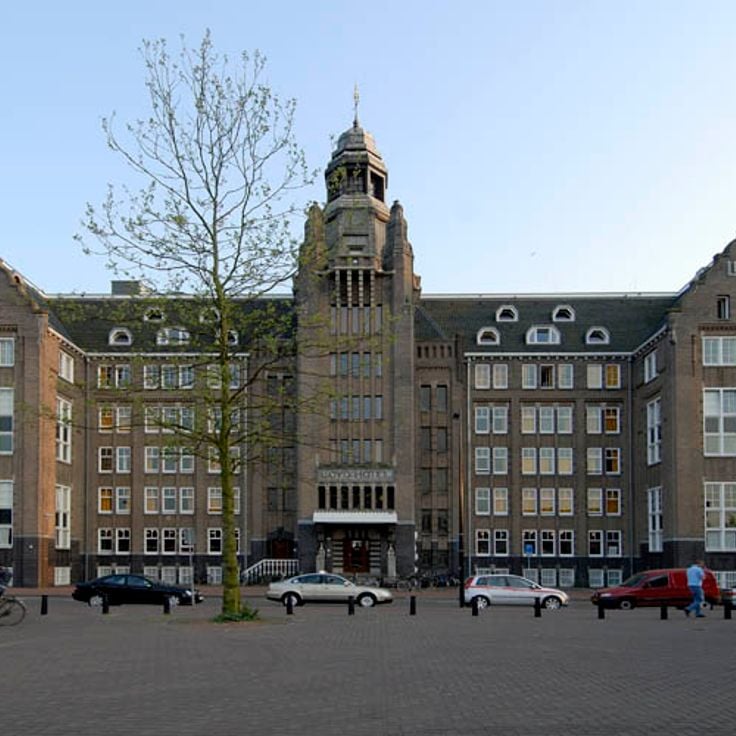
The Lloyd Hotel in Amsterdam shows how Winy Maas works with buildings that already carry a history. The hotel occupies an early 20th-century brick building that once served as an emigrant hotel and later as a detention center. Today it offers rooms in very different sizes and styles, from simple to lavish, drawing guests with very different budgets. The interior does not hide its past. The layers of time are visible in the walls, the corridors, and the spaces in between.
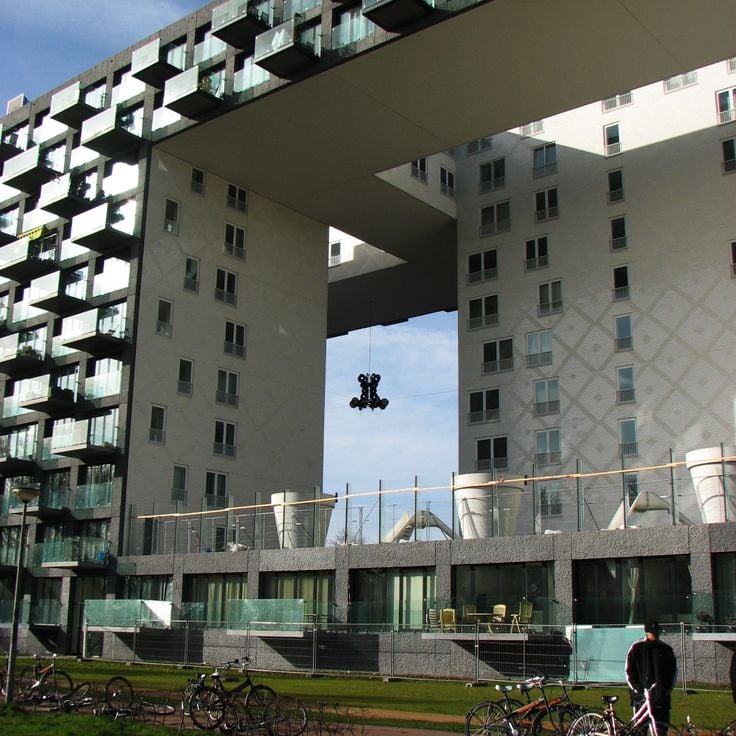
Parkrand is a residential building in Amsterdam that sits next to Vondelpark. Winy Maas designed it so that the building's shape responds to the park: a large opening in the middle frames the view of the greenery. Residents live with the park as a constant backdrop, and people passing by see a building that faces its surroundings rather than turning away from them.
The Double House in Utrecht is a residential project by Winy Maas and MVRDV. Two homes share a common structure, yet each keeps its own character. The facade shifts between wood and glass, giving the building an unusual look from the street. This house shows how two families can live under one roof without one overpowering the other.
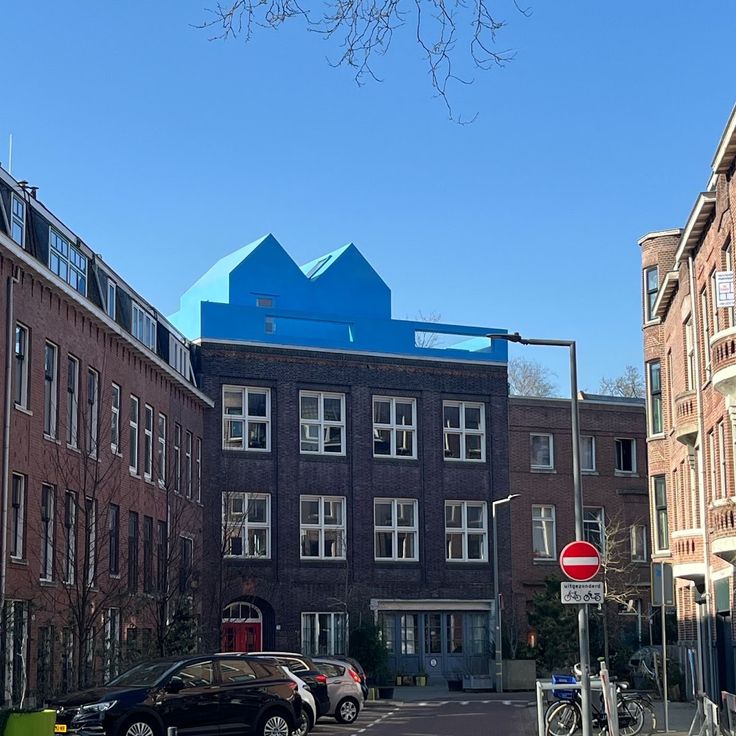
Didden Village sits on a rooftop in Rotterdam, looking like a small village placed above the city. Winy Maas designed several small blue structures here, mixing living spaces with studio areas. The buildings rise from the roof of an existing building, creating a world of their own above the street. This project shows how Maas turns everyday functions into forms that make you look twice.
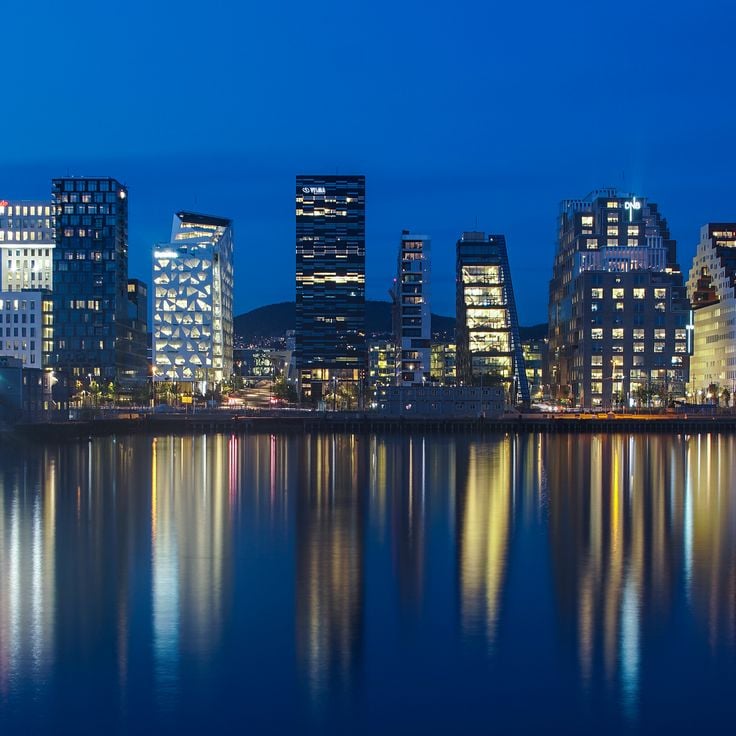
Barcode is a waterfront neighborhood in Oslo made up of a row of tall buildings set close together, each one slightly different in shape and height. Winy Maas and MVRDV worked with other firms here to create homes, offices, and shops that face the harbor. The gaps between the buildings let you see the water from the street behind.
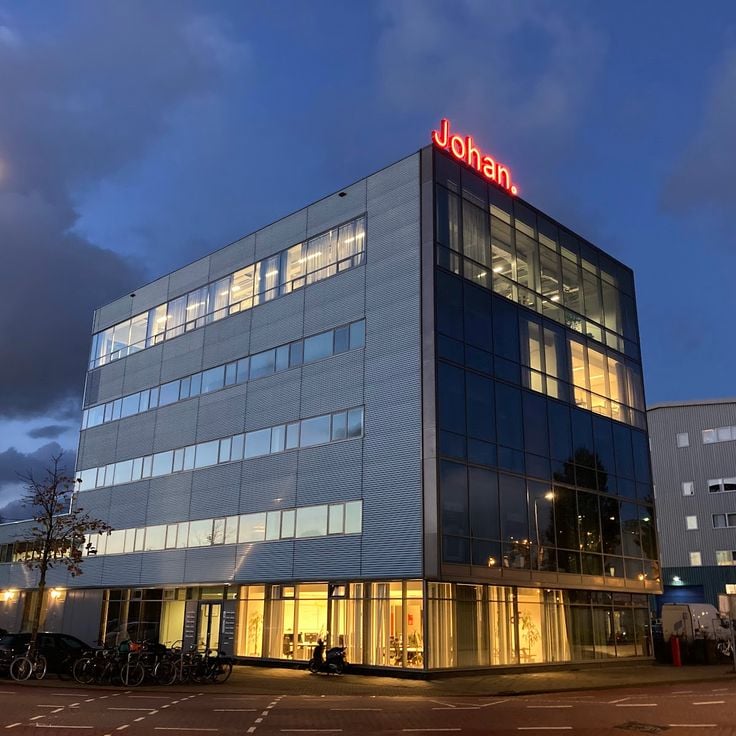
The MVRDV House in Rotterdam is where Winy Maas and his team work every day. The building serves as the studio's own office and shows how the team thinks about space and function. It is not a standard office block. The way the building looks and feels reflects the same approach MVRDV brings to projects across Europe and Asia, making it a working example of the studio's ideas in practice.
The Winhov office in Amsterdam brings together working and living in one building. It shows how Winy Maas approaches everyday function with a clear architectural position, designing spaces that respond to what people actually need rather than following a single formula.
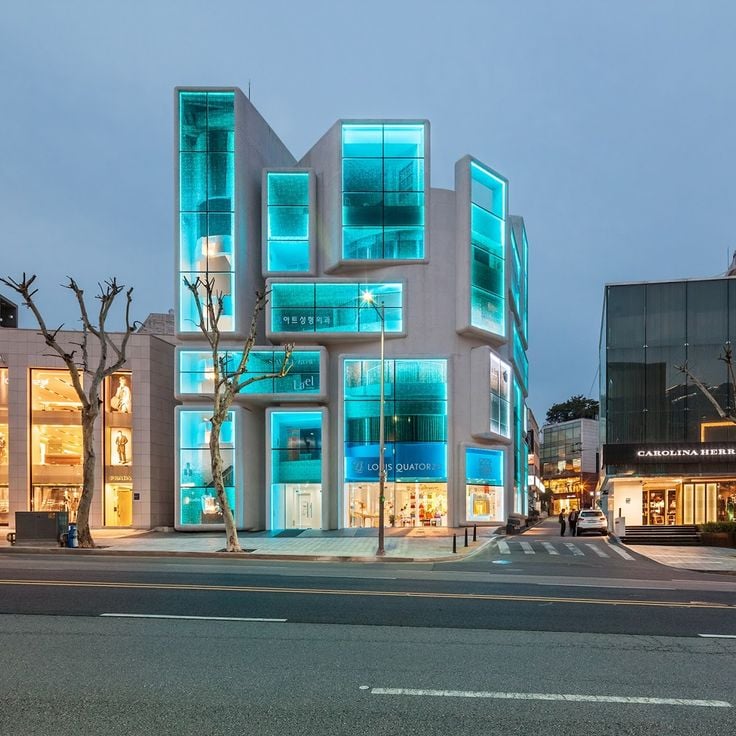
The Chungha Building in Seoul is an office and retail building with a sharp geometric form that catches your eye against the surrounding streetscape. Winy Maas designed it to respond to what the site needed: a building that houses workplaces and shops while refusing to look like every other block on the street. It is one of his projects that shows how function and form can push in the same direction.
Markthal Rotterdam is a residential and office building with a large market hall at its base, designed by Winy Maas of MVRDV. The building curves into a horseshoe shape, with apartments stacked on either side and above the open market space below. The interior ceiling is covered with a large painted mural. It is one of the buildings in this collection where everyday life, food shopping, and city architecture come together in a single space.
WoZoCo's Apartments in Amsterdam were designed by Winy Maas and MVRDV in the 1990s as housing for older adults. The building is easy to spot: a row of units juts out from the main block like oversized drawers pushed halfway open. This happened because the plot was too small to fit all the required homes in a standard layout. Rather than reduce the number of apartments, the architects pushed some of them outward. The result is a building that solves a practical problem in a way that surprises anyone walking past it.
The Mirador Building is a social housing block in Madrid that shows how Dutch architect Winy Maas brings together different ways of living under one roof. The building stacks various apartment types on top of each other and opens up at one point to a large shared space that frames a view over the city. It is part of his approach of designing homes that stand out in their cities while remaining rooted in everyday life.
The Glass Farm in Schijndel is a mixed-use building by Winy Maas whose facade is covered with printed images of traditional local farmhouses. It sits in the center of a town with strong agricultural roots, and the building responds to that history directly. This is Maas at his most place-specific, using a contemporary structure to hold a conversation with what was there before.
Book Mountain in Spijkenisse is a library shaped like a pyramid. The building rises over five floors, with books stacked visibly behind a glass facade. Natural light reaches deep inside, and visitors walk up through the shelves as if climbing a hill. Winy Maas treats this everyday public space as a place worth looking at from the street.
The Baltyk Tower in Poznan is a 16-story office building by Winy Maas. Each floor has a different footprint and orientation, so the tower looks different from every angle. This approach shows how Maas plays with form and function without sacrificing either.
Silodam in Amsterdam is a residential building that sits on the water. Dutch architect Winy Maas designed it so that many different types of homes could exist side by side within a single structure. The facade shifts between colors and materials, making the building feel like a small neighborhood floating on the IJ river.
The Tianjin Binhai Library is a public building designed by Winy Maas and MVRDV in Tianjin. Inside, a spherical auditorium draws the eye immediately. White shelves run from floor to ceiling along the walls, giving the space a presence that feels almost theatrical. Spread across five floors, the building shows how Maas turns public functions into a strong form without losing sight of everyday use.
The Couch sits at the edge of Tennisclub IJburg in Amsterdam, serving at once as a grandstand for spectators and a public gathering spot. Winy Maas designed a building that gives the club what it needs while opening its arms to anyone passing by who wants to stop and watch. The form is direct and welcoming without trying too hard.
The Balancing Barn is a vacation home in Suffolk designed by Dutch architect Winy Maas. It extends far out over a hillside slope, making it look as if it might tip over at any moment. The outer walls are clad in metal, and the section of the house that hangs in the air offers open views over the land below.
Villa VPRO in Hilversum was designed by Winy Maas for a Dutch broadcasting organization. The floors flow into one another, terraces shift and overlap, and the line between inside and outside becomes hard to find. This building shows how Maas rethinks everyday office space without losing sight of what the people inside actually need.
Celosia Residence is a housing building in Madrid that shows how Winy Maas approaches city living. The facade is open and perforated, letting light and air pass through, while gardens are tucked between the apartments. The result is a building that brings greenery into a dense urban block without forgetting that people simply need a place to live.
Depot Boijmans Van Beuningen in Rotterdam is an art storage building that anyone can visit. Designed by Winy Maas and MVRDV, it lets the public walk through rooms where conservators care for artworks that rarely go on public display. The outside is covered in curved mirrored glass, so the building reflects the city around it. This is one of the projects that shows how Maas approaches his work: a building does not have to hide what happens inside it.
The Lloyd Hotel in Amsterdam shows how Winy Maas works with buildings that already carry a history. The hotel occupies an early 20th-century brick building that once served as an emigrant hotel and later as a detention center. Today it offers rooms in very different sizes and styles, from simple to lavish, drawing guests with very different budgets. The interior does not hide its past. The layers of time are visible in the walls, the corridors, and the spaces in between.
Parkrand is a residential building in Amsterdam that sits next to Vondelpark. Winy Maas designed it so that the building's shape responds to the park: a large opening in the middle frames the view of the greenery. Residents live with the park as a constant backdrop, and people passing by see a building that faces its surroundings rather than turning away from them.
The Double House in Utrecht is a residential project by Winy Maas and MVRDV. Two homes share a common structure, yet each keeps its own character. The facade shifts between wood and glass, giving the building an unusual look from the street. This house shows how two families can live under one roof without one overpowering the other.
Didden Village sits on a rooftop in Rotterdam, looking like a small village placed above the city. Winy Maas designed several small blue structures here, mixing living spaces with studio areas. The buildings rise from the roof of an existing building, creating a world of their own above the street. This project shows how Maas turns everyday functions into forms that make you look twice.
Barcode is a waterfront neighborhood in Oslo made up of a row of tall buildings set close together, each one slightly different in shape and height. Winy Maas and MVRDV worked with other firms here to create homes, offices, and shops that face the harbor. The gaps between the buildings let you see the water from the street behind.
The MVRDV House in Rotterdam is where Winy Maas and his team work every day. The building serves as the studio's own office and shows how the team thinks about space and function. It is not a standard office block. The way the building looks and feels reflects the same approach MVRDV brings to projects across Europe and Asia, making it a working example of the studio's ideas in practice.
The Winhov office in Amsterdam brings together working and living in one building. It shows how Winy Maas approaches everyday function with a clear architectural position, designing spaces that respond to what people actually need rather than following a single formula.
The Chungha Building in Seoul is an office and retail building with a sharp geometric form that catches your eye against the surrounding streetscape. Winy Maas designed it to respond to what the site needed: a building that houses workplaces and shops while refusing to look like every other block on the street. It is one of his projects that shows how function and form can push in the same direction.
Markthal Rotterdam is a residential and office building with a large market hall at its base, designed by Winy Maas of MVRDV. The building curves into a horseshoe shape, with apartments stacked on either side and above the open market space below. The interior ceiling is covered with a large painted mural. It is one of the buildings in this collection where everyday life, food shopping, and city architecture come together in a single space.
WoZoCo's Apartments in Amsterdam were designed by Winy Maas and MVRDV in the 1990s as housing for older adults. The building is easy to spot: a row of units juts out from the main block like oversized drawers pushed halfway open. This happened because the plot was too small to fit all the required homes in a standard layout. Rather than reduce the number of apartments, the architects pushed some of them outward. The result is a building that solves a practical problem in a way that surprises anyone walking past it.
The Mirador Building is a social housing block in Madrid that shows how Dutch architect Winy Maas brings together different ways of living under one roof. The building stacks various apartment types on top of each other and opens up at one point to a large shared space that frames a view over the city. It is part of his approach of designing homes that stand out in their cities while remaining rooted in everyday life.
The Glass Farm in Schijndel is a mixed-use building by Winy Maas whose facade is covered with printed images of traditional local farmhouses. It sits in the center of a town with strong agricultural roots, and the building responds to that history directly. This is Maas at his most place-specific, using a contemporary structure to hold a conversation with what was there before.
Book Mountain in Spijkenisse is a library shaped like a pyramid. The building rises over five floors, with books stacked visibly behind a glass facade. Natural light reaches deep inside, and visitors walk up through the shelves as if climbing a hill. Winy Maas treats this everyday public space as a place worth looking at from the street.
The Baltyk Tower in Poznan is a 16-story office building by Winy Maas. Each floor has a different footprint and orientation, so the tower looks different from every angle. This approach shows how Maas plays with form and function without sacrificing either.
Silodam in Amsterdam is a residential building that sits on the water. Dutch architect Winy Maas designed it so that many different types of homes could exist side by side within a single structure. The facade shifts between colors and materials, making the building feel like a small neighborhood floating on the IJ river.
The Tianjin Binhai Library is a public building designed by Winy Maas and MVRDV in Tianjin. Inside, a spherical auditorium draws the eye immediately. White shelves run from floor to ceiling along the walls, giving the space a presence that feels almost theatrical. Spread across five floors, the building shows how Maas turns public functions into a strong form without losing sight of everyday use.
The Couch sits at the edge of Tennisclub IJburg in Amsterdam, serving at once as a grandstand for spectators and a public gathering spot. Winy Maas designed a building that gives the club what it needs while opening its arms to anyone passing by who wants to stop and watch. The form is direct and welcoming without trying too hard.
The Balancing Barn is a vacation home in Suffolk designed by Dutch architect Winy Maas. It extends far out over a hillside slope, making it look as if it might tip over at any moment. The outer walls are clad in metal, and the section of the house that hangs in the air offers open views over the land below.
Villa VPRO in Hilversum was designed by Winy Maas for a Dutch broadcasting organization. The floors flow into one another, terraces shift and overlap, and the line between inside and outside becomes hard to find. This building shows how Maas rethinks everyday office space without losing sight of what the people inside actually need.
Celosia Residence is a housing building in Madrid that shows how Winy Maas approaches city living. The facade is open and perforated, letting light and air pass through, while gardens are tucked between the apartments. The result is a building that brings greenery into a dense urban block without forgetting that people simply need a place to live.
Depot Boijmans Van Beuningen in Rotterdam is an art storage building that anyone can visit. Designed by Winy Maas and MVRDV, it lets the public walk through rooms where conservators care for artworks that rarely go on public display. The outside is covered in curved mirrored glass, so the building reflects the city around it. This is one of the projects that shows how Maas approaches his work: a building does not have to hide what happens inside it.
The Lloyd Hotel in Amsterdam shows how Winy Maas works with buildings that already carry a history. The hotel occupies an early 20th-century brick building that once served as an emigrant hotel and later as a detention center. Today it offers rooms in very different sizes and styles, from simple to lavish, drawing guests with very different budgets. The interior does not hide its past. The layers of time are visible in the walls, the corridors, and the spaces in between.
Parkrand is a residential building in Amsterdam that sits next to Vondelpark. Winy Maas designed it so that the building's shape responds to the park: a large opening in the middle frames the view of the greenery. Residents live with the park as a constant backdrop, and people passing by see a building that faces its surroundings rather than turning away from them.
The Double House in Utrecht is a residential project by Winy Maas and MVRDV. Two homes share a common structure, yet each keeps its own character. The facade shifts between wood and glass, giving the building an unusual look from the street. This house shows how two families can live under one roof without one overpowering the other.
Didden Village sits on a rooftop in Rotterdam, looking like a small village placed above the city. Winy Maas designed several small blue structures here, mixing living spaces with studio areas. The buildings rise from the roof of an existing building, creating a world of their own above the street. This project shows how Maas turns everyday functions into forms that make you look twice.
Barcode is a waterfront neighborhood in Oslo made up of a row of tall buildings set close together, each one slightly different in shape and height. Winy Maas and MVRDV worked with other firms here to create homes, offices, and shops that face the harbor. The gaps between the buildings let you see the water from the street behind.
The MVRDV House in Rotterdam is where Winy Maas and his team work every day. The building serves as the studio's own office and shows how the team thinks about space and function. It is not a standard office block. The way the building looks and feels reflects the same approach MVRDV brings to projects across Europe and Asia, making it a working example of the studio's ideas in practice.
The Winhov office in Amsterdam brings together working and living in one building. It shows how Winy Maas approaches everyday function with a clear architectural position, designing spaces that respond to what people actually need rather than following a single formula.
The Chungha Building in Seoul is an office and retail building with a sharp geometric form that catches your eye against the surrounding streetscape. Winy Maas designed it to respond to what the site needed: a building that houses workplaces and shops while refusing to look like every other block on the street. It is one of his projects that shows how function and form can push in the same direction.
Dutch architect Winy Maas, co-founder of MVRDV, creates buildings that experiment with form while serving real needs. His work spreads across Europe and Asia, building homes, cultural spaces, and offices that catch your eye in their cities. Each project responds to what a place actually requires, never forcing the same answer twice.
Rotterdam shows two of his best-known buildings: Markthal, where apartments sit above a market hall, and Depot Boijmans, an art storage building where you can watch people restoring paintings. Amsterdam's Silodam and WoZoCo apartments reveal how he brings different kinds of people together. In Madrid, the Mirador and in Poznań, Baltyk Tower, show his method works across different regions and weather.
These buildings do not hide. Some tilt and lean, others have grass on their roofs or windows arranged in strange patterns. The Book Mountain in Spijkenisse looks like a library that became a hill. The Balancing Barn in Suffolk seems like it might fall over. They do not stay quiet. They speak directly to their surroundings and the people in them, changing how their cities look and function.
Visit one of these buildings and you will understand why Maas refuses to repeat himself. Look for the details: the way a building tilts just enough to surprise you, how an empty space suddenly becomes a courtyard, where a simple wall turns into something you did not expect. His work teaches that a building can be bold without being cold.