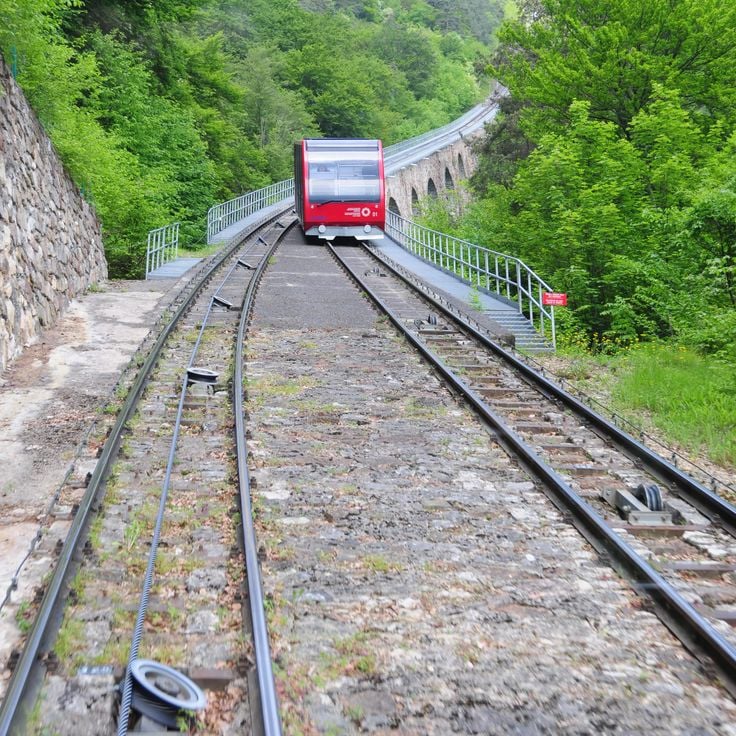
Tracks climbing up Swiss mountains, cabins hanging over the streets of Lisbon, century-old wagons in Wales: here are 25 funiculars that challenge gravity around the world.
Since the 19th century, funiculars connect the tops of towns and mountains to the rest of the land. Some go up in a few minutes, where walking would take an hour. Others pass through old neighborhoods on the hills. They are part of everyday life for local residents and help visitors reach places that are hard to reach on foot.
In Lisbon, the Bica funicular climbs a narrow street between buildings painted in light colors. In Bergen, the Fløibanen takes travelers to the top of Fløyen mountain, where you can see wooden houses and fjords in the distance. In Valparaiso, elevators link the high and low parts of the city, these cabins sliding on slopes are part of the city’s story. The Great Orme Tramway in Wales has been running since 1902 with its original system. The Peak Tram in Hong Kong takes thousands of people each day to the top of the island.
This collection includes 25 funiculars in five continents. Some go very high, like the Niesenbahn in Switzerland that crosses 710 meters of elevation. Others are shorter but go through busy streets. All keep their purpose: to carry the people who live there or those who want to see how the city is arranged between the top and bottom.
Tracks climbing up Swiss mountains, cabins hanging over the streets of Lisbon, century-old wagons in Wales: here are 25 funiculars that challenge gravity around the world.
Since the 19th century, funiculars connect the tops of towns and mountains to the rest of the land. Some go up in a few minutes, where walking would take an hour. Others pass through old neighborhoods on the hills. They are part of everyday life for local residents and help visitors reach places that are hard to reach on foot.
In Lisbon, the Bica funicular climbs a narrow street between buildings painted in light colors. In Bergen, the Fløibanen takes travelers to the top of Fløyen mountain, where you can see wooden houses and fjords in the distance. In Valparaiso, elevators link the high and low parts of the city, these cabins sliding on slopes are part of the city’s story. The Great Orme Tramway in Wales has been running since 1902 with its original system. The Peak Tram in Hong Kong takes thousands of people each day to the top of the island.
This collection includes 25 funiculars in five continents. Some go very high, like the Niesenbahn in Switzerland that crosses 710 meters of elevation. Others are shorter but go through busy streets. All keep their purpose: to carry the people who live there or those who want to see how the city is arranged between the top and bottom.
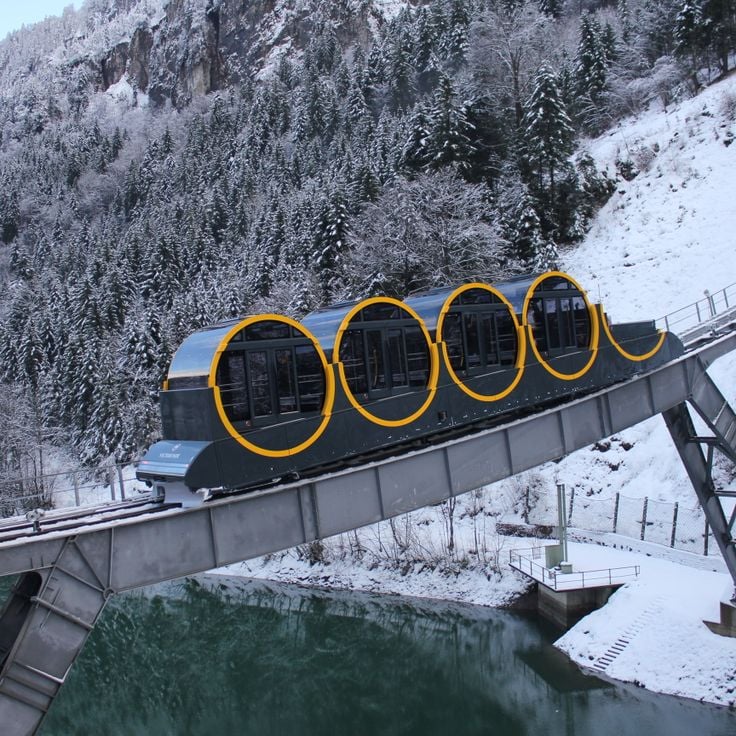
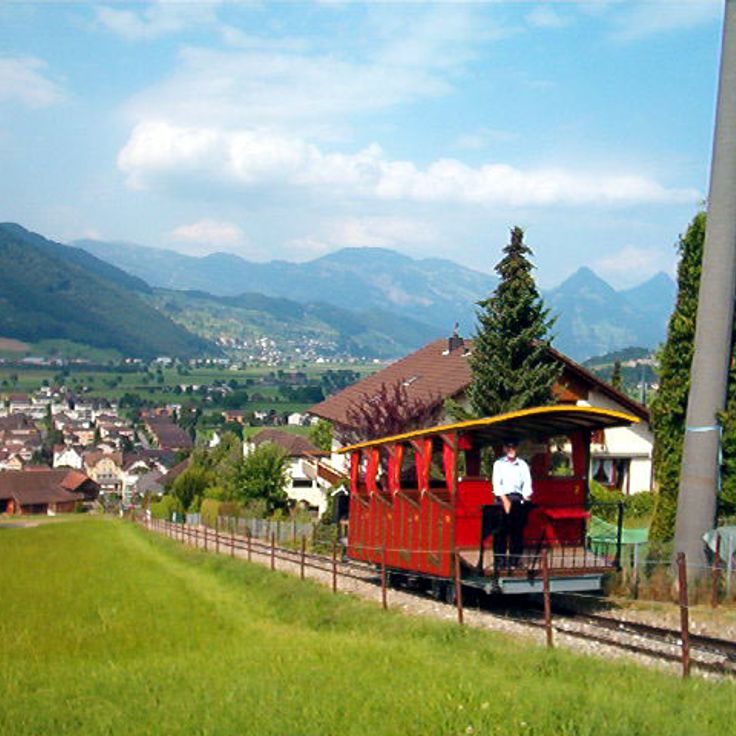
The Schwyz-Stoos funicular connects the village of Schlattli near Schwyz with the car-free mountain village of Stoos at 4,265 feet (1,300 meters). With a maximum gradient of 110 percent, it ranks as the steepest funicular railway in the world. Opened in 2017, the system climbs 2,438 feet (743 meters) over a track length of 5,643 feet (1,720 meters) in roughly ten minutes. Its cylindrical cabins adjust automatically to the gradient, keeping passengers on level floors throughout the journey. The funicular serves residents of Stoos as well as visitors heading for hiking trails, ski areas and the Fronalpstock summit.
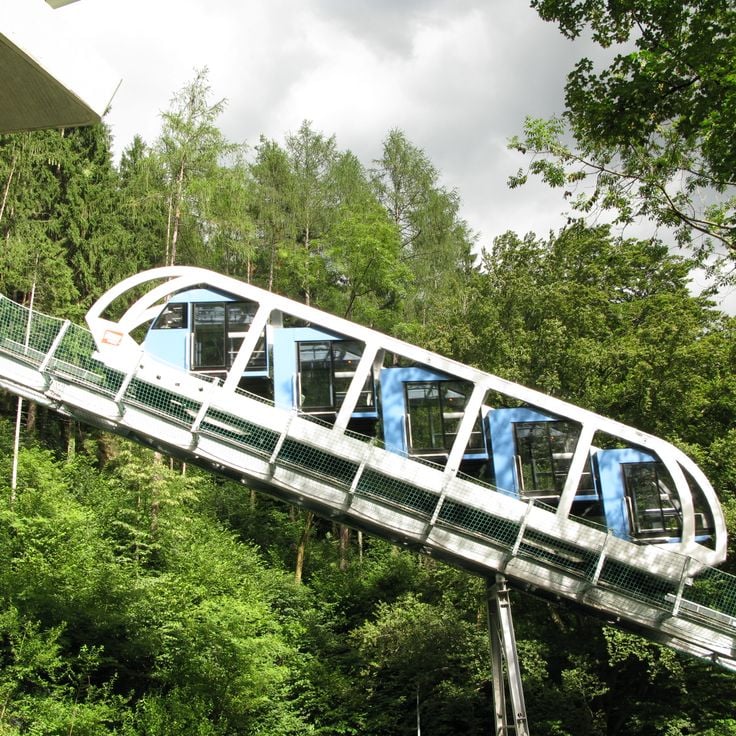
The Hungerburgbahn in Innsbruck connects the city center with the Hungerburg district at 2,822 feet (860 meters) elevation, ascending 945 feet (288 meters). This modern funicular opened in 2007, replacing an older installation from 1906. Stations designed by Zaha Hadid feature contemporary architecture, while the railway serves four stops between the Congress center and Hungerburg. It functions as a feeder to the Nordkettenbahn, which continues to Seegrube and Hafelekar at 7,657 feet (2,334 meters). The railway transports residents, hikers and skiers to the Nordkette range and provides views across the Inn Valley and surrounding peaks. The journey takes eight minutes and the funicular carries up to 1,200 passengers per hour in both directions.
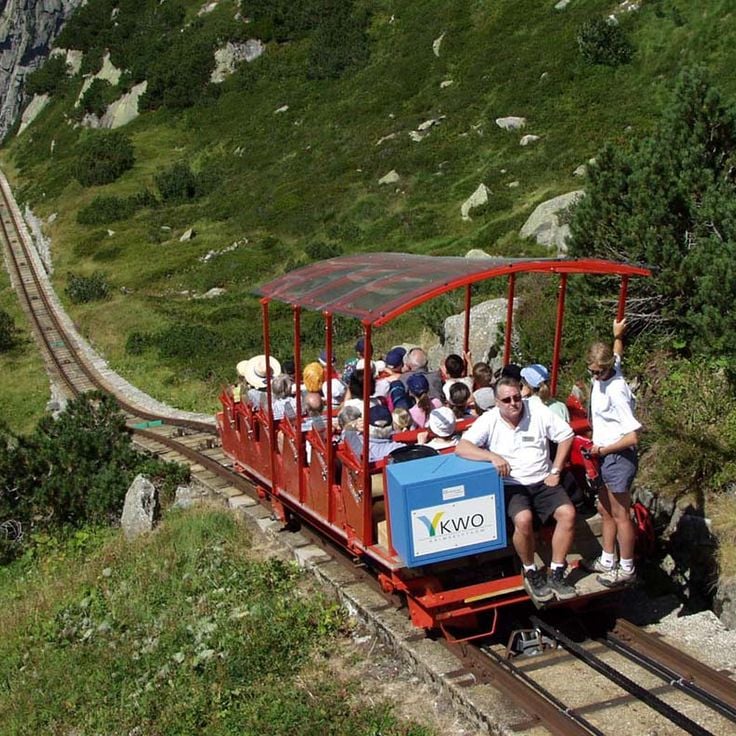
The Gelmerbahn accesses Gelmer Lake in the Bernese Oberland, climbing 1,496 feet (456 meters) over a track length of 3,373 feet (1,028 meters) with a maximum gradient of 106 percent. Originally built in 1926 for construction of the Grimsel Dam, this funicular now carries hikers to the turquoise mountain lake at 6,102 feet (1,860 meters) elevation, where circular hiking trails and alpine passes into the Hasli Valley begin. The open cars provide direct views of the steep rock face and valley below during the eight-minute ascent, with passengers feeling the pull as the gondola climbs the mountainside.
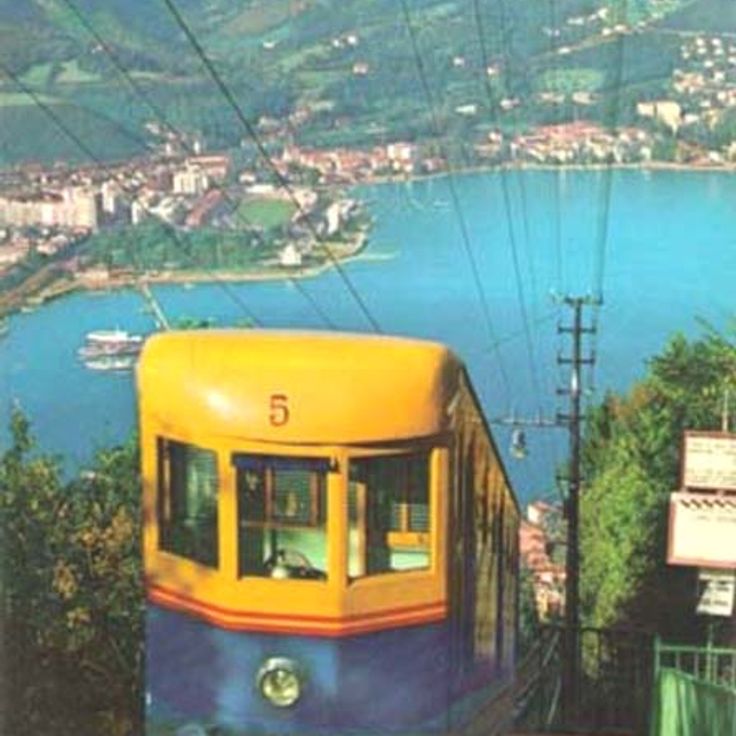
This funicular railway in Lombardy connects Como with the village of Brunate, carrying passengers up a 500-meter (1,640-foot) incline to an elevation of 715 meters (2,346 feet). Opened in 1894, the system uses two cabins running on parallel tracks between the lower station near Lake Como and the upper station. The journey takes approximately seven minutes and passes through wooded terrain, offering views across the lake and surrounding mountains.
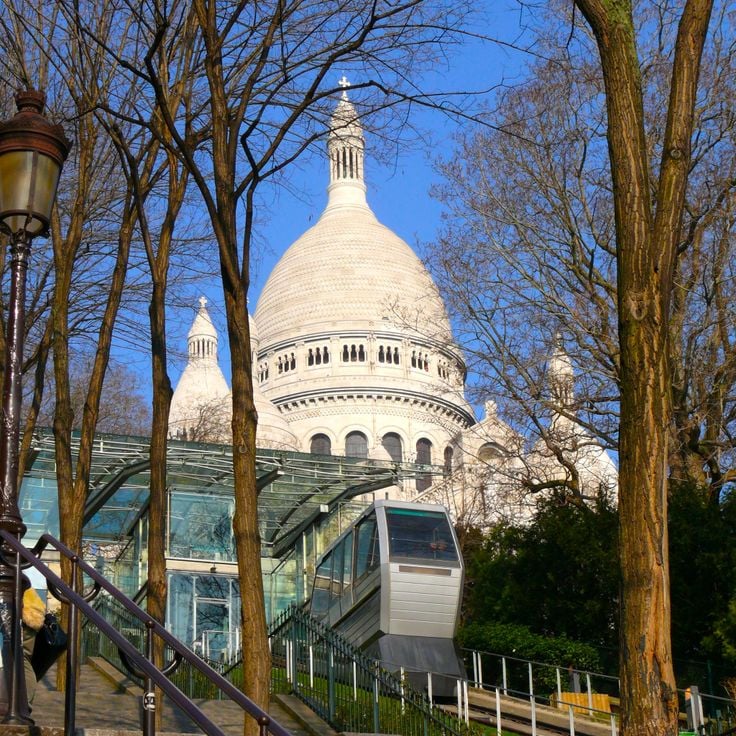
This automated funicular transports two million passengers annually to the Sacré-Cœur Basilica along a 354-foot (108-meter) track. The system climbs the steep Montmartre hill, connecting Rue Foyatier to the basilica forecourt. Two cabins operate in counterbalance, providing access to the highest point in Paris.
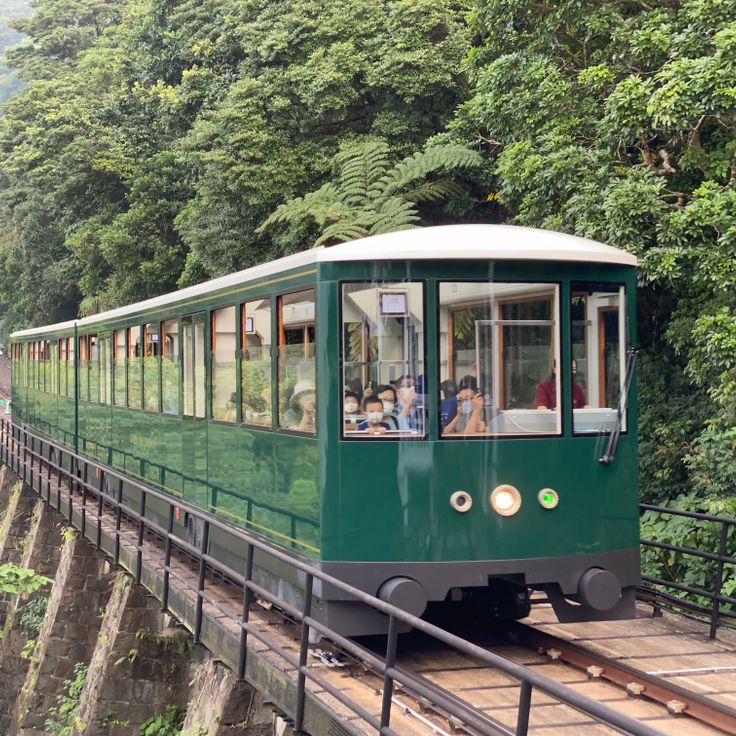
The Peak Tram has operated since 1888 on a 0.9-mile (1.4-kilometer) route that climbs 1,210 feet (368 meters) to Victoria Peak, connecting downtown with the highest point on Hong Kong Island.
This mountain railway connects Heidelberg's old town with the 1,864-foot (568-meter) Königstuhl summit, ascending 1,430 feet (436 meters). Opened in 1907, the line runs through forested terrain and passes Heidelberg Castle. The funicular operates in two sections: first from Kornmarkt to the castle, then via Molkenkur to the upper station. The 17-minute journey provides views over the city and Neckar valley.
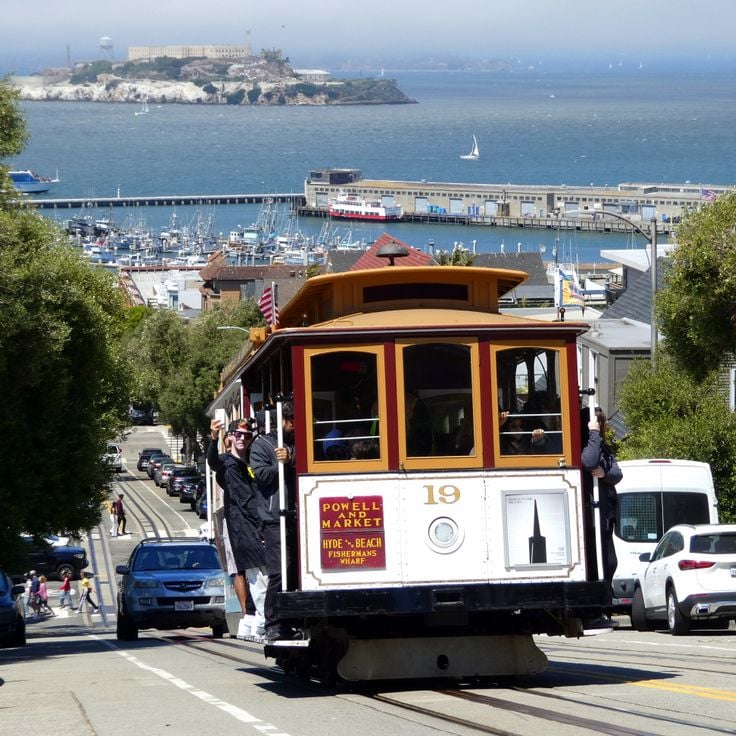
This cable car system has transported passengers on steel cables through San Francisco's steep streets since 1888, traveling at a constant speed of 9 miles per hour (14 km/h). The mechanically operated cars use underground cables to climb the city's hills, connecting different neighborhoods across the urban landscape. The system comprises three lines that carry thousands of passengers daily, serving as both functional transportation and part of the city's historic infrastructure.
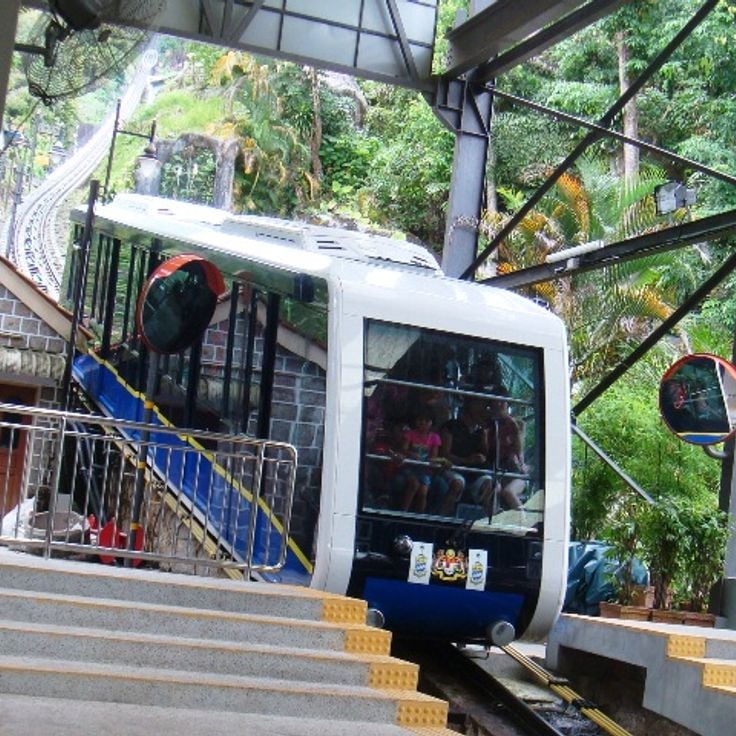
This mountain railway from 1923 extends for two kilometers through the forest, climbing to an elevation of 2,330 feet (710 meters) on Penang Hill. The line connects the city center with the summit and provides access to the cooler elevations above Georgetown. The technical installation transports passengers along a steep route through tropical vegetation. Operations run as a shuttle service between the lower and upper stations.
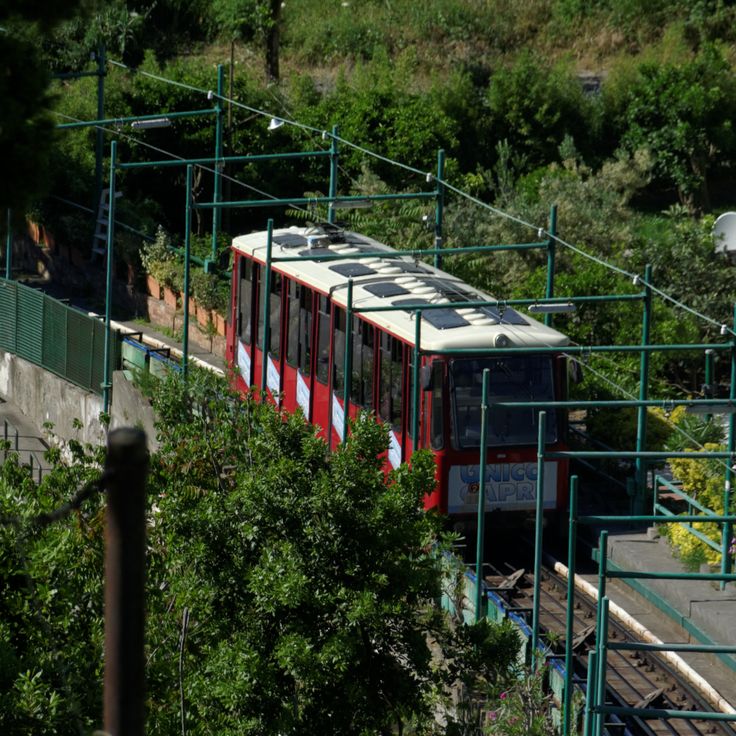
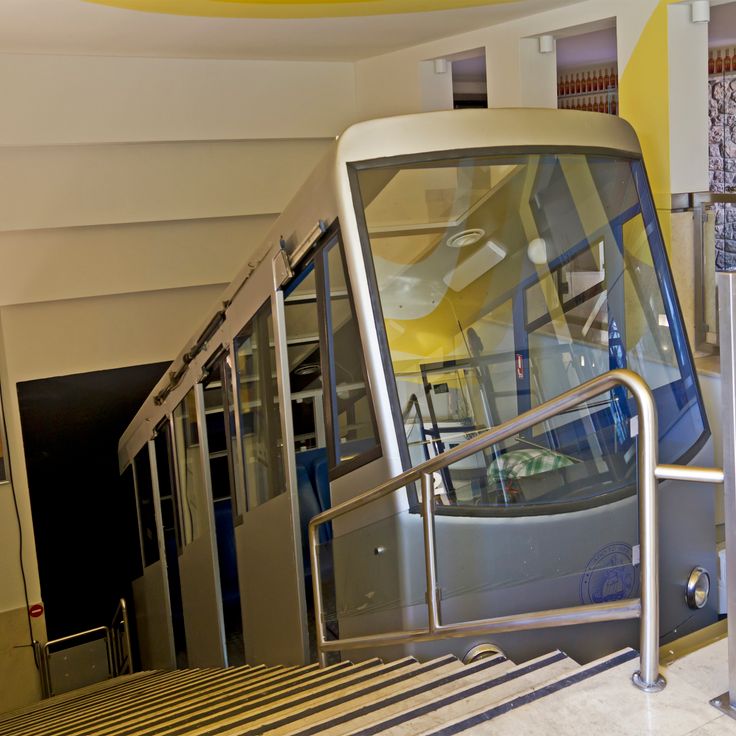
This funicular connects the port with the island center, covering a vertical distance of 466 feet (142 meters) in roughly three minutes. The system transports visitors and residents between Marina Grande and the elevated Piazzetta, where shops, restaurants and historic buildings are located. The route passes through steep terrain that would require a strenuous climb on foot, providing a practical alternative to buses and taxis. Operations run regularly during tourist season, with reduced hours in winter months.
The underground funicular railway travels through limestone formations to reach the summit of Mount Lycabettus at 690 feet (210 meters) above sea level. Opened in 1965, the installation navigates the 28-degree incline through a 690-foot (210-meter) tunnel connecting the Kolonaki neighborhood to the hilltop. The three-minute journey transports passengers to the Chapel of St. George and viewing terraces overlooking the Greek capital.
The Stanserhorn cable car system carries passengers from Stans to the 6,070-foot (1,850-meter) summit of Stanserhorn. The journey combines a historic funicular railway from 1893 with a modern double-decker aerial cable car featuring an open-air viewing platform on its upper deck. Travelers can observe ten Swiss lakes and surrounding Alpine peaks during the ascent.
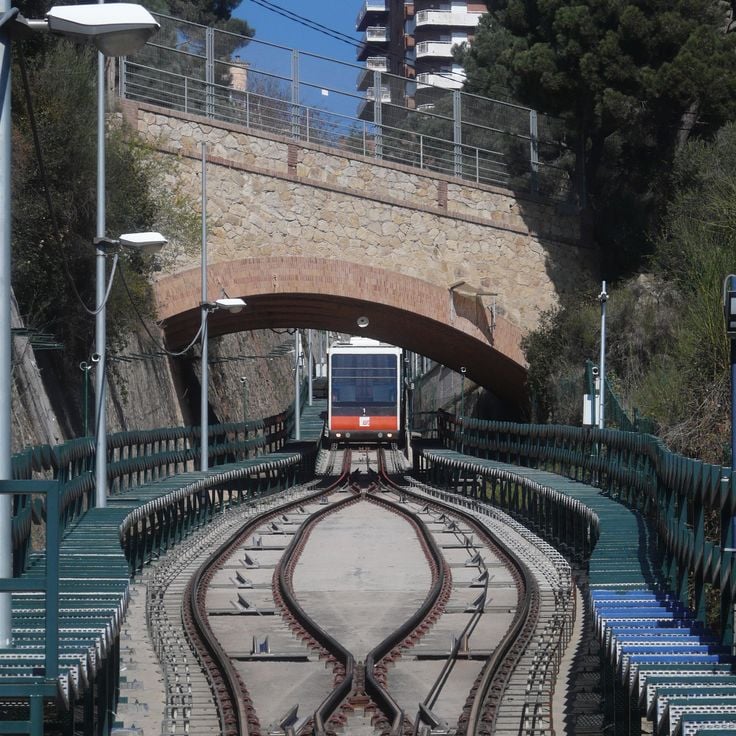
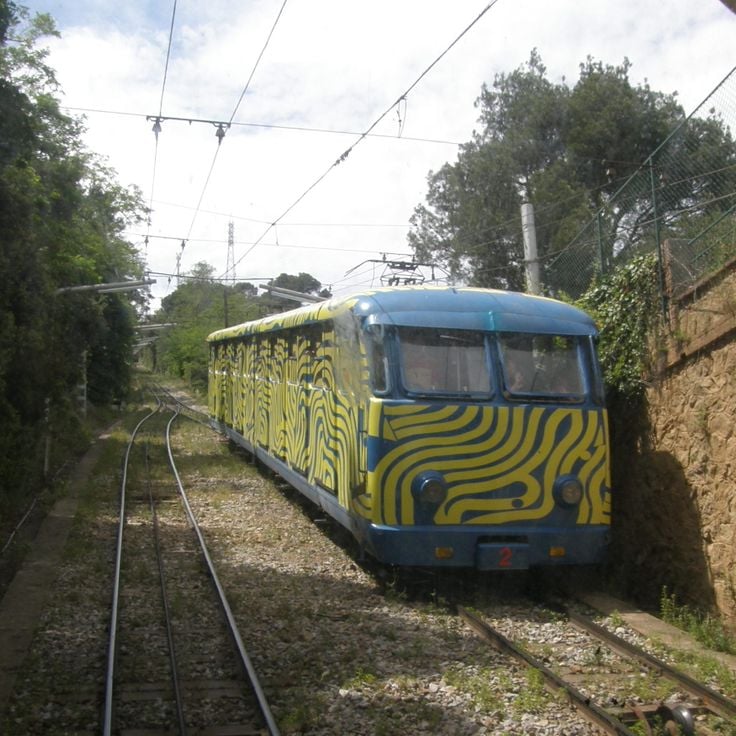
This funicular connects Barcelona with the residential neighborhood of Vallvidrera on the slopes of Tibidabo. The 2,437-foot (743-meter) line climbs 541 feet (165 meters) through forested terrain. Opened in 1906, the route has been modernized several times and now primarily serves local residents and hikers heading to trails in Collserola Natural Park.
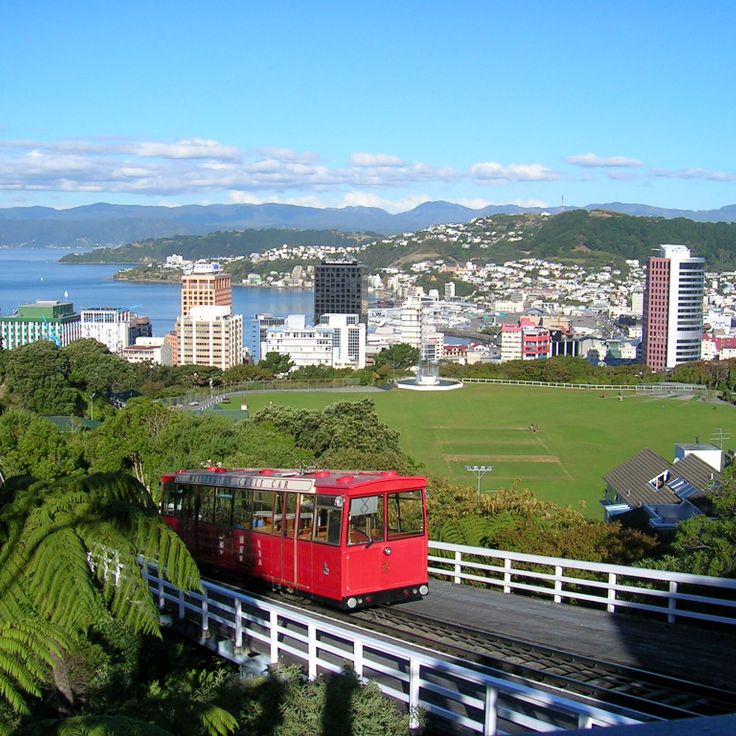
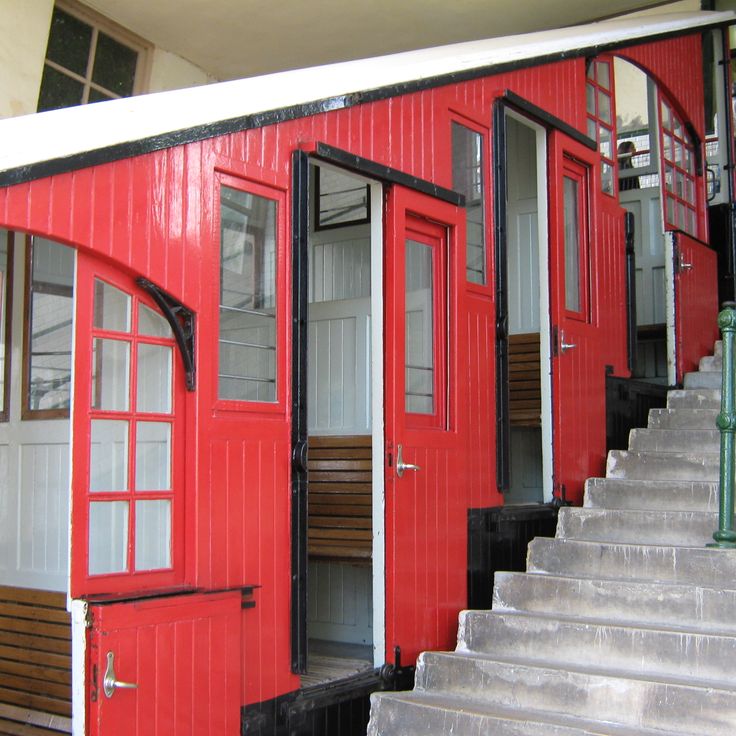
This red funicular connects the city center to the Botanic Gardens along a 2,007-foot (612-meter) track, climbing through Wellington's hills while providing access to one of the city's major green spaces.
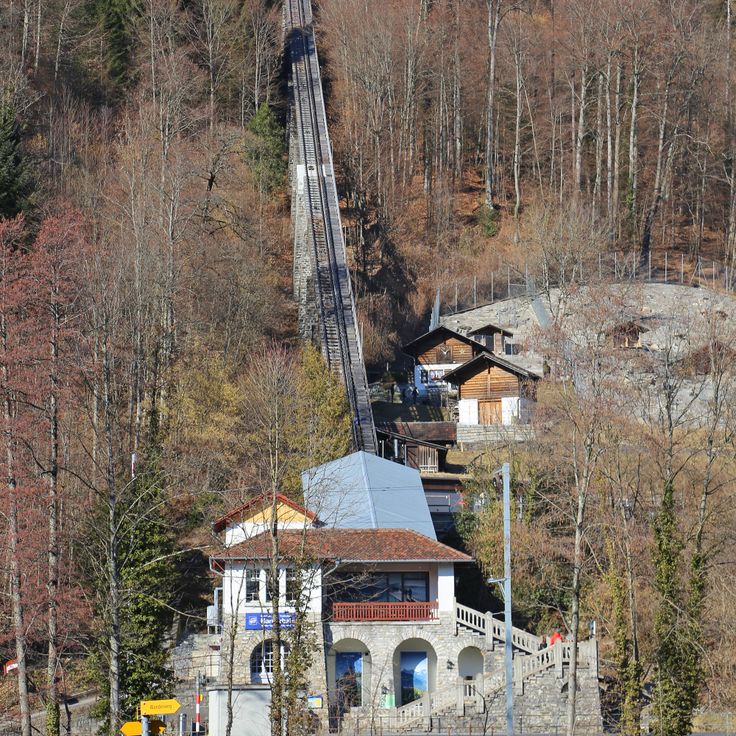
This funicular connects Interlaken with the observation platform on Harder Kulm, climbing 755 meters (2,477 feet) of elevation in eight minutes. The railway travels 1.4 kilometers (0.9 miles) through forested terrain to the mountain station at 1,322 meters (4,337 feet) above sea level. The platform provides views across Interlaken, Lake Thun, Lake Brienz and the surrounding peaks of the Bernese Alps.
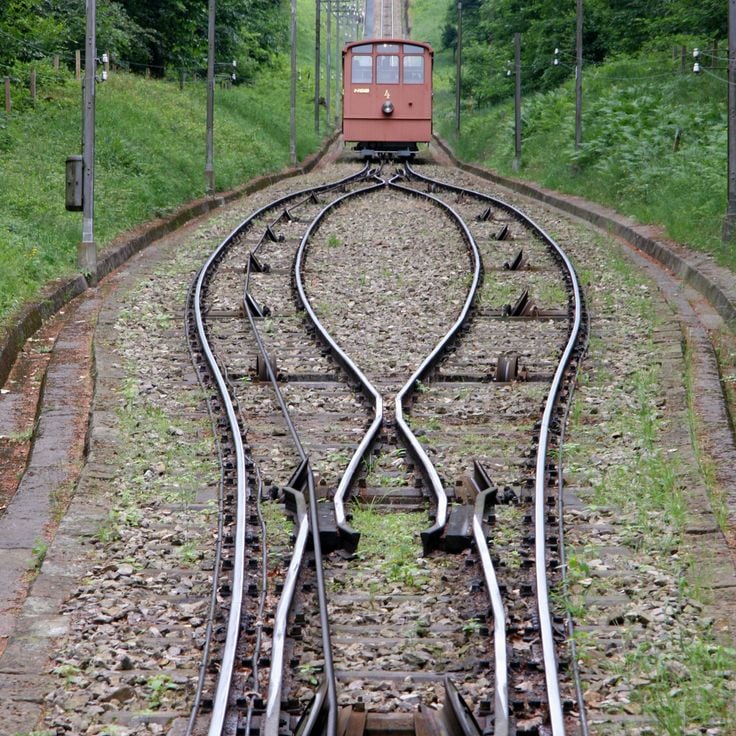
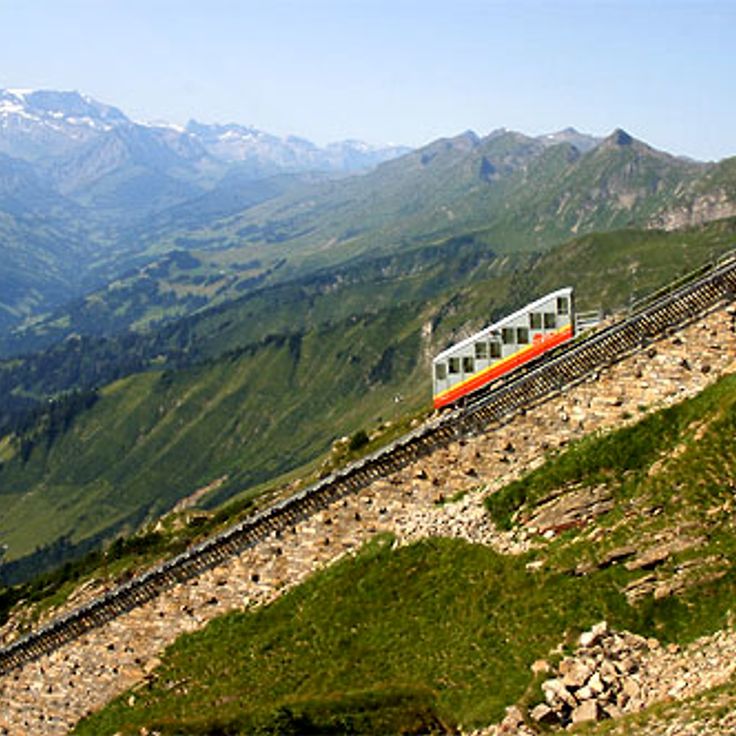
This mountain railway connects Mülenen with the 7,750-foot (2,362-meter) summit of Niesen, covering an elevation gain of 5,480 feet (1,670 meters) over 2.2 miles (3.5 kilometers). The funicular opened in 1910 with a three-rail system and transports visitors in approximately 30 minutes to the viewing platform, which offers views across the Bernese Oberland and surrounding Alpine peaks.
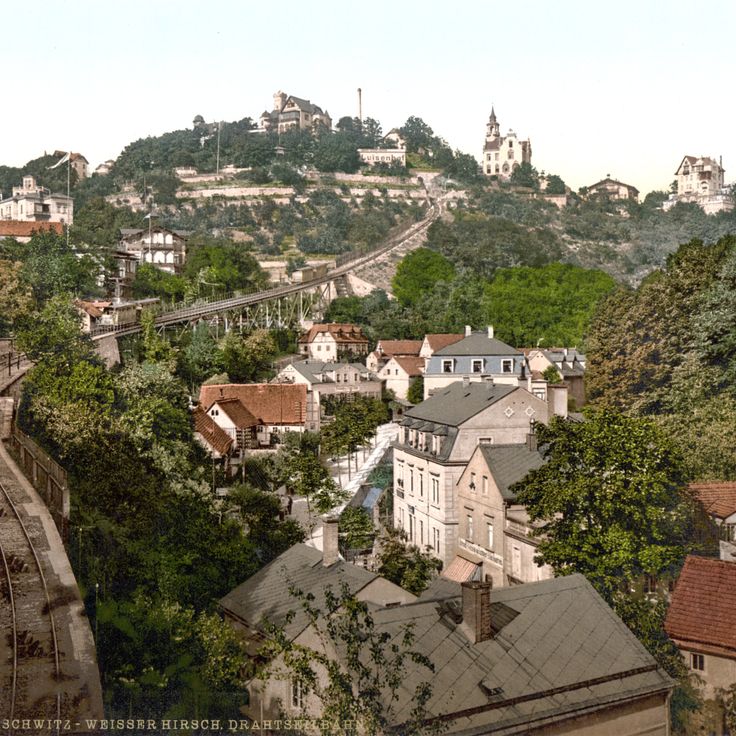
This Dresden funicular built in 1895 covers a distance of 1,794 feet (547 meters) while ascending 312 feet (95 meters) vertically. The installation connects the Loschwitz bank of the Elbe River with the Weißer Hirsch district and handles gradients up to 29.6 percent. Two cars transport passengers along the historic route through wooded terrain. The technical facility uses water ballast for propulsion and ranks among the oldest mountain railways still operating in Germany.
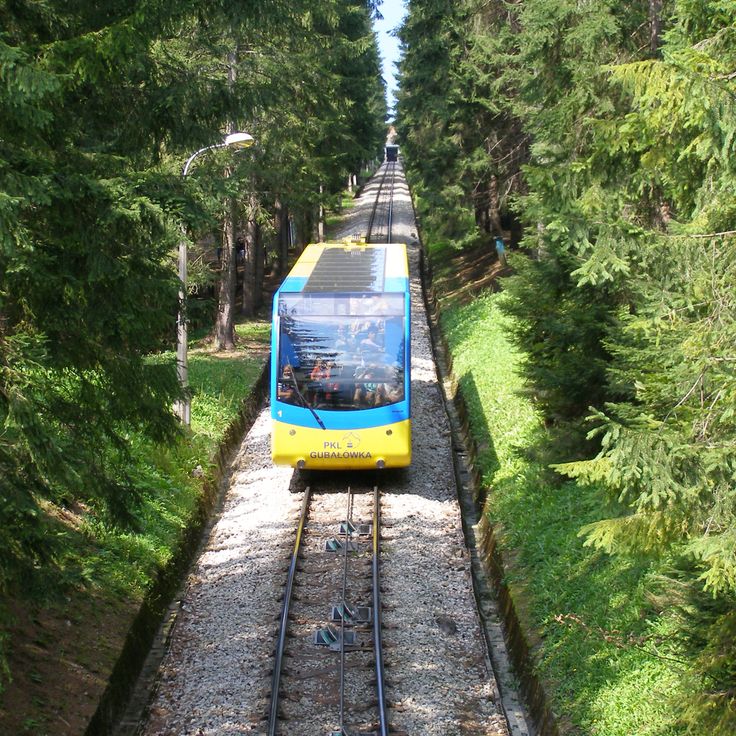
This funiculaire has transported passengers to the 3,684-foot (1,123-meter) summit of Gubałówka Mountain since 1938. The journey covers a vertical rise of roughly 985 feet (300 meters) in about six minutes, connecting Zakopane with the viewpoint that offers sightlines across Tatra peaks and the valley below. The installation serves as a practical link for visitors heading to the upper station, where trails, restaurants and ski areas await.
This funicular opened in 1901 and connects Barcelona to the summit of Tibidabo at 1,680 feet (512 meters) elevation. The line covers 3,710 feet (1,130 meters) and climbs 900 feet (275 meters) to reach the highest point of Serra de Collserola. The railway runs between Plaça del Doctor Andreu and the mountaintop amusement park, where the Temple of the Sacred Heart also stands.
This mountain railway connects the village of St. Anton to Mendel Pass, climbing 2,800 feet (854 meters) over a distance of 1.5 miles (2.4 kilometers). The funicular transports passengers through steep terrain between the Adige Valley and the plateau above. The technical installation provides direct access to the hiking trails and viewpoints of the Mendel Ridge.
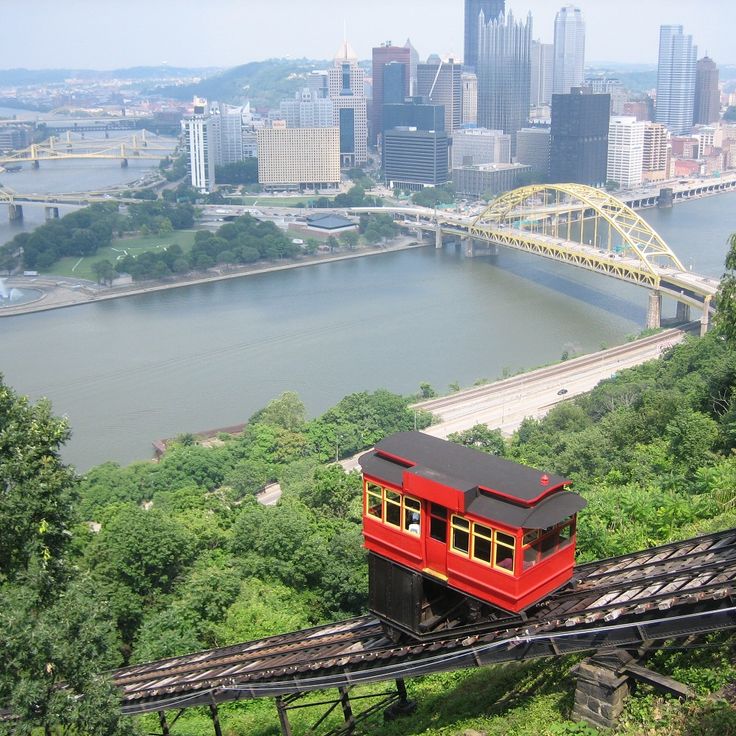
The Incline Duquesne has carried passengers to the summit of Mount Washington since 1877, providing views across Pittsburgh. This funicular climbs the steep hillside that rises south of the confluence of the Allegheny and Monongahela rivers, connecting downtown with the residential neighborhoods on the heights above. The system covers an elevation gain of approximately 400 feet (122 meters) over a track length of about 800 feet (244 meters). From the upper station, the view extends over the rivers, bridges and downtown skyscrapers that define the city center.
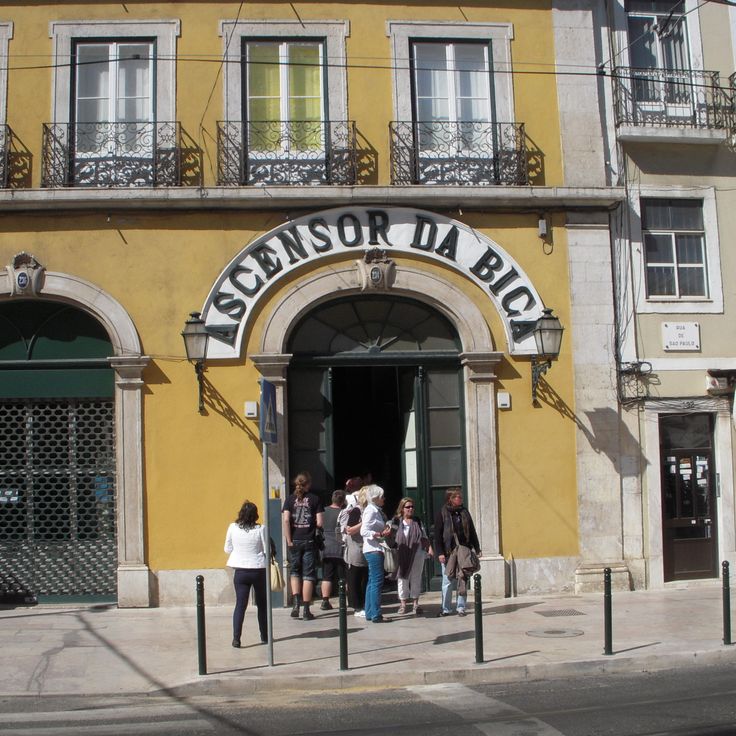
This yellow funicular has transported passengers through the narrow streets of the Chiado district between Calçada do Combro and Rua de São Paulo since 1892. The railway climbs 148 feet (45 meters) over a distance of 804 feet (245 meters), with two cars running on parallel tracks. The historic wooden-bench carriages carry locals and visitors daily up cobblestone streets that would otherwise require a strenuous climb on foot.
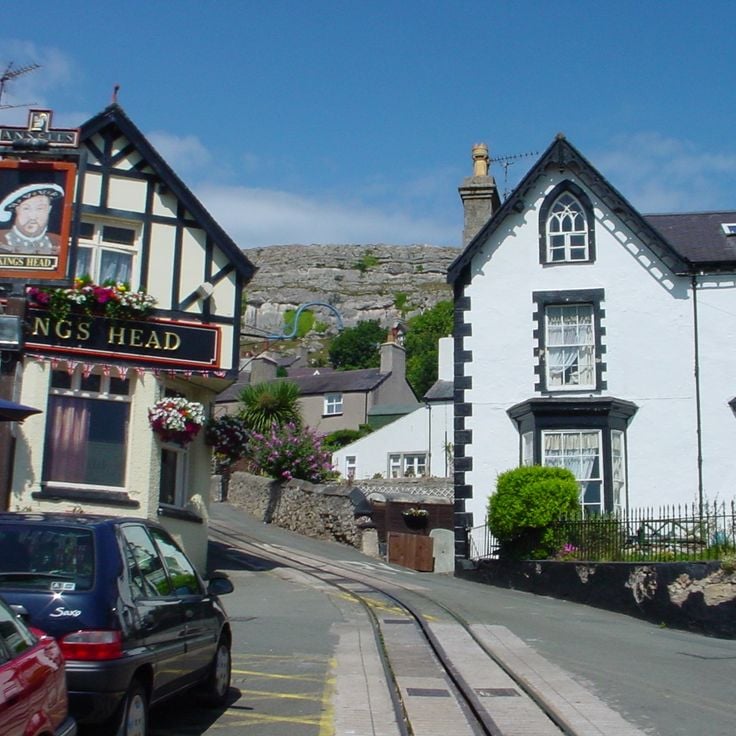
The Great Orme Tramway opened in 1902 and connects the coastal town of Llandudno with the 679-foot summit of Great Orme. The route extends 5,200 feet and passes through two tunnels while ascending 587 feet. The system operates with two independent sections that meet at Halfway Station and stands among the few remaining street cable tramways in Britain.
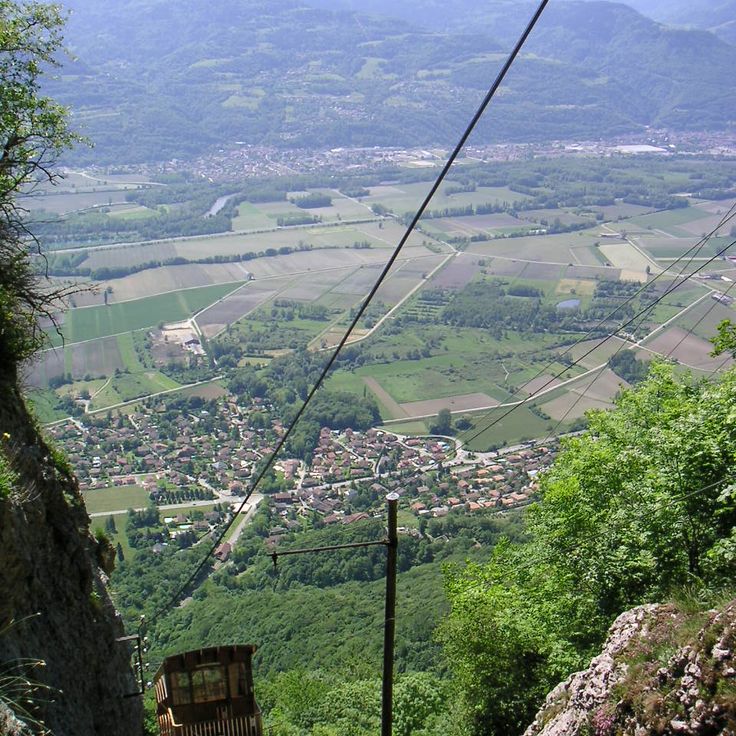
This funicular transports passengers from Lumbin in the Isère Valley to the Plateau des Petites Roches in the French pre-Alps. Built in 1924, the line covers 2,050 meters (6,725 feet) of track and climbs 710 meters (2,330 feet) to connect Saint-Hilaire-du-Touvet with the valley below. It reaches gradients of 83 percent on its steepest sections, placing it among the steepest funiculars worldwide. The two-cabin system carries visitors to paragliding launch sites and provides views across the Chartreuse mountains during the ascent.
This funicular has connected downtown San Sebastián with the summit of Monte Igueldo at 604 feet (184 meters) since 1912. The 1,024-foot (312-meter) route climbs 449 feet (137 meters) through a beech forest above La Concha Bay. The three-minute journey operates year-round with wooden cabins built in the original style. The summit features an early 20th-century amusement park and viewpoints over the Basque coastline.
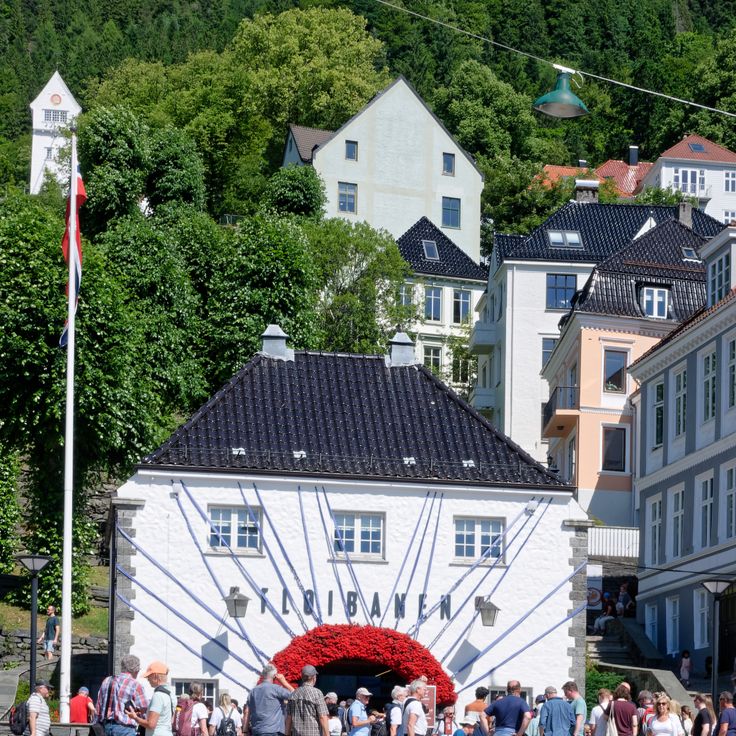
The Fløibanen funicular carries passengers from Bergen's downtown to the summit of Mount Fløyen. The 2,769-foot (844-meter) track climbs 991 feet (302 meters) in about eight minutes, connecting the historic Bryggen wharf district with the mountain viewpoint. Opened in 1918, the railway runs every 15 minutes and provides views across Bergen, its fjords and the surrounding mountains. The upper station serves as a starting point for hiking trails, with a restaurant and viewing platforms offering panoramas of the city and harbor below.
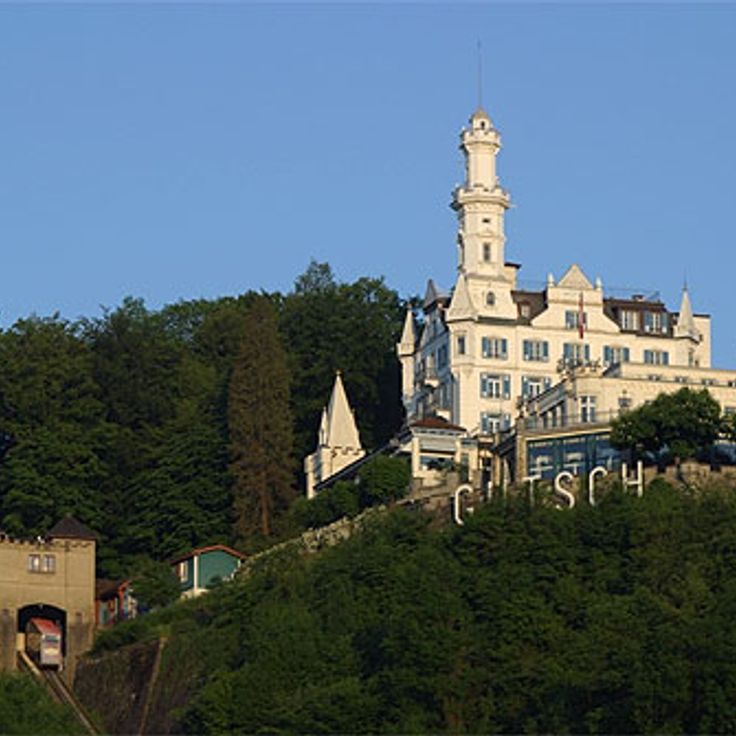
This funicular connects Gütsch Castle with the village of Andermatt in the Uri Alps. Opened in 1987, the system covers 1,585 feet (483 meters) with a gradient of 46 percent, transporting passengers between the valley floor at 4,718 feet (1,438 meters) and the castle hotel at 5,125 feet (1,562 meters). The two minute journey passes through forested terrain and provides views across the Urseren Valley and surrounding peaks of the Central Alps.
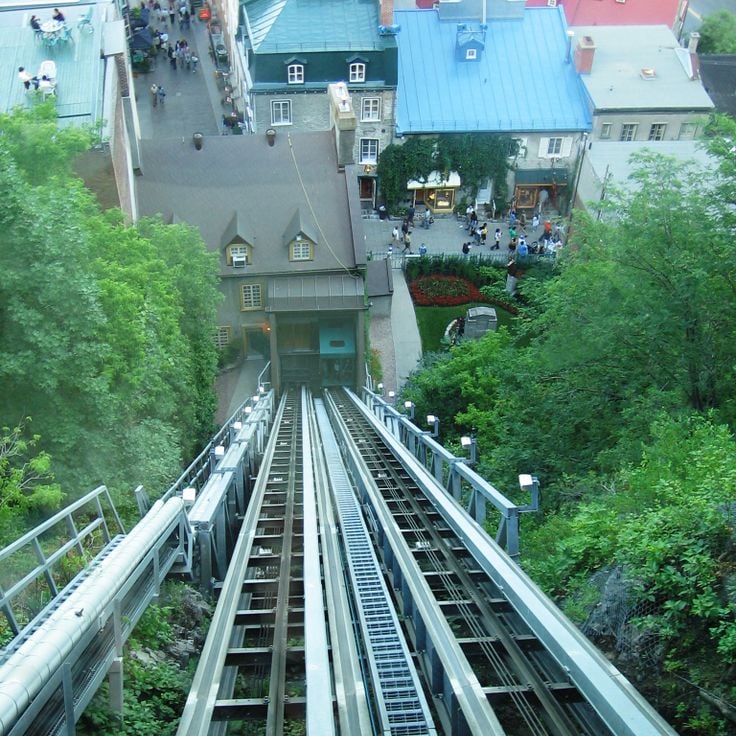
This funicular has connected Upper Town to Lower Town since 1879 and carries 20 passengers per trip along the steep cliff face above the St. Lawrence River. The railway covers an elevation change of 210 feet (64 meters) over a track length of 210 feet (64 meters), running between the Dufferin Terrace area and the Petit Champlain district. After several modernizations over the decades, the Funiculaire de Québec now operates with two contemporary cabins and serves both residents and visitors as a practical transit link between the two historic levels of the city.
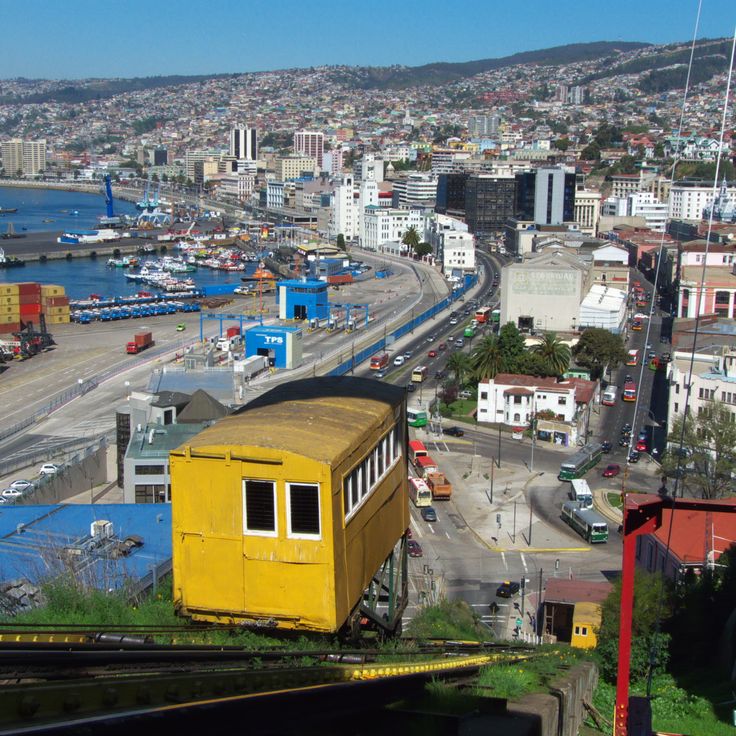
The historic funiculars of Valparaiso date from the 19th century and carry passengers up the steep slopes of this port city. Of the original 30-plus installations, about 15 remain operational today, including Ascensor Concepción from 1883 and Ascensor Artillería with its observation platform at 575 feet (175 meters) elevation. The mechanical systems bridge height differences between 130 and 260 feet (40 and 80 meters), connecting the lower town with residential neighborhoods on the cerros. The wooden cabins move along steep track sections with gradients reaching 45 degrees. These functional transport systems have served the daily movement of residents between different city levels for over a century.
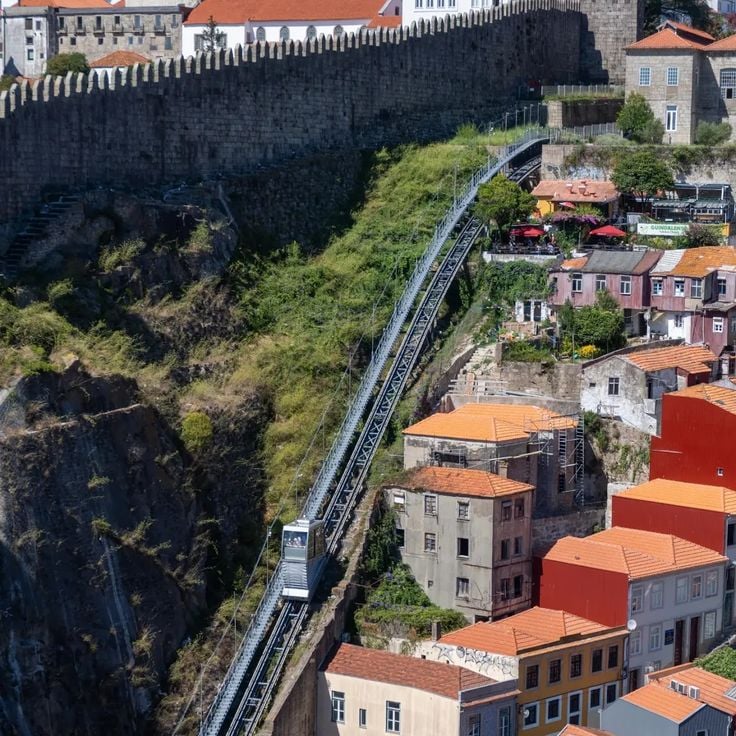
The Funicular dos Guindais connects Porto's lower waterfront district with the upper Batalha quarter across 281 meters (921 feet) with a vertical rise of 61 meters (200 feet). This funicular opened in 1891, replacing a steep footpath between the riverside Ribeira neighborhood and the elevated urban districts. The installation operates daily, transporting residents and visitors during a three-minute journey between the two city levels. Both cars were renovated in 2004 while maintaining the original system. The upper station sits near the Batalha church, while the lower station stands at the Dom Luís I Bridge, providing access between these two historic areas of Porto without the steep climb.
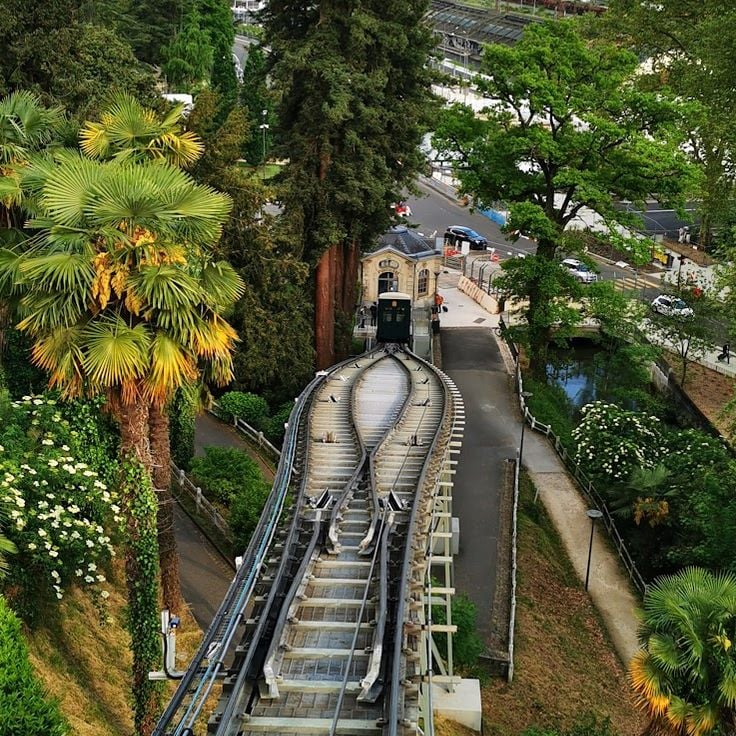
The Pau funicular has connected the lower town with Boulevard des Pyrénées since 1908, climbing 260 feet (80 meters) over a distance of 660 feet (200 meters). The system carries passengers from Pau railway station to the upper town in approximately three minutes, sparing them the steep walk through historic streets. The installation has been modernized several times, most recently in 1978, but maintains its practical function as transport for residents and visitors. The Funiculaire de Pau belongs to those urban funiculars that serve primarily as public transit, providing access to elevated neighborhoods.
The Schwyz-Stoos funicular connects the village of Schlattli near Schwyz with the car-free mountain village of Stoos at 4,265 feet (1,300 meters). With a maximum gradient of 110 percent, it ranks as the steepest funicular railway in the world. Opened in 2017, the system climbs 2,438 feet (743 meters) over a track length of 5,643 feet (1,720 meters) in roughly ten minutes. Its cylindrical cabins adjust automatically to the gradient, keeping passengers on level floors throughout the journey. The funicular serves residents of Stoos as well as visitors heading for hiking trails, ski areas and the Fronalpstock summit.
The Hungerburgbahn in Innsbruck connects the city center with the Hungerburg district at 2,822 feet (860 meters) elevation, ascending 945 feet (288 meters). This modern funicular opened in 2007, replacing an older installation from 1906. Stations designed by Zaha Hadid feature contemporary architecture, while the railway serves four stops between the Congress center and Hungerburg. It functions as a feeder to the Nordkettenbahn, which continues to Seegrube and Hafelekar at 7,657 feet (2,334 meters). The railway transports residents, hikers and skiers to the Nordkette range and provides views across the Inn Valley and surrounding peaks. The journey takes eight minutes and the funicular carries up to 1,200 passengers per hour in both directions.
The Gelmerbahn accesses Gelmer Lake in the Bernese Oberland, climbing 1,496 feet (456 meters) over a track length of 3,373 feet (1,028 meters) with a maximum gradient of 106 percent. Originally built in 1926 for construction of the Grimsel Dam, this funicular now carries hikers to the turquoise mountain lake at 6,102 feet (1,860 meters) elevation, where circular hiking trails and alpine passes into the Hasli Valley begin. The open cars provide direct views of the steep rock face and valley below during the eight-minute ascent, with passengers feeling the pull as the gondola climbs the mountainside.
This funicular railway in Lombardy connects Como with the village of Brunate, carrying passengers up a 500-meter (1,640-foot) incline to an elevation of 715 meters (2,346 feet). Opened in 1894, the system uses two cabins running on parallel tracks between the lower station near Lake Como and the upper station. The journey takes approximately seven minutes and passes through wooded terrain, offering views across the lake and surrounding mountains.
This automated funicular transports two million passengers annually to the Sacré-Cœur Basilica along a 354-foot (108-meter) track. The system climbs the steep Montmartre hill, connecting Rue Foyatier to the basilica forecourt. Two cabins operate in counterbalance, providing access to the highest point in Paris.
The Peak Tram has operated since 1888 on a 0.9-mile (1.4-kilometer) route that climbs 1,210 feet (368 meters) to Victoria Peak, connecting downtown with the highest point on Hong Kong Island.
This mountain railway connects Heidelberg's old town with the 1,864-foot (568-meter) Königstuhl summit, ascending 1,430 feet (436 meters). Opened in 1907, the line runs through forested terrain and passes Heidelberg Castle. The funicular operates in two sections: first from Kornmarkt to the castle, then via Molkenkur to the upper station. The 17-minute journey provides views over the city and Neckar valley.
This cable car system has transported passengers on steel cables through San Francisco's steep streets since 1888, traveling at a constant speed of 9 miles per hour (14 km/h). The mechanically operated cars use underground cables to climb the city's hills, connecting different neighborhoods across the urban landscape. The system comprises three lines that carry thousands of passengers daily, serving as both functional transportation and part of the city's historic infrastructure.
This mountain railway from 1923 extends for two kilometers through the forest, climbing to an elevation of 2,330 feet (710 meters) on Penang Hill. The line connects the city center with the summit and provides access to the cooler elevations above Georgetown. The technical installation transports passengers along a steep route through tropical vegetation. Operations run as a shuttle service between the lower and upper stations.
This funicular connects the port with the island center, covering a vertical distance of 466 feet (142 meters) in roughly three minutes. The system transports visitors and residents between Marina Grande and the elevated Piazzetta, where shops, restaurants and historic buildings are located. The route passes through steep terrain that would require a strenuous climb on foot, providing a practical alternative to buses and taxis. Operations run regularly during tourist season, with reduced hours in winter months.
The underground funicular railway travels through limestone formations to reach the summit of Mount Lycabettus at 690 feet (210 meters) above sea level. Opened in 1965, the installation navigates the 28-degree incline through a 690-foot (210-meter) tunnel connecting the Kolonaki neighborhood to the hilltop. The three-minute journey transports passengers to the Chapel of St. George and viewing terraces overlooking the Greek capital.
The Stanserhorn cable car system carries passengers from Stans to the 6,070-foot (1,850-meter) summit of Stanserhorn. The journey combines a historic funicular railway from 1893 with a modern double-decker aerial cable car featuring an open-air viewing platform on its upper deck. Travelers can observe ten Swiss lakes and surrounding Alpine peaks during the ascent.
This funicular connects Barcelona with the residential neighborhood of Vallvidrera on the slopes of Tibidabo. The 2,437-foot (743-meter) line climbs 541 feet (165 meters) through forested terrain. Opened in 1906, the route has been modernized several times and now primarily serves local residents and hikers heading to trails in Collserola Natural Park.
This red funicular connects the city center to the Botanic Gardens along a 2,007-foot (612-meter) track, climbing through Wellington's hills while providing access to one of the city's major green spaces.
This funicular connects Interlaken with the observation platform on Harder Kulm, climbing 755 meters (2,477 feet) of elevation in eight minutes. The railway travels 1.4 kilometers (0.9 miles) through forested terrain to the mountain station at 1,322 meters (4,337 feet) above sea level. The platform provides views across Interlaken, Lake Thun, Lake Brienz and the surrounding peaks of the Bernese Alps.
This mountain railway connects Mülenen with the 7,750-foot (2,362-meter) summit of Niesen, covering an elevation gain of 5,480 feet (1,670 meters) over 2.2 miles (3.5 kilometers). The funicular opened in 1910 with a three-rail system and transports visitors in approximately 30 minutes to the viewing platform, which offers views across the Bernese Oberland and surrounding Alpine peaks.
This Dresden funicular built in 1895 covers a distance of 1,794 feet (547 meters) while ascending 312 feet (95 meters) vertically. The installation connects the Loschwitz bank of the Elbe River with the Weißer Hirsch district and handles gradients up to 29.6 percent. Two cars transport passengers along the historic route through wooded terrain. The technical facility uses water ballast for propulsion and ranks among the oldest mountain railways still operating in Germany.
This funiculaire has transported passengers to the 3,684-foot (1,123-meter) summit of Gubałówka Mountain since 1938. The journey covers a vertical rise of roughly 985 feet (300 meters) in about six minutes, connecting Zakopane with the viewpoint that offers sightlines across Tatra peaks and the valley below. The installation serves as a practical link for visitors heading to the upper station, where trails, restaurants and ski areas await.
This funicular opened in 1901 and connects Barcelona to the summit of Tibidabo at 1,680 feet (512 meters) elevation. The line covers 3,710 feet (1,130 meters) and climbs 900 feet (275 meters) to reach the highest point of Serra de Collserola. The railway runs between Plaça del Doctor Andreu and the mountaintop amusement park, where the Temple of the Sacred Heart also stands.
This mountain railway connects the village of St. Anton to Mendel Pass, climbing 2,800 feet (854 meters) over a distance of 1.5 miles (2.4 kilometers). The funicular transports passengers through steep terrain between the Adige Valley and the plateau above. The technical installation provides direct access to the hiking trails and viewpoints of the Mendel Ridge.
The Incline Duquesne has carried passengers to the summit of Mount Washington since 1877, providing views across Pittsburgh. This funicular climbs the steep hillside that rises south of the confluence of the Allegheny and Monongahela rivers, connecting downtown with the residential neighborhoods on the heights above. The system covers an elevation gain of approximately 400 feet (122 meters) over a track length of about 800 feet (244 meters). From the upper station, the view extends over the rivers, bridges and downtown skyscrapers that define the city center.
This yellow funicular has transported passengers through the narrow streets of the Chiado district between Calçada do Combro and Rua de São Paulo since 1892. The railway climbs 148 feet (45 meters) over a distance of 804 feet (245 meters), with two cars running on parallel tracks. The historic wooden-bench carriages carry locals and visitors daily up cobblestone streets that would otherwise require a strenuous climb on foot.
The Great Orme Tramway opened in 1902 and connects the coastal town of Llandudno with the 679-foot summit of Great Orme. The route extends 5,200 feet and passes through two tunnels while ascending 587 feet. The system operates with two independent sections that meet at Halfway Station and stands among the few remaining street cable tramways in Britain.
This funicular transports passengers from Lumbin in the Isère Valley to the Plateau des Petites Roches in the French pre-Alps. Built in 1924, the line covers 2,050 meters (6,725 feet) of track and climbs 710 meters (2,330 feet) to connect Saint-Hilaire-du-Touvet with the valley below. It reaches gradients of 83 percent on its steepest sections, placing it among the steepest funiculars worldwide. The two-cabin system carries visitors to paragliding launch sites and provides views across the Chartreuse mountains during the ascent.
This funicular has connected downtown San Sebastián with the summit of Monte Igueldo at 604 feet (184 meters) since 1912. The 1,024-foot (312-meter) route climbs 449 feet (137 meters) through a beech forest above La Concha Bay. The three-minute journey operates year-round with wooden cabins built in the original style. The summit features an early 20th-century amusement park and viewpoints over the Basque coastline.
The Fløibanen funicular carries passengers from Bergen's downtown to the summit of Mount Fløyen. The 2,769-foot (844-meter) track climbs 991 feet (302 meters) in about eight minutes, connecting the historic Bryggen wharf district with the mountain viewpoint. Opened in 1918, the railway runs every 15 minutes and provides views across Bergen, its fjords and the surrounding mountains. The upper station serves as a starting point for hiking trails, with a restaurant and viewing platforms offering panoramas of the city and harbor below.
This funicular connects Gütsch Castle with the village of Andermatt in the Uri Alps. Opened in 1987, the system covers 1,585 feet (483 meters) with a gradient of 46 percent, transporting passengers between the valley floor at 4,718 feet (1,438 meters) and the castle hotel at 5,125 feet (1,562 meters). The two minute journey passes through forested terrain and provides views across the Urseren Valley and surrounding peaks of the Central Alps.
This funicular has connected Upper Town to Lower Town since 1879 and carries 20 passengers per trip along the steep cliff face above the St. Lawrence River. The railway covers an elevation change of 210 feet (64 meters) over a track length of 210 feet (64 meters), running between the Dufferin Terrace area and the Petit Champlain district. After several modernizations over the decades, the Funiculaire de Québec now operates with two contemporary cabins and serves both residents and visitors as a practical transit link between the two historic levels of the city.
The historic funiculars of Valparaiso date from the 19th century and carry passengers up the steep slopes of this port city. Of the original 30-plus installations, about 15 remain operational today, including Ascensor Concepción from 1883 and Ascensor Artillería with its observation platform at 575 feet (175 meters) elevation. The mechanical systems bridge height differences between 130 and 260 feet (40 and 80 meters), connecting the lower town with residential neighborhoods on the cerros. The wooden cabins move along steep track sections with gradients reaching 45 degrees. These functional transport systems have served the daily movement of residents between different city levels for over a century.
The Funicular dos Guindais connects Porto's lower waterfront district with the upper Batalha quarter across 281 meters (921 feet) with a vertical rise of 61 meters (200 feet). This funicular opened in 1891, replacing a steep footpath between the riverside Ribeira neighborhood and the elevated urban districts. The installation operates daily, transporting residents and visitors during a three-minute journey between the two city levels. Both cars were renovated in 2004 while maintaining the original system. The upper station sits near the Batalha church, while the lower station stands at the Dom Luís I Bridge, providing access between these two historic areas of Porto without the steep climb.
The Pau funicular has connected the lower town with Boulevard des Pyrénées since 1908, climbing 260 feet (80 meters) over a distance of 660 feet (200 meters). The system carries passengers from Pau railway station to the upper town in approximately three minutes, sparing them the steep walk through historic streets. The installation has been modernized several times, most recently in 1978, but maintains its practical function as transport for residents and visitors. The Funiculaire de Pau belongs to those urban funiculars that serve primarily as public transit, providing access to elevated neighborhoods.
The Schwyz-Stoos funicular connects the village of Schlattli near Schwyz with the car-free mountain village of Stoos at 4,265 feet (1,300 meters). With a maximum gradient of 110 percent, it ranks as the steepest funicular railway in the world. Opened in 2017, the system climbs 2,438 feet (743 meters) over a track length of 5,643 feet (1,720 meters) in roughly ten minutes. Its cylindrical cabins adjust automatically to the gradient, keeping passengers on level floors throughout the journey. The funicular serves residents of Stoos as well as visitors heading for hiking trails, ski areas and the Fronalpstock summit.
The Hungerburgbahn in Innsbruck connects the city center with the Hungerburg district at 2,822 feet (860 meters) elevation, ascending 945 feet (288 meters). This modern funicular opened in 2007, replacing an older installation from 1906. Stations designed by Zaha Hadid feature contemporary architecture, while the railway serves four stops between the Congress center and Hungerburg. It functions as a feeder to the Nordkettenbahn, which continues to Seegrube and Hafelekar at 7,657 feet (2,334 meters). The railway transports residents, hikers and skiers to the Nordkette range and provides views across the Inn Valley and surrounding peaks. The journey takes eight minutes and the funicular carries up to 1,200 passengers per hour in both directions.
The Gelmerbahn accesses Gelmer Lake in the Bernese Oberland, climbing 1,496 feet (456 meters) over a track length of 3,373 feet (1,028 meters) with a maximum gradient of 106 percent. Originally built in 1926 for construction of the Grimsel Dam, this funicular now carries hikers to the turquoise mountain lake at 6,102 feet (1,860 meters) elevation, where circular hiking trails and alpine passes into the Hasli Valley begin. The open cars provide direct views of the steep rock face and valley below during the eight-minute ascent, with passengers feeling the pull as the gondola climbs the mountainside.
This funicular railway in Lombardy connects Como with the village of Brunate, carrying passengers up a 500-meter (1,640-foot) incline to an elevation of 715 meters (2,346 feet). Opened in 1894, the system uses two cabins running on parallel tracks between the lower station near Lake Como and the upper station. The journey takes approximately seven minutes and passes through wooded terrain, offering views across the lake and surrounding mountains.
This automated funicular transports two million passengers annually to the Sacré-Cœur Basilica along a 354-foot (108-meter) track. The system climbs the steep Montmartre hill, connecting Rue Foyatier to the basilica forecourt. Two cabins operate in counterbalance, providing access to the highest point in Paris.
The Peak Tram has operated since 1888 on a 0.9-mile (1.4-kilometer) route that climbs 1,210 feet (368 meters) to Victoria Peak, connecting downtown with the highest point on Hong Kong Island.
This mountain railway connects Heidelberg's old town with the 1,864-foot (568-meter) Königstuhl summit, ascending 1,430 feet (436 meters). Opened in 1907, the line runs through forested terrain and passes Heidelberg Castle. The funicular operates in two sections: first from Kornmarkt to the castle, then via Molkenkur to the upper station. The 17-minute journey provides views over the city and Neckar valley.
This cable car system has transported passengers on steel cables through San Francisco's steep streets since 1888, traveling at a constant speed of 9 miles per hour (14 km/h). The mechanically operated cars use underground cables to climb the city's hills, connecting different neighborhoods across the urban landscape. The system comprises three lines that carry thousands of passengers daily, serving as both functional transportation and part of the city's historic infrastructure.
This mountain railway from 1923 extends for two kilometers through the forest, climbing to an elevation of 2,330 feet (710 meters) on Penang Hill. The line connects the city center with the summit and provides access to the cooler elevations above Georgetown. The technical installation transports passengers along a steep route through tropical vegetation. Operations run as a shuttle service between the lower and upper stations.
This funicular connects the port with the island center, covering a vertical distance of 466 feet (142 meters) in roughly three minutes. The system transports visitors and residents between Marina Grande and the elevated Piazzetta, where shops, restaurants and historic buildings are located. The route passes through steep terrain that would require a strenuous climb on foot, providing a practical alternative to buses and taxis. Operations run regularly during tourist season, with reduced hours in winter months.
The underground funicular railway travels through limestone formations to reach the summit of Mount Lycabettus at 690 feet (210 meters) above sea level. Opened in 1965, the installation navigates the 28-degree incline through a 690-foot (210-meter) tunnel connecting the Kolonaki neighborhood to the hilltop. The three-minute journey transports passengers to the Chapel of St. George and viewing terraces overlooking the Greek capital.
The Stanserhorn cable car system carries passengers from Stans to the 6,070-foot (1,850-meter) summit of Stanserhorn. The journey combines a historic funicular railway from 1893 with a modern double-decker aerial cable car featuring an open-air viewing platform on its upper deck. Travelers can observe ten Swiss lakes and surrounding Alpine peaks during the ascent.
This funicular connects Barcelona with the residential neighborhood of Vallvidrera on the slopes of Tibidabo. The 2,437-foot (743-meter) line climbs 541 feet (165 meters) through forested terrain. Opened in 1906, the route has been modernized several times and now primarily serves local residents and hikers heading to trails in Collserola Natural Park.
This red funicular connects the city center to the Botanic Gardens along a 2,007-foot (612-meter) track, climbing through Wellington's hills while providing access to one of the city's major green spaces.
This funicular connects Interlaken with the observation platform on Harder Kulm, climbing 755 meters (2,477 feet) of elevation in eight minutes. The railway travels 1.4 kilometers (0.9 miles) through forested terrain to the mountain station at 1,322 meters (4,337 feet) above sea level. The platform provides views across Interlaken, Lake Thun, Lake Brienz and the surrounding peaks of the Bernese Alps.
This mountain railway connects Mülenen with the 7,750-foot (2,362-meter) summit of Niesen, covering an elevation gain of 5,480 feet (1,670 meters) over 2.2 miles (3.5 kilometers). The funicular opened in 1910 with a three-rail system and transports visitors in approximately 30 minutes to the viewing platform, which offers views across the Bernese Oberland and surrounding Alpine peaks.
This Dresden funicular built in 1895 covers a distance of 1,794 feet (547 meters) while ascending 312 feet (95 meters) vertically. The installation connects the Loschwitz bank of the Elbe River with the Weißer Hirsch district and handles gradients up to 29.6 percent. Two cars transport passengers along the historic route through wooded terrain. The technical facility uses water ballast for propulsion and ranks among the oldest mountain railways still operating in Germany.
This funiculaire has transported passengers to the 3,684-foot (1,123-meter) summit of Gubałówka Mountain since 1938. The journey covers a vertical rise of roughly 985 feet (300 meters) in about six minutes, connecting Zakopane with the viewpoint that offers sightlines across Tatra peaks and the valley below. The installation serves as a practical link for visitors heading to the upper station, where trails, restaurants and ski areas await.
This funicular opened in 1901 and connects Barcelona to the summit of Tibidabo at 1,680 feet (512 meters) elevation. The line covers 3,710 feet (1,130 meters) and climbs 900 feet (275 meters) to reach the highest point of Serra de Collserola. The railway runs between Plaça del Doctor Andreu and the mountaintop amusement park, where the Temple of the Sacred Heart also stands.
This mountain railway connects the village of St. Anton to Mendel Pass, climbing 2,800 feet (854 meters) over a distance of 1.5 miles (2.4 kilometers). The funicular transports passengers through steep terrain between the Adige Valley and the plateau above. The technical installation provides direct access to the hiking trails and viewpoints of the Mendel Ridge.
The Incline Duquesne has carried passengers to the summit of Mount Washington since 1877, providing views across Pittsburgh. This funicular climbs the steep hillside that rises south of the confluence of the Allegheny and Monongahela rivers, connecting downtown with the residential neighborhoods on the heights above. The system covers an elevation gain of approximately 400 feet (122 meters) over a track length of about 800 feet (244 meters). From the upper station, the view extends over the rivers, bridges and downtown skyscrapers that define the city center.
This yellow funicular has transported passengers through the narrow streets of the Chiado district between Calçada do Combro and Rua de São Paulo since 1892. The railway climbs 148 feet (45 meters) over a distance of 804 feet (245 meters), with two cars running on parallel tracks. The historic wooden-bench carriages carry locals and visitors daily up cobblestone streets that would otherwise require a strenuous climb on foot.
The Great Orme Tramway opened in 1902 and connects the coastal town of Llandudno with the 679-foot summit of Great Orme. The route extends 5,200 feet and passes through two tunnels while ascending 587 feet. The system operates with two independent sections that meet at Halfway Station and stands among the few remaining street cable tramways in Britain.
This funicular transports passengers from Lumbin in the Isère Valley to the Plateau des Petites Roches in the French pre-Alps. Built in 1924, the line covers 2,050 meters (6,725 feet) of track and climbs 710 meters (2,330 feet) to connect Saint-Hilaire-du-Touvet with the valley below. It reaches gradients of 83 percent on its steepest sections, placing it among the steepest funiculars worldwide. The two-cabin system carries visitors to paragliding launch sites and provides views across the Chartreuse mountains during the ascent.
This funicular has connected downtown San Sebastián with the summit of Monte Igueldo at 604 feet (184 meters) since 1912. The 1,024-foot (312-meter) route climbs 449 feet (137 meters) through a beech forest above La Concha Bay. The three-minute journey operates year-round with wooden cabins built in the original style. The summit features an early 20th-century amusement park and viewpoints over the Basque coastline.
The Fløibanen funicular carries passengers from Bergen's downtown to the summit of Mount Fløyen. The 2,769-foot (844-meter) track climbs 991 feet (302 meters) in about eight minutes, connecting the historic Bryggen wharf district with the mountain viewpoint. Opened in 1918, the railway runs every 15 minutes and provides views across Bergen, its fjords and the surrounding mountains. The upper station serves as a starting point for hiking trails, with a restaurant and viewing platforms offering panoramas of the city and harbor below.
This funicular connects Gütsch Castle with the village of Andermatt in the Uri Alps. Opened in 1987, the system covers 1,585 feet (483 meters) with a gradient of 46 percent, transporting passengers between the valley floor at 4,718 feet (1,438 meters) and the castle hotel at 5,125 feet (1,562 meters). The two minute journey passes through forested terrain and provides views across the Urseren Valley and surrounding peaks of the Central Alps.
This funicular has connected Upper Town to Lower Town since 1879 and carries 20 passengers per trip along the steep cliff face above the St. Lawrence River. The railway covers an elevation change of 210 feet (64 meters) over a track length of 210 feet (64 meters), running between the Dufferin Terrace area and the Petit Champlain district. After several modernizations over the decades, the Funiculaire de Québec now operates with two contemporary cabins and serves both residents and visitors as a practical transit link between the two historic levels of the city.
The historic funiculars of Valparaiso date from the 19th century and carry passengers up the steep slopes of this port city. Of the original 30-plus installations, about 15 remain operational today, including Ascensor Concepción from 1883 and Ascensor Artillería with its observation platform at 575 feet (175 meters) elevation. The mechanical systems bridge height differences between 130 and 260 feet (40 and 80 meters), connecting the lower town with residential neighborhoods on the cerros. The wooden cabins move along steep track sections with gradients reaching 45 degrees. These functional transport systems have served the daily movement of residents between different city levels for over a century.
The Funicular dos Guindais connects Porto's lower waterfront district with the upper Batalha quarter across 281 meters (921 feet) with a vertical rise of 61 meters (200 feet). This funicular opened in 1891, replacing a steep footpath between the riverside Ribeira neighborhood and the elevated urban districts. The installation operates daily, transporting residents and visitors during a three-minute journey between the two city levels. Both cars were renovated in 2004 while maintaining the original system. The upper station sits near the Batalha church, while the lower station stands at the Dom Luís I Bridge, providing access between these two historic areas of Porto without the steep climb.
The Pau funicular has connected the lower town with Boulevard des Pyrénées since 1908, climbing 260 feet (80 meters) over a distance of 660 feet (200 meters). The system carries passengers from Pau railway station to the upper town in approximately three minutes, sparing them the steep walk through historic streets. The installation has been modernized several times, most recently in 1978, but maintains its practical function as transport for residents and visitors. The Funiculaire de Pau belongs to those urban funiculars that serve primarily as public transit, providing access to elevated neighborhoods.
These funiculars invite you to see the city and the mountain in a different way, by taking time to go up and watch the landscape change before your eyes. Whether you want a practical way to travel or a height experience, each ride tells something about the place it crosses. Get on and enjoy the trip: sometimes, the journey is as important as the destination.