See the monuments around you in AROpen chests in the app
Around Us is built for your phone — point your camera at the streets and discover the monuments and places around you in augmented reality.Around Us is built for your phone — chests unlock when you walk, explore and capture nearby places.
Stone monuments across continents mark moments when cities chose to remember their victories and turning points.
Triumphal arches document military and historical events of their time. These monuments to victories and commemoration stand in cities around the world. The structures combine architectural elements with historical documentation through reliefs, inscriptions, and sculptures.
The collection includes Roman triumphal arches such as the Arch of Constantine, Arch of Titus, and Arch of Septimius Severus in Rome, along with the Arch of Trajan in Benevento. Paris features the Arc de Triomphe, Porte Saint-Denis, and Arc de Triomphe du Carrousel. The Brandenburg Gate in Berlin, Siegestor in Munich, and Puerta de Alcalá in Madrid document European history.
Further examples include the India Gate in New Delhi, Patuxaï in Vientiane, and Arch 22 in Banjul. In North America, the Washington Square Arch and Soldiers' and Sailors' Arch stand in New York, while the Gateway Arch rises in St. Louis. The Triumphal Arch of Orange and Hadrian's Arch in Athens demonstrate ancient Roman architecture.
Stone monuments across continents mark moments when cities chose to remember their victories and turning points.
Triumphal arches document military and historical events of their time. These monuments to victories and commemoration stand in cities around the world. The structures combine architectural elements with historical documentation through reliefs, inscriptions, and sculptures.
The collection includes Roman triumphal arches such as the Arch of Constantine, Arch of Titus, and Arch of Septimius Severus in Rome, along with the Arch of Trajan in Benevento. Paris features the Arc de Triomphe, Porte Saint-Denis, and Arc de Triomphe du Carrousel. The Brandenburg Gate in Berlin, Siegestor in Munich, and Puerta de Alcalá in Madrid document European history.
Further examples include the India Gate in New Delhi, Patuxaï in Vientiane, and Arch 22 in Banjul. In North America, the Washington Square Arch and Soldiers' and Sailors' Arch stand in New York, while the Gateway Arch rises in St. Louis. The Triumphal Arch of Orange and Hadrian's Arch in Athens demonstrate ancient Roman architecture.
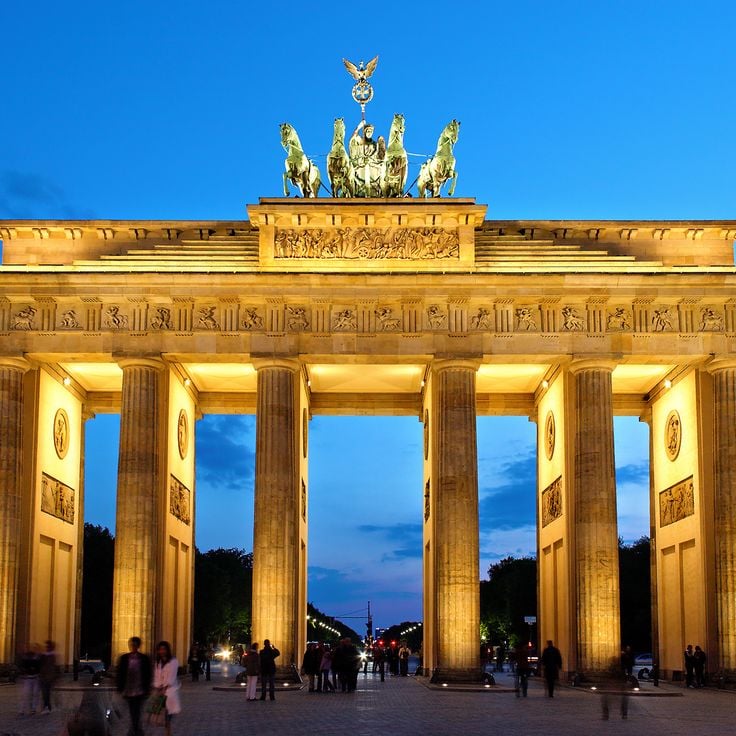
The Brandenburg Gate was built between 1788 and 1791 following designs by Carl Gotthard Langhans in the Neoclassical style. It rises 26 meters (85 feet) above Pariser Platz and features twelve Doric sandstone columns forming five passageways. The quadriga on top shows Victoria, goddess of victory, driving a chariot drawn by four horses. Johann Gottfried Schadow created this copper sculpture in 1793. Reliefs on the inner walls depict scenes from Greek mythology, including the Hercules cycle. The gate originally served as one of eighteen city gates and marks the western entrance to the Unter den Linden boulevard. In this collection of triumphal arches, the Brandenburg Gate stands as a monument that brings together architecture and historical documentation.
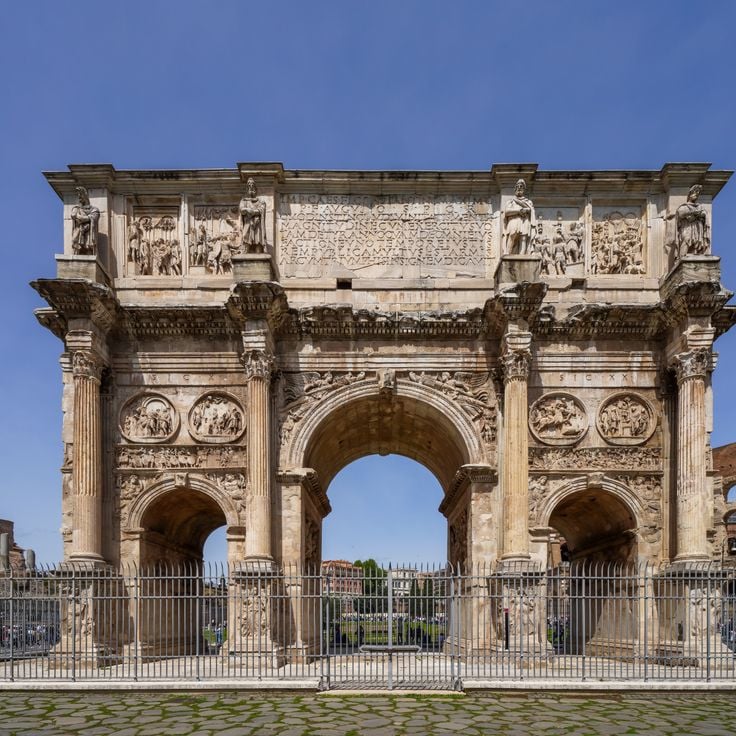
The Arch of Constantine stands in Rome, between the Colosseum and the Palatine Hill. It was built in 315 to mark Emperor Constantine's victory over Maxentius. Many of its reliefs and sculptures were taken from older Roman monuments and placed here. Walking past it, you can read layers of Roman history in the stone, from the carvings themselves to the inscriptions that record a turning point of the early 4th century.
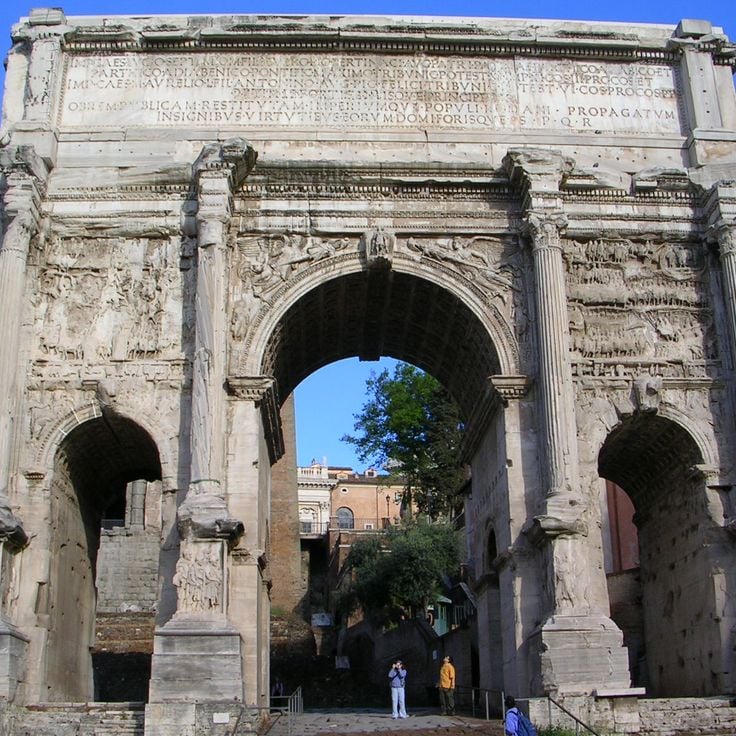
The Arch of Septimius Severus stands at the edge of the Roman Forum and is one of the triumphal arches that gave shape to this collection. Built in 203 AD to mark military campaigns against the Parthians, the arch rises about 75 feet (23 meters) above the pavement. It has three passages and is covered with relief panels showing battles and sieges in Mesopotamia. Inscriptions along the upper section record what the emperor and his sons achieved. Walking through the Forum, this arch is one of the first things you see.
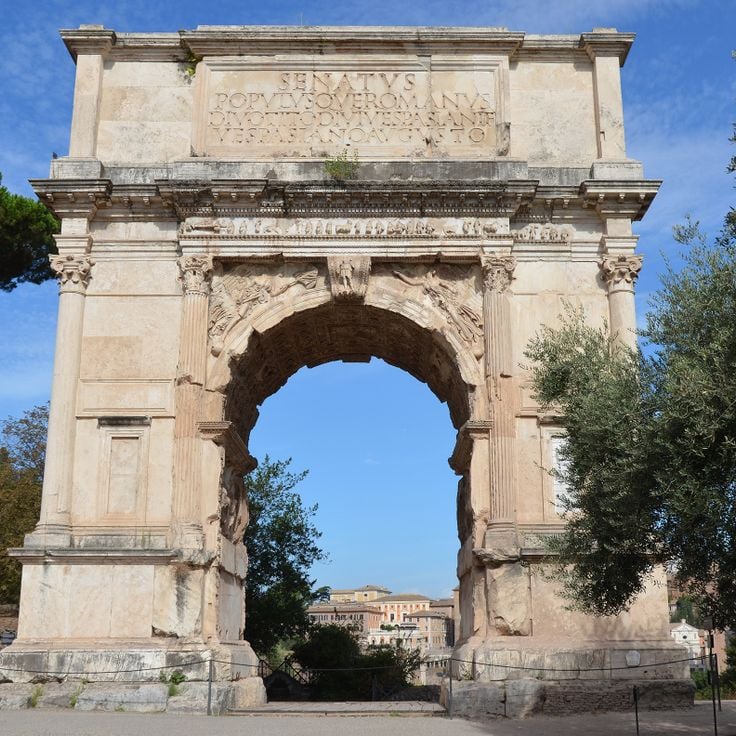
The Arch of Titus dates to 82 AD and stands at the edge of the Roman Forum. It was built after the death of Emperor Titus to honor his campaign in the Jewish War. The reliefs carved into the stone show the triumphal procession following the fall of Jerusalem, including the looted menorah from the Second Temple. These carvings make this arch a direct record of one of the most consequential events of the ancient world. It is among the oldest surviving triumphal arches in Rome and later served as a model for commemorative monuments across Europe.
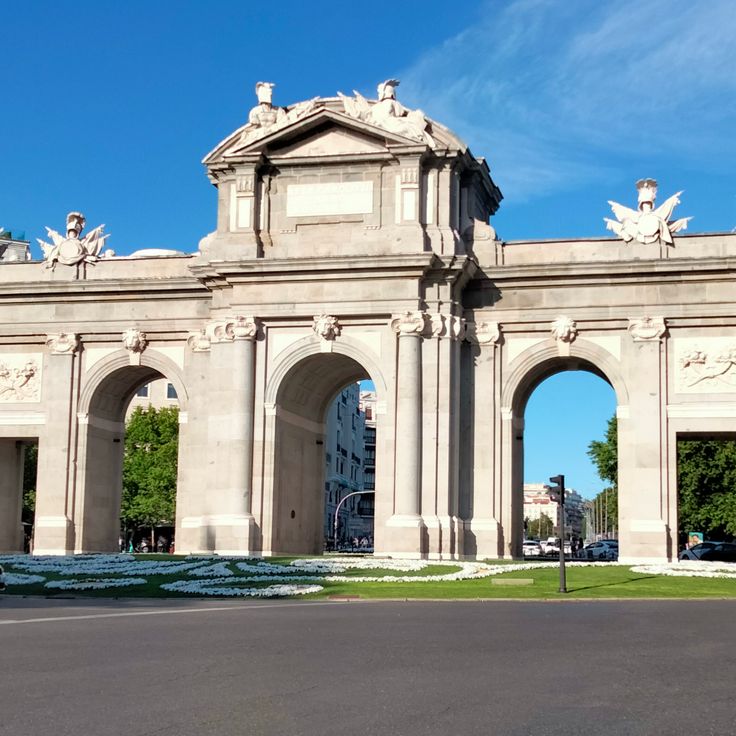
The Gate of Alcalá stands in the center of Madrid and is one of the most recognized 18th-century triumphal arches in Europe. It was designed by Francesco Sabatini and built from granite on the orders of King Charles III. The gate has five arches: the three central ones have semi-domes, and the two side ones have flat architraves. The facade displays reliefs and ornamentation recalling victories and events of the Spanish monarchy. The structure combines neoclassical forms with baroque details and once marked the entrance to the city on the road to Alcalá de Henares.
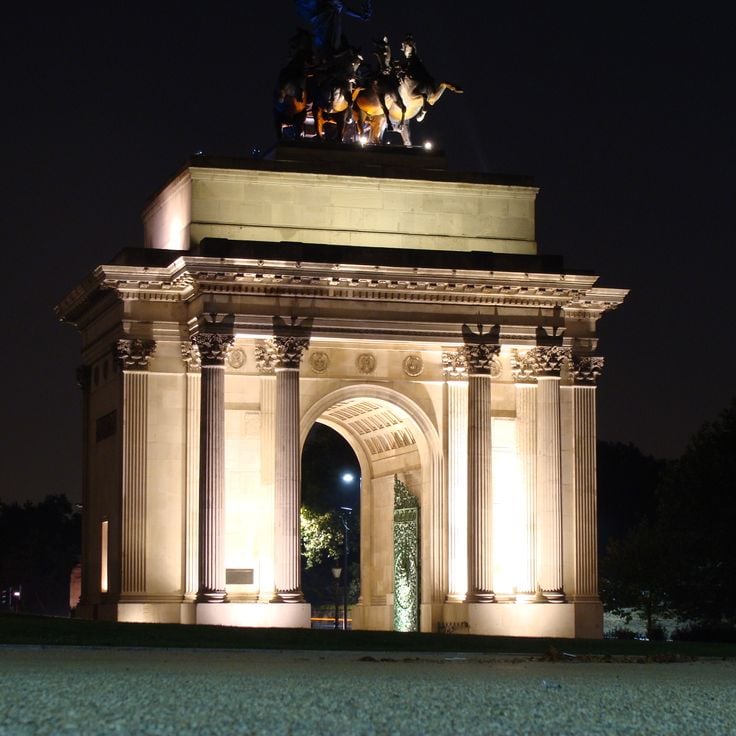
The Wellington Arch stands at Hyde Park Corner in London and was built in 1830. This triumphal arch in Corinthian style has three passageways and is topped by Europe's largest bronze sculpture group, a chariot pulled by horses with Nike, the goddess of victory. Originally designed as a northern entrance to Buckingham Palace, it was later dedicated to honor the military victories of the Duke of Wellington. Inside, the arch contains exhibitions about its history and design. The upper levels offer views across the surrounding parks and historic neighborhoods of London.
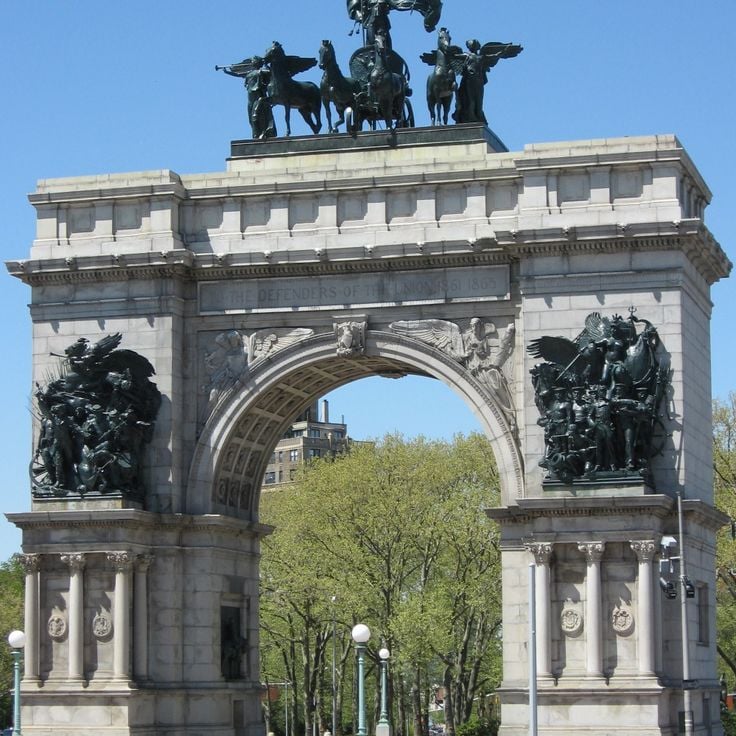
The Soldiers' and Sailors' Arch stands at Grand Army Plaza in Brooklyn and belongs to this collection of triumphal monuments that document military and historical events. Built in 1892, the arch honors the soldiers and sailors of the Union Army who fought in the American Civil War. Relief sculptures show Abraham Lincoln and Ulysses Grant, two central figures of the conflict. The arch serves as a memorial to Civil War participants and records the military history of the United States from the mid-19th century.
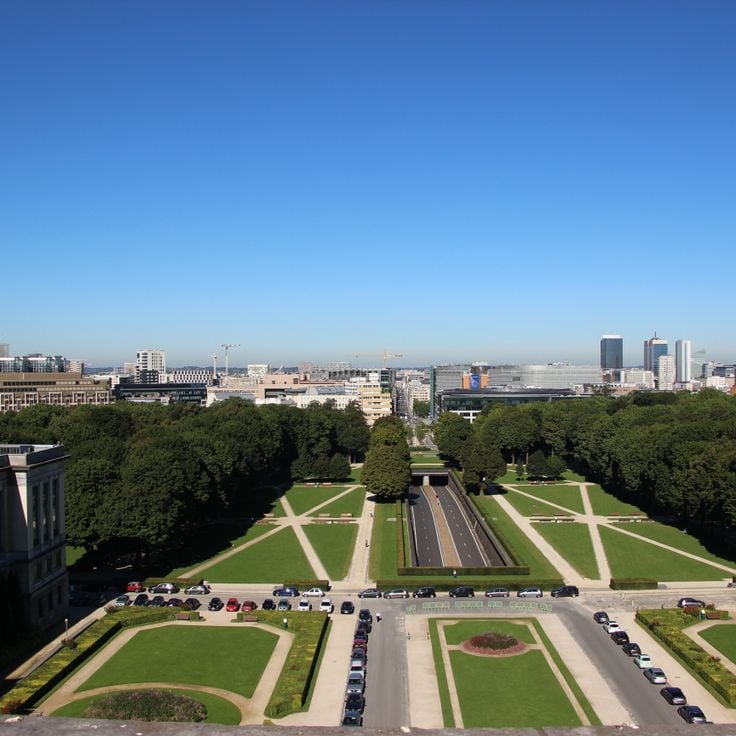
This triumphal arch in Brussels stands as a monument to military victories and national history. Completed in 1905, the structure houses the Art and History Museum and the Automobile Museum. The arch marks the entrance to Cinquantenaire Park and originally served as a gateway for the 1880 Brussels World's Fair. The facade displays allegorical sculptures and reliefs representing Belgium's historical provinces and documenting national themes. The arch connects two building complexes and forms the architectural center of the park.
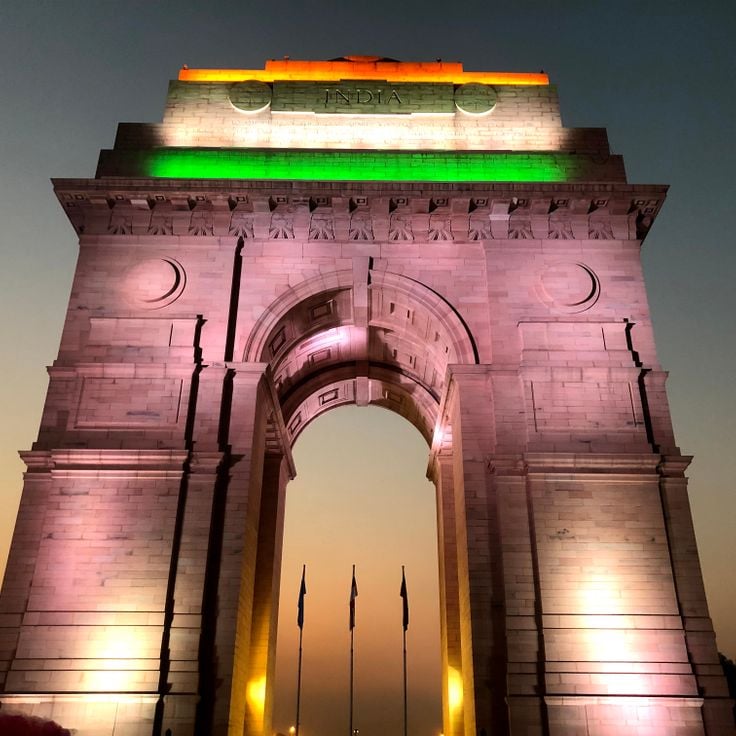
India Gate is a red sandstone monument in New Delhi that honors Indian soldiers who died in the wars of the early 20th century. It was completed in 1931 and designed by Edwin Lutyens. Like a triumphal arch, it has an arched passage and a flat top. Reliefs and inscriptions recall the military events of that time. Inside, a flame burns in memory of fallen soldiers. The monument stands at the end of Rajpath and is a defining feature of the city's landscape.
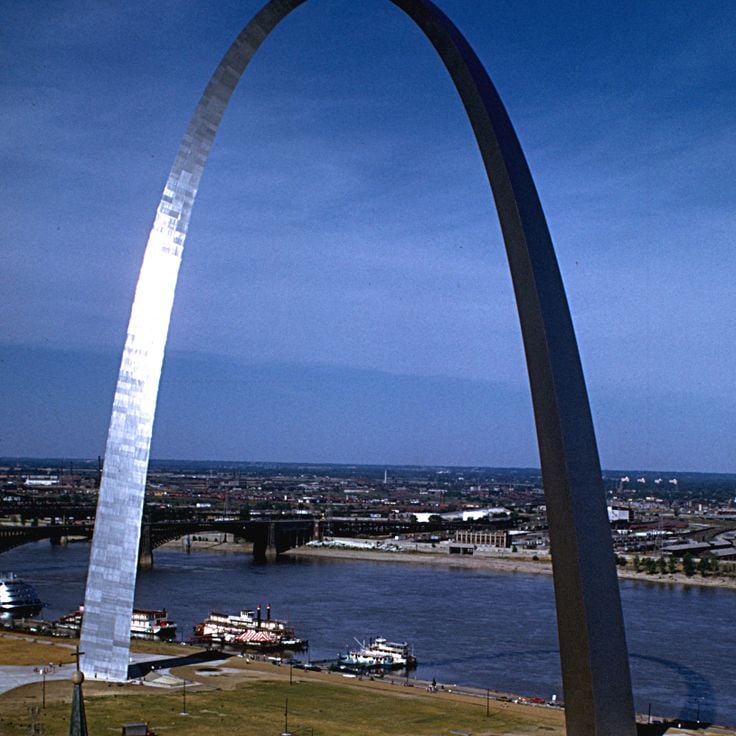
The Gateway Arch in Saint Louis documents the westward expansion of the United States. This 192-foot (59-meter) steel structure was completed in 1965 and stands along the Mississippi River. The monument combines modern engineering with historical meaning, showing the territorial development of the country during the 19th century. An observation platform at the top lets visitors view the river landscape and the city.
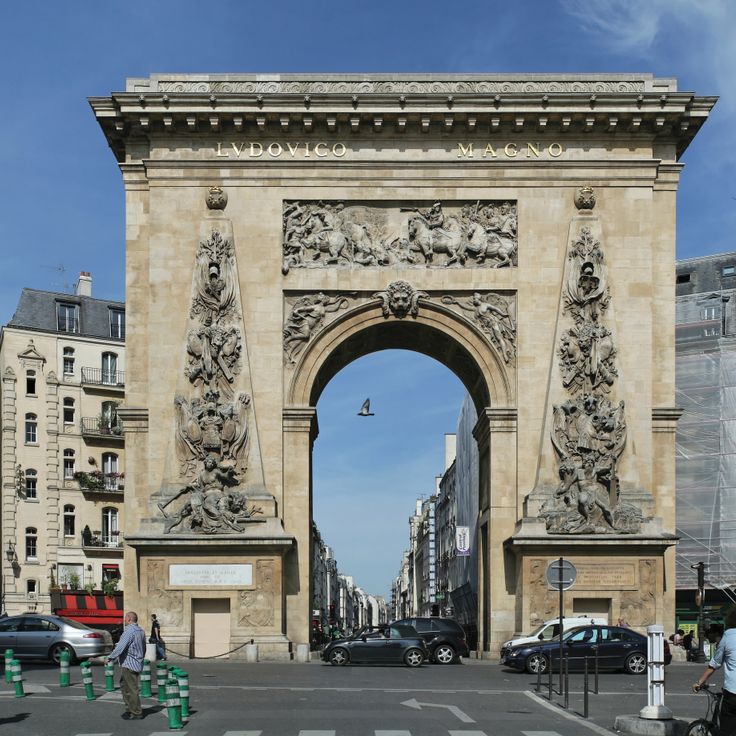
The Saint-Denis Gate was built in 1672 and marks what was once the boundary of Paris. This gate commemorates the Rhine campaign of Louis XIV and documents that military operation through inscriptions and reliefs carved into the stone. It belongs to the tradition of French triumphal monuments, combining the form of a city gate with a record of 17th-century history.
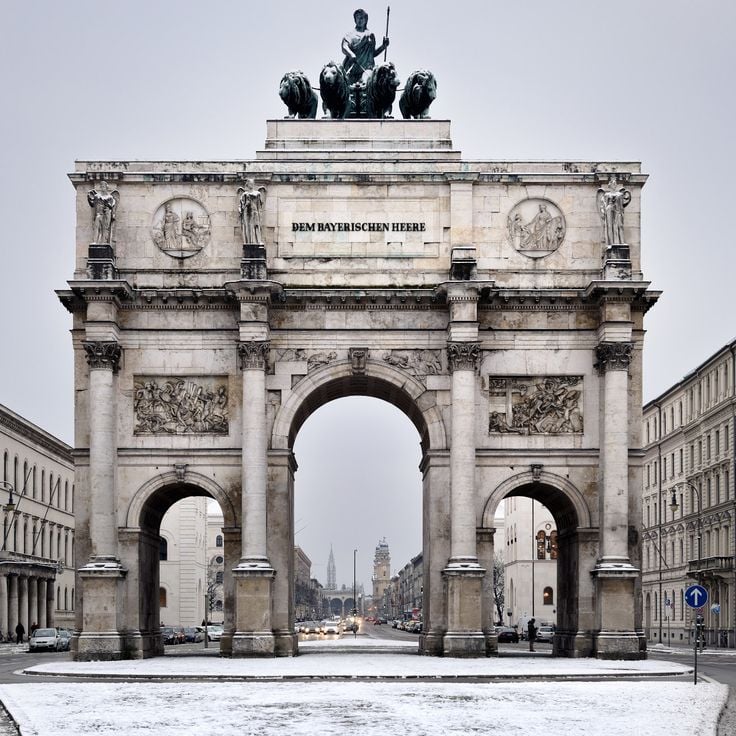
The Siegestor in Munich is a triumphal arch built in the 19th century to honor the Bavarian army. It was modeled after the Arch of Constantine in Rome. After being damaged in World War II, it was only partially restored. The inscription added at the top now dedicates the arch to peace rather than victory, giving it a meaning quite different from its original purpose.
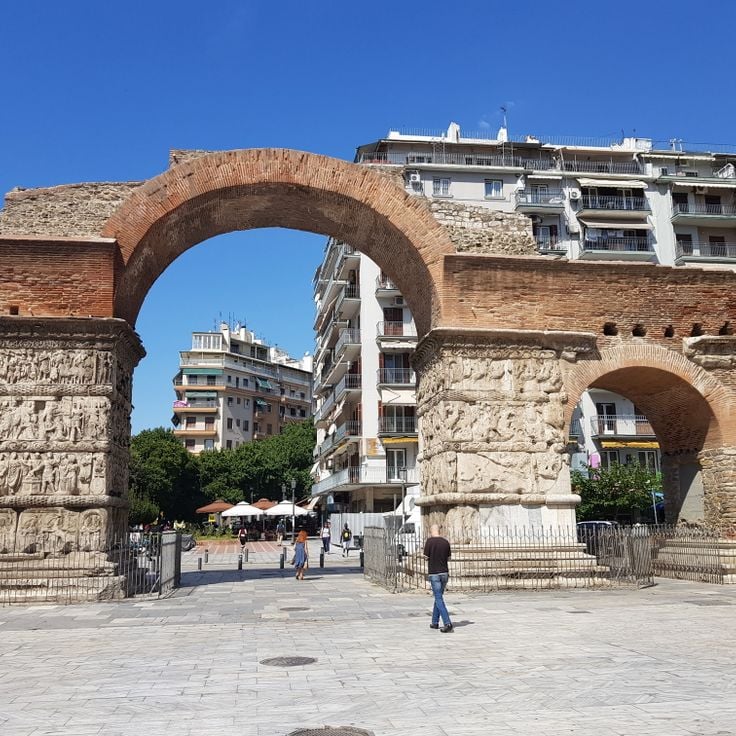
The Arch of Galerius in Thessaloniki belongs to this collection of triumphal monuments that record military victories and historical events through stone and sculpture. Built in the early 4th century, it celebrates Emperor Galerius's victory over the Sassanid Persians. The surviving pillars show detailed reliefs of battle scenes, processions, and imperial ceremonies from the campaign of 297 to 298. Originally part of a larger complex connecting the imperial palace to a mausoleum, the arch stood on the Via Egnatia, the main Roman road through the Balkans.
The Patuxaï in Vientiane honors those who fought for independence from France. This monument stands in the capital as a commemoration of the Lao struggle for sovereignty. The structure combines traditional Lao architectural motifs with a design reminiscent of European triumphal arches. Four arches support the monument, which rises 148 feet (45 meters) above the city. Relief sculptures and decorative elements display mythological figures and scenes from Lao history. Visitors can climb to the upper levels for views across the capital.
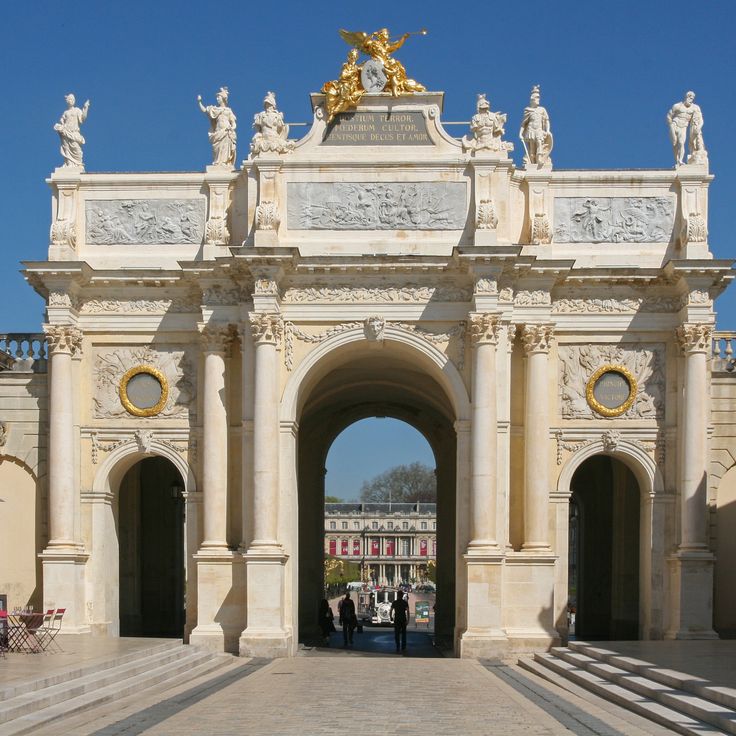
The Héré Arch stands on Place Stanislas in Nancy and belongs to a group of monuments that document military and historical events. Built in the 18th century, it honors King Louis XV and records the bond between the Duchy of Lorraine and the French crown. The facade carries historical inscriptions and decorative reliefs showing military events. The arch is part of the UNESCO World Heritage listing of Place Stanislas and shapes the urban center of Nancy.
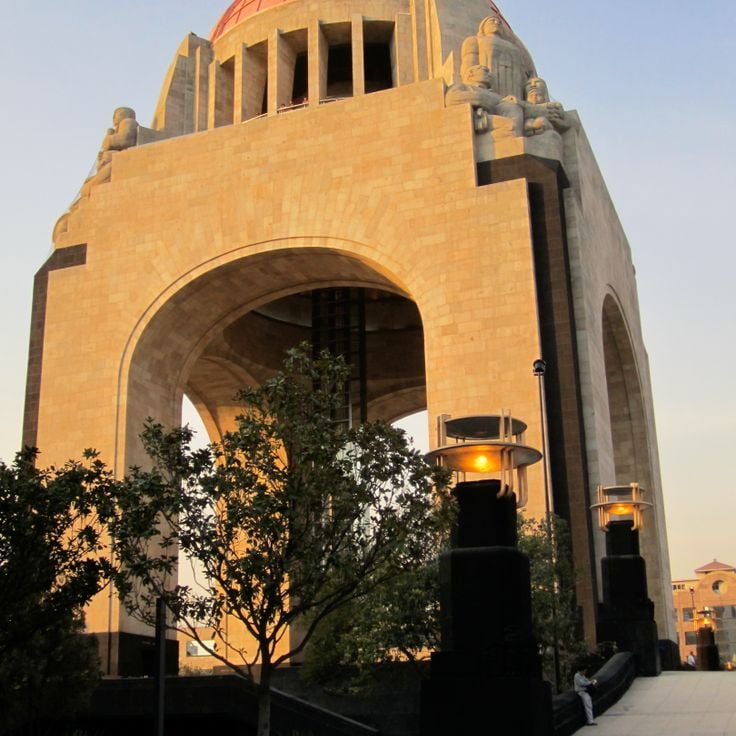
This massive monument stands at Revolution Square in Mexico City and was originally conceived as part of a legislative palace before being transformed into a memorial after the Mexican Revolution. The steel and stone structure reaches 67 meters (220 feet) in height and features a central dome with four corner pillars. Sculptures at the base represent Independence, Law, Agrarian Reform, and Labor. The monument houses the remains of several Mexican revolutionary leaders, including Francisco Madero, Venustiano Carranza, and Pancho Villa. An observation deck provides panoramic views of the city.
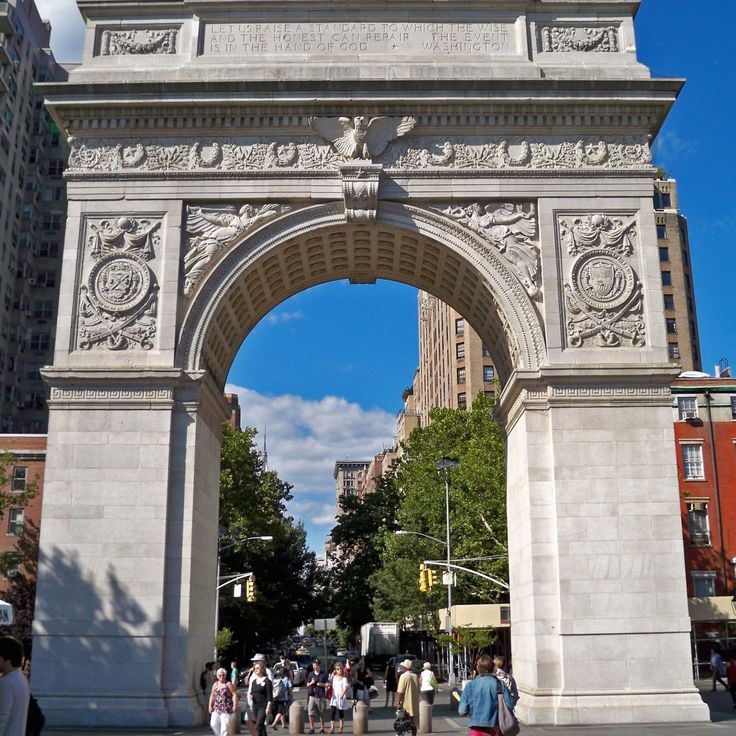
The Washington Square Arch stands at the northern entrance to Washington Square Park in Greenwich Village. It was built to mark the 100th anniversary of George Washington's inauguration in 1789. A first arch made of wood appeared in 1889, and the current structure in white marble was completed in 1892. Architect Stanford White designed it with Corinthian columns and sculptures showing Washington as both a general and a president. For more than a century, this arch has served as a central meeting point in the heart of Manhattan.
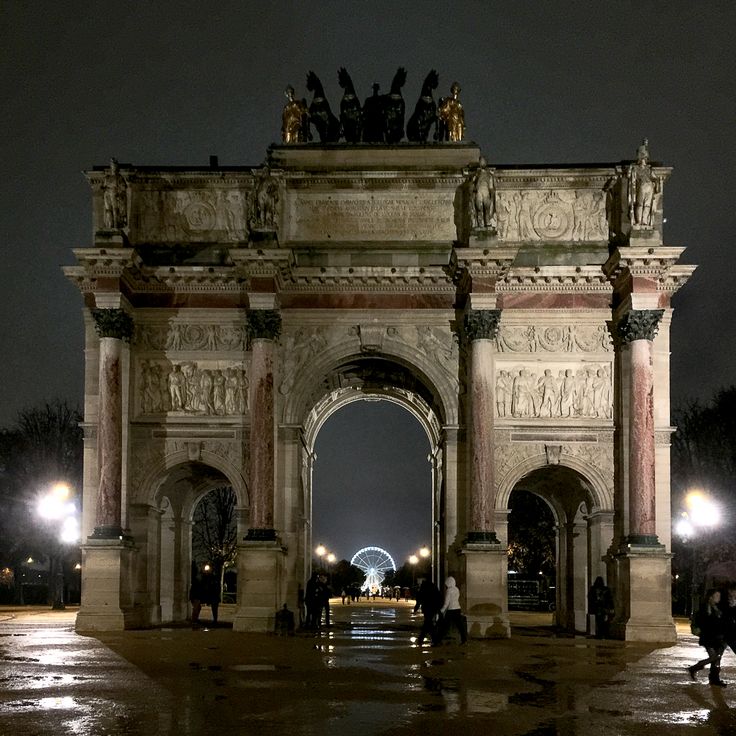
The Arc de Triomphe du Carrousel in Paris documents military victories under Napoléon I. Built between 1806 and 1808, this monument stands in the Jardin des Tuileries between the Louvre and Place de la Concorde. The arch features eight pink marble columns in the Corinthian order, framing three passageways. Reliefs on its walls show scenes from battles like the Battle of Austerlitz and the Peace of Pressburg. A gilded quadriga with four horses, originally from the Basilica of St. Mark in Venice, crowns the top of the structure.
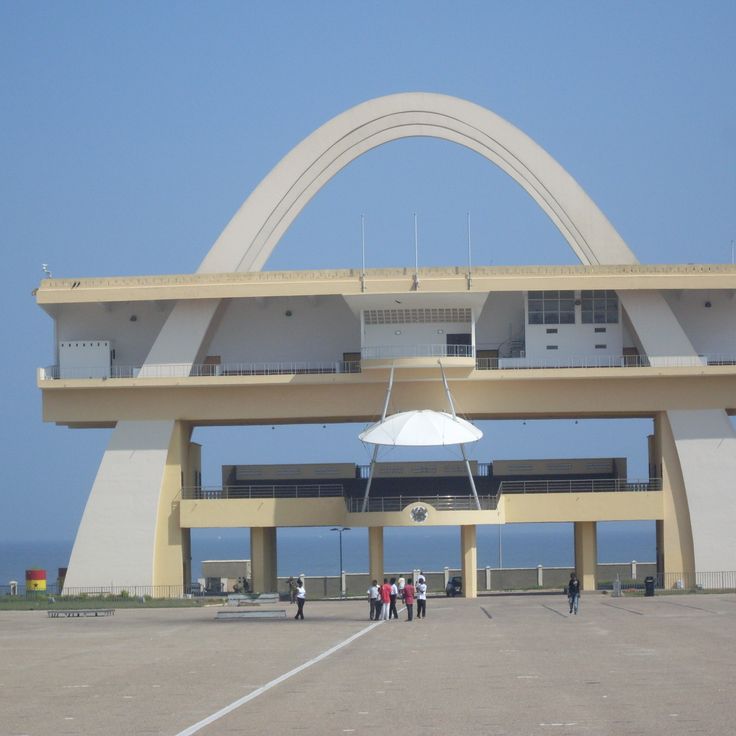
The Independence Arch stands in central Accra and marks Ghana's independence in 1957, when the country ended British colonial rule. The arch was built to celebrate the founding of the first republic in sub-Saharan Africa. Like other triumphal arches around the world, it records a turning point in history through its form and inscriptions, honoring the people who shaped Ghana's path to self-governance.
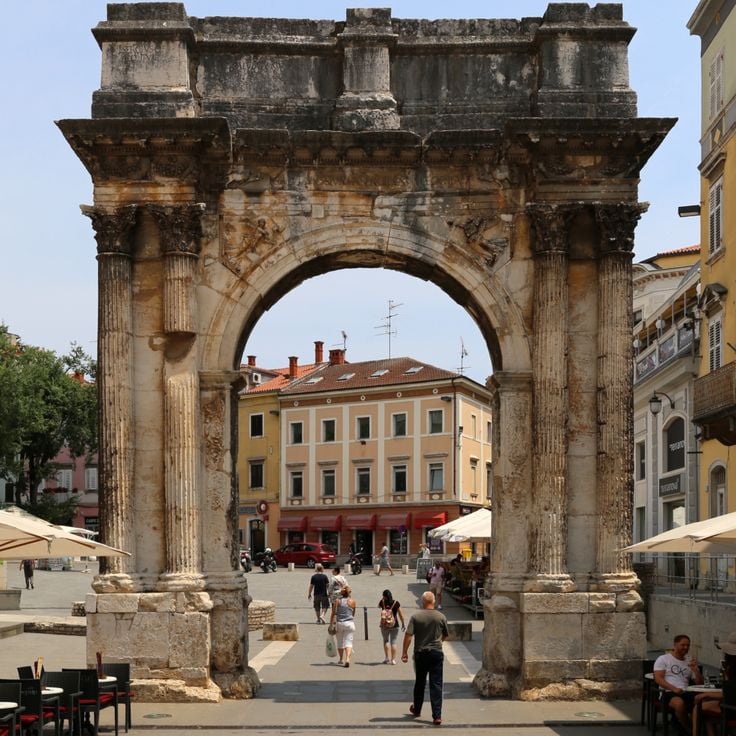
The Triumphal Arch of Sergius was built in 27 BC in Pula and documents significant military events from the Roman era. This arch honors historical victories through detailed reliefs depicting chariots and horses. The structure combines Roman construction with historical documentation and serves as a monument to commemoration. The carvings show military scenes that help us understand the events of that period. The arch stands in the Croatian city of Pula and is among the preserved Roman monuments of this region.
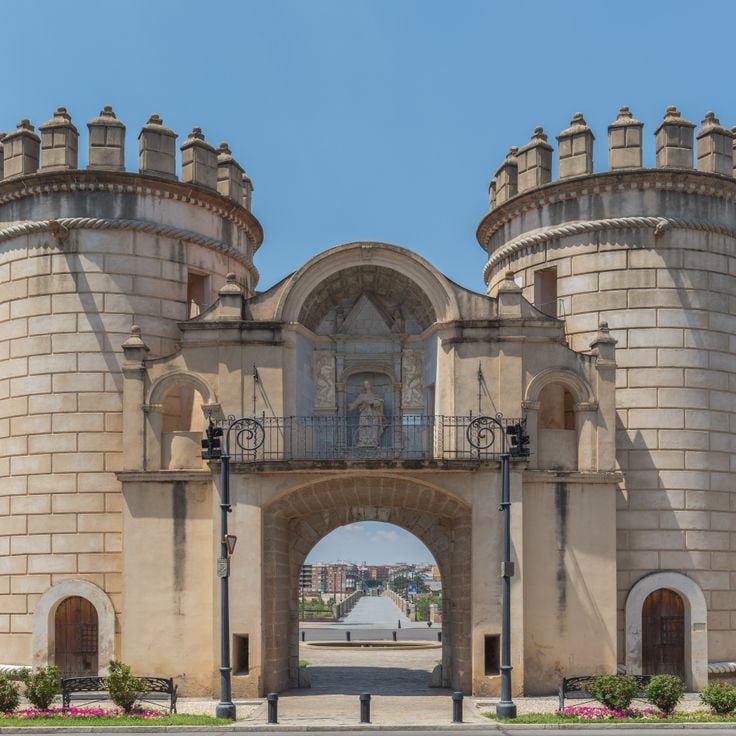
The Puerta de Palmas in Badajoz was built in 1551 to guard the bridge over the Guadiana River. This gate with two flanking towers stood at the entrance to the city on the border between Spain and Portugal. It combined a defensive role with a monumental form, as was common in Renaissance-era civic architecture.
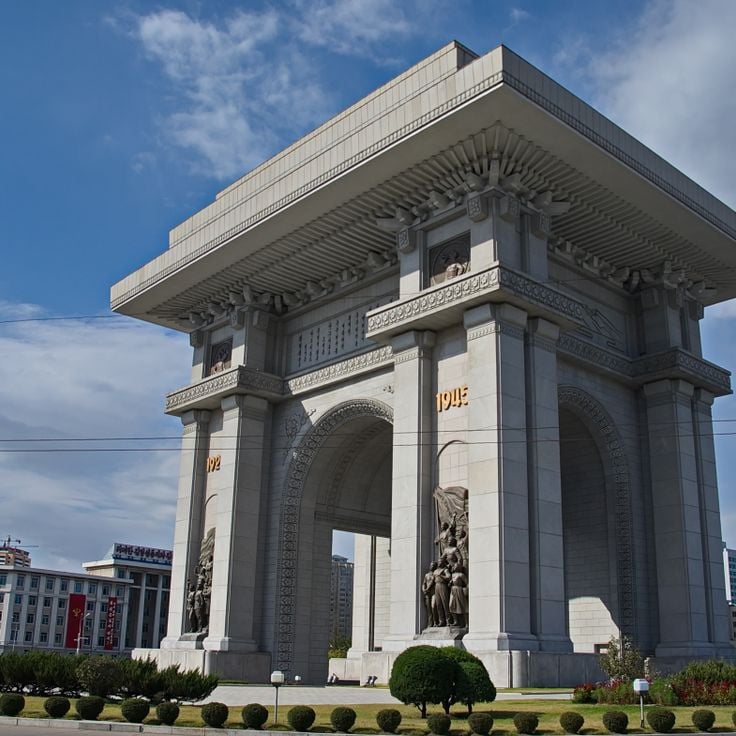
The Arc de Triomphe de Kim Il-sung is a stone arch completed in 1982 to mark the 70th birthday of Kim Il-sung and reaches 60 meters in height. This monument documents North Korea's political history through its monumental architecture and honors the role of the state founder. Located in central Pyongyang, it features inscriptions and decorative elements relating to historical events of the nation.
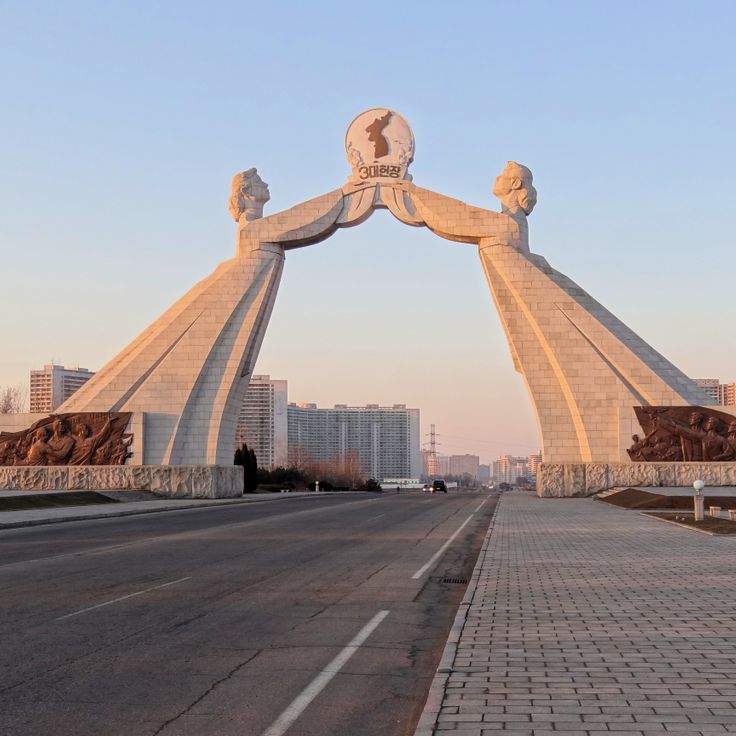
The Arch of Reunification stands in Pyongyang, along the road that leads toward the demilitarized zone at the border with South Korea. Built in 2001 to mark a meeting between high-ranking officials from both Koreas, it shows two women in traditional Korean dress holding a sphere shaped like the Korean Peninsula. The two figures are made from over 100 concrete blocks and rise about 98 feet (30 meters) tall. This monument captures a moment of diplomatic hope between North and South Korea at the start of the 21st century.
The Triumphal Arch of Orange is one of the oldest Roman arches still standing in France. Built between 10 and 27 BC, it once marked the entrance to a Roman colony along the Via Agrippa. The north face shows a battle between Romans and Gauls. Across its facades, reliefs depict weapons, captives, and battle scenes that record Rome's military presence in the region. This arch is part of a broader group of monuments built to keep the memory of past victories alive in public spaces.
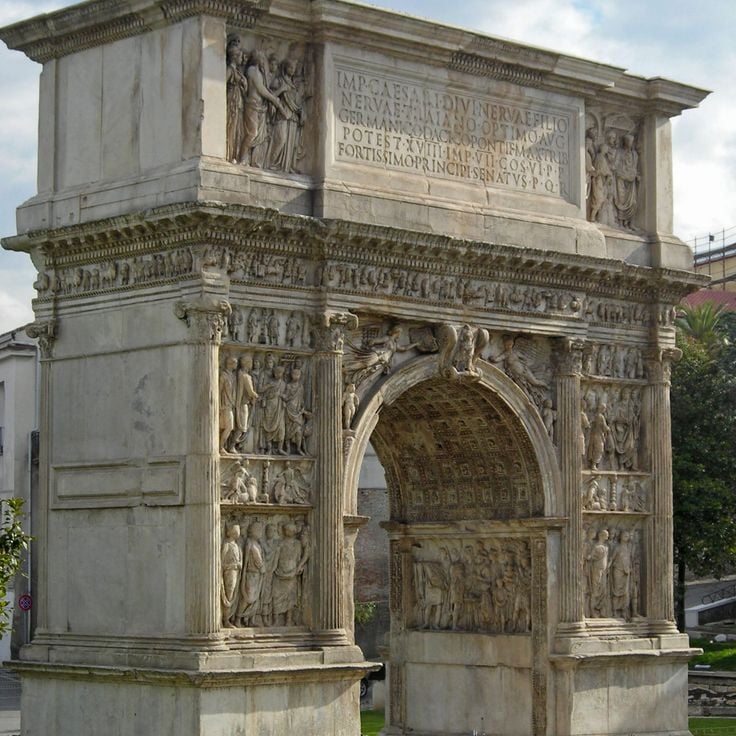
The Arch of Trajan in Benevento is a marble monument that documents Emperor Trajan's reign. Relief panels on the structure show his military successes, administrative reforms, and construction projects. This arch stands along the ancient Via Traiana, an important trade route to Brundisium. The detailed carvings on both sides of the monument record significant events from the Roman period. The arch demonstrates Benevento's strategic importance in the ancient Roman world.
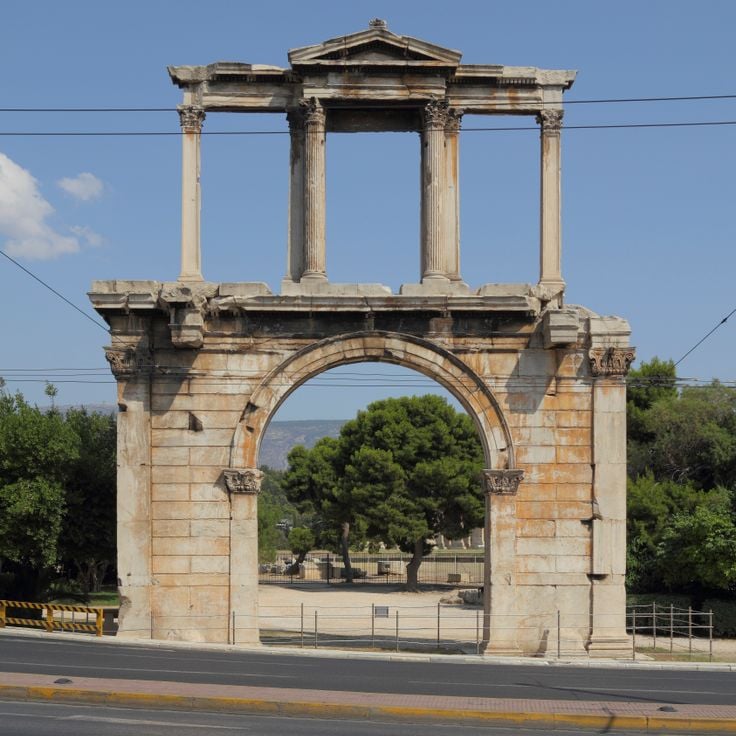
The Arch of Hadrian in Athens was built from Pentelic marble in 131 AD. It was erected at the boundary between the old Greek city and the new district that Emperor Hadrian had built. Two inscriptions on the arch connect the legendary rule of Theseus with the reign of Hadrian. The arch marked the passage into the Roman expansion of the city, which included the Temple of Olympian Zeus.
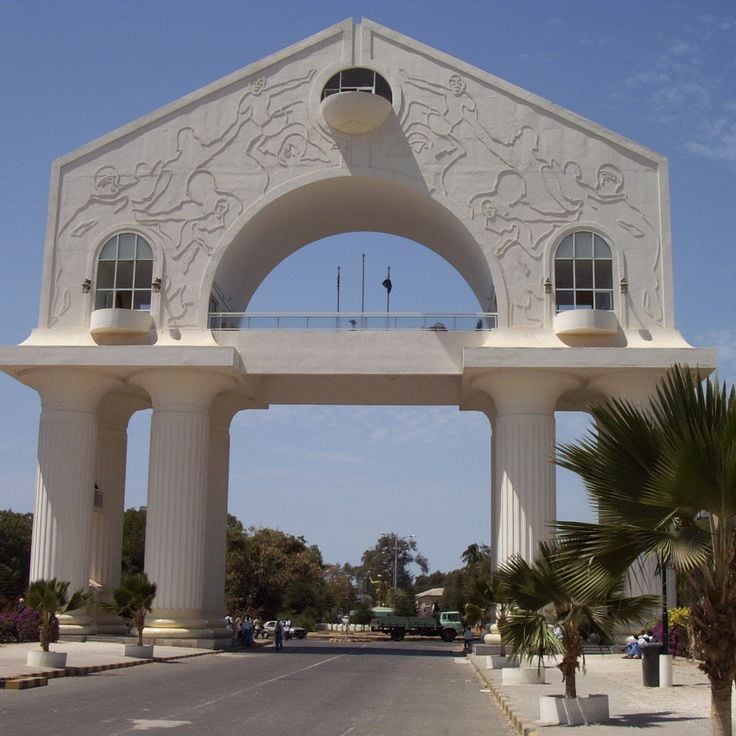
This arch in Banjul was built in 1996 and stands 35 meters tall as a steel structure. It marks the military coup of July 22, 1994, and documents a turning point in Gambian history. Inside, an elevator carries visitors to an observation gallery that offers views over the city and surrounding landscape. The monument combines modern construction methods with the historical function of commemorating an important national event.
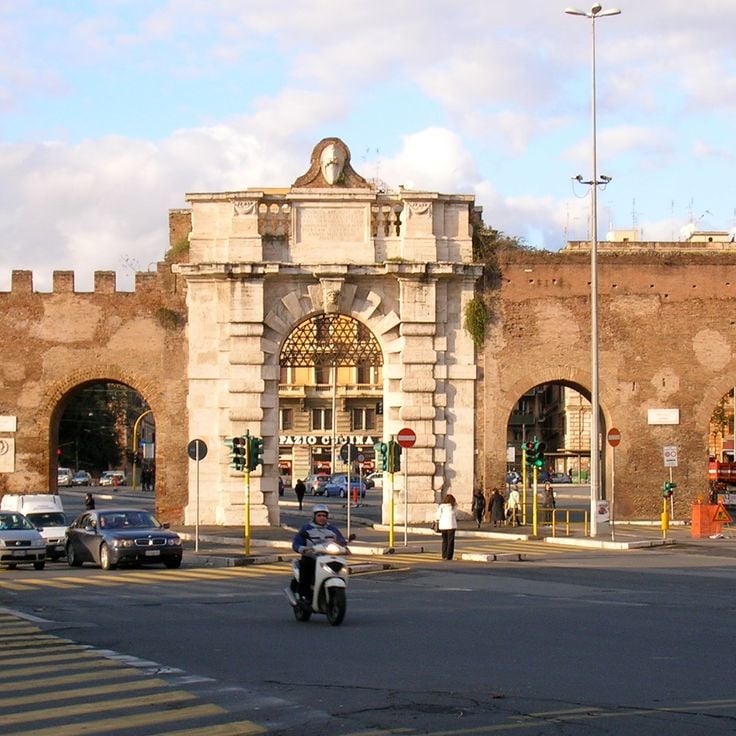
The Porta San Giovanni is a stone gate built in the 1570s, set into the Aurelian Walls near Rome's cathedral. It marks a historic entrance from the Via Appia Nuova and shows how the city once protected its boundaries. This gate belongs to a wider collection of monuments that document military and historical events around the world.
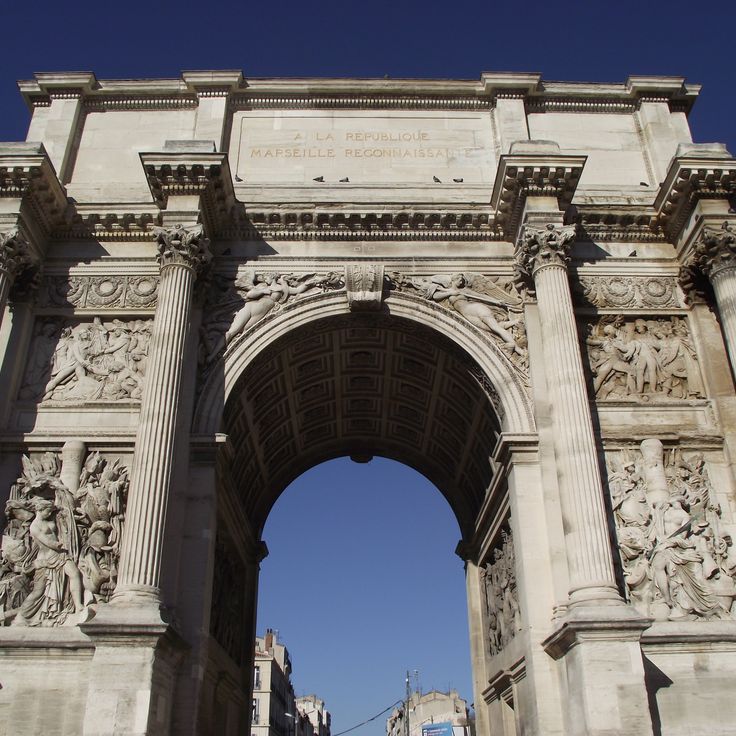
The Porte d'Aix is a marble arch from 1839 that stands at the former city entrance on the road to Aix-en-Provence. This triumphal arch combines classical architectural elements with military decorations and documents the historical significance of this route into the city. The structure marks an important access point to Marseille during the 19th century and reflects the European tradition of arches that commemorate victories and historic events.
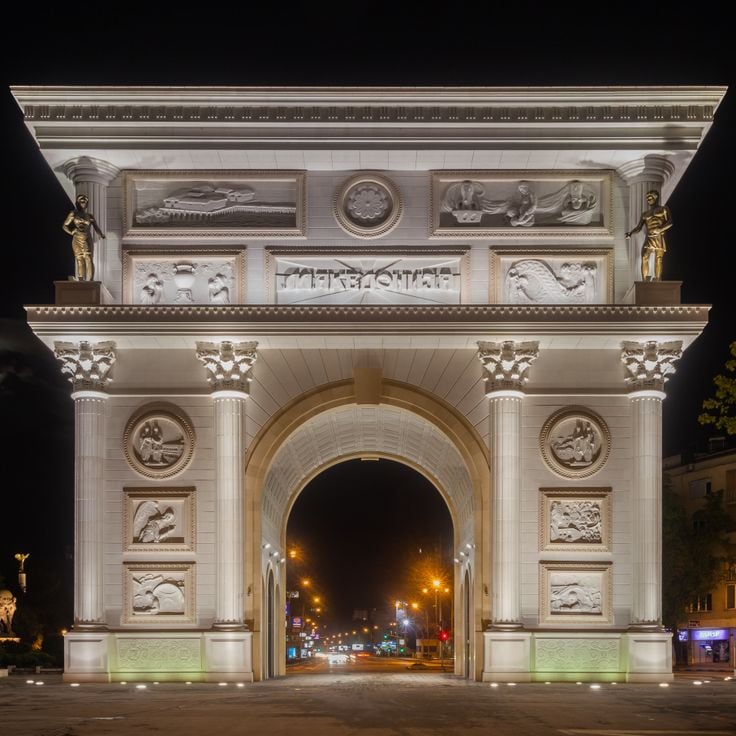
Porta Macedonia is a triumphal arch built in 2012 in Skopje, fitting within this collection of such monuments that document military and historical events. The structure is made of marble and bronze and displays reliefs depicting historical events from the region. Interior exhibition spaces across multiple levels convey regional history through sculptural representations and architectural design.
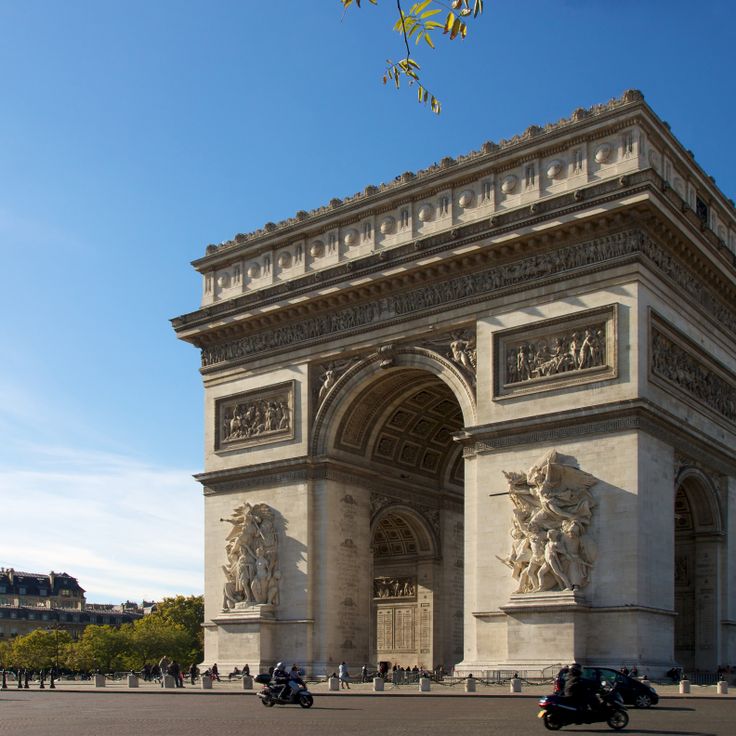
The Arc de Triomphe stands at Place Charles de Gaulle and is one of the most recognized monuments in France. It was built to honor the victories of the French army. Along its walls, the names of generals and battles are engraved, and large reliefs show key moments from military campaigns. Beneath the arch lies the Tomb of the Unknown Soldier, where a flame has burned every day since 1920. From the platform at the top, visitors look out over the twelve boulevards that fan out from the square.
The Brandenburg Gate was built between 1788 and 1791 following designs by Carl Gotthard Langhans in the Neoclassical style. It rises 26 meters (85 feet) above Pariser Platz and features twelve Doric sandstone columns forming five passageways. The quadriga on top shows Victoria, goddess of victory, driving a chariot drawn by four horses. Johann Gottfried Schadow created this copper sculpture in 1793. Reliefs on the inner walls depict scenes from Greek mythology, including the Hercules cycle. The gate originally served as one of eighteen city gates and marks the western entrance to the Unter den Linden boulevard. In this collection of triumphal arches, the Brandenburg Gate stands as a monument that brings together architecture and historical documentation.
The Arch of Constantine stands in Rome, between the Colosseum and the Palatine Hill. It was built in 315 to mark Emperor Constantine's victory over Maxentius. Many of its reliefs and sculptures were taken from older Roman monuments and placed here. Walking past it, you can read layers of Roman history in the stone, from the carvings themselves to the inscriptions that record a turning point of the early 4th century.
The Arch of Septimius Severus stands at the edge of the Roman Forum and is one of the triumphal arches that gave shape to this collection. Built in 203 AD to mark military campaigns against the Parthians, the arch rises about 75 feet (23 meters) above the pavement. It has three passages and is covered with relief panels showing battles and sieges in Mesopotamia. Inscriptions along the upper section record what the emperor and his sons achieved. Walking through the Forum, this arch is one of the first things you see.
The Arch of Titus dates to 82 AD and stands at the edge of the Roman Forum. It was built after the death of Emperor Titus to honor his campaign in the Jewish War. The reliefs carved into the stone show the triumphal procession following the fall of Jerusalem, including the looted menorah from the Second Temple. These carvings make this arch a direct record of one of the most consequential events of the ancient world. It is among the oldest surviving triumphal arches in Rome and later served as a model for commemorative monuments across Europe.
The Gate of Alcalá stands in the center of Madrid and is one of the most recognized 18th-century triumphal arches in Europe. It was designed by Francesco Sabatini and built from granite on the orders of King Charles III. The gate has five arches: the three central ones have semi-domes, and the two side ones have flat architraves. The facade displays reliefs and ornamentation recalling victories and events of the Spanish monarchy. The structure combines neoclassical forms with baroque details and once marked the entrance to the city on the road to Alcalá de Henares.
The Wellington Arch stands at Hyde Park Corner in London and was built in 1830. This triumphal arch in Corinthian style has three passageways and is topped by Europe's largest bronze sculpture group, a chariot pulled by horses with Nike, the goddess of victory. Originally designed as a northern entrance to Buckingham Palace, it was later dedicated to honor the military victories of the Duke of Wellington. Inside, the arch contains exhibitions about its history and design. The upper levels offer views across the surrounding parks and historic neighborhoods of London.
The Soldiers' and Sailors' Arch stands at Grand Army Plaza in Brooklyn and belongs to this collection of triumphal monuments that document military and historical events. Built in 1892, the arch honors the soldiers and sailors of the Union Army who fought in the American Civil War. Relief sculptures show Abraham Lincoln and Ulysses Grant, two central figures of the conflict. The arch serves as a memorial to Civil War participants and records the military history of the United States from the mid-19th century.
This triumphal arch in Brussels stands as a monument to military victories and national history. Completed in 1905, the structure houses the Art and History Museum and the Automobile Museum. The arch marks the entrance to Cinquantenaire Park and originally served as a gateway for the 1880 Brussels World's Fair. The facade displays allegorical sculptures and reliefs representing Belgium's historical provinces and documenting national themes. The arch connects two building complexes and forms the architectural center of the park.
India Gate is a red sandstone monument in New Delhi that honors Indian soldiers who died in the wars of the early 20th century. It was completed in 1931 and designed by Edwin Lutyens. Like a triumphal arch, it has an arched passage and a flat top. Reliefs and inscriptions recall the military events of that time. Inside, a flame burns in memory of fallen soldiers. The monument stands at the end of Rajpath and is a defining feature of the city's landscape.
The Gateway Arch in Saint Louis documents the westward expansion of the United States. This 192-foot (59-meter) steel structure was completed in 1965 and stands along the Mississippi River. The monument combines modern engineering with historical meaning, showing the territorial development of the country during the 19th century. An observation platform at the top lets visitors view the river landscape and the city.
The Saint-Denis Gate was built in 1672 and marks what was once the boundary of Paris. This gate commemorates the Rhine campaign of Louis XIV and documents that military operation through inscriptions and reliefs carved into the stone. It belongs to the tradition of French triumphal monuments, combining the form of a city gate with a record of 17th-century history.
The Siegestor in Munich is a triumphal arch built in the 19th century to honor the Bavarian army. It was modeled after the Arch of Constantine in Rome. After being damaged in World War II, it was only partially restored. The inscription added at the top now dedicates the arch to peace rather than victory, giving it a meaning quite different from its original purpose.
The Arch of Galerius in Thessaloniki belongs to this collection of triumphal monuments that record military victories and historical events through stone and sculpture. Built in the early 4th century, it celebrates Emperor Galerius's victory over the Sassanid Persians. The surviving pillars show detailed reliefs of battle scenes, processions, and imperial ceremonies from the campaign of 297 to 298. Originally part of a larger complex connecting the imperial palace to a mausoleum, the arch stood on the Via Egnatia, the main Roman road through the Balkans.
The Patuxaï in Vientiane honors those who fought for independence from France. This monument stands in the capital as a commemoration of the Lao struggle for sovereignty. The structure combines traditional Lao architectural motifs with a design reminiscent of European triumphal arches. Four arches support the monument, which rises 148 feet (45 meters) above the city. Relief sculptures and decorative elements display mythological figures and scenes from Lao history. Visitors can climb to the upper levels for views across the capital.
The Héré Arch stands on Place Stanislas in Nancy and belongs to a group of monuments that document military and historical events. Built in the 18th century, it honors King Louis XV and records the bond between the Duchy of Lorraine and the French crown. The facade carries historical inscriptions and decorative reliefs showing military events. The arch is part of the UNESCO World Heritage listing of Place Stanislas and shapes the urban center of Nancy.
This massive monument stands at Revolution Square in Mexico City and was originally conceived as part of a legislative palace before being transformed into a memorial after the Mexican Revolution. The steel and stone structure reaches 67 meters (220 feet) in height and features a central dome with four corner pillars. Sculptures at the base represent Independence, Law, Agrarian Reform, and Labor. The monument houses the remains of several Mexican revolutionary leaders, including Francisco Madero, Venustiano Carranza, and Pancho Villa. An observation deck provides panoramic views of the city.
The Washington Square Arch stands at the northern entrance to Washington Square Park in Greenwich Village. It was built to mark the 100th anniversary of George Washington's inauguration in 1789. A first arch made of wood appeared in 1889, and the current structure in white marble was completed in 1892. Architect Stanford White designed it with Corinthian columns and sculptures showing Washington as both a general and a president. For more than a century, this arch has served as a central meeting point in the heart of Manhattan.
The Arc de Triomphe du Carrousel in Paris documents military victories under Napoléon I. Built between 1806 and 1808, this monument stands in the Jardin des Tuileries between the Louvre and Place de la Concorde. The arch features eight pink marble columns in the Corinthian order, framing three passageways. Reliefs on its walls show scenes from battles like the Battle of Austerlitz and the Peace of Pressburg. A gilded quadriga with four horses, originally from the Basilica of St. Mark in Venice, crowns the top of the structure.
The Independence Arch stands in central Accra and marks Ghana's independence in 1957, when the country ended British colonial rule. The arch was built to celebrate the founding of the first republic in sub-Saharan Africa. Like other triumphal arches around the world, it records a turning point in history through its form and inscriptions, honoring the people who shaped Ghana's path to self-governance.
The Triumphal Arch of Sergius was built in 27 BC in Pula and documents significant military events from the Roman era. This arch honors historical victories through detailed reliefs depicting chariots and horses. The structure combines Roman construction with historical documentation and serves as a monument to commemoration. The carvings show military scenes that help us understand the events of that period. The arch stands in the Croatian city of Pula and is among the preserved Roman monuments of this region.
The Puerta de Palmas in Badajoz was built in 1551 to guard the bridge over the Guadiana River. This gate with two flanking towers stood at the entrance to the city on the border between Spain and Portugal. It combined a defensive role with a monumental form, as was common in Renaissance-era civic architecture.
The Arc de Triomphe de Kim Il-sung is a stone arch completed in 1982 to mark the 70th birthday of Kim Il-sung and reaches 60 meters in height. This monument documents North Korea's political history through its monumental architecture and honors the role of the state founder. Located in central Pyongyang, it features inscriptions and decorative elements relating to historical events of the nation.
The Arch of Reunification stands in Pyongyang, along the road that leads toward the demilitarized zone at the border with South Korea. Built in 2001 to mark a meeting between high-ranking officials from both Koreas, it shows two women in traditional Korean dress holding a sphere shaped like the Korean Peninsula. The two figures are made from over 100 concrete blocks and rise about 98 feet (30 meters) tall. This monument captures a moment of diplomatic hope between North and South Korea at the start of the 21st century.
The Triumphal Arch of Orange is one of the oldest Roman arches still standing in France. Built between 10 and 27 BC, it once marked the entrance to a Roman colony along the Via Agrippa. The north face shows a battle between Romans and Gauls. Across its facades, reliefs depict weapons, captives, and battle scenes that record Rome's military presence in the region. This arch is part of a broader group of monuments built to keep the memory of past victories alive in public spaces.
The Arch of Trajan in Benevento is a marble monument that documents Emperor Trajan's reign. Relief panels on the structure show his military successes, administrative reforms, and construction projects. This arch stands along the ancient Via Traiana, an important trade route to Brundisium. The detailed carvings on both sides of the monument record significant events from the Roman period. The arch demonstrates Benevento's strategic importance in the ancient Roman world.
The Arch of Hadrian in Athens was built from Pentelic marble in 131 AD. It was erected at the boundary between the old Greek city and the new district that Emperor Hadrian had built. Two inscriptions on the arch connect the legendary rule of Theseus with the reign of Hadrian. The arch marked the passage into the Roman expansion of the city, which included the Temple of Olympian Zeus.
This arch in Banjul was built in 1996 and stands 35 meters tall as a steel structure. It marks the military coup of July 22, 1994, and documents a turning point in Gambian history. Inside, an elevator carries visitors to an observation gallery that offers views over the city and surrounding landscape. The monument combines modern construction methods with the historical function of commemorating an important national event.
The Porta San Giovanni is a stone gate built in the 1570s, set into the Aurelian Walls near Rome's cathedral. It marks a historic entrance from the Via Appia Nuova and shows how the city once protected its boundaries. This gate belongs to a wider collection of monuments that document military and historical events around the world.
The Porte d'Aix is a marble arch from 1839 that stands at the former city entrance on the road to Aix-en-Provence. This triumphal arch combines classical architectural elements with military decorations and documents the historical significance of this route into the city. The structure marks an important access point to Marseille during the 19th century and reflects the European tradition of arches that commemorate victories and historic events.
Porta Macedonia is a triumphal arch built in 2012 in Skopje, fitting within this collection of such monuments that document military and historical events. The structure is made of marble and bronze and displays reliefs depicting historical events from the region. Interior exhibition spaces across multiple levels convey regional history through sculptural representations and architectural design.
The Arc de Triomphe stands at Place Charles de Gaulle and is one of the most recognized monuments in France. It was built to honor the victories of the French army. Along its walls, the names of generals and battles are engraved, and large reliefs show key moments from military campaigns. Beneath the arch lies the Tomb of the Unknown Soldier, where a flame has burned every day since 1920. From the platform at the top, visitors look out over the twelve boulevards that fan out from the square.
The Brandenburg Gate was built between 1788 and 1791 following designs by Carl Gotthard Langhans in the Neoclassical style. It rises 26 meters (85 feet) above Pariser Platz and features twelve Doric sandstone columns forming five passageways. The quadriga on top shows Victoria, goddess of victory, driving a chariot drawn by four horses. Johann Gottfried Schadow created this copper sculpture in 1793. Reliefs on the inner walls depict scenes from Greek mythology, including the Hercules cycle. The gate originally served as one of eighteen city gates and marks the western entrance to the Unter den Linden boulevard. In this collection of triumphal arches, the Brandenburg Gate stands as a monument that brings together architecture and historical documentation.
The Arch of Constantine stands in Rome, between the Colosseum and the Palatine Hill. It was built in 315 to mark Emperor Constantine's victory over Maxentius. Many of its reliefs and sculptures were taken from older Roman monuments and placed here. Walking past it, you can read layers of Roman history in the stone, from the carvings themselves to the inscriptions that record a turning point of the early 4th century.
The Arch of Septimius Severus stands at the edge of the Roman Forum and is one of the triumphal arches that gave shape to this collection. Built in 203 AD to mark military campaigns against the Parthians, the arch rises about 75 feet (23 meters) above the pavement. It has three passages and is covered with relief panels showing battles and sieges in Mesopotamia. Inscriptions along the upper section record what the emperor and his sons achieved. Walking through the Forum, this arch is one of the first things you see.
The Arch of Titus dates to 82 AD and stands at the edge of the Roman Forum. It was built after the death of Emperor Titus to honor his campaign in the Jewish War. The reliefs carved into the stone show the triumphal procession following the fall of Jerusalem, including the looted menorah from the Second Temple. These carvings make this arch a direct record of one of the most consequential events of the ancient world. It is among the oldest surviving triumphal arches in Rome and later served as a model for commemorative monuments across Europe.
The Gate of Alcalá stands in the center of Madrid and is one of the most recognized 18th-century triumphal arches in Europe. It was designed by Francesco Sabatini and built from granite on the orders of King Charles III. The gate has five arches: the three central ones have semi-domes, and the two side ones have flat architraves. The facade displays reliefs and ornamentation recalling victories and events of the Spanish monarchy. The structure combines neoclassical forms with baroque details and once marked the entrance to the city on the road to Alcalá de Henares.
The Wellington Arch stands at Hyde Park Corner in London and was built in 1830. This triumphal arch in Corinthian style has three passageways and is topped by Europe's largest bronze sculpture group, a chariot pulled by horses with Nike, the goddess of victory. Originally designed as a northern entrance to Buckingham Palace, it was later dedicated to honor the military victories of the Duke of Wellington. Inside, the arch contains exhibitions about its history and design. The upper levels offer views across the surrounding parks and historic neighborhoods of London.
The Soldiers' and Sailors' Arch stands at Grand Army Plaza in Brooklyn and belongs to this collection of triumphal monuments that document military and historical events. Built in 1892, the arch honors the soldiers and sailors of the Union Army who fought in the American Civil War. Relief sculptures show Abraham Lincoln and Ulysses Grant, two central figures of the conflict. The arch serves as a memorial to Civil War participants and records the military history of the United States from the mid-19th century.
This triumphal arch in Brussels stands as a monument to military victories and national history. Completed in 1905, the structure houses the Art and History Museum and the Automobile Museum. The arch marks the entrance to Cinquantenaire Park and originally served as a gateway for the 1880 Brussels World's Fair. The facade displays allegorical sculptures and reliefs representing Belgium's historical provinces and documenting national themes. The arch connects two building complexes and forms the architectural center of the park.
India Gate is a red sandstone monument in New Delhi that honors Indian soldiers who died in the wars of the early 20th century. It was completed in 1931 and designed by Edwin Lutyens. Like a triumphal arch, it has an arched passage and a flat top. Reliefs and inscriptions recall the military events of that time. Inside, a flame burns in memory of fallen soldiers. The monument stands at the end of Rajpath and is a defining feature of the city's landscape.
The Gateway Arch in Saint Louis documents the westward expansion of the United States. This 192-foot (59-meter) steel structure was completed in 1965 and stands along the Mississippi River. The monument combines modern engineering with historical meaning, showing the territorial development of the country during the 19th century. An observation platform at the top lets visitors view the river landscape and the city.
The Saint-Denis Gate was built in 1672 and marks what was once the boundary of Paris. This gate commemorates the Rhine campaign of Louis XIV and documents that military operation through inscriptions and reliefs carved into the stone. It belongs to the tradition of French triumphal monuments, combining the form of a city gate with a record of 17th-century history.
The Siegestor in Munich is a triumphal arch built in the 19th century to honor the Bavarian army. It was modeled after the Arch of Constantine in Rome. After being damaged in World War II, it was only partially restored. The inscription added at the top now dedicates the arch to peace rather than victory, giving it a meaning quite different from its original purpose.
The Arch of Galerius in Thessaloniki belongs to this collection of triumphal monuments that record military victories and historical events through stone and sculpture. Built in the early 4th century, it celebrates Emperor Galerius's victory over the Sassanid Persians. The surviving pillars show detailed reliefs of battle scenes, processions, and imperial ceremonies from the campaign of 297 to 298. Originally part of a larger complex connecting the imperial palace to a mausoleum, the arch stood on the Via Egnatia, the main Roman road through the Balkans.
The Patuxaï in Vientiane honors those who fought for independence from France. This monument stands in the capital as a commemoration of the Lao struggle for sovereignty. The structure combines traditional Lao architectural motifs with a design reminiscent of European triumphal arches. Four arches support the monument, which rises 148 feet (45 meters) above the city. Relief sculptures and decorative elements display mythological figures and scenes from Lao history. Visitors can climb to the upper levels for views across the capital.
The Héré Arch stands on Place Stanislas in Nancy and belongs to a group of monuments that document military and historical events. Built in the 18th century, it honors King Louis XV and records the bond between the Duchy of Lorraine and the French crown. The facade carries historical inscriptions and decorative reliefs showing military events. The arch is part of the UNESCO World Heritage listing of Place Stanislas and shapes the urban center of Nancy.
This massive monument stands at Revolution Square in Mexico City and was originally conceived as part of a legislative palace before being transformed into a memorial after the Mexican Revolution. The steel and stone structure reaches 67 meters (220 feet) in height and features a central dome with four corner pillars. Sculptures at the base represent Independence, Law, Agrarian Reform, and Labor. The monument houses the remains of several Mexican revolutionary leaders, including Francisco Madero, Venustiano Carranza, and Pancho Villa. An observation deck provides panoramic views of the city.
The Washington Square Arch stands at the northern entrance to Washington Square Park in Greenwich Village. It was built to mark the 100th anniversary of George Washington's inauguration in 1789. A first arch made of wood appeared in 1889, and the current structure in white marble was completed in 1892. Architect Stanford White designed it with Corinthian columns and sculptures showing Washington as both a general and a president. For more than a century, this arch has served as a central meeting point in the heart of Manhattan.
The Arc de Triomphe du Carrousel in Paris documents military victories under Napoléon I. Built between 1806 and 1808, this monument stands in the Jardin des Tuileries between the Louvre and Place de la Concorde. The arch features eight pink marble columns in the Corinthian order, framing three passageways. Reliefs on its walls show scenes from battles like the Battle of Austerlitz and the Peace of Pressburg. A gilded quadriga with four horses, originally from the Basilica of St. Mark in Venice, crowns the top of the structure.
The Independence Arch stands in central Accra and marks Ghana's independence in 1957, when the country ended British colonial rule. The arch was built to celebrate the founding of the first republic in sub-Saharan Africa. Like other triumphal arches around the world, it records a turning point in history through its form and inscriptions, honoring the people who shaped Ghana's path to self-governance.
The Triumphal Arch of Sergius was built in 27 BC in Pula and documents significant military events from the Roman era. This arch honors historical victories through detailed reliefs depicting chariots and horses. The structure combines Roman construction with historical documentation and serves as a monument to commemoration. The carvings show military scenes that help us understand the events of that period. The arch stands in the Croatian city of Pula and is among the preserved Roman monuments of this region.
The Puerta de Palmas in Badajoz was built in 1551 to guard the bridge over the Guadiana River. This gate with two flanking towers stood at the entrance to the city on the border between Spain and Portugal. It combined a defensive role with a monumental form, as was common in Renaissance-era civic architecture.
The Arc de Triomphe de Kim Il-sung is a stone arch completed in 1982 to mark the 70th birthday of Kim Il-sung and reaches 60 meters in height. This monument documents North Korea's political history through its monumental architecture and honors the role of the state founder. Located in central Pyongyang, it features inscriptions and decorative elements relating to historical events of the nation.
The Arch of Reunification stands in Pyongyang, along the road that leads toward the demilitarized zone at the border with South Korea. Built in 2001 to mark a meeting between high-ranking officials from both Koreas, it shows two women in traditional Korean dress holding a sphere shaped like the Korean Peninsula. The two figures are made from over 100 concrete blocks and rise about 98 feet (30 meters) tall. This monument captures a moment of diplomatic hope between North and South Korea at the start of the 21st century.
The Triumphal Arch of Orange is one of the oldest Roman arches still standing in France. Built between 10 and 27 BC, it once marked the entrance to a Roman colony along the Via Agrippa. The north face shows a battle between Romans and Gauls. Across its facades, reliefs depict weapons, captives, and battle scenes that record Rome's military presence in the region. This arch is part of a broader group of monuments built to keep the memory of past victories alive in public spaces.
The Arch of Trajan in Benevento is a marble monument that documents Emperor Trajan's reign. Relief panels on the structure show his military successes, administrative reforms, and construction projects. This arch stands along the ancient Via Traiana, an important trade route to Brundisium. The detailed carvings on both sides of the monument record significant events from the Roman period. The arch demonstrates Benevento's strategic importance in the ancient Roman world.
The Arch of Hadrian in Athens was built from Pentelic marble in 131 AD. It was erected at the boundary between the old Greek city and the new district that Emperor Hadrian had built. Two inscriptions on the arch connect the legendary rule of Theseus with the reign of Hadrian. The arch marked the passage into the Roman expansion of the city, which included the Temple of Olympian Zeus.
This arch in Banjul was built in 1996 and stands 35 meters tall as a steel structure. It marks the military coup of July 22, 1994, and documents a turning point in Gambian history. Inside, an elevator carries visitors to an observation gallery that offers views over the city and surrounding landscape. The monument combines modern construction methods with the historical function of commemorating an important national event.
The Porta San Giovanni is a stone gate built in the 1570s, set into the Aurelian Walls near Rome's cathedral. It marks a historic entrance from the Via Appia Nuova and shows how the city once protected its boundaries. This gate belongs to a wider collection of monuments that document military and historical events around the world.
The Porte d'Aix is a marble arch from 1839 that stands at the former city entrance on the road to Aix-en-Provence. This triumphal arch combines classical architectural elements with military decorations and documents the historical significance of this route into the city. The structure marks an important access point to Marseille during the 19th century and reflects the European tradition of arches that commemorate victories and historic events.
Porta Macedonia is a triumphal arch built in 2012 in Skopje, fitting within this collection of such monuments that document military and historical events. The structure is made of marble and bronze and displays reliefs depicting historical events from the region. Interior exhibition spaces across multiple levels convey regional history through sculptural representations and architectural design.
The Arc de Triomphe stands at Place Charles de Gaulle and is one of the most recognized monuments in France. It was built to honor the victories of the French army. Along its walls, the names of generals and battles are engraved, and large reliefs show key moments from military campaigns. Beneath the arch lies the Tomb of the Unknown Soldier, where a flame has burned every day since 1920. From the platform at the top, visitors look out over the twelve boulevards that fan out from the square.
When you visit these arches, bring a notebook to sketch the relief carvings. The details carved into stone are small and easy to miss from ground level, but they tell the stories that people once considered important enough to preserve forever.