See the monuments around you in AROpen chests in the app
Around Us is built for your phone — point your camera at the streets and discover the monuments and places around you in augmented reality.Around Us is built for your phone — chests unlock when you walk, explore and capture nearby places.
Kolkata's past surfaces in religious sites, colonial buildings, and busy markets scattered across the city. The British era left its mark through the white marble Victoria Memorial and administrative structures around BBD Bagh and the Writers Building. Religious spaces range from the Dakshineswar Kali Temple on the Hooghly River to the neo-Gothic St. Paul's Cathedral and historic synagogues like Beth El and Maghen David. The Kumartuli neighborhood is known for artisans who mold clay figures for religious festivals, while New Market offers textiles, spices, and household goods. The Indian Museum holds ancient collections and archaeological finds, and Science City houses a planetarium and science exhibitions.
Kolkata's past surfaces in religious sites, colonial buildings, and busy markets scattered across the city. The British era left its mark through the white marble Victoria Memorial and administrative structures around BBD Bagh and the Writers Building. Religious spaces range from the Dakshineswar Kali Temple on the Hooghly River to the neo-Gothic St. Paul's Cathedral and historic synagogues like Beth El and Maghen David. The Kumartuli neighborhood is known for artisans who mold clay figures for religious festivals, while New Market offers textiles, spices, and household goods. The Indian Museum holds ancient collections and archaeological finds, and Science City houses a planetarium and science exhibitions.
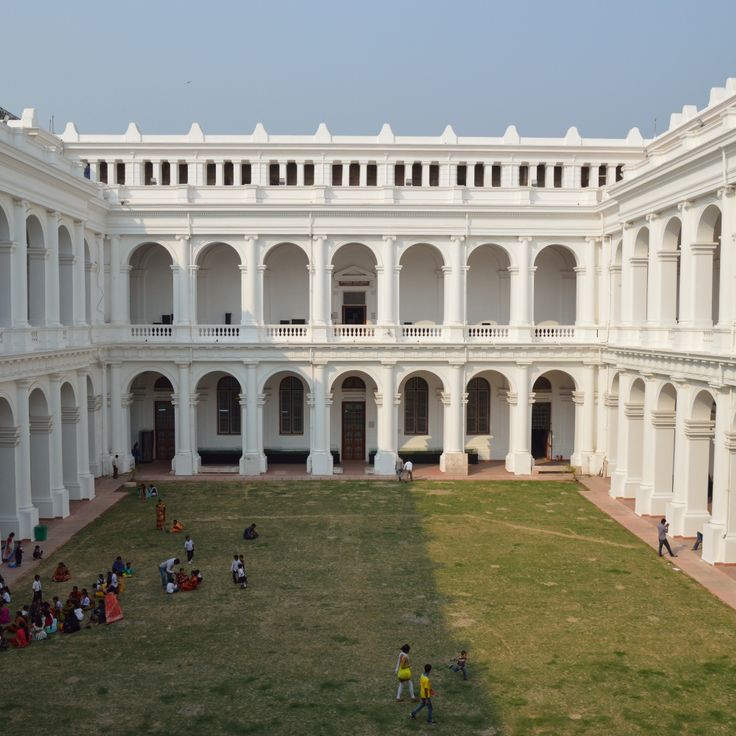
This museum opened in 1814 as the first of its kind in India and now displays antiquities, armor, fossils, skeletons, mummies, and art objects. The collections range from archaeological finds in the Indus Valley to Tibetan scroll paintings. Inside the rooms, stuffed animals stand next to minerals and historic coins. A large Buddha from Amaravati greets visitors in the entrance hall. The galleries lead through centuries of Indian and Asian history, from Stone Age tools to 19th-century textiles. The building itself recalls the colonial era with high ceilings and wide corridors.
This science center is one of the major educational institutions in Kolkata, offering exhibits on natural history, technology, and space exploration. Visitors find a planetarium, a space theater, and several galleries that cover different aspects of science and transportation. The interactive displays appeal to both children and adults, making complex topics accessible through hands-on experiments and models. The grounds are large and provide space for walking between individual pavilions, where families often spend an entire day exploring the different sections.
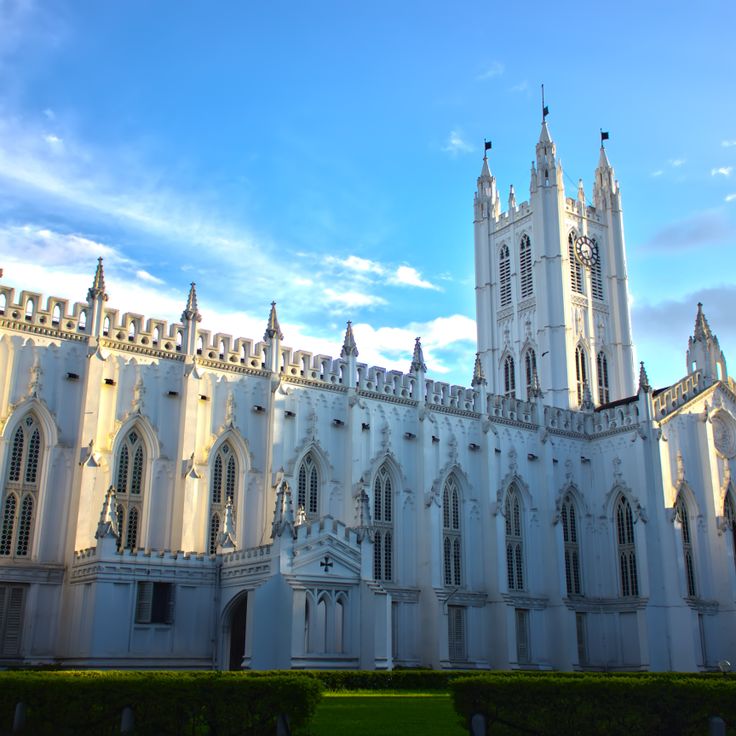
This cathedral was built in 1847 in the neo-Gothic style and stands as part of Kolkata's religious heritage. The spire rises about 200 feet (60 meters) into the air. The stained glass windows show scenes of the crucifixion and fill the interior with warm light. The architecture combines British building tradition with the tropical climate of the city and has been damaged by earthquakes several times over the years, then rebuilt.
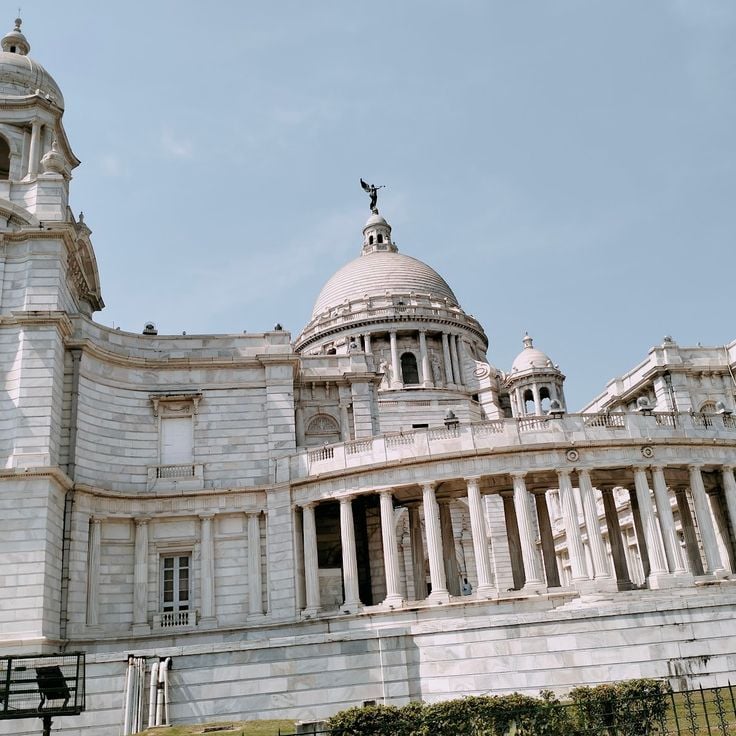
This monument was built between 1906 and 1921 from white Makrana marble and stands in the heart of Kolkata as a testament to British rule in India. The Victoria Memorial houses a museum documenting colonial history, with paintings, sculptures, and historical objects from the 19th and early 20th centuries. The grounds include large gardens where locals and visitors stroll. The building combines European and Indian architectural styles, with domes, towers, and arcades. Inside, the galleries display portraits, manuscripts, and memorabilia from the British Raj period. This monument recalls Kolkata's colonial past and now serves as a cultural center.
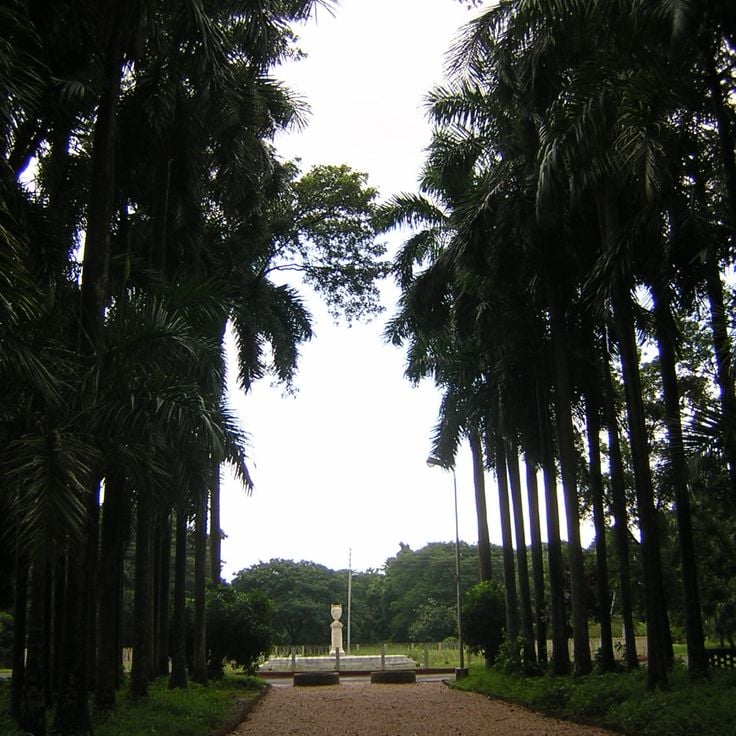
This botanical garden spreads over 109 hectares along the Hooghly River and was established in 1787 by the East India Company. The grounds hold more than 12,000 plant species from different climate zones and are known for their massive banyan tree, whose aerial roots form an impressive canopy spread. Between the glasshouses and themed gardens, visitors find shaded paths, ponds, and open lawns where locals come to walk and rest.
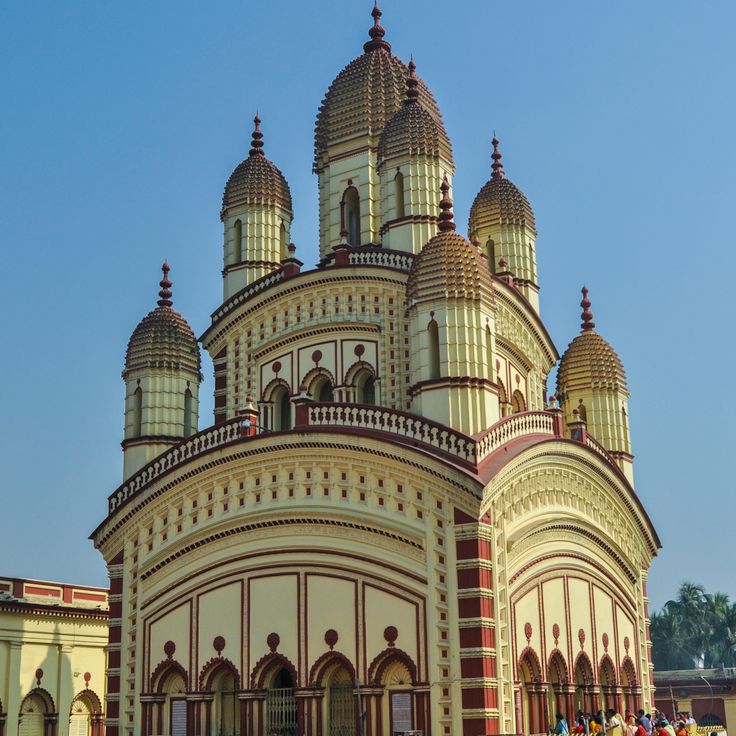
This temple rises on the eastern bank of the Hooghly, joining nine shrines beneath red towers outlined in white. Built in 1855 for the goddess Kali, the main structure follows the Bengal tradition with a tall shikhara over the central sanctuary. The complex opens onto a spacious courtyard lined with arcades, where devotees gather and perform rituals by the riverbank. The temple ties religious life to the rhythm of the river and the sounds of daily worship.
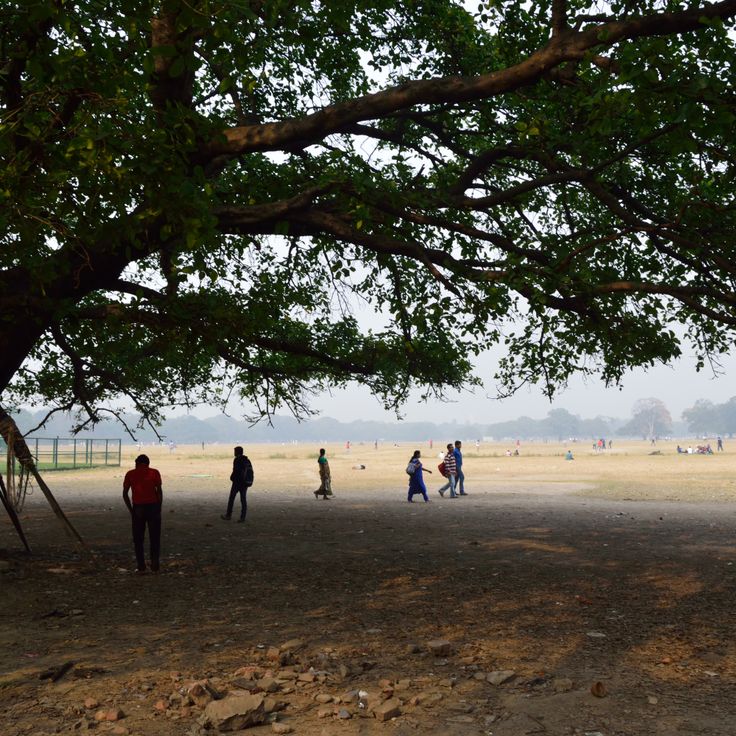
This large park forms the green center of Kolkata and stretches for several miles between the colonial buildings of BBD Bagh and the southern neighborhoods. Early in the morning, joggers and families come here, and later in the day children play cricket on the open lawns. The Victoria Memorial stands at the southern end, while Fort William occupies the northern section. Regular gatherings and festivals take place under the old trees, especially during the cooler months. On weekends, vendors sell snacks and colorful kites that rise above the wide fields.
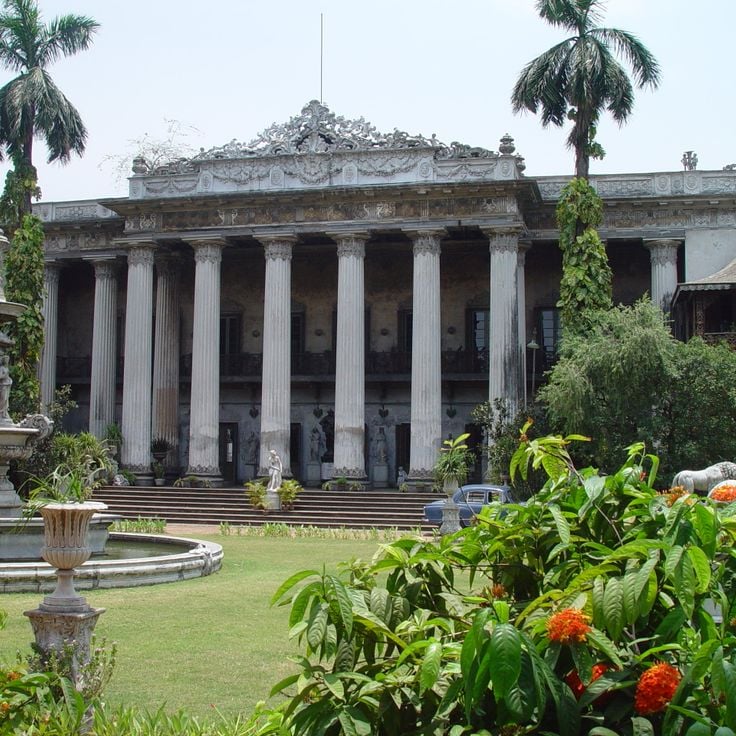
This mansion was built in 1835 by Raja Rajendra Mullick and forms part of Kolkata's colonial heritage. The rooms contain European sculptures, crystal chandeliers hang from the ceilings, and Italian marble covers the floors. The palace combines Indian architecture with European influences and preserves the collections of a Bengali aristocratic family. Visitors can tour the interiors and view the artworks that were gathered over several generations.
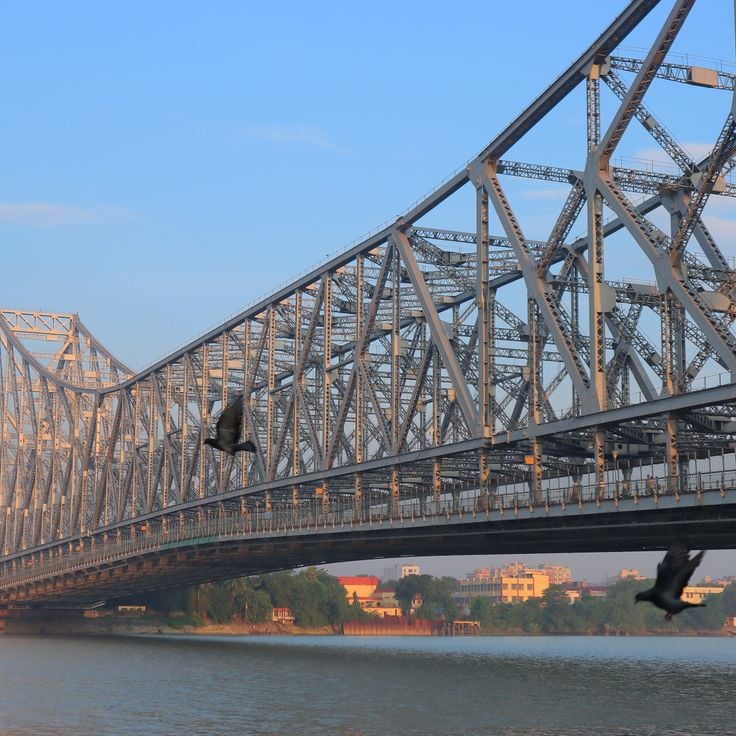
This bridge connects two banks of the Hooghly and has been one of Kolkata's main traffic arteries since 1943. The steel structure spans 2300 feet (705 meters) and carries tens of thousands of vehicles and pedestrians daily. Traffic is dense during morning and evening hours when commuters travel between neighborhoods. This bridge was built without bolts and rests on two large pillars. From the riverbank you can see the structure against the sky while boats pass underneath.
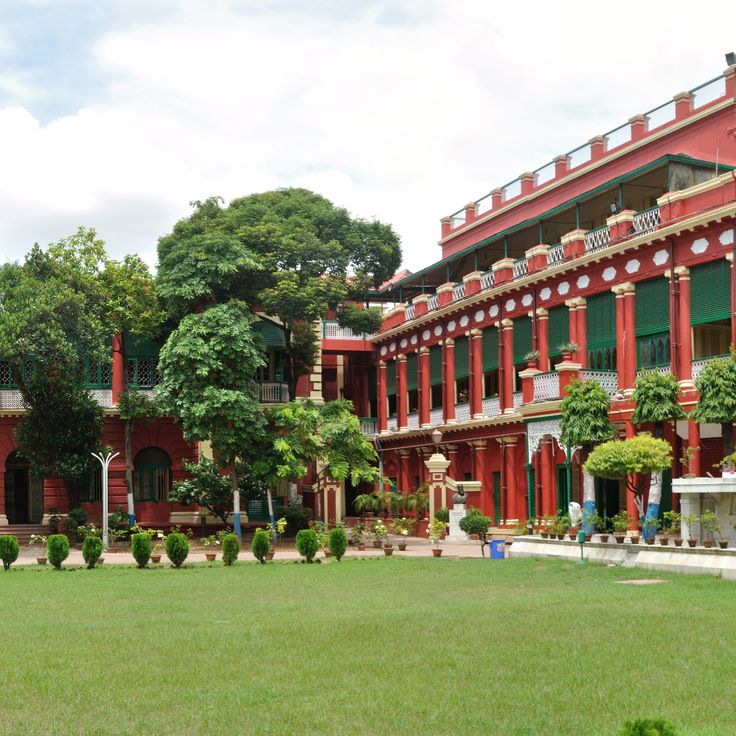
This 19th-century house was the residence of poet Rabindranath Tagore and preserves personal belongings and manuscripts. It connects to Kolkata's literary heritage and shows rooms where the writer lived and worked. The collection includes furniture, photographs, and handwritten texts that document his life.
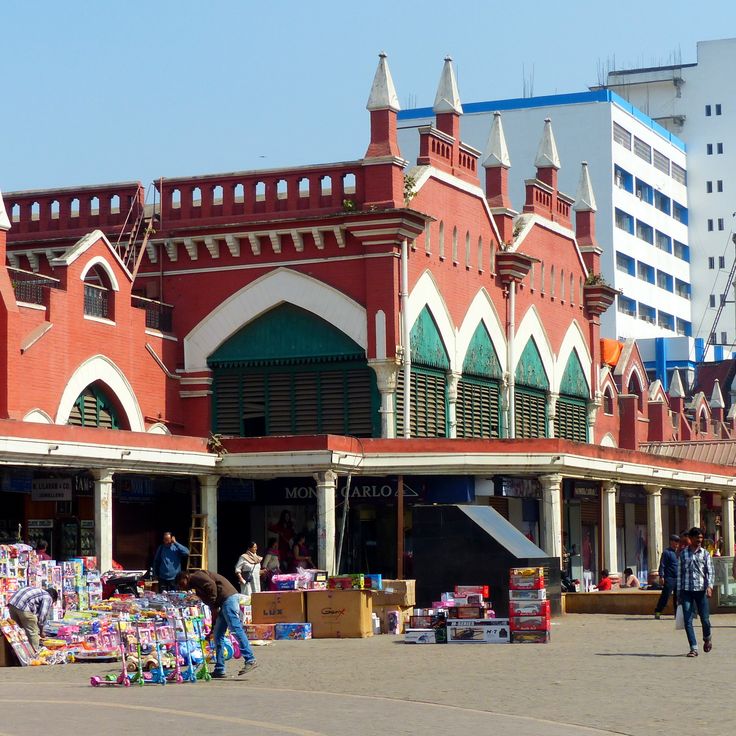
This historic market in Kolkata fills each morning with vendors selling fresh flowers. You see garlands and floral arrangements made for religious ceremonies. The scent of jasmine, marigolds, and roses drifts through narrow aisles as buyers select their offerings for temples and household celebrations. Early morning light filters through overhead coverings and illuminates the colorful stalls, where families have tended the flower trade for generations.
This central square is surrounded by government buildings from British colonial times, built during the 19th century. The Writers Building once served as headquarters for the East India Company and now houses government offices. The High Court is the highest judicial body in West Bengal. The architecture shows red brick and white columns. A monument stands in the center. Streets around the square lead to banks, offices, and old trading houses. Many people come here for work in the morning. The area is part of the historic business district.
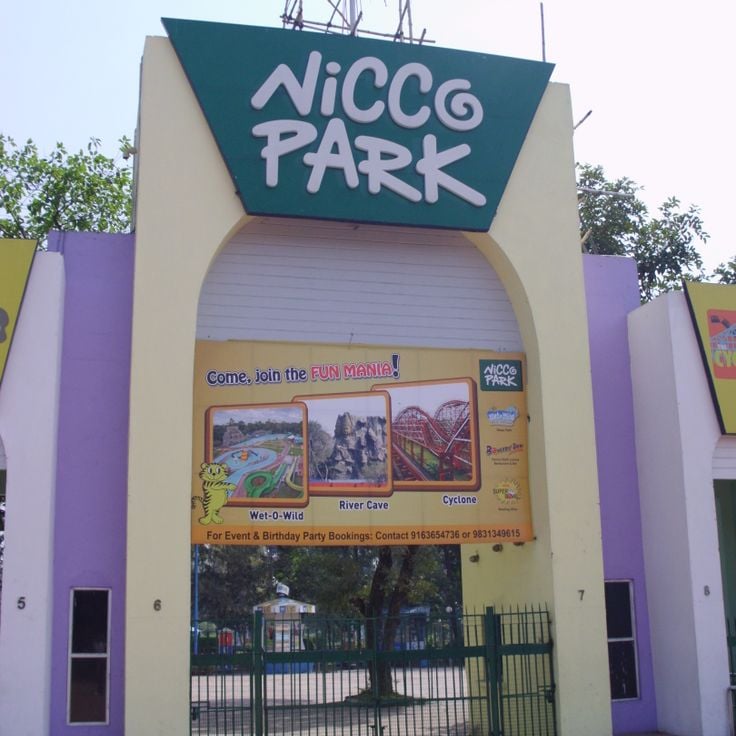
This amusement park from 1991 is one of the recreational destinations in Kolkata, offering rides, a go-kart track, and shows. Families come here on weekends and holidays, when the attractions are running and the gardens invite walking. The feel is animated, with children on the carousels and visitors in the food areas. Nicco Park sits outside the city center and shows a more modern side of Kolkata alongside the historic sites in the collection.
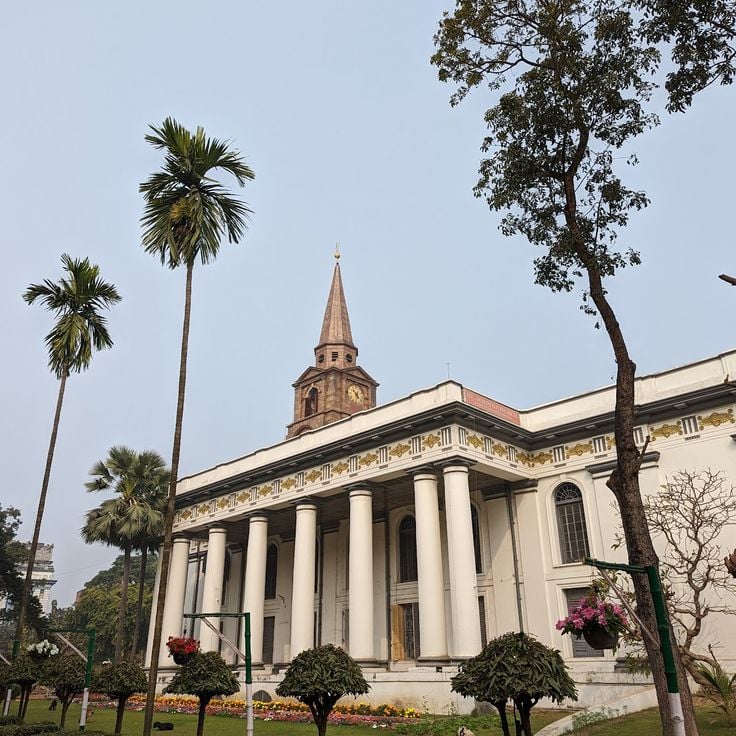
This Anglican church was built in 1787 and stands in the colonial quarter of Kolkata. The neoclassical building has an octagonal spire rising above the surrounding area. Inside, stained glass windows with biblical scenes let in colored light. The church served the British community for worship and is surrounded by graves and monuments from that era. Today you can experience the architecture and atmosphere of an 18th-century place of worship.
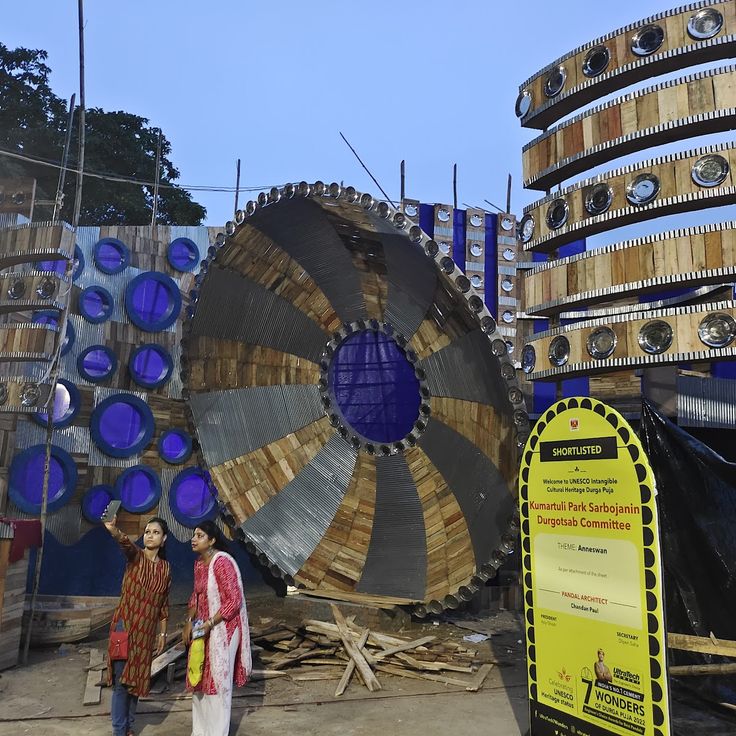
This neighborhood is the center of clay figure production for religious ceremonies in Kolkata. Artisans here work in family workshops that have shaped deities and sacred figures using traditional methods since the 17th century. Narrow lanes are lined with open studios where clay is kneaded, molded, and painted. Activity intensifies before religious festivals when statues are prepared for temples and ritual use. Visitors see a working community where craftsmanship passes from one generation to the next, and contemporary as well as traditional forms take shape.
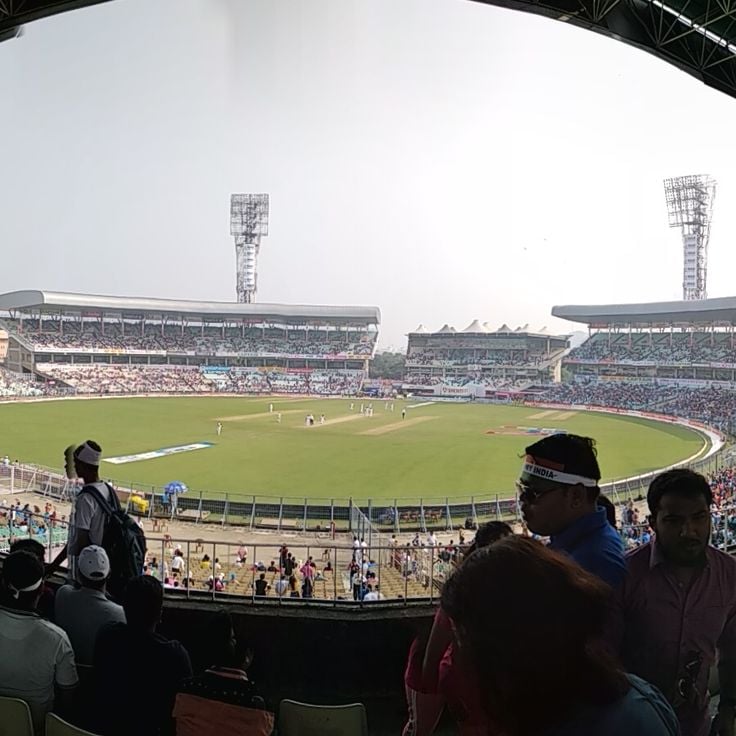
This cricket stadium dates back to the mid-19th century and remains one of the most important venues for international matches in India. The grounds sit in the heart of Kolkata and locals regard them as a temple of cricket. On match days the stands fill with passionate supporters who cheer their teams with intensity. The energy during major tournaments is electric, with chants and flags filling the entire stadium. Between matches the grounds stay quiet, but the history of the place remains present in every corner. Eden Gardens connects Kolkata's colonial past with the modern passion for cricket, showing how sport has shaped the city across generations.
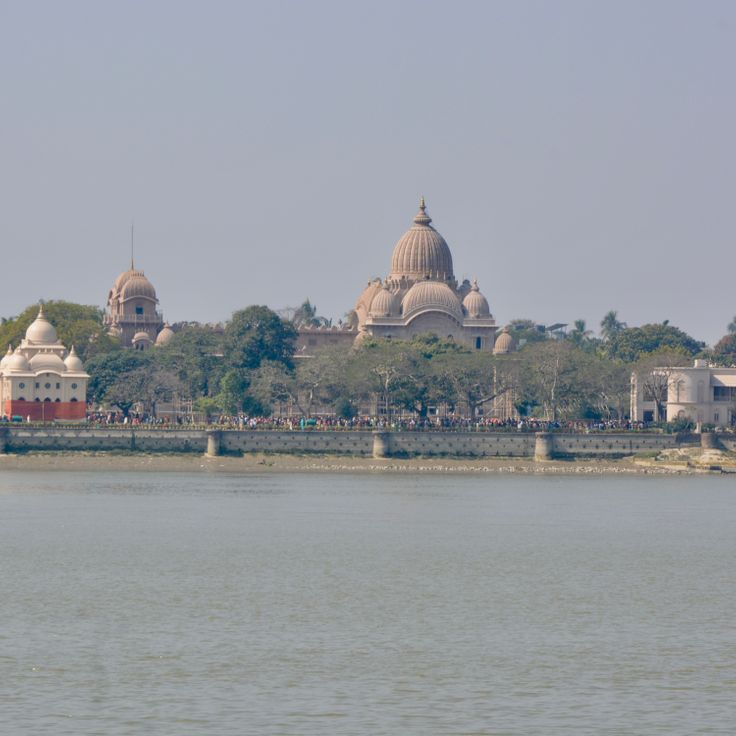
This Hindu monastery was founded in 1897 and serves as the headquarters of the Ramakrishna Mission. The architecture of Belur Math combines elements of Hindu temples, Islamic mosques, and Christian churches. The building stands on the bank of the Hooghly River and shows an attempt to unite different religious traditions in a shared architectural language. The complex includes prayer halls, a large courtyard, and rooms for the monastic community. Visitors find here a place of meditation and religious practice that preserves the legacy of Ramakrishna and his disciple Vivekananda.
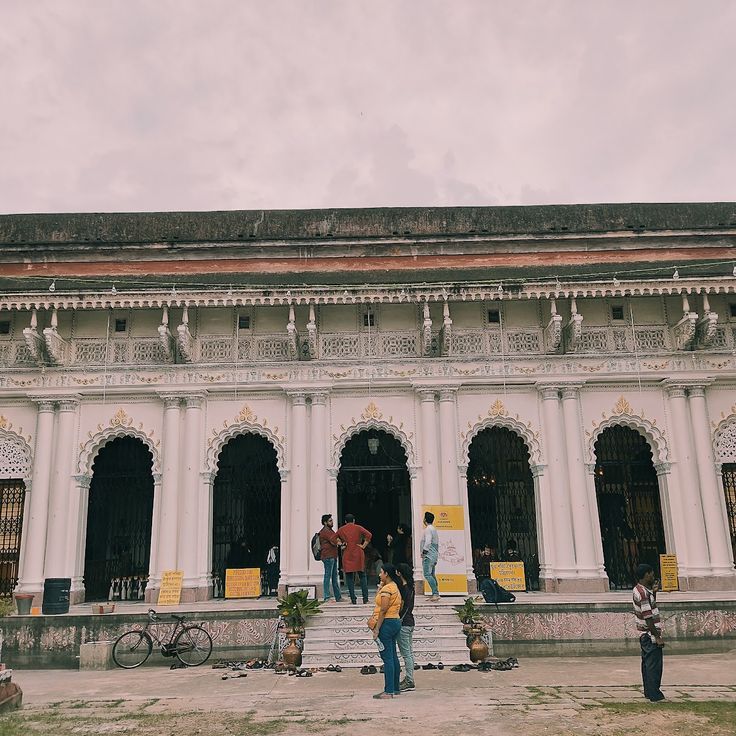
This palace was built in 1700 by the Raja family of Sovabazar and shows the architecture of old aristocratic residences in Kolkata. The inner courtyard still serves as a place for religious ceremonies and traditional Hindu festivals that keep the city's cultural heritage alive. High arches and carved woodwork shape the rooms, while the walls carry colors that have faded over the centuries. Family members still occupy parts of the building, so visitors can only enter selected areas. The mood connects history with the daily life of a city whose colonial past is reflected in many structures.
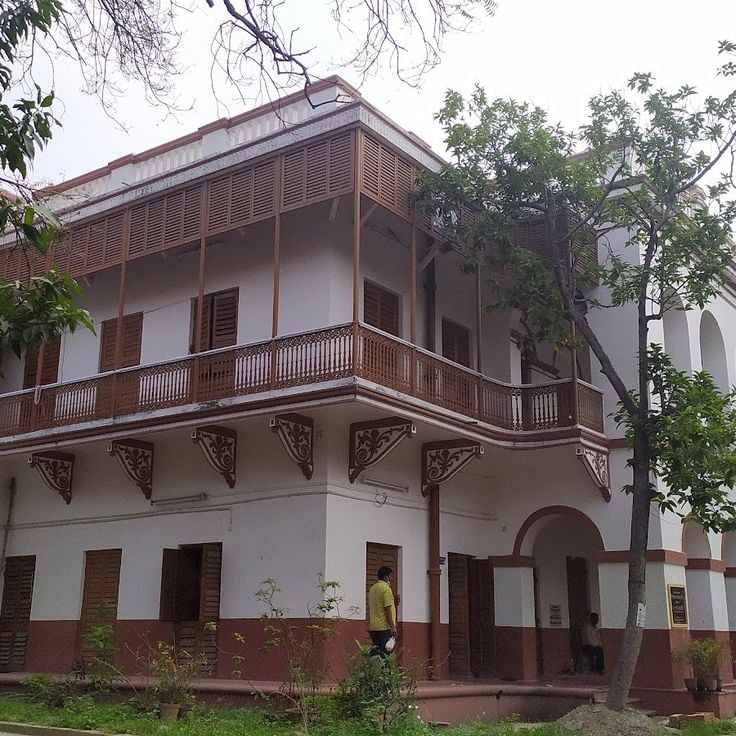
This house is a 19th-century residence where Bengali scholar and reformer Ishwar Chandra Vidyasagar lived. The rooms preserve his personal belongings, furniture, and private library. Visitors see desks, books, and documents that offer insight into his life and work for social reform and education. The building shows the domestic setting of an educated family in colonial Bengal and forms part of Kolkata's historical memory.
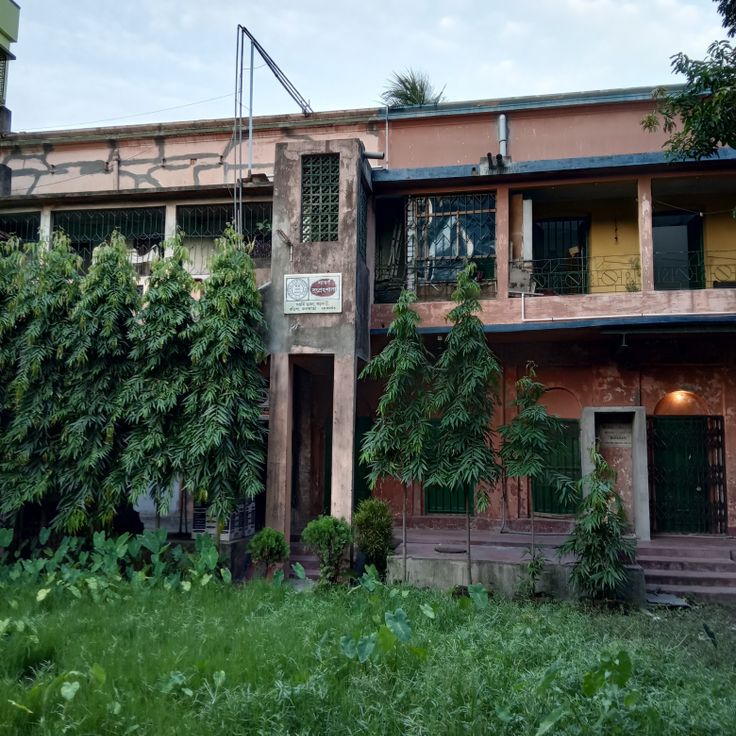
This private museum preserves the collections of the Sabarna Roy Choudhury family, holding manuscripts, paintings, and objects from Bengali history. The exhibits document local traditions and daily life of past generations through personal items and handwritten documents that offer insight into the region's cultural life.
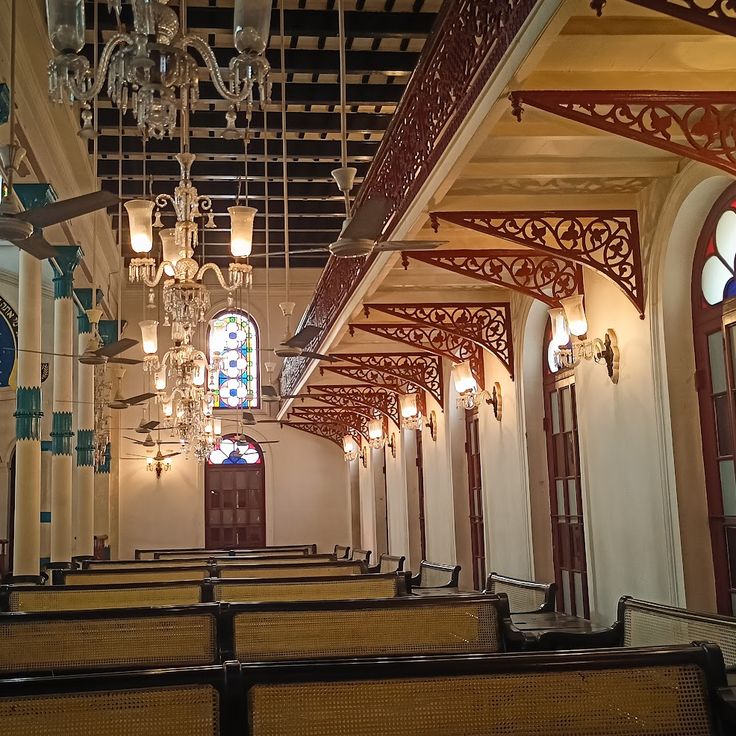
This synagogue was built in 1856 for Kolkata's Jewish community and still stands in the historic center of the city. The interior is fitted with crystal chandeliers while colored stained glass windows filter the light. The architecture combines elements of European places of worship with the 19th-century building methods of Bengal. The congregation, once larger, still uses the building for services and welcomes visitors by prior arrangement. The synagogue is part of the religious diversity of Kolkata, alongside temples, churches, and mosques that shape the cityscape.
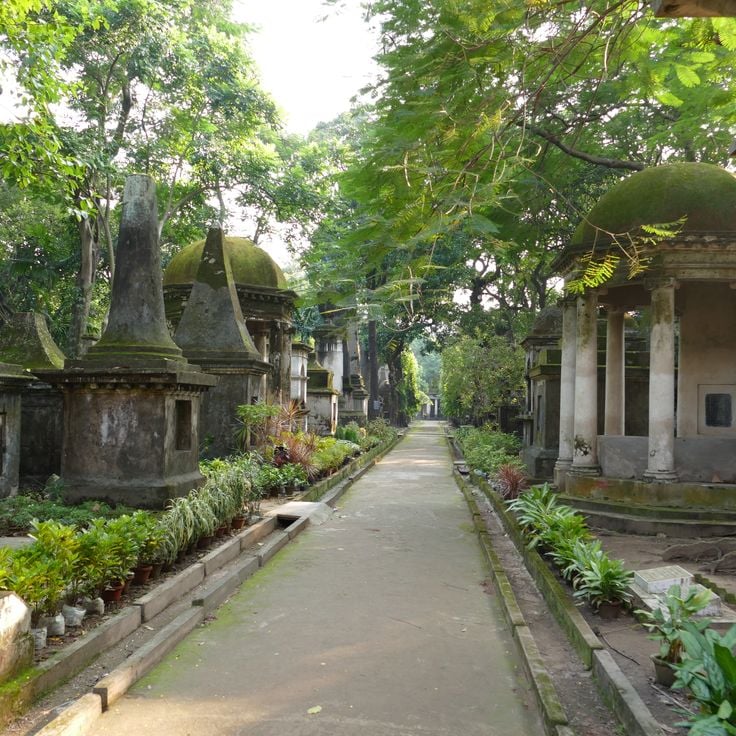
This old cemetery dates to 1767 and holds the graves of British colonial officials and European settlers in Kolkata. The tombs show Gothic architecture and Indo-Saracenic influences, with obelisks, pavilions, and weathered sculptures among tall trees. The grounds document the British presence in the city through inscriptions and carved stonework from the 18th and 19th centuries. Moss and vines cover many of the old monuments. This site forms part of Kolkata's colonial heritage alongside the historic buildings in BBD Bagh and the Victoria Memorial.
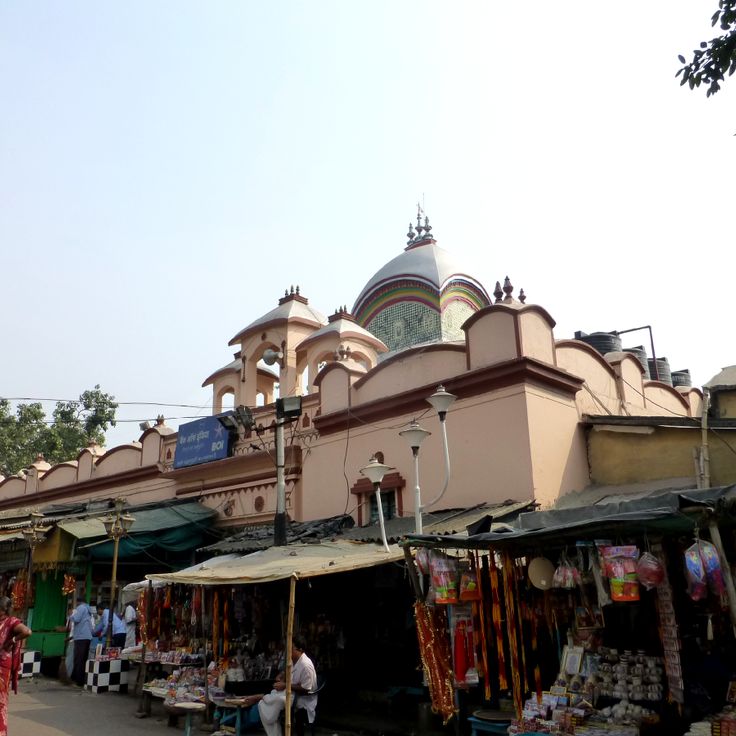
This temple is one of the most important religious sites in the city and was built in the 18th century. Pilgrims come here to worship the goddess Kali. The atmosphere is shaped by chants, incense, and the constant flow of devotees. Around the shrine, a neighborhood has grown with vendors selling flowers, offerings, and religious items. The place connects devotion with the daily life of people who perform their rituals here.
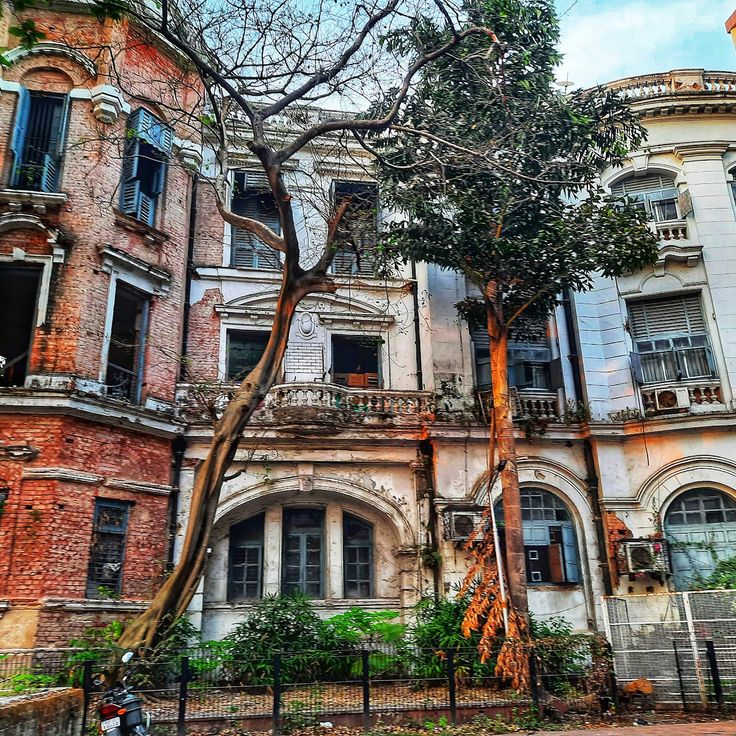
This palace was built in the early 19th century and served as a military hospital during World War II. Today the building houses administrative offices. The architecture preserves traces of its different uses and forms part of Kolkata's colonial urban history. The rooms and corridors still carry signs of the medical facility, while the outer facade shows the original construction style. The building stands in the older part of the city, where many historical structures from the British period remain.
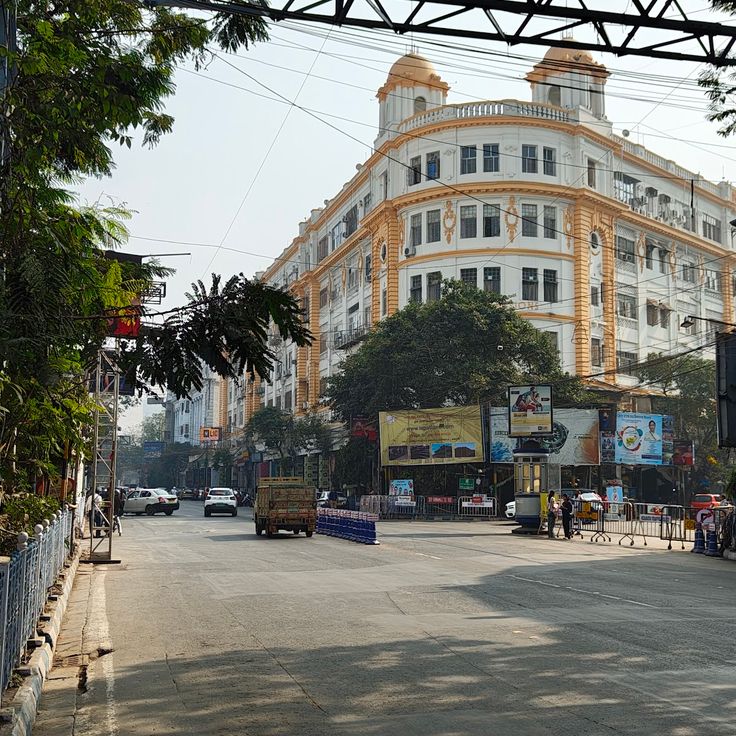
This street runs through the center of the city and shows buildings from the British colonial period, with facades dating back to the 19th century. Along the street, restaurants and shops line up, some of them run by families for several generations. The architecture recalls the Victorian era with its columns and balconies. In the evenings, people come here to eat or shop. Park Street connects different parts of the old city and serves as a landmark for visitors tracing Kolkata's British past through its monuments and colonial buildings.
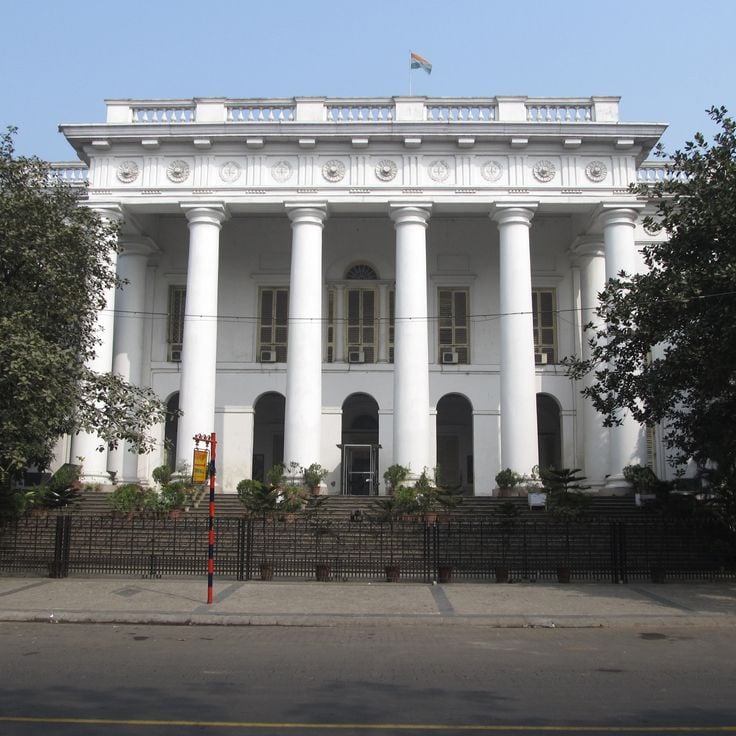
This town hall was built in 1813 to serve the British colonial administration and now houses the municipal council. The facade shows Doric columns and pale stone, typical of public buildings from that period. Inside are meeting rooms where administrative sessions once took place. The building stands in central Kolkata and belongs to the architectural reminders of the city's British past.
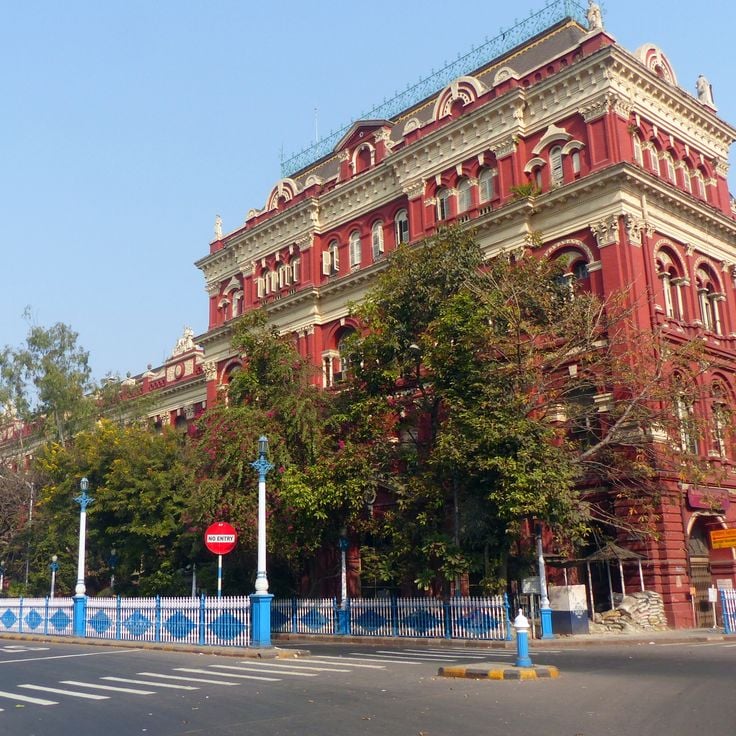
This former administrative headquarters with its red facade was built in the 18th century for employees of the East India Company and stands as a witness to British colonial rule in Kolkata. The Writers Building is one of the prominent structures in the historic BBD Bagh district and recalls the era when the city, then known as Calcutta, served as the center of British power in India. The Victorian architecture shows itself in the arches, columns and symmetry of the facade, while the building served for decades as the seat of the Bengal government.
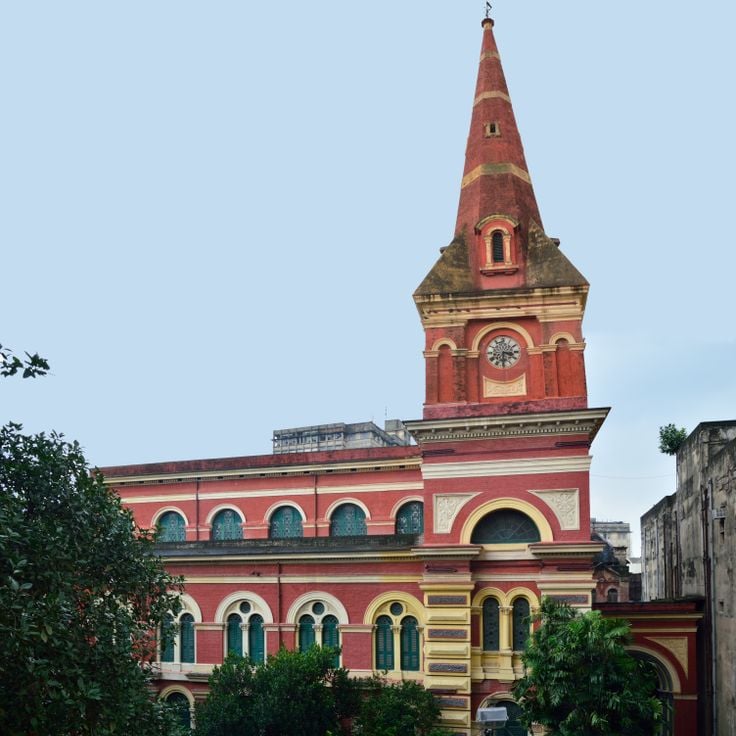
This synagogue was built in 1884 in the China Bazaar district and forms part of Kolkata's Jewish heritage. The facade shows Renaissance elements and features a clock. The building documents the once active Jewish community in the city and adds to the religious architecture alongside Hindu temples, churches and mosques that shape Kolkata's history.
This museum opened in 1814 as the first of its kind in India and now displays antiquities, armor, fossils, skeletons, mummies, and art objects. The collections range from archaeological finds in the Indus Valley to Tibetan scroll paintings. Inside the rooms, stuffed animals stand next to minerals and historic coins. A large Buddha from Amaravati greets visitors in the entrance hall. The galleries lead through centuries of Indian and Asian history, from Stone Age tools to 19th-century textiles. The building itself recalls the colonial era with high ceilings and wide corridors.
This science center is one of the major educational institutions in Kolkata, offering exhibits on natural history, technology, and space exploration. Visitors find a planetarium, a space theater, and several galleries that cover different aspects of science and transportation. The interactive displays appeal to both children and adults, making complex topics accessible through hands-on experiments and models. The grounds are large and provide space for walking between individual pavilions, where families often spend an entire day exploring the different sections.
This cathedral was built in 1847 in the neo-Gothic style and stands as part of Kolkata's religious heritage. The spire rises about 200 feet (60 meters) into the air. The stained glass windows show scenes of the crucifixion and fill the interior with warm light. The architecture combines British building tradition with the tropical climate of the city and has been damaged by earthquakes several times over the years, then rebuilt.
This monument was built between 1906 and 1921 from white Makrana marble and stands in the heart of Kolkata as a testament to British rule in India. The Victoria Memorial houses a museum documenting colonial history, with paintings, sculptures, and historical objects from the 19th and early 20th centuries. The grounds include large gardens where locals and visitors stroll. The building combines European and Indian architectural styles, with domes, towers, and arcades. Inside, the galleries display portraits, manuscripts, and memorabilia from the British Raj period. This monument recalls Kolkata's colonial past and now serves as a cultural center.
This botanical garden spreads over 109 hectares along the Hooghly River and was established in 1787 by the East India Company. The grounds hold more than 12,000 plant species from different climate zones and are known for their massive banyan tree, whose aerial roots form an impressive canopy spread. Between the glasshouses and themed gardens, visitors find shaded paths, ponds, and open lawns where locals come to walk and rest.
This temple rises on the eastern bank of the Hooghly, joining nine shrines beneath red towers outlined in white. Built in 1855 for the goddess Kali, the main structure follows the Bengal tradition with a tall shikhara over the central sanctuary. The complex opens onto a spacious courtyard lined with arcades, where devotees gather and perform rituals by the riverbank. The temple ties religious life to the rhythm of the river and the sounds of daily worship.
This large park forms the green center of Kolkata and stretches for several miles between the colonial buildings of BBD Bagh and the southern neighborhoods. Early in the morning, joggers and families come here, and later in the day children play cricket on the open lawns. The Victoria Memorial stands at the southern end, while Fort William occupies the northern section. Regular gatherings and festivals take place under the old trees, especially during the cooler months. On weekends, vendors sell snacks and colorful kites that rise above the wide fields.
This mansion was built in 1835 by Raja Rajendra Mullick and forms part of Kolkata's colonial heritage. The rooms contain European sculptures, crystal chandeliers hang from the ceilings, and Italian marble covers the floors. The palace combines Indian architecture with European influences and preserves the collections of a Bengali aristocratic family. Visitors can tour the interiors and view the artworks that were gathered over several generations.
This bridge connects two banks of the Hooghly and has been one of Kolkata's main traffic arteries since 1943. The steel structure spans 2300 feet (705 meters) and carries tens of thousands of vehicles and pedestrians daily. Traffic is dense during morning and evening hours when commuters travel between neighborhoods. This bridge was built without bolts and rests on two large pillars. From the riverbank you can see the structure against the sky while boats pass underneath.
This 19th-century house was the residence of poet Rabindranath Tagore and preserves personal belongings and manuscripts. It connects to Kolkata's literary heritage and shows rooms where the writer lived and worked. The collection includes furniture, photographs, and handwritten texts that document his life.
This historic market in Kolkata fills each morning with vendors selling fresh flowers. You see garlands and floral arrangements made for religious ceremonies. The scent of jasmine, marigolds, and roses drifts through narrow aisles as buyers select their offerings for temples and household celebrations. Early morning light filters through overhead coverings and illuminates the colorful stalls, where families have tended the flower trade for generations.
This central square is surrounded by government buildings from British colonial times, built during the 19th century. The Writers Building once served as headquarters for the East India Company and now houses government offices. The High Court is the highest judicial body in West Bengal. The architecture shows red brick and white columns. A monument stands in the center. Streets around the square lead to banks, offices, and old trading houses. Many people come here for work in the morning. The area is part of the historic business district.
This amusement park from 1991 is one of the recreational destinations in Kolkata, offering rides, a go-kart track, and shows. Families come here on weekends and holidays, when the attractions are running and the gardens invite walking. The feel is animated, with children on the carousels and visitors in the food areas. Nicco Park sits outside the city center and shows a more modern side of Kolkata alongside the historic sites in the collection.
This Anglican church was built in 1787 and stands in the colonial quarter of Kolkata. The neoclassical building has an octagonal spire rising above the surrounding area. Inside, stained glass windows with biblical scenes let in colored light. The church served the British community for worship and is surrounded by graves and monuments from that era. Today you can experience the architecture and atmosphere of an 18th-century place of worship.
This neighborhood is the center of clay figure production for religious ceremonies in Kolkata. Artisans here work in family workshops that have shaped deities and sacred figures using traditional methods since the 17th century. Narrow lanes are lined with open studios where clay is kneaded, molded, and painted. Activity intensifies before religious festivals when statues are prepared for temples and ritual use. Visitors see a working community where craftsmanship passes from one generation to the next, and contemporary as well as traditional forms take shape.
This cricket stadium dates back to the mid-19th century and remains one of the most important venues for international matches in India. The grounds sit in the heart of Kolkata and locals regard them as a temple of cricket. On match days the stands fill with passionate supporters who cheer their teams with intensity. The energy during major tournaments is electric, with chants and flags filling the entire stadium. Between matches the grounds stay quiet, but the history of the place remains present in every corner. Eden Gardens connects Kolkata's colonial past with the modern passion for cricket, showing how sport has shaped the city across generations.
This Hindu monastery was founded in 1897 and serves as the headquarters of the Ramakrishna Mission. The architecture of Belur Math combines elements of Hindu temples, Islamic mosques, and Christian churches. The building stands on the bank of the Hooghly River and shows an attempt to unite different religious traditions in a shared architectural language. The complex includes prayer halls, a large courtyard, and rooms for the monastic community. Visitors find here a place of meditation and religious practice that preserves the legacy of Ramakrishna and his disciple Vivekananda.
This palace was built in 1700 by the Raja family of Sovabazar and shows the architecture of old aristocratic residences in Kolkata. The inner courtyard still serves as a place for religious ceremonies and traditional Hindu festivals that keep the city's cultural heritage alive. High arches and carved woodwork shape the rooms, while the walls carry colors that have faded over the centuries. Family members still occupy parts of the building, so visitors can only enter selected areas. The mood connects history with the daily life of a city whose colonial past is reflected in many structures.
This house is a 19th-century residence where Bengali scholar and reformer Ishwar Chandra Vidyasagar lived. The rooms preserve his personal belongings, furniture, and private library. Visitors see desks, books, and documents that offer insight into his life and work for social reform and education. The building shows the domestic setting of an educated family in colonial Bengal and forms part of Kolkata's historical memory.
This private museum preserves the collections of the Sabarna Roy Choudhury family, holding manuscripts, paintings, and objects from Bengali history. The exhibits document local traditions and daily life of past generations through personal items and handwritten documents that offer insight into the region's cultural life.
This synagogue was built in 1856 for Kolkata's Jewish community and still stands in the historic center of the city. The interior is fitted with crystal chandeliers while colored stained glass windows filter the light. The architecture combines elements of European places of worship with the 19th-century building methods of Bengal. The congregation, once larger, still uses the building for services and welcomes visitors by prior arrangement. The synagogue is part of the religious diversity of Kolkata, alongside temples, churches, and mosques that shape the cityscape.
This old cemetery dates to 1767 and holds the graves of British colonial officials and European settlers in Kolkata. The tombs show Gothic architecture and Indo-Saracenic influences, with obelisks, pavilions, and weathered sculptures among tall trees. The grounds document the British presence in the city through inscriptions and carved stonework from the 18th and 19th centuries. Moss and vines cover many of the old monuments. This site forms part of Kolkata's colonial heritage alongside the historic buildings in BBD Bagh and the Victoria Memorial.
This temple is one of the most important religious sites in the city and was built in the 18th century. Pilgrims come here to worship the goddess Kali. The atmosphere is shaped by chants, incense, and the constant flow of devotees. Around the shrine, a neighborhood has grown with vendors selling flowers, offerings, and religious items. The place connects devotion with the daily life of people who perform their rituals here.
This palace was built in the early 19th century and served as a military hospital during World War II. Today the building houses administrative offices. The architecture preserves traces of its different uses and forms part of Kolkata's colonial urban history. The rooms and corridors still carry signs of the medical facility, while the outer facade shows the original construction style. The building stands in the older part of the city, where many historical structures from the British period remain.
This street runs through the center of the city and shows buildings from the British colonial period, with facades dating back to the 19th century. Along the street, restaurants and shops line up, some of them run by families for several generations. The architecture recalls the Victorian era with its columns and balconies. In the evenings, people come here to eat or shop. Park Street connects different parts of the old city and serves as a landmark for visitors tracing Kolkata's British past through its monuments and colonial buildings.
This town hall was built in 1813 to serve the British colonial administration and now houses the municipal council. The facade shows Doric columns and pale stone, typical of public buildings from that period. Inside are meeting rooms where administrative sessions once took place. The building stands in central Kolkata and belongs to the architectural reminders of the city's British past.
This former administrative headquarters with its red facade was built in the 18th century for employees of the East India Company and stands as a witness to British colonial rule in Kolkata. The Writers Building is one of the prominent structures in the historic BBD Bagh district and recalls the era when the city, then known as Calcutta, served as the center of British power in India. The Victorian architecture shows itself in the arches, columns and symmetry of the facade, while the building served for decades as the seat of the Bengal government.
This synagogue was built in 1884 in the China Bazaar district and forms part of Kolkata's Jewish heritage. The facade shows Renaissance elements and features a clock. The building documents the once active Jewish community in the city and adds to the religious architecture alongside Hindu temples, churches and mosques that shape Kolkata's history.
This museum opened in 1814 as the first of its kind in India and now displays antiquities, armor, fossils, skeletons, mummies, and art objects. The collections range from archaeological finds in the Indus Valley to Tibetan scroll paintings. Inside the rooms, stuffed animals stand next to minerals and historic coins. A large Buddha from Amaravati greets visitors in the entrance hall. The galleries lead through centuries of Indian and Asian history, from Stone Age tools to 19th-century textiles. The building itself recalls the colonial era with high ceilings and wide corridors.
This science center is one of the major educational institutions in Kolkata, offering exhibits on natural history, technology, and space exploration. Visitors find a planetarium, a space theater, and several galleries that cover different aspects of science and transportation. The interactive displays appeal to both children and adults, making complex topics accessible through hands-on experiments and models. The grounds are large and provide space for walking between individual pavilions, where families often spend an entire day exploring the different sections.
This cathedral was built in 1847 in the neo-Gothic style and stands as part of Kolkata's religious heritage. The spire rises about 200 feet (60 meters) into the air. The stained glass windows show scenes of the crucifixion and fill the interior with warm light. The architecture combines British building tradition with the tropical climate of the city and has been damaged by earthquakes several times over the years, then rebuilt.
This monument was built between 1906 and 1921 from white Makrana marble and stands in the heart of Kolkata as a testament to British rule in India. The Victoria Memorial houses a museum documenting colonial history, with paintings, sculptures, and historical objects from the 19th and early 20th centuries. The grounds include large gardens where locals and visitors stroll. The building combines European and Indian architectural styles, with domes, towers, and arcades. Inside, the galleries display portraits, manuscripts, and memorabilia from the British Raj period. This monument recalls Kolkata's colonial past and now serves as a cultural center.
This botanical garden spreads over 109 hectares along the Hooghly River and was established in 1787 by the East India Company. The grounds hold more than 12,000 plant species from different climate zones and are known for their massive banyan tree, whose aerial roots form an impressive canopy spread. Between the glasshouses and themed gardens, visitors find shaded paths, ponds, and open lawns where locals come to walk and rest.
This temple rises on the eastern bank of the Hooghly, joining nine shrines beneath red towers outlined in white. Built in 1855 for the goddess Kali, the main structure follows the Bengal tradition with a tall shikhara over the central sanctuary. The complex opens onto a spacious courtyard lined with arcades, where devotees gather and perform rituals by the riverbank. The temple ties religious life to the rhythm of the river and the sounds of daily worship.
This large park forms the green center of Kolkata and stretches for several miles between the colonial buildings of BBD Bagh and the southern neighborhoods. Early in the morning, joggers and families come here, and later in the day children play cricket on the open lawns. The Victoria Memorial stands at the southern end, while Fort William occupies the northern section. Regular gatherings and festivals take place under the old trees, especially during the cooler months. On weekends, vendors sell snacks and colorful kites that rise above the wide fields.
This mansion was built in 1835 by Raja Rajendra Mullick and forms part of Kolkata's colonial heritage. The rooms contain European sculptures, crystal chandeliers hang from the ceilings, and Italian marble covers the floors. The palace combines Indian architecture with European influences and preserves the collections of a Bengali aristocratic family. Visitors can tour the interiors and view the artworks that were gathered over several generations.
This bridge connects two banks of the Hooghly and has been one of Kolkata's main traffic arteries since 1943. The steel structure spans 2300 feet (705 meters) and carries tens of thousands of vehicles and pedestrians daily. Traffic is dense during morning and evening hours when commuters travel between neighborhoods. This bridge was built without bolts and rests on two large pillars. From the riverbank you can see the structure against the sky while boats pass underneath.
This 19th-century house was the residence of poet Rabindranath Tagore and preserves personal belongings and manuscripts. It connects to Kolkata's literary heritage and shows rooms where the writer lived and worked. The collection includes furniture, photographs, and handwritten texts that document his life.
This historic market in Kolkata fills each morning with vendors selling fresh flowers. You see garlands and floral arrangements made for religious ceremonies. The scent of jasmine, marigolds, and roses drifts through narrow aisles as buyers select their offerings for temples and household celebrations. Early morning light filters through overhead coverings and illuminates the colorful stalls, where families have tended the flower trade for generations.
This central square is surrounded by government buildings from British colonial times, built during the 19th century. The Writers Building once served as headquarters for the East India Company and now houses government offices. The High Court is the highest judicial body in West Bengal. The architecture shows red brick and white columns. A monument stands in the center. Streets around the square lead to banks, offices, and old trading houses. Many people come here for work in the morning. The area is part of the historic business district.
This amusement park from 1991 is one of the recreational destinations in Kolkata, offering rides, a go-kart track, and shows. Families come here on weekends and holidays, when the attractions are running and the gardens invite walking. The feel is animated, with children on the carousels and visitors in the food areas. Nicco Park sits outside the city center and shows a more modern side of Kolkata alongside the historic sites in the collection.
This Anglican church was built in 1787 and stands in the colonial quarter of Kolkata. The neoclassical building has an octagonal spire rising above the surrounding area. Inside, stained glass windows with biblical scenes let in colored light. The church served the British community for worship and is surrounded by graves and monuments from that era. Today you can experience the architecture and atmosphere of an 18th-century place of worship.
This neighborhood is the center of clay figure production for religious ceremonies in Kolkata. Artisans here work in family workshops that have shaped deities and sacred figures using traditional methods since the 17th century. Narrow lanes are lined with open studios where clay is kneaded, molded, and painted. Activity intensifies before religious festivals when statues are prepared for temples and ritual use. Visitors see a working community where craftsmanship passes from one generation to the next, and contemporary as well as traditional forms take shape.
This cricket stadium dates back to the mid-19th century and remains one of the most important venues for international matches in India. The grounds sit in the heart of Kolkata and locals regard them as a temple of cricket. On match days the stands fill with passionate supporters who cheer their teams with intensity. The energy during major tournaments is electric, with chants and flags filling the entire stadium. Between matches the grounds stay quiet, but the history of the place remains present in every corner. Eden Gardens connects Kolkata's colonial past with the modern passion for cricket, showing how sport has shaped the city across generations.
This Hindu monastery was founded in 1897 and serves as the headquarters of the Ramakrishna Mission. The architecture of Belur Math combines elements of Hindu temples, Islamic mosques, and Christian churches. The building stands on the bank of the Hooghly River and shows an attempt to unite different religious traditions in a shared architectural language. The complex includes prayer halls, a large courtyard, and rooms for the monastic community. Visitors find here a place of meditation and religious practice that preserves the legacy of Ramakrishna and his disciple Vivekananda.
This palace was built in 1700 by the Raja family of Sovabazar and shows the architecture of old aristocratic residences in Kolkata. The inner courtyard still serves as a place for religious ceremonies and traditional Hindu festivals that keep the city's cultural heritage alive. High arches and carved woodwork shape the rooms, while the walls carry colors that have faded over the centuries. Family members still occupy parts of the building, so visitors can only enter selected areas. The mood connects history with the daily life of a city whose colonial past is reflected in many structures.
This house is a 19th-century residence where Bengali scholar and reformer Ishwar Chandra Vidyasagar lived. The rooms preserve his personal belongings, furniture, and private library. Visitors see desks, books, and documents that offer insight into his life and work for social reform and education. The building shows the domestic setting of an educated family in colonial Bengal and forms part of Kolkata's historical memory.
This private museum preserves the collections of the Sabarna Roy Choudhury family, holding manuscripts, paintings, and objects from Bengali history. The exhibits document local traditions and daily life of past generations through personal items and handwritten documents that offer insight into the region's cultural life.
This synagogue was built in 1856 for Kolkata's Jewish community and still stands in the historic center of the city. The interior is fitted with crystal chandeliers while colored stained glass windows filter the light. The architecture combines elements of European places of worship with the 19th-century building methods of Bengal. The congregation, once larger, still uses the building for services and welcomes visitors by prior arrangement. The synagogue is part of the religious diversity of Kolkata, alongside temples, churches, and mosques that shape the cityscape.
This old cemetery dates to 1767 and holds the graves of British colonial officials and European settlers in Kolkata. The tombs show Gothic architecture and Indo-Saracenic influences, with obelisks, pavilions, and weathered sculptures among tall trees. The grounds document the British presence in the city through inscriptions and carved stonework from the 18th and 19th centuries. Moss and vines cover many of the old monuments. This site forms part of Kolkata's colonial heritage alongside the historic buildings in BBD Bagh and the Victoria Memorial.
This temple is one of the most important religious sites in the city and was built in the 18th century. Pilgrims come here to worship the goddess Kali. The atmosphere is shaped by chants, incense, and the constant flow of devotees. Around the shrine, a neighborhood has grown with vendors selling flowers, offerings, and religious items. The place connects devotion with the daily life of people who perform their rituals here.
This palace was built in the early 19th century and served as a military hospital during World War II. Today the building houses administrative offices. The architecture preserves traces of its different uses and forms part of Kolkata's colonial urban history. The rooms and corridors still carry signs of the medical facility, while the outer facade shows the original construction style. The building stands in the older part of the city, where many historical structures from the British period remain.
This street runs through the center of the city and shows buildings from the British colonial period, with facades dating back to the 19th century. Along the street, restaurants and shops line up, some of them run by families for several generations. The architecture recalls the Victorian era with its columns and balconies. In the evenings, people come here to eat or shop. Park Street connects different parts of the old city and serves as a landmark for visitors tracing Kolkata's British past through its monuments and colonial buildings.
This town hall was built in 1813 to serve the British colonial administration and now houses the municipal council. The facade shows Doric columns and pale stone, typical of public buildings from that period. Inside are meeting rooms where administrative sessions once took place. The building stands in central Kolkata and belongs to the architectural reminders of the city's British past.
This former administrative headquarters with its red facade was built in the 18th century for employees of the East India Company and stands as a witness to British colonial rule in Kolkata. The Writers Building is one of the prominent structures in the historic BBD Bagh district and recalls the era when the city, then known as Calcutta, served as the center of British power in India. The Victorian architecture shows itself in the arches, columns and symmetry of the facade, while the building served for decades as the seat of the Bengal government.
This synagogue was built in 1884 in the China Bazaar district and forms part of Kolkata's Jewish heritage. The facade shows Renaissance elements and features a clock. The building documents the once active Jewish community in the city and adds to the religious architecture alongside Hindu temples, churches and mosques that shape Kolkata's history.