Cekin Mansion, Mansion and museum in Šiška, Ljubljana, Slovenia
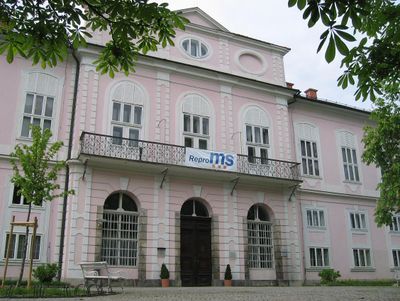
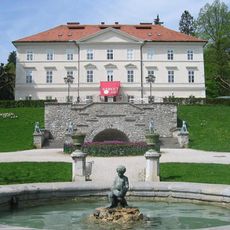
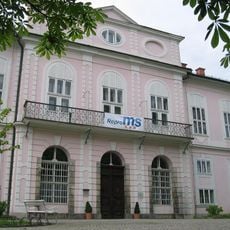
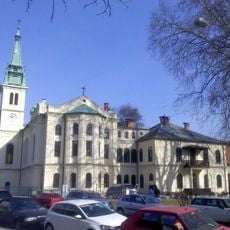
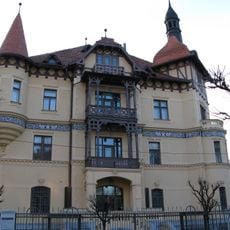
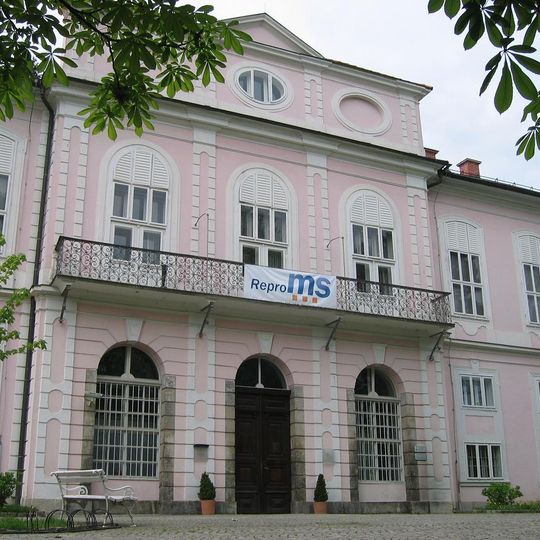
Cekin Mansion is a late-Baroque mansion on a terrace at the northern edge of Tivoli Park, next to Tivoli Hall. Its rectangular plan has a projecting entrance bay with a triangular attic and a balcony above the semicircular stone portal. Inside, a vaulted entrance hall leads to a two-flight staircase and a central ceremonial hall with a later illusionistic ceiling painting.
A 17th-century masonry manor already stood on the site, owned by wealthy townsmen until Jurij Marn sold it in 1752. Leopold Karl Lamberg then had the Baroque mansion built, completed in 1755, and established the Leopoldsruhe estate around it. From 1812 to 1813 Eugène de Beauharnais, viceroy of Italy, used it as a temporary residence during the French administration of Ljubljana.
The name Cekin comes from Lőrincz Szőgyény, husband of Ivana Lamberg, who inherited the mansion in 1787; townspeople Slovenized his surname. The Lambergs established the Leopoldsruhe estate around the mansion. Since 1951 it has housed the Museum of Contemporary History of Slovenia, whose collections cover World War I, the interwar period, World War II, postwar Yugoslavia and independent Slovenia.
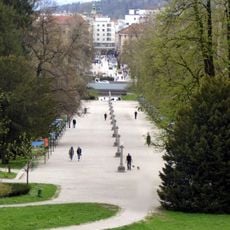
The mansion stands on a terrace at the edge of a slope in Tivoli Park, reached by shallow steps from the park or from Celovška cesta. A steel annex with a lift and staircase at the rear connects the lower rooms with the attic. The nearby Tivoli Hall sports arena was built very close to the mansion.
The steel annex with a lift and staircase on the rear of the mansion was added in the 1990–92 renovation by architect Jurij Kobe, who received the Plečnik Award for the work in 1992. It links the lower rooms with the attic, where curators' offices and part of the collections depot are housed.
The community of curious travelers
AroundUs brings together thousands of curated places, local tips, and hidden gems, enriched daily by 93,829 contributors worldwide.