Buffalo Bill Dam, dam on the Shoshone River in Park County, Wyoming, United States
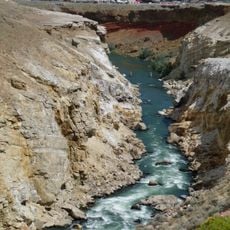
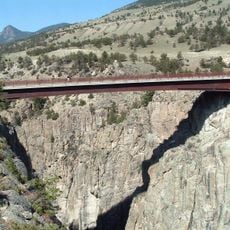
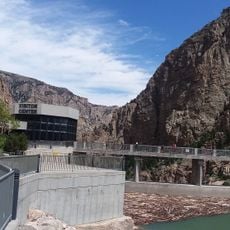
Buffalo Bill Dam is a concrete arch dam on the Shoshone River in Park County, Wyoming, holding back a long reservoir set within a narrow canyon. The site also includes a hydroelectric power plant that still generates electricity today, along with a visitor center at the base of the structure.
The dam was built in the early 1900s as one of the first projects of the federal Reclamation Service, designed to bring water to dry farmland in the Bighorn Basin. When it was completed in 1910, it was the tallest concrete dam in the world, and it was raised further in later decades to increase reservoir capacity.
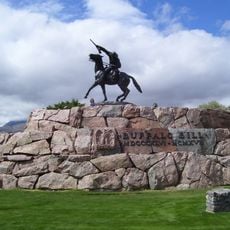
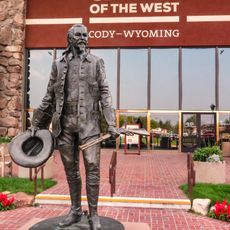
The dam takes its name from William Frederick Cody, known as Buffalo Bill, who promoted settlement in this part of Wyoming and helped attract investment in irrigation projects. His name on the structure is a reminder of how closely the opening of the American West was tied to water use and farming.
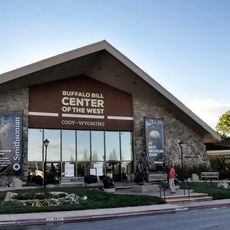
A visitor center next to the dam explains the history of the structure and offers a direct view of the wall and the canyon. From the walkway across the top of the dam, you can look out over the reservoir on one side and straight down into the canyon on the other.
When the dam was finished in 1910, it was so tall that some engineers doubted whether concrete could hold that much water pressure without cracking. The arch design used here was still new at the time, and the project was seen as a gamble on a form of construction that had not yet been fully tested at that scale.
The community of curious travelers
AroundUs brings together thousands of curated places, local tips, and hidden gems, enriched daily by 91,390 contributors worldwide.