United States Pavilion, Seville, Exhibition pavilion in Seville, Spain.
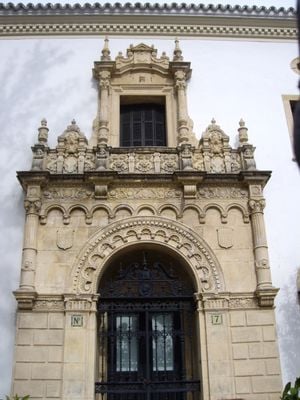
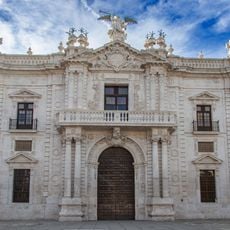
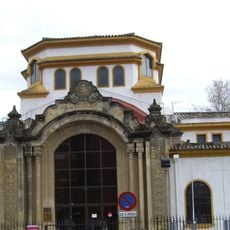
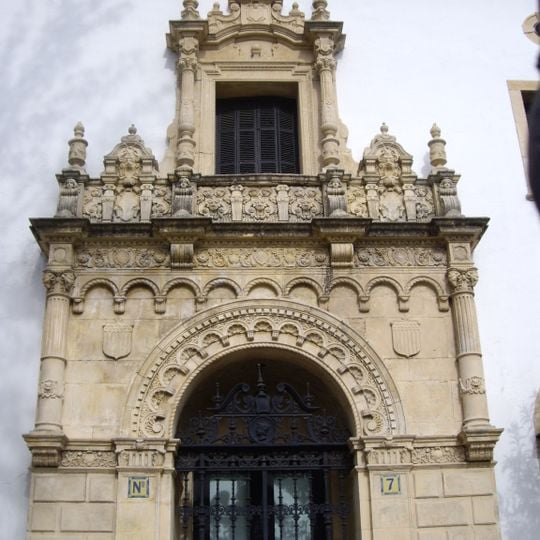
The United States Pavilion in Seville is a two-story building with a triangular floor plan and white facades decorated with elegant stone ornaments. Its interior was originally divided into three functional spaces designed to house different programs and activities.
Built in 1929 as the United States contribution to the Ibero-American Exposition, the structure was designed by American architect William Templeton Johnson. After the exposition, the building was repurposed and now serves as home to a research foundation.
The pavilion contained exhibits from the National Museum of Fine Arts and maps showing Spanish conquistador routes during the 1929 exposition.
The pavilion stands at the intersection of Paseo de las Delicias and Avenida de María Luisa, right in the heart of the former exposition grounds. Access is possible during the day, though it's worth checking ahead since the building currently functions mainly as an administrative headquarters.
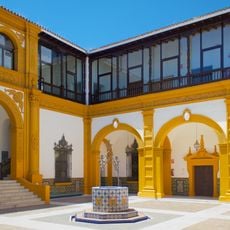
The central courtyard follows the facade lines, featuring two entrance portals with fine ornamental details contrasting against white walls.
The community of curious travelers
AroundUs brings together thousands of curated places, local tips, and hidden gems, enriched daily by 60,000 contributors worldwide.