Somosaguas fossil site, Paleontological site in Pozuelo de Alarcón, Spain.
Somosaguas fossil site lies on the Somosaguas campus of the Complutense University in Pozuelo de Alarcón. It consists of two fossil-bearing zones 60 m apart: Somosaguas Norte, in an upper stratigraphic position, and Somosaguas Sur. The 6 m of sediment comprise three sections: arkoses with clayey matrix (T1, 0.5 m), alternating micaceous sands and brown clays (T2, up to 1.5 m), and arkoses with clayey matrix (T3, over 3 m).
A geology student discovered bone fragments near the Faculty of Political Sciences in 1989, which sparked initial interest in the area. Systematic excavations started in 1998 under the direction of Professor Nieves López Martínez.
Since 2000, excavations have run as a fortnightly campaign in April or May, carried out by students of the Complutense University with the National Museum of Natural Sciences. Alongside the digging, the site holds open days, workshops and exhibitions that let visitors see the work and handle the methods used on the Somosaguas Norte and Sur layers.
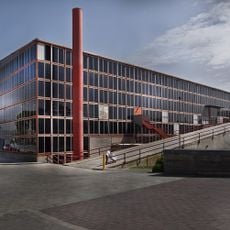
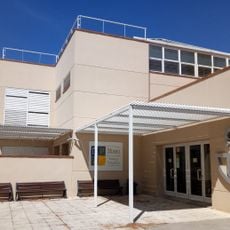
The site requires advance coordination before visiting and is located on the Complutense University campus next to the Faculty of Political Sciences. Plan your visit during active excavation periods when researchers are working on the ground.
At Somosaguas South, more than 400 fossil teeth were recovered from just 50 kilograms of sediment. This concentration of micromammal remains let researchers assign the deposit to the Middle Aragonian E biozone, and a probabilistic analysis of its fauna gave an age of 13.96 million years.
The community of curious travelers
AroundUs brings together thousands of curated places, local tips, and hidden gems, enriched daily by 94,573 contributors worldwide.