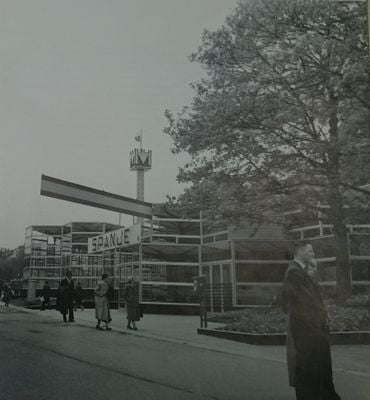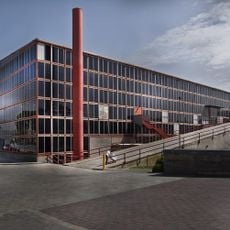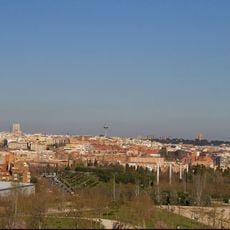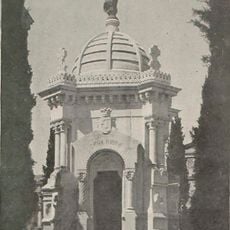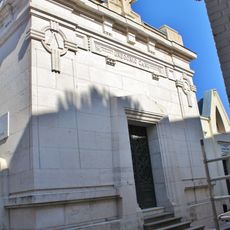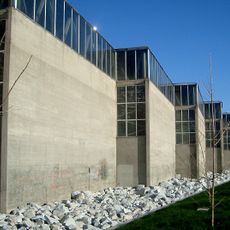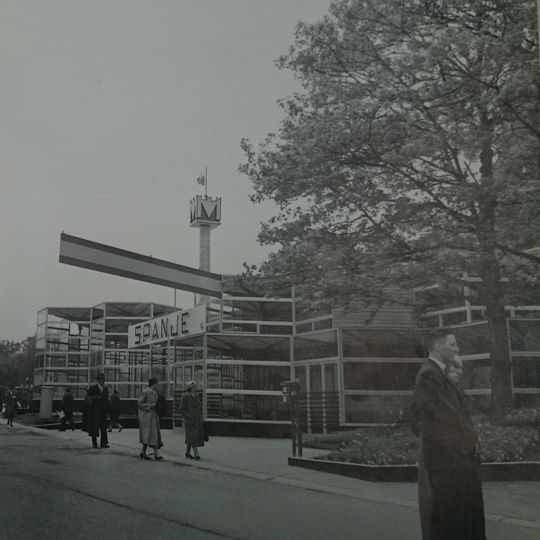
Spain Pavilion of Expo 1958, Architectural pavilion in Madrid, Spain.
The Spain Pavilion is built from modular hexagonal units arranged at varying heights to create its form. The construction system allows natural light to enter from many angles, changing how the interior looks throughout the day.
The pavilion was first built for the 1958 Brussels World Fair and later moved to Madrid. Its relocation demonstrates how well the design was received and its appeal beyond the original event.
The structure shows how Spain embraced modernist design through its geometric forms and open spatial layout. It marks a turning point in how Spanish architects approached building at that time.
The modular design adapts to existing trees and changes in the ground level as you move through it. The flexible structure lets natural elements remain part of the space rather than being removed.
The hexagonal structure was an uncommon choice for large buildings at that time and showed experimental construction methods. This geometric form allowed architects to combine space and light in a way that felt new.
The community of curious travelers
AroundUs brings together thousands of curated places, local tips, and hidden gems, enriched daily by 60,000 contributors worldwide.