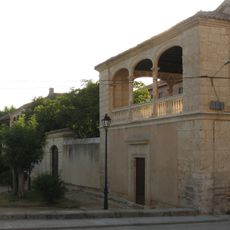
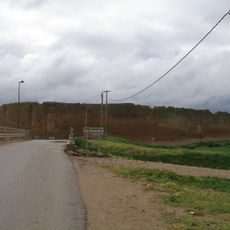
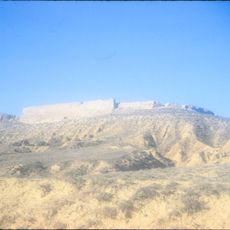
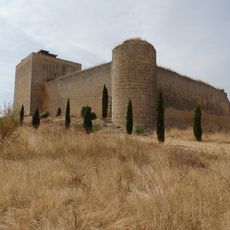
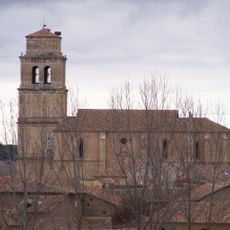
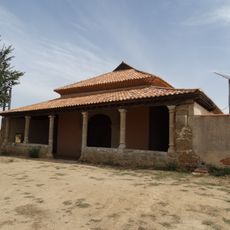
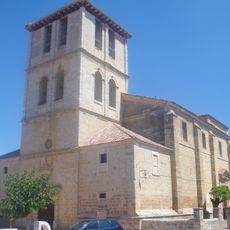
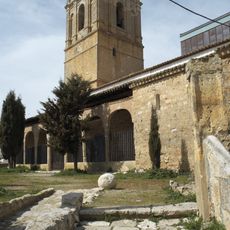
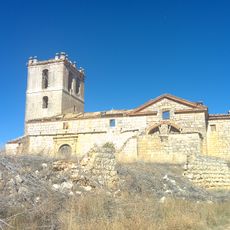
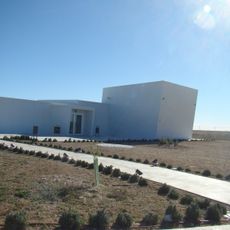
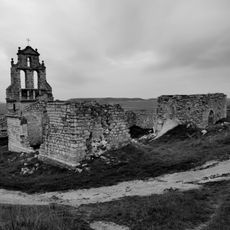
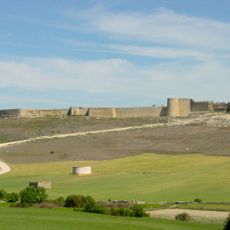
Walls of Urueña, Medieval defensive wall in Urueña, Spain.
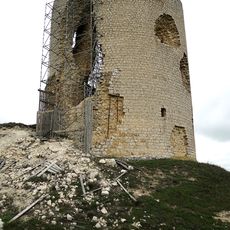
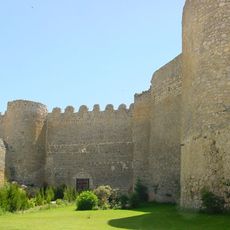
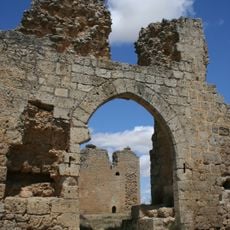
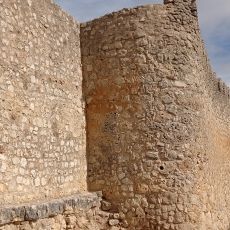
The Walls of Urueña are a 12th–13th-century masonry enclosure with semicylindrical towers at intervals, following the irregular, steep edge of the páramo. About 80% of the original circuit survives, covering almost 7 hectares. The whole wall is crenellated and has a walkway along the adarve.
Construction began in the 12th century under Princess Sancha, sister of King Alfonso VII, to defend the strategic border between Castile and León. This fortification was part of the broader efforts of that era to secure frontier regions against attack.
The Puerta del Azogue opens to the north and is built in a right-angled elbow plan, so attackers had to turn sideways inside the passage. The southern Arco de la Villa faces it but relies less on architecture, since the páramo drops steeply to the valley on that side.
The wall is fully crenellated and a walkway (camino de adarve) runs along its top. The Puerta del Azogue opens to the north and the Arco de la Villa to the south, opposite it; the southern side is where the páramo drops steeply toward the valley. About 80% of the original circuit survives, enclosing almost 7 hectares in an irregular shape.
The wall's two gates are deliberately unequal: the northern Puerta del Azogue is built in a right-angled elbow so attackers had to turn while exposed, whereas the southern Arco de la Villa relies on the sheer cliff below the páramo edge for protection. The circuit is topped by a walkway, the camino de adarve, running behind the battlements.
The community of curious travelers
AroundUs brings together thousands of curated places, local tips, and hidden gems, enriched daily by 94,048 contributors worldwide.