Baosheng Temple, Buddhist temple in Luzhi, China
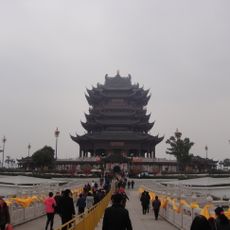
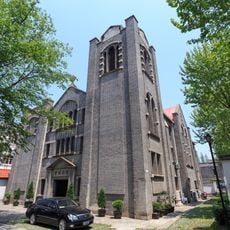
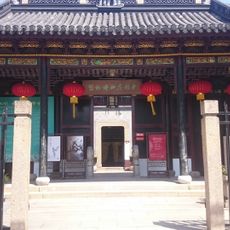
Baosheng Temple is a Buddhist temple complex in Luzhi, Wuzhong District, Suzhou. Its Mahavira Hall preserves Song-dynasty stone column bases, including lotus-pattern and huasheng bases praised by architect Liang Sicheng as "especially exquisite." The Arhat Hall, designed by Fan Wenzhao in 1930, houses nine Tang-dynasty clay arhat statues by Yang Huizhi. The grounds also contain a Song-dynasty stone dhvaja pillar and a 50-metre ginkgo tree.
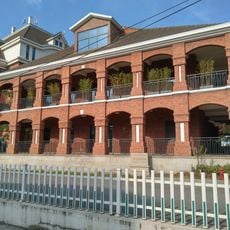
Baosheng Temple was founded in 503, the second year of the Liang dynasty's Tianjian era, under the name Baosheng Jiaosi. It was destroyed in 845 during the Tang persecution of Buddhism, rebuilt in 1013, and flourished in the Ming from 1487; in 1950 it became a museum. In 1928 half of the Mahavira Hall collapsed and nine arhat statues were lost; architect Fan Wenzhao built the Arhat Hall two years later for the survivors.
The temple is also known as Baosheng Chan Temple, its name in the Qing dynasty. It became the Baosheng Temple Museum in 1950. Inside, visitors can see a Song-dynasty stone dhvajo pillar carved with Buddha figures and sutras, and an iron bell cast between the late Ming and early Qing.
Visitors should take time to explore the different halls at their own pace, as there is much to see throughout the complex. It helps to arrive earlier in the day when conditions are less crowded and the light is better for viewing details.
The temple's 1,500-year-old ginkgo, about 50 metres tall, is not its only overlooked relic: a Song-dynasty stone dhvajo pillar carved with Buddha figures and sutras, and a late Ming to early Qing iron bell, are also kept on the grounds.
The community of curious travelers
AroundUs brings together thousands of curated places, local tips, and hidden gems, enriched daily by 94,043 contributors worldwide.