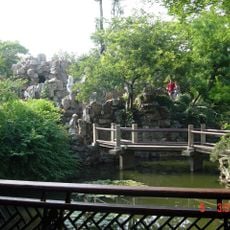
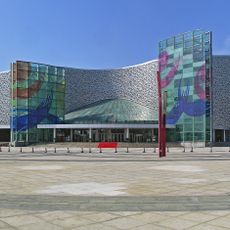
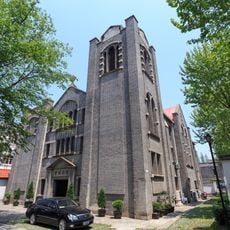
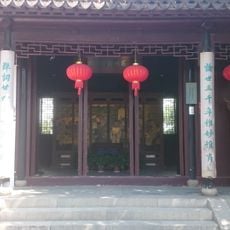
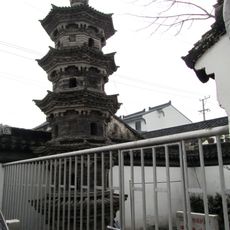
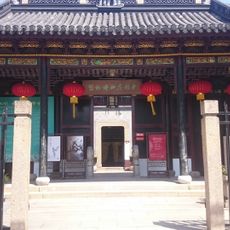
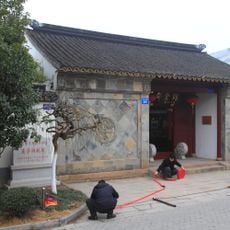
Caoxieshan Site, Archaeological site in Weiting Subdistrict, China.
Caoxieshan is a Neolithic site in Weiting Subdistrict, Suzhou Industrial Park, Jiangsu, with cultural deposits 11 metres deep divided into ten layers. Excavations from 1972 to 1973 uncovered carbonised rice, textile fragments, polished stone and bone tools, pottery and jade objects.
Caoxieshan was discovered in 1956 and excavated between 1972 and 1973, when archaeologists found carbonised rice grains, textile fragments and polished stone, bone, pottery and jade objects. Its 11-metre deposit holds ten layers running from Majiabang through Songze to Liangzhu and up to Wu-Yue remains of the Spring and Autumn period. It was listed as a Jiangsu provincial protected site in 1995 and a national key cultural relic in 2013.
The site's name comes from its shape, said to resemble a straw sandal. Its most celebrated find is a large jade cong from tomb M198, called "China's first jade cong" because it pushed back the known date of such objects to the Liangzhu period, around 5,000 years ago. Excavations also yielded the earliest known example of a woven kudzu-fibre textile.
The site lies in Weiting Subdistrict, Suzhou Industrial Park, beside North Yangcheng Lake. Suzhou Rail Transit Line 11 has a Caoxieshan station near the archaeological park, and several bus routes also reach it. The park's own website, caoxieshanpark.cn, gives current visiting details.
The M198 tomb here yielded three jade cong, and the first one unearthed is called the "First Jade Cong of China": it overturned the accepted dating of cong and showed that marked social ranking already existed around 5,000 years ago.
The community of curious travelers
AroundUs brings together thousands of curated places, local tips, and hidden gems, enriched daily by 93,712 contributors worldwide.