Berlin S-Bahn, Rapid transit railway system in Berlin, Germany
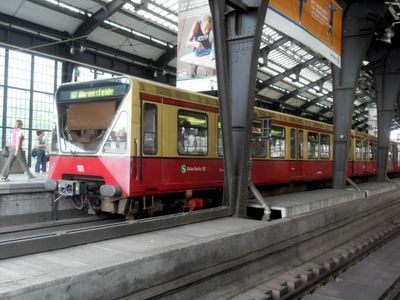
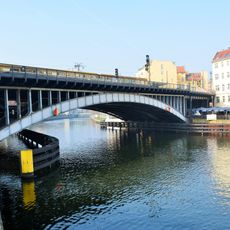
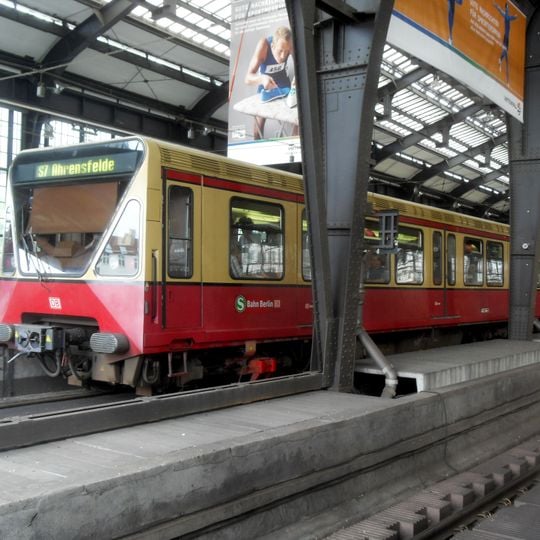
Berlin S-Bahn is a rapid transit railway system in Berlin and Brandenburg that operates 16 lines with a total of 168 stations. The trains run on dedicated tracks, mostly above ground on viaducts or in cuttings, and connect inner city areas with the outer districts and the surrounding region.
The network officially received the name S-Bahn in December 1930, after previously being called city, ring and suburban railway. Following the division of the city in 1961, operations were split and only gradually reunified after 1989.
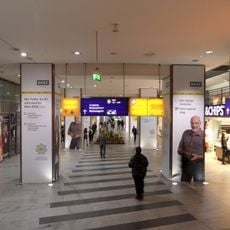
The round yellow signs with a white S mark the station entrances throughout the city and have become one of the most recognizable orientation points. Passengers of all ages use this network daily for commutes to work, school or leisure trips, making it a fixed part of urban daily life.
Tickets can be purchased at machines in the stations, through the mobile app or at sales points, with both single journeys and time passes available. The trains run roughly every ten or twenty minutes, often more frequently during peak hours, and most stations are accessible with ramps or lifts.
Power supply comes from a lateral conductor rail with 750 volts direct current, a method used only here in Germany. This technical feature dates back to the early days of electric operation and has been maintained until today.
The community of curious travelers
AroundUs brings together thousands of curated places, local tips, and hidden gems, enriched daily by 60,000 contributors worldwide.