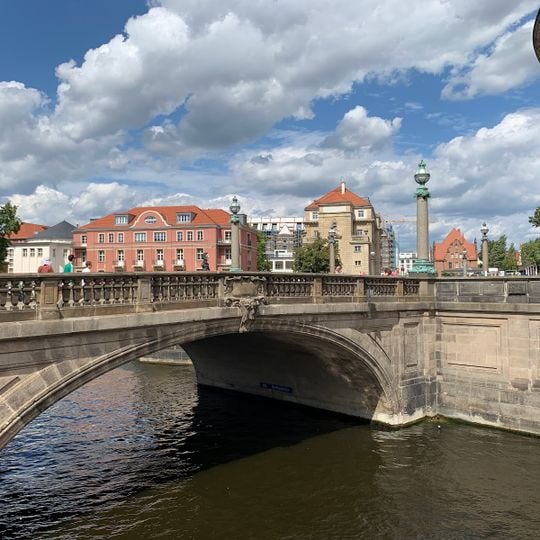
Monbijou Bridge, Steel arch bridge in Mitte, Germany.
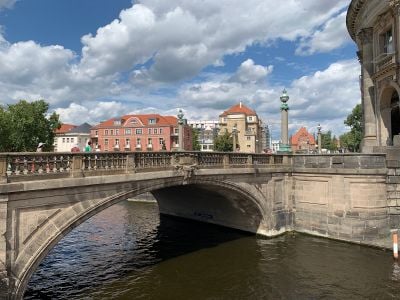
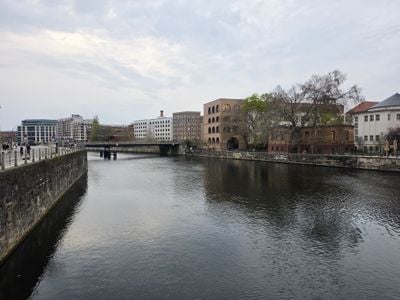
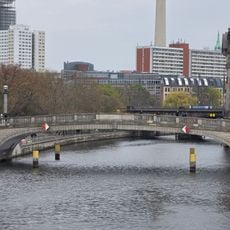
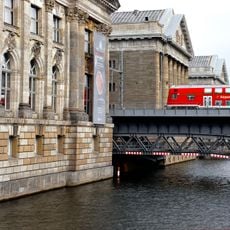
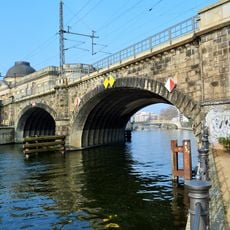
Monbijou Bridge connects Monbijoupark to Museum Island across the River Spree using a steel arch and stone structure. The crossing spans 62 meters and displays the engineering approach of the early 1900s.
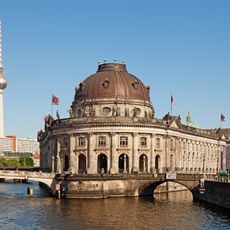
The architect Ernst von Ihne designed the double bridge together with the Bode Museum; its two sections were built between 1902 and 1904 and named Monbijoubrücke in 1905 after nearby Monbijou Palace. In 1945 Wehrmacht troops blew up the northern span, which was replaced by a steel temporary bridge for decades. The northern section was rebuilt and reopened on 12 October 2006.
The bridge and the street leading over it were named in August 1905 after Schloss Monbijou, a nearby palace that no longer exists. The two halves meet at an obtuse angle on the tip of Museum Island, where the two arms of the Spree join directly behind the bridge.
The bridge provides direct access to Museum Island for pedestrians and cyclists coming from Monbijoupark. Nearby public transportation options make it easy to reach surrounding museums and attractions.
The bridge's two halves meet at an 82.5-degree angle over the tip of Museum Island, and the northern span rests on a foundation sunk 18 metres deep on a wooden caisson because of the poor riverbed. The equestrian statue of Emperor Frederick III once placed on the museum forecourt was not returned after rebuilding.
The community of curious travelers
AroundUs brings together thousands of curated places, local tips, and hidden gems, enriched daily by 93,183 contributors worldwide.