Narmer Palette, Archaeological artifact at Egyptian Museum, Egypt
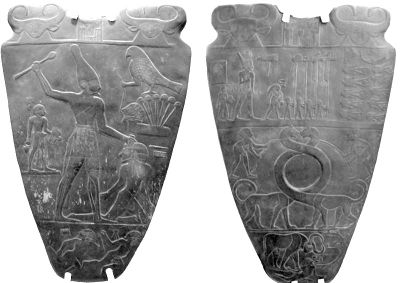
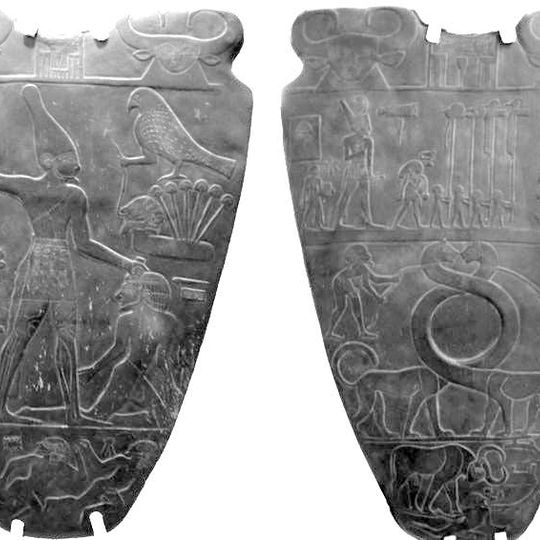
The Narmer Palette is a ceremonial object made from dark stone, held in the Egyptian Museum in Cairo and richly carved on both sides. It stands roughly as tall as a small table and half that in width, with figures and early script covering the surface.
James Quibell and Frederick Green found the palette in 1898 among the ruins of Hierakonpolis, an early temple site along the Nile. It comes from around 3100 before the Common Era, when Upper and Lower Egypt were coming together.
The name Narmer is carved at the top in early script, marking one of the first rulers after the joining of the two kingdoms. The carvings show ceremonial scenes with deities and captives that expressed political and religious power at the time.
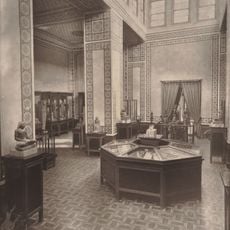
The piece is on permanent display in the Egyptian Museum in central Cairo and stays there because of its importance for early script. You can find it in one of the ground floor galleries, well lit behind glass.
In the middle sits a round hollow originally used for grinding minerals into makeup powder. The detailed battle scenes and the image of a bull breaking through a fortress wall often catch the eye only after a longer look.
The community of curious travelers
AroundUs brings together thousands of curated places, local tips, and hidden gems, enriched daily by 90,896 contributors worldwide.