Muhammad Ali Mosque, Ottoman mosque in Cairo, Egypt
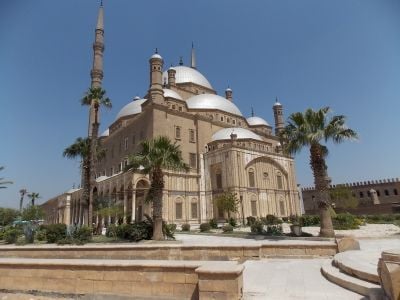
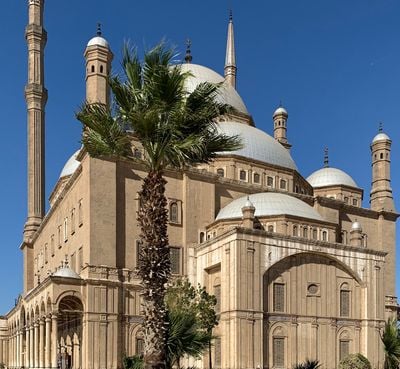
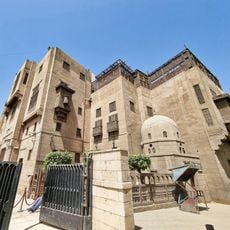
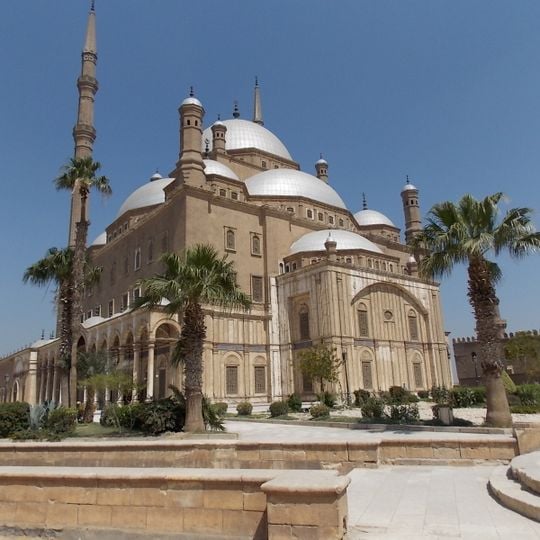
The Muhammad Ali Mosque is a large Ottoman-style mosque of pale tan ashlar blocks in the Citadel of Cairo. A tall central dome rises on a drum, with a slightly smaller dome in front and lower domes to the sides. Four multi-tiered minarets stand on the left and right, and a fifth rises behind the main dome. A domed portico with columns stands at the lower left.
Muhammad Ali Pasha, founder of modern Egypt, ordered construction to begin in 1830, seeking to create a monument modeled after the grand Ottoman mosques of Istanbul. The building work ended in 1848, while interior decoration continued under his successor Abbas Pasha.
The name honors Muhammad Ali Pasha, whose tomb sits inside the building and visitors can walk around it during their tour. The smooth white alabaster catches daylight and makes the outer walls glow against the darker limestone of the citadel walls.
The location at the highest point of the citadel means visitors must climb stairs and walk through the fortress grounds before reaching the interior. Open daily, the building hosts worshippers during the five daily prayer times, and tourists should be respectful during these moments.
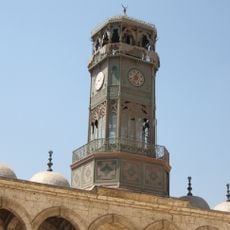
The clock tower holds a timepiece given by King Louis Philippe of France to Muhammad Ali around 1836-1840; it long stood defunct before King Farouk had it repaired. The tower was again the subject of a restoration project begun by the Ministry of Antiquities in 2014.
The community of curious travelers
AroundUs brings together thousands of curated places, local tips, and hidden gems, enriched daily by 93,222 contributors worldwide.