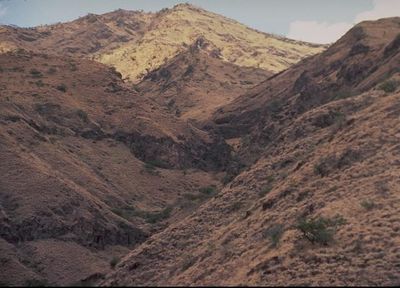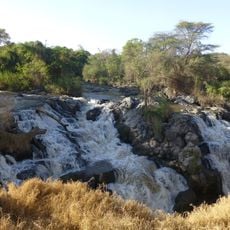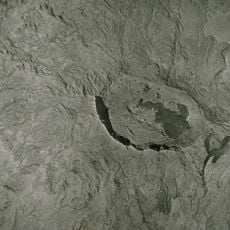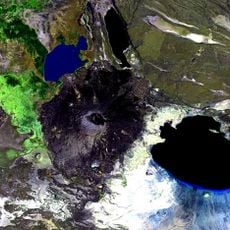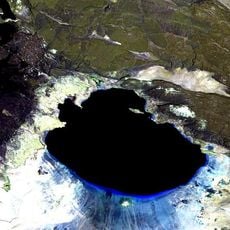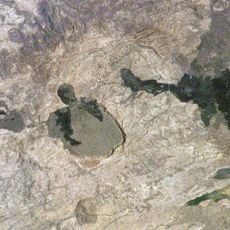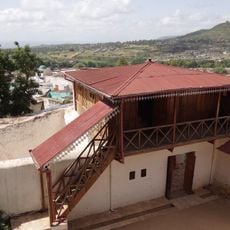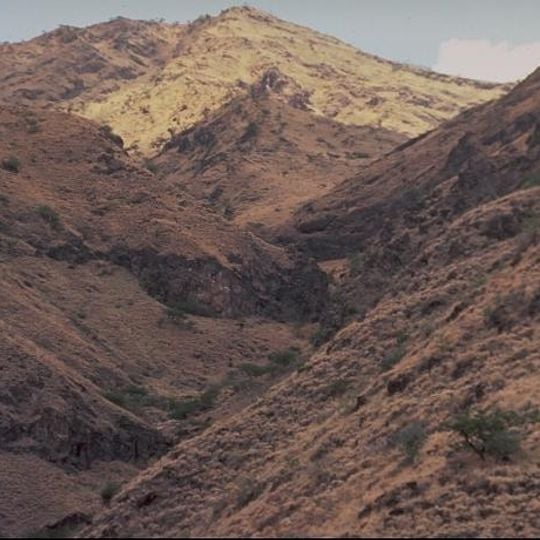
Mount Ayalu, Stratovolcano in Great Rift Valley, Ethiopia.
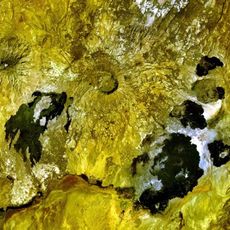
Mount Ayalu is a stratovolcano in Ethiopia's Great Rift Valley rising to 2,145 meters with steep slopes built from layers of hardened rhyolitic material. The volcano's structure reveals multiple volcanic episodes stacked atop each other over its formation history.
The summit was first documented during an expedition by explorer Wilfred Thesiger in 1933, marking its entry into Western geographical records. This exploration helped expand knowledge of the region's volcanoes during the early 20th century.
The Afar people made pilgrimages to the summit seeking blessings for health and warfare success, showing how deeply the mountain was woven into local spiritual beliefs. This sacred role shaped how communities in the region understood their relationship with the landscape.
The mountain lies east of the Awash River in the Afar Region and is accessible via the local routes in the area. Visitors should prepare for steep terrain and the hot climate characteristic of the rift valley setting.
In 2000 a magma intrusion emerged extending 8 kilometers toward Adwa, revealing that the volcano remains geologically active beneath the surface. This event demonstrates ongoing volcanic processes despite the absence of major eruptions for many years.
The community of curious travelers
AroundUs brings together thousands of curated places, local tips, and hidden gems, enriched daily by 91,439 contributors worldwide.