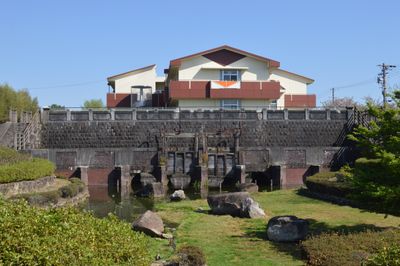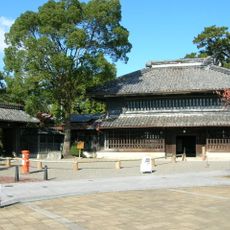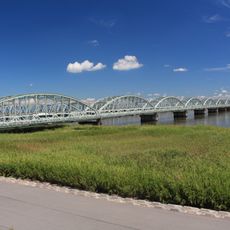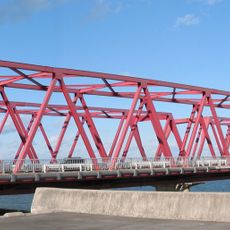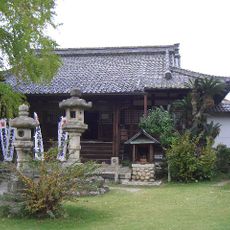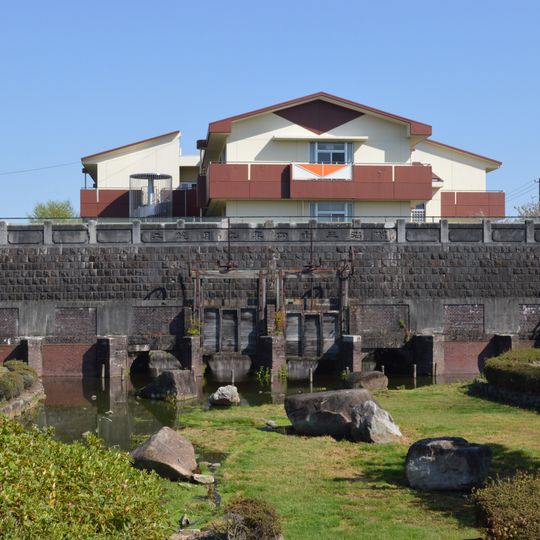
Tatsuta polder sluice gates, Historical water management structure in Yatomi, Japan.
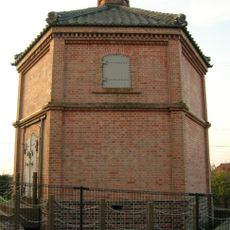
The Tatsuta polder sluice gates are a brick structure with four arched openings that spans 26 meters in length and measures 9.5 meters wide and 8 meters high. The construction serves both as a water control mechanism and a bridge, featuring wooden doors and lifting mechanisms that manage water flow through brick-lined channels.
The structure was built between 1901 and 1902 and originally served as a drainage facility for agricultural purposes, directing water into the Nabeta River. Over time, its function changed to also work as a reverse tide irrigation system.
The structure was recognized as a tangible cultural property of Yatomi City in 1978, representing early modern Japanese engineering. It shows how people of that era learned to control water for their fields.
The structure is accessible by a well-marked path and is easiest to explore in clear weather when the details of the brick work are clearly visible. Visitors should wear sturdy footwear as the ground around the gates can be wet and slippery.
The gates showed remarkable adaptability, initially facing drainage challenges but later transforming into a reverse irrigation system to control tidal effects. This shift shows how early engineers adjusted their designs when the original solution did not work as intended.
The community of curious travelers
AroundUs brings together thousands of curated places, local tips, and hidden gems, enriched daily by 60,000 contributors worldwide.