本蓮寺, Buddhist temple in Fujisawa, Japan.
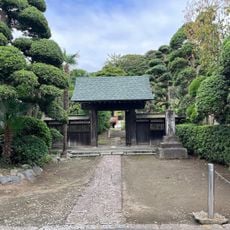
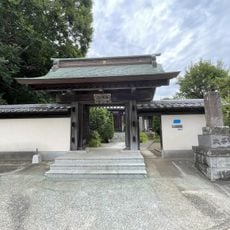
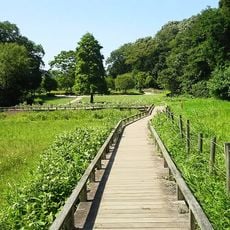
Honrenji is a Buddhist temple in Fujisawa with buildings arranged across different levels, featuring a large main hall as the center point. The structures are connected through the grounds by pathways that guide visitors through the complex.
Tradition holds that the temple was founded in 595 by Gien and later became a Shingon esoteric temple. In 1184 Minamoto no Yoritomo rebuilt it as Ryūryū-ji, and in 1271 Nichiren is said to have rested here after the Ryūkō-ji persecution. Around 1303–1306 Nisshū converted it to the Nichiren school, and in 1649 the Edo shogunate granted it a 7-koku vermilion-seal estate.
Honrenji is one of the eight rotation temples (rinban jissatsu) of Ryukokuji, the head temple of the Nichiren school's Rokujo-monryu line, and belongs to the Choshi dharma lineage. Its mountain name, Ryukokuzan, links it to the nearby execution site of the Dragon's Mouth. The temple honours Nichiren, who according to tradition rested here in 1271 after surviving the Ryuko persecution.
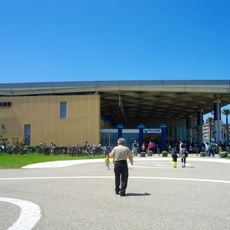
Visitors can reach the temple on foot from Fujisawa station, with signage visible throughout the local neighborhood. Wearing comfortable shoes is helpful, as the grounds require walking through several areas to fully experience the space.
The temple grounds hold a stone monument inscribed with a waka poem by Prince Munetaka, the sixth shogun of the Kamakura shogunate. He is said to have stayed at the temple on his way back to Kyoto after being removed from his post on suspicion of rebellion, and composed the poem at a poetry gathering there.
The community of curious travelers
AroundUs brings together thousands of curated places, local tips, and hidden gems, enriched daily by 94,662 contributors worldwide.