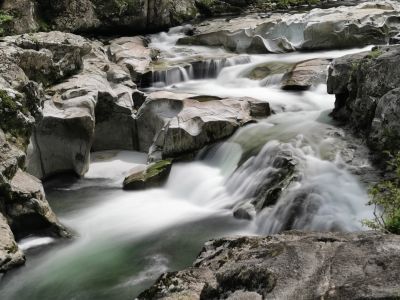
煮え渕ポットホール, Pothole group in Toei, Aichi Prefecture, Japan
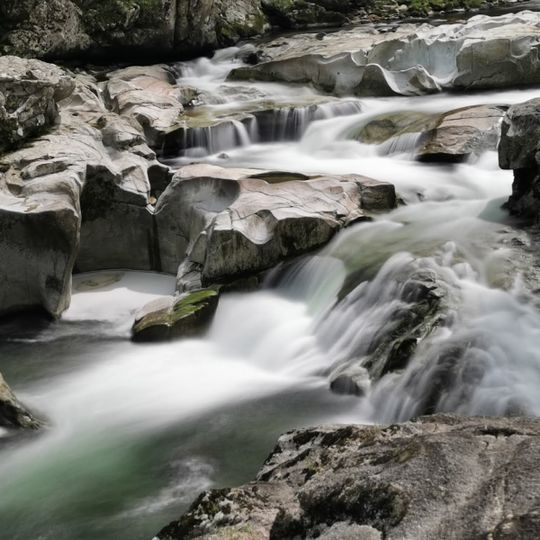
The Niebuchi Potholes are a geological formation featuring more than 20 round depressions carved into granite bedrock by water erosion and swirling stones. The hollows vary in size and depth, revealing how flowing water shapes solid rock over extended periods.
The granite formation originated roughly 100 million years ago during the Ryoke granite belt formation in central Japan. The potholes themselves were carved by water erosion over millions of years, creating a rare geological feature.
Large potholes carry names such as "Giant's Cauldron" and "Ogre's Stone Bath". According to the Kitashitara County History, the Kawasuku hamlet performed rain-making rituals in the cauldrons of Niebuchi. The site was designated an Aichi Prefecture Natural Monument on 11 November 1988, together with the downstream Azukaribuchi Potholes, the first potholes so designated in the prefecture.
The site is best visited during dry weather, as rainfall makes the paths slippery and limits views of the formations. A red pedestrian suspension bridge system provides safe paths for observing the potholes from multiple angles.
The largest hollows carry names such as "Giant's Cauldron" and "Ogre's Stone Bath". According to the Kitashitara County History, the Kawasuku hamlet performed rain-making rituals in the cauldron of Niebuchi, a custom recorded in the section on the Niebuchi rain prayer.
The community of curious travelers
AroundUs brings together thousands of curated places, local tips, and hidden gems, enriched daily by 94,755 contributors worldwide.