Tomb of Tamagusuku Chōkun, Ancient burial structure in Maeda, Japan
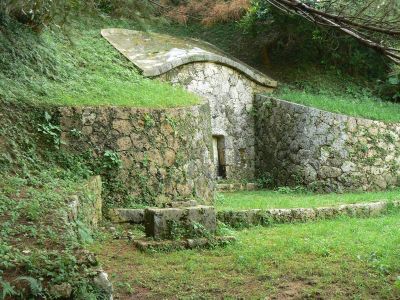
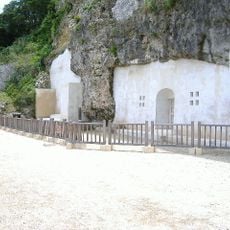
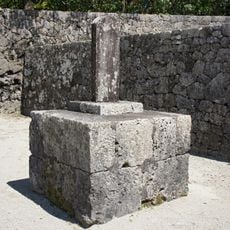
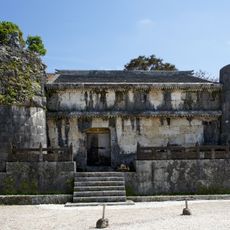
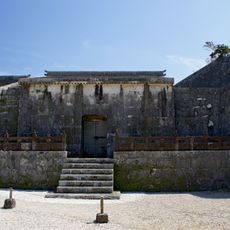
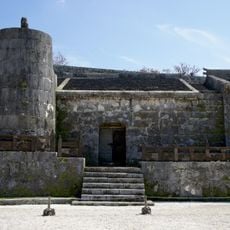
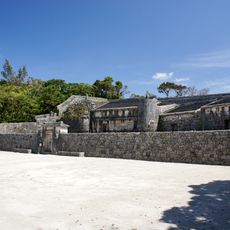
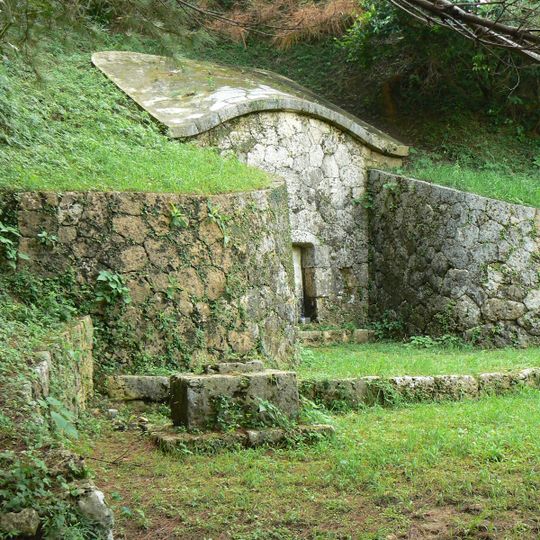
The Tomb of Tamagusuku Chōkun is a family tomb of the Shō clan's Hedona branch in Maeda, Urasoe. Its curved sleeve stones and raised burial court form a prototype of the Okinawan turtle-back tomb. The chamber, 2.39 by 2.73 metres, has Ryukyu limestone walls, four stone pillars and a ceiling of Nībi sandstone. A 48-centimetre offering table stands before the entrance.
The tomb is the family vault of the Chōkun lineage of the Mukai family, not a single grave. Tamagusuku Chōkun was first buried in a private tomb in Shuri Ishimine, and his urn was moved here around 1899. His bones were washed in 1805, 71 years after death, far longer than the usual three to seven years. The tomb was badly damaged in the Battle of Okinawa, excavated in 1988 and designated a Urasoe City historic site in 1995.
Tamagusuku Chōkun is called the founder of kumiodori, the Ryukyuan dance-drama, and is credited with the first five works of the repertoire, still staged today. The tomb itself is the family grave of the Hyadomine-donchi branch of the Shō clan, not a single burial; about 24 or 25 zushigame urns were found inside, most of them plain ceramic jars.
The tomb stands in Maeda, Urasoe, and was designated a Urasoe City historic site in 1995; it was restored in 2005 after wartime damage destroyed the roof and upper half. The burial chamber is about 6.52 square metres with a ceiling roughly 1.8 metres high, so entry is cramped. Look for the 48 cm-wide offering table (sammidee) before the grave mouth and the curved kerb stones enclosing the grave courtyard.
Tamagusuku Chōkun was first buried in a rare private tomb in Shuri Ishimine, and his zushigame was moved to this family tomb around 1899. His bones were washed 71 years after death, in 1805, far longer than the usual three to seven years.
The community of curious travelers
AroundUs brings together thousands of curated places, local tips, and hidden gems, enriched daily by 93,470 contributors worldwide.