Tomi Shrine, Shinto shrine in Nara Prefecture, Japan
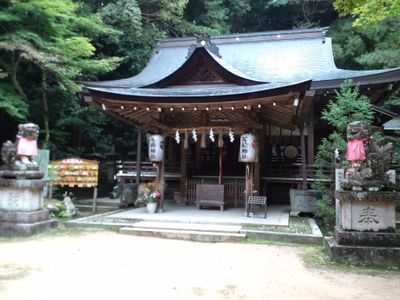
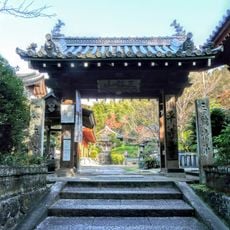
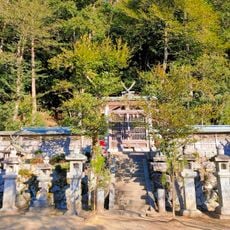
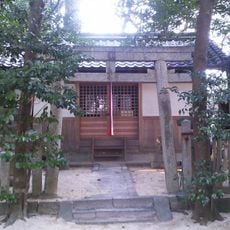
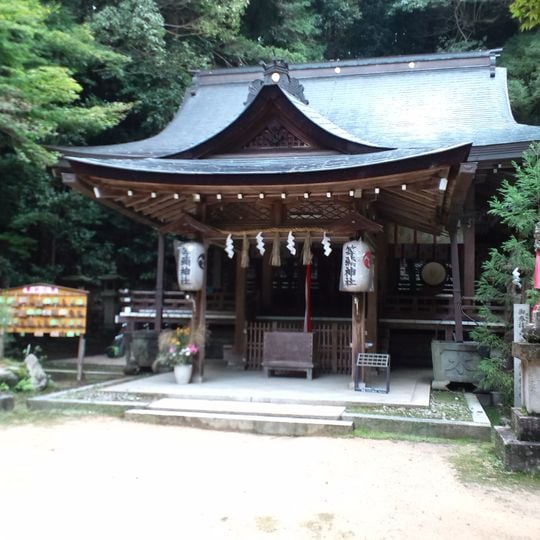
Tomi Shrine stands in Sakurai, Nara Prefecture, at the top of a short flight of stone steps. Its wooden hall has a dark grey tiled roof curving upward at the eaves, with a raised triangular gable over the facade, a lattice frieze above the entrance and two large white paper lanterns bearing black characters. The grounds hold the upper Kamitsuo Sha and the lower Shimotsuo Sha, with its right hall (Hachiman Sha) and left hall (Kasuga Sha).
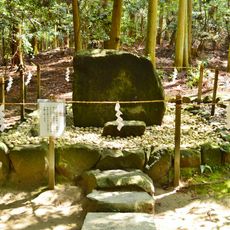
Tomi Shrine's founding date is unknown; shrine tradition holds it stood on Mount Torimi, where Emperor Jimmu is said to have worshipped ancestral and heavenly deities, a site linked to the origin of the Daijōe rite. In 1112 a landslide forced the hall to move to its present location. It was listed among the Engishiki shrines, and in 1940 it was raised from village shrine to prefectural shrine.
Until the Meiji era the shrine was called Noto-no-miya, and the name Tomi is linked to Mount Torimiyama, where Emperor Jimmu is said to have first worshipped the ancestral deities. The shrine keeps a yatagarasu, the three-legged crow, shown here in human form rather than as a bird. In the grounds stand thirteen stone monuments inscribed with waka and haiku poems.
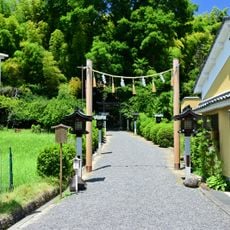
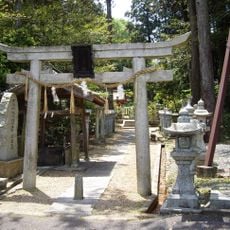
Tomi Shrine is about a 15-minute walk from Sakurai Station, served by JR West and Kintetsu. Alternatively, take the bus toward Tanzan Shrine and get off at Kaminomori-chō, two minutes on foot from the shrine. The approach climbs a short flight of stone steps to the worship hall.
The shrine's yatagarasu, the three-legged crow of Shinto myth, is depicted here in human form, an unusual choice among shrines. The grounds also hold 13 stone monuments inscribed with waka and haiku poems, and the shrine was called Notomiya until the Meiji era.
The community of curious travelers
AroundUs brings together thousands of curated places, local tips, and hidden gems, enriched daily by 93,640 contributors worldwide.