Akasaka Tennōzan Kofun, Ancient burial mound in Sakurai, Japan
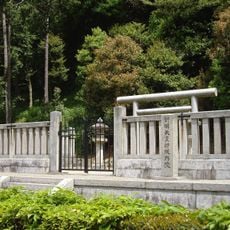
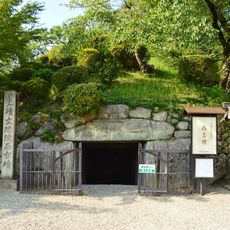
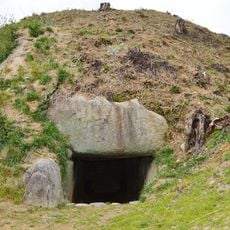
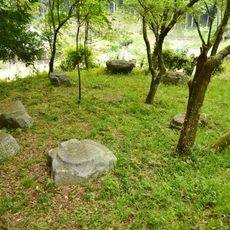
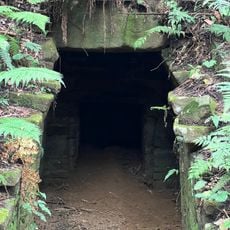
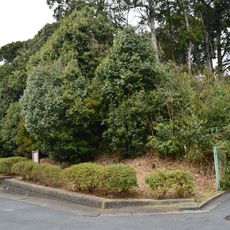
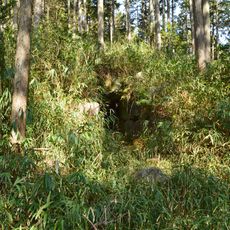
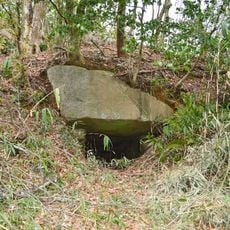
Akasaka Tennōzan Kofun is a square-shaped burial mound from the late sixth century featuring three terraced levels and a stone chamber inside. The chamber holds a house-shaped stone coffin made from pale volcanic stone with a recessed top opening.
Akasaka Tennōzan Kofun was built at the end of the 6th or start of the 7th century, as dated from its stone chamber and coffin type; it has never been excavated, so no grave goods are known. In the Meiji era it was still proposed as the tomb of Emperor Sushun, who according to the Nihon Shoki was buried at Kurabashi, until the present Kurahashino-Okanoue tomb was designated 1.7 km southwest. It was made a national Historic Site on 25 December 1954.
The mound is also called Tennōzan Kofun, the name under which it was designated a national Historic Site on 25 December 1954. From the Meiji era until the current Kurahashino-Okanoue tomb was fixed as his mausoleum, this tomb was proposed as the tomb of Emperor Sushun, and historians and archaeologists still consider it a strong candidate.
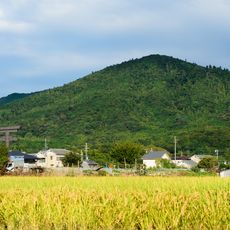
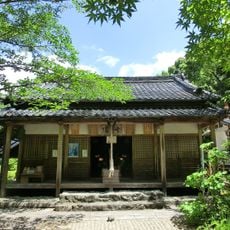
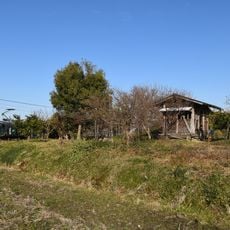
The mound sits on a ridge tip reached on foot from the Shimoo-guchi bus stop, about five minutes' walk from the bus off the Sakurai Station lines. The chamber has long stood open and no finds are recorded, so visitors see the stone structure and terraced slopes rather than artefacts. The site has not been excavated; survey and 3D measurement of the chamber were carried out in recent years.
The stone coffin features unusual projections on its sides designed for securing ropes, and a square opening at the top that served specific ritual or practical purposes. These precise carved details are rarely seen and demonstrate the craftsmanship involved.
The community of curious travelers
AroundUs brings together thousands of curated places, local tips, and hidden gems, enriched daily by 93,524 contributors worldwide.