Shinozu-jinja, Shinto shrine in Japan
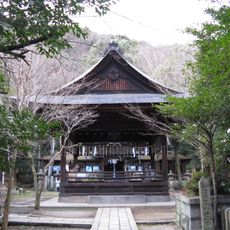
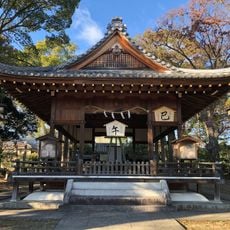
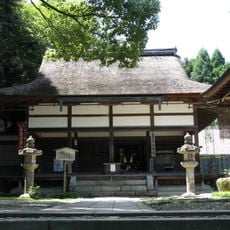
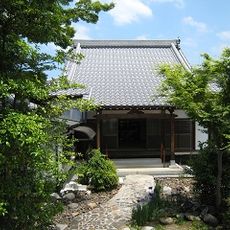
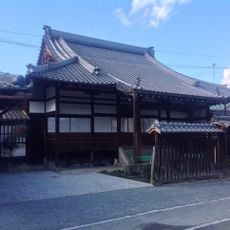
Shinozu-jinja is a Shinto shrine in Nakashō, Ōtsu, built in the nagare-zukuri style, with a main hall reconstructed in 1661. Its front gate is the former north Ōte-mon of Zeze Castle, relocated here and designated an Important Cultural Property. The shrine's crest is the melon (uri).
The founding date is unknown, but the shrine was formerly called Daibontennō-sha. It was patronised by the Honda family and other successive lords of Zeze Domain, and by the Arisugawa-no-miya house, which donated a torii and left records of repeated visits. The honden was rebuilt in 1661 (Manji 4). In 1868 it took its present name and was ranked a village shrine, then promoted to prefectural shrine in 1922.
The shrine's crest is the melon (uri), and its annual festival is held on 3 May. Within the grounds stand subordinate shrines to Sukunahikona, Takao-kami and two groups of six deities each, one including Inari Myōjin. The main gate was moved here from the north Ōte gate of former Zeze Castle and is a National Important Cultural Property.
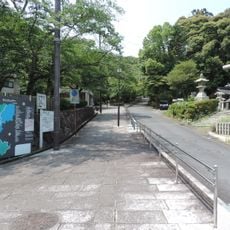
The shrine is easily accessed on foot, with paths made of stones and gravel leading to the main building. Visitors should arrive at the temizuya fountain and rinse their hands and mouth with water to prepare for prayer before entering the sacred areas.
The shrine's front gate is the former north outer gate (Kita-Ōte-mon) of Zeze Castle, moved here and now a National Important Cultural Property. Inside, a ridge tag (munafuda) bears an inscription dated to 1456 (Kōshō 2).
The community of curious travelers
AroundUs brings together thousands of curated places, local tips, and hidden gems, enriched daily by 94,028 contributors worldwide.