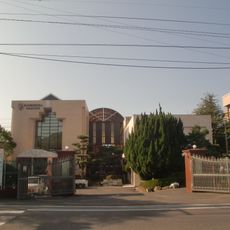
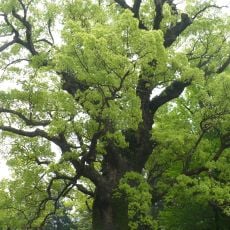
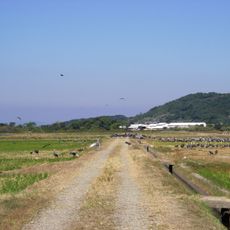
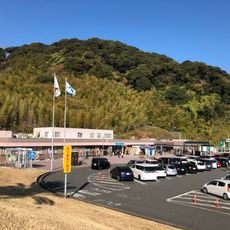
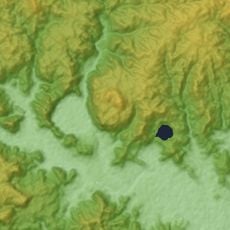
Satsuma Kokubun-ji Remains, Buddhist archaeological site in Kokubunchō, Satsumasendai, Japan.
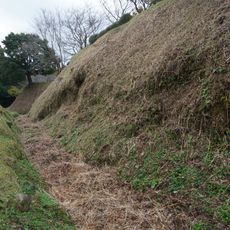
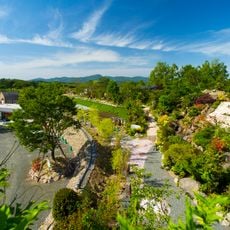
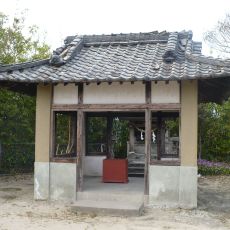
Satsuma Kokubun-ji Remains is a former provincial temple in Kokubuncho, Satsumasendai, now a park covering about 1.5 hectares. Excavations since 1968 revealed a compound 130 meters north-south and 120 meters east-west, smaller than other provincial temples, with a Kawara-dera-style layout. Foundation stones of the pagoda, main hall, and gates remain.
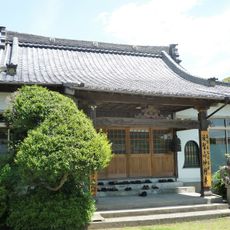
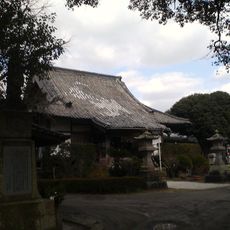
Satsuma Kokubun-ji was founded in the late 8th century, according to excavations carried out through 1983. It declined early but survived until the Muromachi period as the shrine temple of Kōkoku Tenmangū, then was burned down during Toyotomi Hideyoshi's Kyushu campaign. Rebuilt by Shimazu Mitsuhisa in the Edo period as a branch temple of Taihei-ji, it was abolished in 1869 during the haibutsu kishaku.
The temple complex shows an unusual layout with a secondary hall positioned west of the main structure, following the pattern established at Kawara-dera in Asuka. Visitors can trace this distinctive arrangement when walking through the park today.
The archaeological site functions today as the Satsuma Kokubunji Ruins Historical Park with good walkways throughout the grounds. The site is reachable by train and then a moderate walk from the nearest station, making it accessible for most visitors.
The pagoda's foundation stones were moved to another temple in the city in 1888, then returned to their original spot in 1944, the year the pagoda site alone was designated a National Historic Site. The full 1.5-hectare area was added in 1976 and laid out as a park in 1985.
The community of curious travelers
AroundUs brings together thousands of curated places, local tips, and hidden gems, enriched daily by 93,955 contributors worldwide.