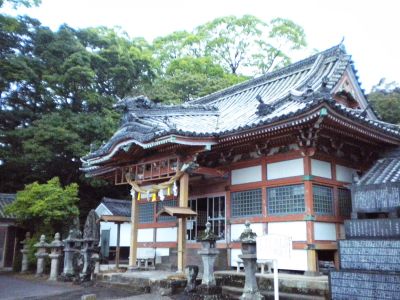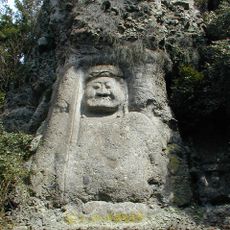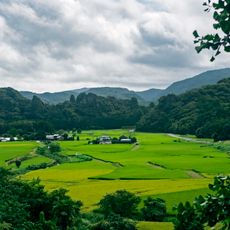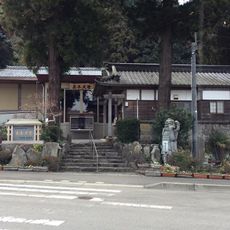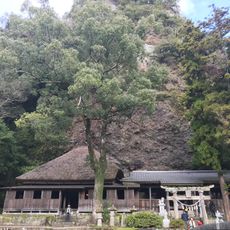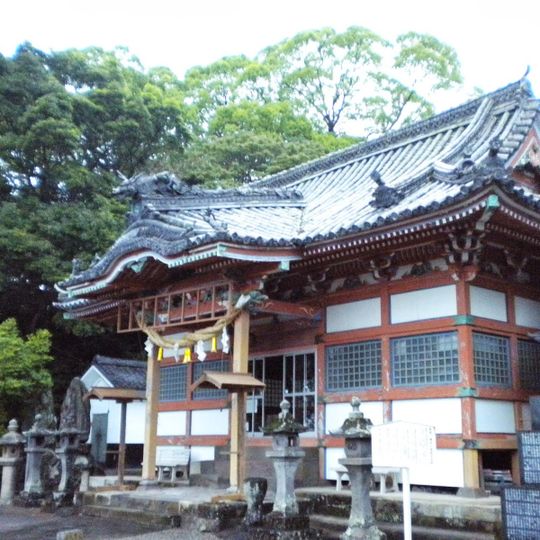
Wakamiya-hachimansha, Shinto shrine in Japan
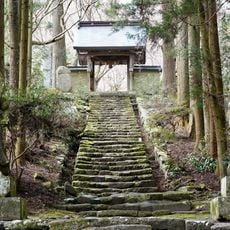
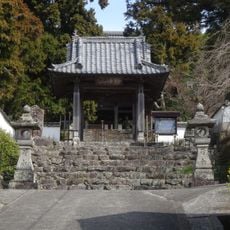
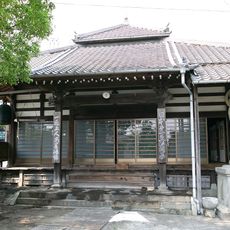
Wakamiya-hachimansha stands in Kitsuki, Oita Prefecture, on a site it has occupied since 1326. Its precinct holds a grove designated a prefectural natural monument in 1980 and a group of stone objects, including a torii inscribed with the year Kan'ei 20 (1643), designated a city cultural property in 1999. A subsidiary shrine, Wakan-shogunsha, honours Kibitsu Chikashige, first head of the Kibitsu clan.
Founded in 985 by Ki no Kanetsune, who brought four sandalwood statues carved by Prince Atsumi and consecrated at Iwashimizu Hachimangū in 918. The shrine was moved to Hamada in 1057, to Nakamura in 1173, and to its present site in 1326. It became a village shrine in 1873 and a prefectural shrine in 1921.
The shrine honours four deities: Emperor Nintoku (Ōsazaki no Mikoto), his half-brother Prince Uji no Wakiiratsuko, and Ure-hime and Kure-hime. Its market began in 1173, when the shrine moved to Nakamura and Fujiwara no Yorimichi's permission allowed a fair under Governor Fujiwara no Sukesuke; tied to the hōjō-e rite, it grew into a cattle and horse market counted among Japan's three great ones, still trading about 2,000 animals around 1950.
The shrine is accessible by foot from central Kitsuki and entry is free. The grounds are easy to navigate with clearly marked paths, and the quiet surroundings make it suitable for a peaceful visit at any time.
The shrine's market began in 1173, when Fujiwara no Imichi authorised a fair at the Nakamuro site under the supervision of the Bungo governor Fujiwara no Sukesuke. Tied to the hōjō-e rite, it grew into a cattle and horse market counted among Japan's three great ones; around 1950 some 2,000 animals were still traded.
The community of curious travelers
AroundUs brings together thousands of curated places, local tips, and hidden gems, enriched daily by 94,797 contributors worldwide.