Tesshū-ji, Buddhist temple in Shimizu-ku, Japan
Tesshū-ji is a Rinzai-shū Myōshin-ji school temple in Shimizu-ku, Shizuoka, with the mountain name Fudarakusan. Its main image is a wooden Thousand-Armed Kannon in the Kannon hall, and the temple keeps the Utsusemi flute, said to have belonged to Minamoto no Yoshitsune. The grounds also hold a bronze statue of Takatsuka Chikudō.
The temple began in the reign of Empress Suiko, when Kunō Tadahito of the Hata clan built a hall near present-day Kunōzan Tōshō-gū; the monk Gyōki later named it Kunō-ji. In 1570 Takeda Shingen moved it to its current site for his Kunō Castle and it became Shingon-Ritsu. In the Meiji era it fell into ruin until Yamaoka Tesshū revived it as a Rinzai Myōshin-ji temple and renamed it Tesshū-ji.
The main image is a wooden Thousand-Armed Kannon, kept in the Kannon Hall and listed as a prefectural cultural property. The temple also preserves a lacquered flute, the Usuzumi no Fue, said to have been used by Minamoto no Yoshitsune in his youth and donated by him to Kōnō-ji, the temple's predecessor; it was designated a city cultural property in 1977. Concerts are held to honour Yoshitsune and to keep the instrument in use.
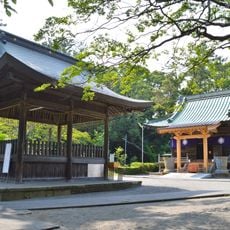
The temple sits near three other temples within walking distance of Shimizu station, making it convenient to visit multiple sites. The grounds are accessible and open to explore, with clear pathways leading through the different areas.
The temple keeps a thin-ink flute (usuzumi no fue), said to have been played by Minamoto no Yoshitsune when he was a boy called Ushiwakamaru and donated by him to Kōnō-ji, the temple's predecessor. It was designated a Shimizu city cultural property in 1977, and after repairs in 1998 concerts are held to console Yoshitsune and keep the instrument sounding.
The community of curious travelers
AroundUs brings together thousands of curated places, local tips, and hidden gems, enriched daily by 93,546 contributors worldwide.