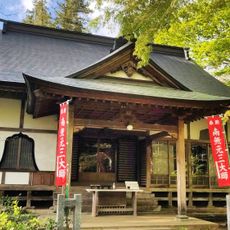
Ganjō-ji, Buddhist temple in Ichinoseki, Japan.
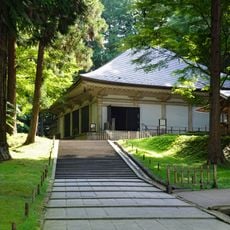
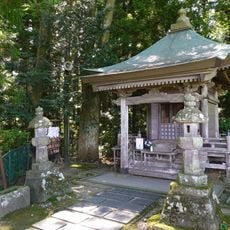
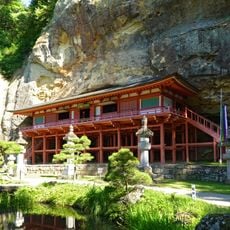
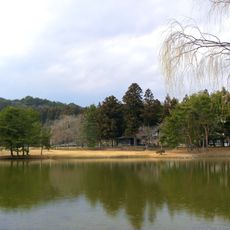
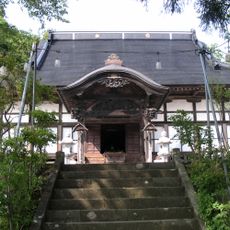
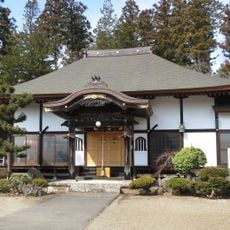
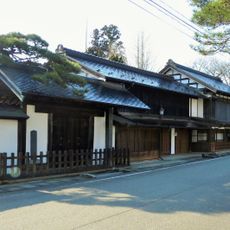
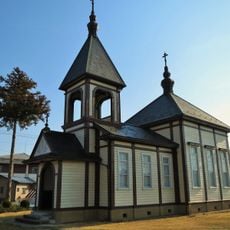
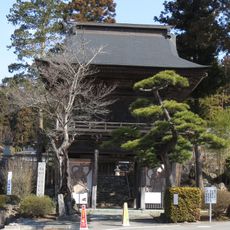
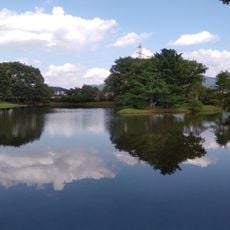
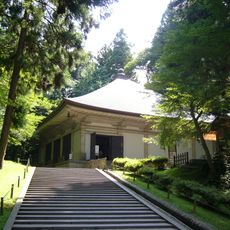
Ganjō-ji is a Buddhist temple in Ichinoseki with multiple wooden buildings that display traditional Japanese architecture. The grounds are carefully integrated into the natural surroundings and follow a thoughtful spatial arrangement.
The temple was founded in 1385 and has remained a religious center through the centuries. It survived numerous natural disasters and social changes that shaped the region.
Ganjō-ji belongs to the Sōtō school of Zen Buddhism and is a rotation temple (banjichi) of Sōjiji, one of the school's two head temples. Its mountain name is Hakubasan and its main image is a Shaka Nyorai. The temple is a branch of Shōbō-ji in Ōshū, and its cemetery holds the graves of Date Hyōbu Munekatsu, a figure in the Date disturbance, and his family.
The temple stands in the Tsuruyama district of Ichinoseki, in Iwate Prefecture. The main hall is a mid-Edo-period building renovated in 1984. The grounds hold the graves of Date Hyōbu Munekatsu and his family, linked to the Date disturbance, along with those of the Confucian scholar Seki Yōken and the sumo wrestler Hidenoyama.
The temple's 18th abbot, Dainichi Ryōben, also served as 24th abbot of Shōbō-ji and was trusted by Date Tsunamune, fourth lord of Sendai, contributing to the rebuilding of Shōbō-ji's main hall. The graves of Date Hyōbu Munekatsu and his family, linked to the Date Disturbance, stand in the grounds.
The community of curious travelers
AroundUs brings together thousands of curated places, local tips, and hidden gems, enriched daily by 94,830 contributors worldwide.