Takkoku-no-Iwaya, Cave temple in Hiraizumi, Japan.
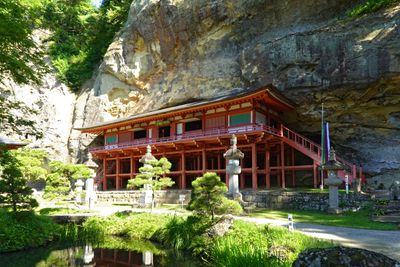
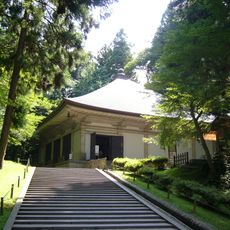
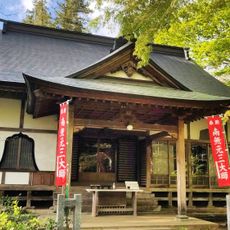
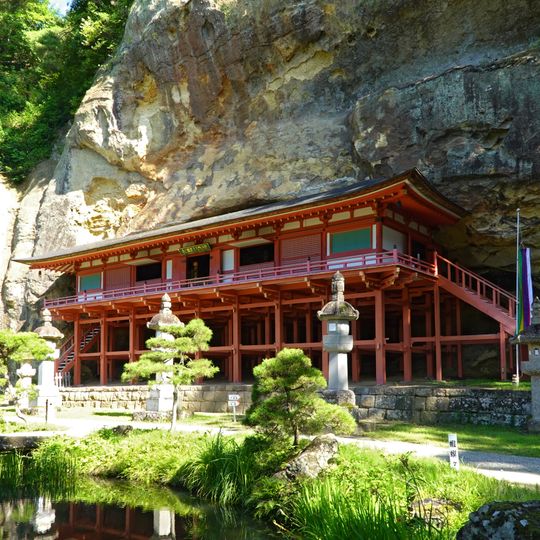
Takkoku-no-Iwaya is a Tendai Buddhist hall built beneath an overhanging cliff about 150 meters long, whose rock face rises roughly 35 meters at its highest point. The two-story wooden Bishamon-do has a hipped tile roof with upturned eaves, red beams and pillars, green-paneled windows and a red balcony railing, with a roofed red stair descending on the right. It stands on a stone base against the rock, and a large bas-relief Buddha is carved into the cliff above.
General Sakanoue no Tamuramaro founded this temple in 801 CE as a Buddhist sanctuary following military success in northern Japan. The site was then maintained and developed across the centuries.
The stone Buddha carved directly into the rock demonstrates how Buddhist spiritual practice merged with the surrounding natural landscape. You can observe how this integration shaped the religious expression of the region.
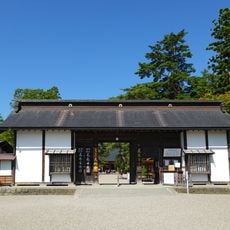
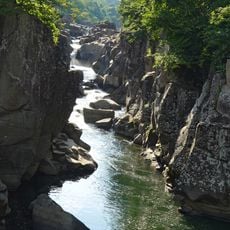
The temple grounds are a sacred area: smoking, eating and drinking, and bringing animals including pets are prohibited. The precinct entrance has a torii gate, and the cave hall stands below a cliff about 150 meters long. The site lies roughly six kilometers southwest of central Hiraizumi, between the town and Genbikei ravine.
The temple grounds contain a large bas-relief Buddha carved into the upper cliff face, identified as Dainichi Nyorai or Amida Nyorai. A stone image of Bishamon-ten serves as the main object of worship inside the cave hall. The site was added to Japan's tentative World Heritage list in 2012 with other Hiraizumi-area remains.
The community of curious travelers
AroundUs brings together thousands of curated places, local tips, and hidden gems, enriched daily by 93,601 contributors worldwide.