Unyo Maru, Maritime heritage site in Kōnan, Japan.
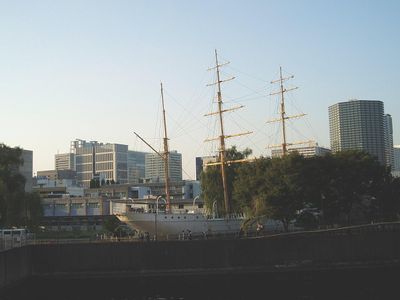
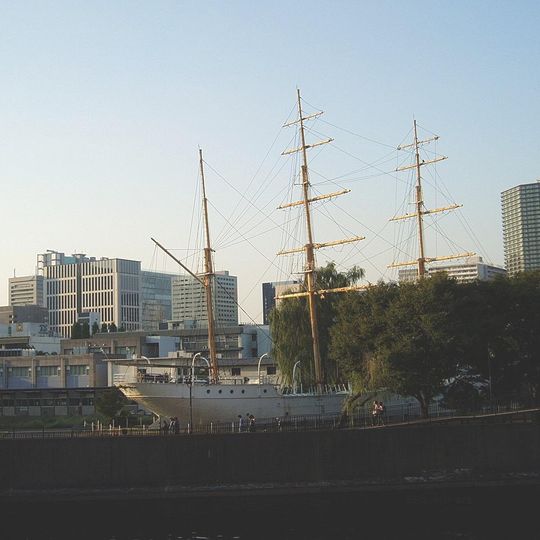
The Unyo Maru is a steel-hulled, three-masted barque built in 1909 at Osaka Iron Works' Sakurajima shipyard as a fisheries training and survey vessel. It is the last surviving example of the American-style whaling barque and the oldest extant Japanese-made steel ship. It now stands on land at Tokyo University of Marine Science and Technology's Shinagawa campus.
Built in 1909 at Osaka Iron Works' Sakurajima shipyard as the second training ship of the Fisheries Institute, after the first, Kaitaku Maru, was wrecked in Yeongil Bay, Korea. The steel-hulled, three-masted barque made 36 voyages until 1928, opening the Kamchatka fishing grounds and testing crab canning on board. During the 1923 Great Kanto Earthquake it was moored at Tsukishima and rescued over 500 people from burning boats. Retired in 1928, it was reused from 1932 as a sail-training ship, moved to Shinagawa in 1962 and registered as a national Tangible Cultural Property on 11 December 1998.
The ship's name combines the characters for cloud and hawk, and its figurehead and bow carry the name in Japanese script. It was a training vessel of the Fisheries Institute, later Tokyo University of Fisheries, so its decks hosted students learning whaling and net-fishing rather than cargo. A canned-crab experiment aboard in 1926 opened the east Kamchatka grounds.
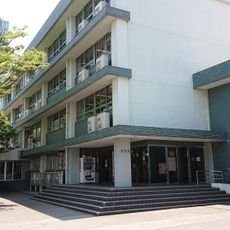
The ship stands on land in the southeast of the Tokyo University of Marine Science and Technology Shinagawa campus, near the Tennozu Canal lock. From Tennozu Isle Station it is about a five-minute walk; from Shinagawa Station about 25 minutes via the main gate. Entry to the campus is possible only on public open days, and boarding is prohibited because of severe deterioration.
The Unyo Maru is the last surviving example of the American-style barque whaling ships that once sailed the world's oceans, and the oldest surviving steel-hulled vessel built in Japan. It was built in 1909 at the Osaka Iron Works Sakurajima shipyard as a steel ship, not a wooden one. Since 2012 it has stood on land at the Shinagawa campus of Tokyo University of Marine Science and Technology, near the Tennozu canal lock.
The community of curious travelers
AroundUs brings together thousands of curated places, local tips, and hidden gems, enriched daily by 93,664 contributors worldwide.