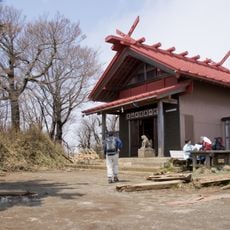
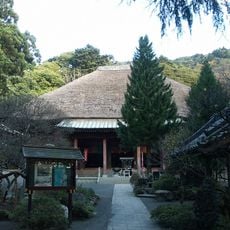
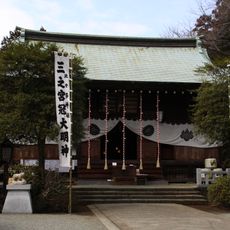
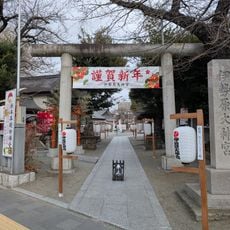
Takabeya-jinja, Shinto shrine in Japan
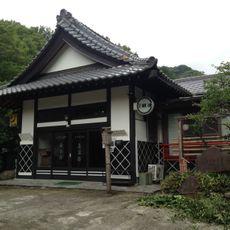
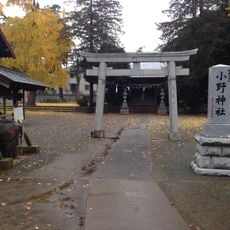
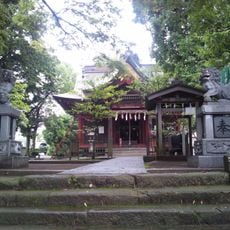
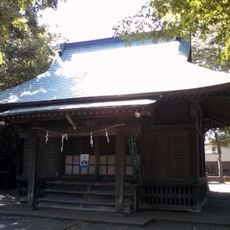
Takabeya-jinja is a Shinto shrine in Shimo-Kasuya, Isehara, entered through a torii and a worship hall rebuilt in 1865. Its honden, rebuilt in 1929 after the Great Kanto Earthquake, reuses the main timbers of the 1647 hall. Both buildings were registered as national tangible cultural properties on 25 February 2016.
Listed in the 927 Engishiki register as one of Sagami Province's thirteen shrines, it served as tutelary shrine of 127 villages in Osumi District. In the Kamakura period, local land steward Katsuya Tōta Sahyōe no Suke Aritsune built a new hall. The main hall was rebuilt in 1647, collapsed in the 1923 Great Kantō earthquake, and was reconstructed in 1929 reusing its pillars, carvings and front doors.
Each September the shrine holds the Shiokumi ceremony, performed for over a thousand years since the Heian period. Sand and seawater are collected at Terugasaki beach, where Sumiyoshi Okami is said to have landed; until the early Meiji era priests walked 16 km each way. The seawater is used as fire-quelling water, the sand is scattered on the approach, and the seaweed is hung on the ropes of the hall and gate.
The shrine is about a twenty-minute walk from Isehara's main train station or easily reached by bus via the Kasuya Kamihoshu stop. It is straightforward to visit and regularly attracts people interested in history and local traditions.
The bronze bell was made in December 1386 by Kōchi no kami Munekuni and donated by Taira no Hidenori; it is a Kanagawa Prefectural Important Cultural Property, not a national one. The shrine also keeps three old gagaku masks and a "Hachimangū" plaque written by the Obaku monk Etsuzan Dōshū.
The community of curious travelers
AroundUs brings together thousands of curated places, local tips, and hidden gems, enriched daily by 94,918 contributors worldwide.