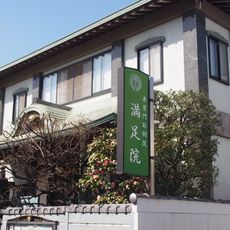
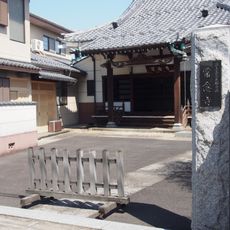
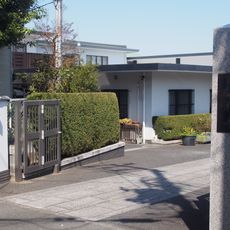
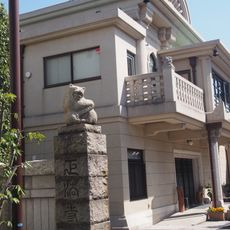
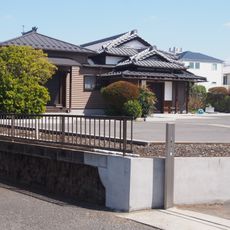
Shinganji, Buddhist temple in Shimokitazawa, Japan
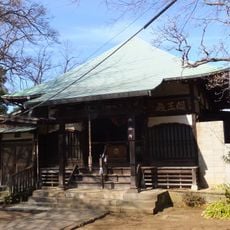
Shinganji is a Jodo-sect temple whose main hall, rebuilt in 1964, enshrines an Amida triad and, in a cabinet, the memorial tablet of Yuki Hideyasu. The grounds also hold the 1836 Awashima Hall, a hall for Fudo and Enma, a Benzaiten statue with eight arms, a cemetery, and a pair of ginkgo trees said to date from the temple's founding.
Shinganji was founded in 1608 as a memorial temple for Yuki Hideyasu, lord of Fukui, after his death in 1607. His dying wish, conveyed to the priest Mansho of Ichijoji in Echizen, was carried out by Mansho's disciple Sonko, who found a site in Kitazawa village. The temple's name comes from Hideyasu's posthumous name, Joko-in Den Shingan Doi Unsho Daikoji. Until the Meiji separation of Shinto and Buddhism, it served as the betto temple of Kitazawa Hachiman Shrine next door.
The Hari Kuyo rite takes place on 8 February at the Awashima Hall, the temple's oldest building, rebuilt in 1836. Worshippers stick old needles into tofu as an offering, and a needle mound stands in front of the hall. The rite was designated a Setagaya intangible folk cultural property in 1999.
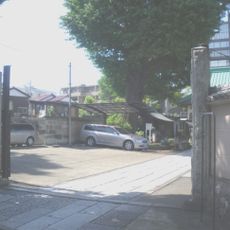
Shinganji is about a 10-minute walk from Shimokitazawa Station on the Keio Inokashira and Odakyu lines. The temple grounds are on a slope, and the cemetery was rebuilt with barrier-free access in 2007. The kindergarten, founded in 1952, occupies part of the grounds, so visitors should keep to the paths and avoid school areas during class hours.
The kindergarten takes its name from the area's former nickname, Awashima, earned through the Awashima Myojin deity and the Awashima moxa treatments once famous here. Its predecessor was the Shinganji Aoi Sunday School, opened in 1925 and closed during the Pacific War.
The community of curious travelers
AroundUs brings together thousands of curated places, local tips, and hidden gems, enriched daily by 94,225 contributors worldwide.