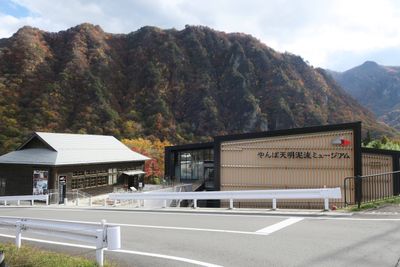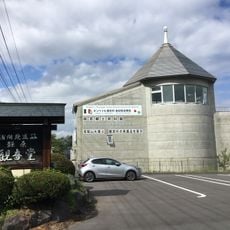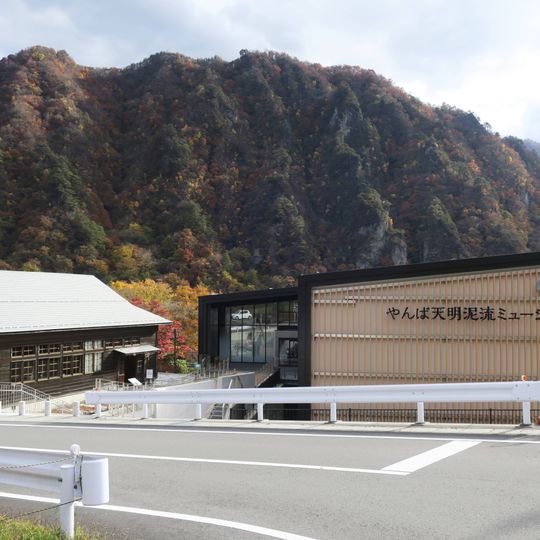
Yamba Tenmei Mudflow Museum, Volcanological museum in Naganohara, Japan
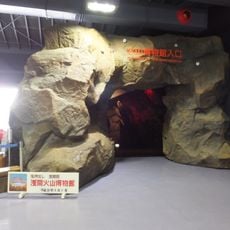
Yamba Tenmei Mudflow Museum is a volcanological museum in Naganohara that displays artifacts and discoveries from excavations at the Higashimiya site, including household items and tools preserved by volcanic deposits. The collection contains well-kept objects from different household areas that provide insight into the material culture of the time.
The museum documents the devastating Tenmei Mudflow of 1783, triggered by Mount Asama's eruption, which buried entire villages under thick deposits. This event left a profound mark on the region's geography and settlement patterns.
The exhibits show daily routines from the Edo period through recovered items like wooden clogs, sandals, and sake-brewing tools from the buried settlement. These objects help visitors understand how ordinary life unfolded before the disaster struck.
Visitors should know the museum sits in a smaller town and planning a visit during operating hours is best. The exhibition is fairly manageable in scope, so you can complete your visit in about one hour.
Archaeological excavations revealed buildings with intact floorboards and hearths, frozen in time by the mudflow, offering direct evidence of life moments before disaster. Such fully preserved structures are rare archaeologically and provide an extraordinary view of the exact moment of the catastrophe.
The community of curious travelers
AroundUs brings together thousands of curated places, local tips, and hidden gems, enriched daily by 60,000 contributors worldwide.