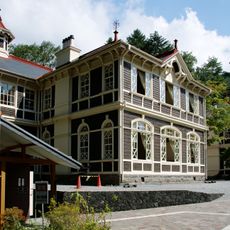
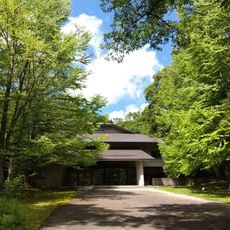
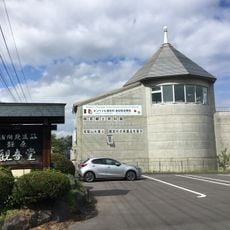
Kanbara Kannondō, Hall of Guanyin in Tsumagoi, Gunma Prefecture, Japan
The Kanbara Kannondō is a Buddhist temple dedicated to Guanyin, a deity central to the hall's purpose and decoration. It showcases traditional Japanese architectural elements including curved tile roofs and wooden support posts arranged around an interior prayer space.
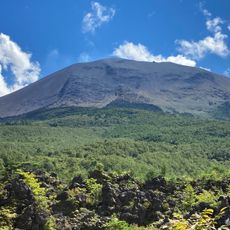
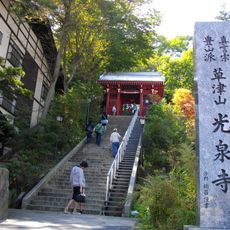
In 1783 the Kanbara village was destroyed by a debris flow from the great eruption of Mount Asama; 477 of its 570 inhabitants died, and only 93 survived, among them those who climbed the stone steps to this hall. Excavations in 1979 showed the stairway originally had 50 steps, 35 of them buried under about 6.5 m of mud, and two bodies were found at the bottom. The hall is now known as the "15 steps that divided life and death."
The temple serves as a focal point for the local Buddhist community, where people gather to perform rituals and observe religious occasions throughout the year. These gatherings remain an integral part of daily spiritual life in the village.
The hall stands about 12 km north of the crater, reached from the Kannondō-mae bus stop on the Seibu Kankō line, a 2-minute walk; buses run about 5 minutes from Manza-Kazawaguchi Station and about 65 minutes from Karuizawa Station. The stone stairway in front now has 15 visible steps, the rest buried since 1783.
The hall is called "the 15 steps that divided life and death": of 570 villagers, 477 died in the 1783 mudflow, and only those who climbed the stone steps reached safety. Excavations in 1979 found the staircase had 50 steps in all, with debris 6.5 m deep; two skeletons, apparently a daughter carrying her mother, were found at the buried base.
The community of curious travelers
AroundUs brings together thousands of curated places, local tips, and hidden gems, enriched daily by 93,460 contributors worldwide.