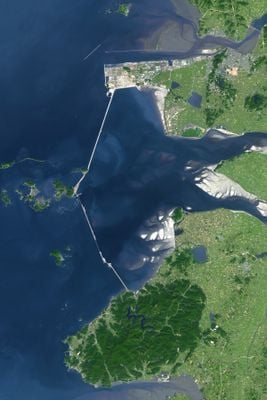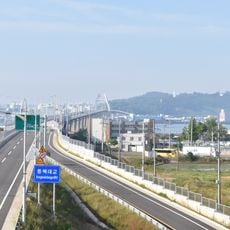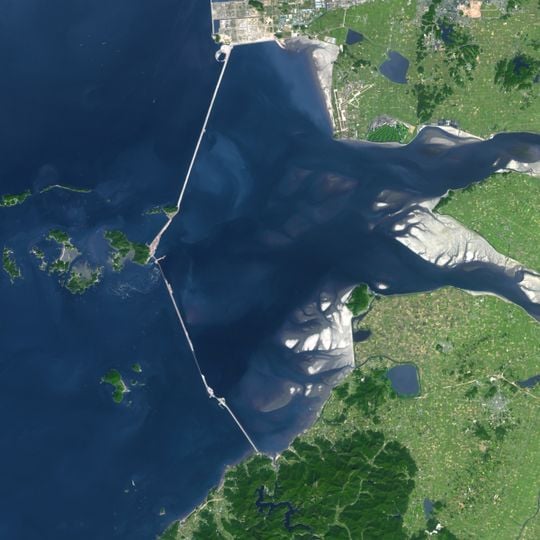
Saemangeum Seawall, Levee on the west coast of South Korea.
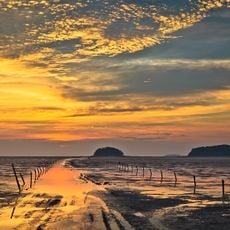
Saemangeum Seawall is a coastal levee on the western coast of South Korea, separating the Yellow Sea from a large area of reclaimed land. It runs between Byeonsan Peninsula to the north and Gogunsan Archipelago to the south, forming a continuous barrier of concrete and rock.
Construction started in 1991 and took nearly two decades to complete, with the seawall officially finished in 2010. During that period, the project transformed tidal flats and shallow waters into dry land on a very large scale.
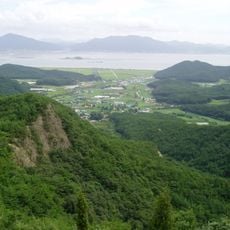
The seawall shaped how people in this area live and work today. It marks a shift from traditional fishing practices to new activities in the transformed landscape, visible in how communities now use the surroundings.
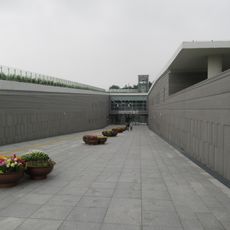
The seawall can be accessed from both ends and is open to walkers and cyclists along its top road, which offers open views on both sides. Visiting on a clear day is a good idea since there is little shade along the way.
At roughly 21 miles (33 kilometers) long, this structure is one of the longest seawalls in the world. The land created behind it is roughly the size of Seoul and is now used for farming, industry, and new urban development.
The community of curious travelers
AroundUs brings together thousands of curated places, local tips, and hidden gems, enriched daily by 90,969 contributors worldwide.