Nebojša Tower, Medieval defensive tower at Belgrade Fortress, Serbia
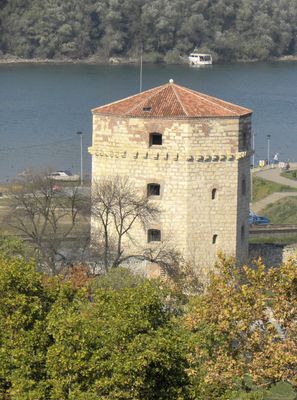
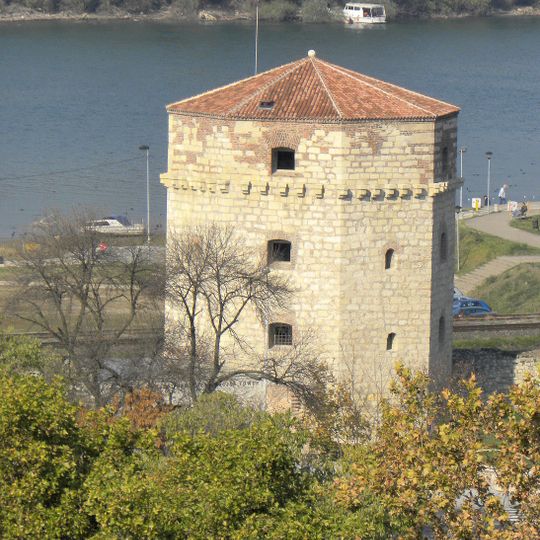
Nebojša Tower is a five-storey, 22-metre-high artillery tower with an octagonal base and thick stone walls, built around 1460 at the entrance to the former Danube port in the Lower Town of Belgrade Fortress. Its upper section was lowered and given a vaulted floor by the Austrians in the first half of the 18th century, when the original crenellated top was replaced by the present roof. The photograph shows a square-looking stone tower with a shallow pyramidal roof of reddish-brown tiles, a band of darker masonry below the roofline, a projecting corbel row, and small windows and slit openings.
The tower was built in 1460 by Hungarian rulers as a defensive stronghold and later served as an Ottoman prison. Its transformation from fortress to prison reflects how the structure adapted to the changing powers that controlled the region over the following centuries.
The name refers to a medieval defense concept that Serbs applied to their most advanced fortification towers. Today visitors encounter this as a symbol of medieval power displayed through the building's physical form and the objects housed within.
The tower stands in the Lower Town by the former Danube port, near the confluence of the Sava and Danube. Since 2010 the interior has been open as a museum with exhibition rooms on four floors, the first devoted to Rigas Feraios. The upper floors are reached by narrow stone stairs, and the ground around the fortress is uneven.
On 19 May 1896 the first football match in Serbia was played on a field in front of the tower, marked only by bricks where the goals should stand. Hugo Buli, son of the Belgrade merchant Edidija Buli, had brought the first leather football to Serbia from Germany and formed the country's first football section within the Soko gymnastics society on 12 May 1896.
The community of curious travelers
AroundUs brings together thousands of curated places, local tips, and hidden gems, enriched daily by 94,140 contributors worldwide.